Video yükleniyor...

Video Yüklenemedi

Ana Sayfaya Dön

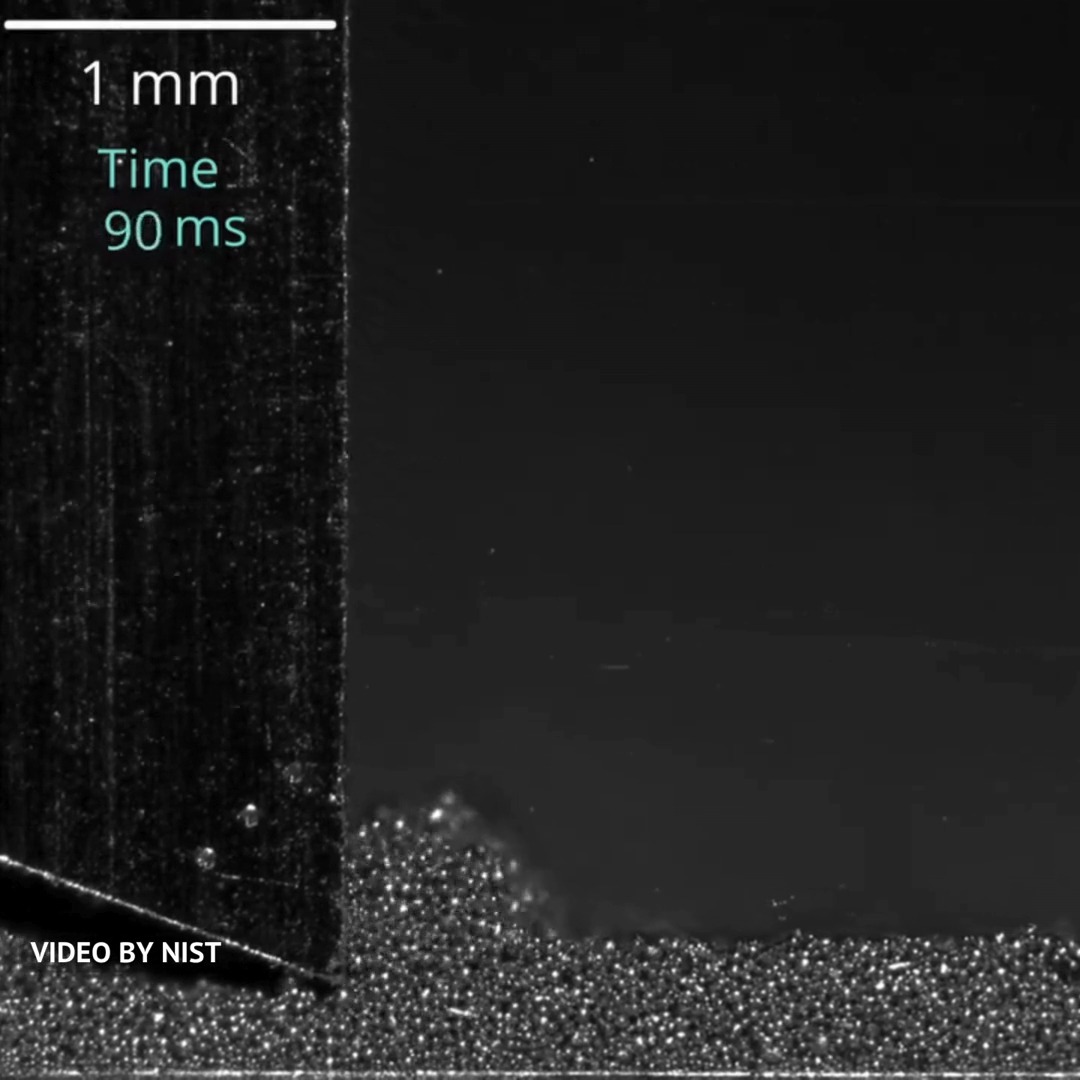
Apple developed a process to 3D print the titanium case for its Watch at scale (Ultra 3, Series 11). It uses 50% the raw material compared to old models and made interesting calls on material sciences / manufacturing: 1️⃣ Take 100% recycled raw titanium powder. 2️⃣ Atomizes the powder...

158,048 görüntüleme • 7 ay önce •via X (Twitter)

0 Yorum

Yorum bulunmuyor

Orijinal gönderinin yorumları burada görünecek

Benzer Videolar

Amazing documentary from Sweden showcasing how they made iron from raw clay they harvest in a bog. This method is how they made raw materials for tools, weapons and export from the early iron age until the industrial revolution! The first step is to dig up clay rich in iron ore from a bog. The clay is left to dry in piles and then transported to a foundry nearby the bog. At the foundry the first step is the roast the raw material. This is to remove moisture and biological material. The temperature of the fire is around 500-600°C but not higher since the material should not melt yet. This shrinks the raw material to 50% of it's original mass, sometimes to a third of it's original mass. This process takes 2-4 hours. As this happens the men prepare the foundry. In a stone clad hole in the ground with an air vent at the bottom firewood is stacked. When this is lit on fire the men takes careful precautions to not allow it to burn up completely. After an hour the firewood is turned into charcoal used to turn the now refined iron ore into iron ingots. The roasted iron ore is placed into the bed of coal will sink slowly sink to the bottom of the pit as the coal burn with a temperature in-between 1200-1400°C, the men peak into the airhole at the foundry and can tell from the colour of the temperature is correct or if they need to adjust it. The bellows blows 350L of air into the foundry per turn and the entire process takes up to four hours. The lump of iron is still full of slag and byproduct. To remove this its beaten with a hammer on site. At a smiths workshop a smith continue to hammer our out the byproducts until it's refined enough for production! In the forests there are many traces of iron ore refinement. The foundry's can still be found in good condition even if they have not been in use for over 500 years and traces of slag and byproduct still litter the ground.

Birch Brother 🪓

161,263 görüntüleme • 2 gün önce

The same kinds of productivity gains we've seen in coding with AI agents are heading to the rest of knowledge work. This is the jump when you go from having a chatbot to being able to actually have an agent go off and do work for minutes or even hours and come back with a complete work output that you then review. Here's an example of the new Box Agent filling out an RFP response from an existing knowledge base. This process would normally take hours to fill out, and requires the full attention of the user doing the work. Now, you provide the Box Agent with the RFP questions, and it will go off, make a plan, extract all the relevant questions, read through existing source material to come up with an answer, and then generate a new word document as the final output. All while you're doing something else. The key to this architecture is that the agent is able to use all of the same tools in the background that a user uses to get work done. The agent can search for documents, read entire files, run scripts and tools in the background, and even be able to write code on the fly to automate tasks it hasn't seen before. And best of all, the Box Agent will (soon) work from the Box MCP and CLI so you can invoke it in any agentic system as a step in a process. This kind of agent complexity would have been impossible even 6 months ago. Models consistently failed at tracking long running tasks or using the right tools at the right moment for the task. But this is all now possible because of models like GPT-5.4, Opus 4.6, and Gemini 3, and is only getting better by the month. Just as we moved from engineers writing code and using AI as an assistant to answer questions, in many areas of knowledge work -like legal, finance, consulting, sales, marketing, and more- when we have a problem we'll just kick off the AI agent to just go work on it for us in the background.

Aaron Levie

24,618 görüntüleme • 3 ay önce

I've built it for you!! It's an automated AI system that analyzes AI case studies (you can change the use case) to identify and document enterprise-level AI implementations. It starts by reading URLs from a CSV file and uses web scraping (either through WebLoader or Firecrawl) to extract the content from each case study. The extracted content is then sent to Claude 3.5 Sonnet, which analyzes whether the case study represents a genuine enterprise AI implementation based on specific criteria like company maturity, implementation scale, and measurable business outcomes. For each URL, the system first saves the raw content and then performs this initial qualification analysis. If Claude determines that a case study qualifies as an enterprise AI implementation, the system proceeds to generate a detailed analysis. It creates three types of reports: - an individual case study report with sections like Executive Summary, AI Strategy Analysis, and Business Impact Assessment - a cross-case analysis that identifies patterns and trends across multiple case studies - and an executive dashboard summarizing key metrics and insights. All of these reports are saved in structured formats (markdown for individual reports, JSON for cross-case analysis and dashboard) in their respective directories. If a case study doesn't qualify as an enterprise AI implementation, the system logs the reason and moves on to the next URL. The entire process is asynchronous and provides detailed terminal feedback about its progress and decisions.

Muratcan Koylan

85,221 görüntüleme • 1 yıl önce

🚨🇷🇺WEST IN RAGE: Russia's 3D printing Breakthrough Goes Global Rosatom (Russia's state nuclear corporation) shipped an industrial 3D printer to India — its first export to a far-abroad market. The RusBeam 2800, an electron-beam printer for large metal parts, now produces aerospace components. Russian additive manufacturing is outgrowing import substitution and starting to compete globally. Rostec (Russia's state industrial conglomerate) and Rosatom created the country's first certified reference sample of metal powder — titanium alloy PT-3V. Labs can now calibrate powder characteristics against a single standard: fewer defects, faster certification, a common quality language. It's no coincidence that Rosatom and Rostec lead this push. Nuclear reactors and jet engines demand absolute precision — exactly why the PT-3V reference sample matters. It gives every lab a single benchmark to check powders against, ensuring the hundredth printed part matches the first. Without it, 3D printing stays guesswork. With it, the technology becomes a trusted industrial process. Russian aviation has crossed that threshold: Rostec uses 3D-printed parts in PD-14 and PD-8 engines and has certified the first additively manufactured hot-section component for a serial aircraft engine — a combustor swirler inside the PD-14 powering the MC-21. These announcements are two sides of the same coin. Russia is assembling a complete chain: equipment, materials, software, standards, certification. After 2022, severed supply chains turned 3D printing from a trend into industrial survival. When a critical imported part is unavailable, printing it domestically shifts from convenience to necessity. The market hit 22.3 billion rubles in 2025. Hot-section parts face extreme temperatures and vibration, so certification means the technology has passed its toughest exam. Russia has moved beyond printing samples to building a full-fledged industry — from certified powder to exported machines for the most demanding sectors. Do you think the U.S. can really compete with Russia in this field?

NewRulesGeopolitics

21,176 görüntüleme • 1 ay önce

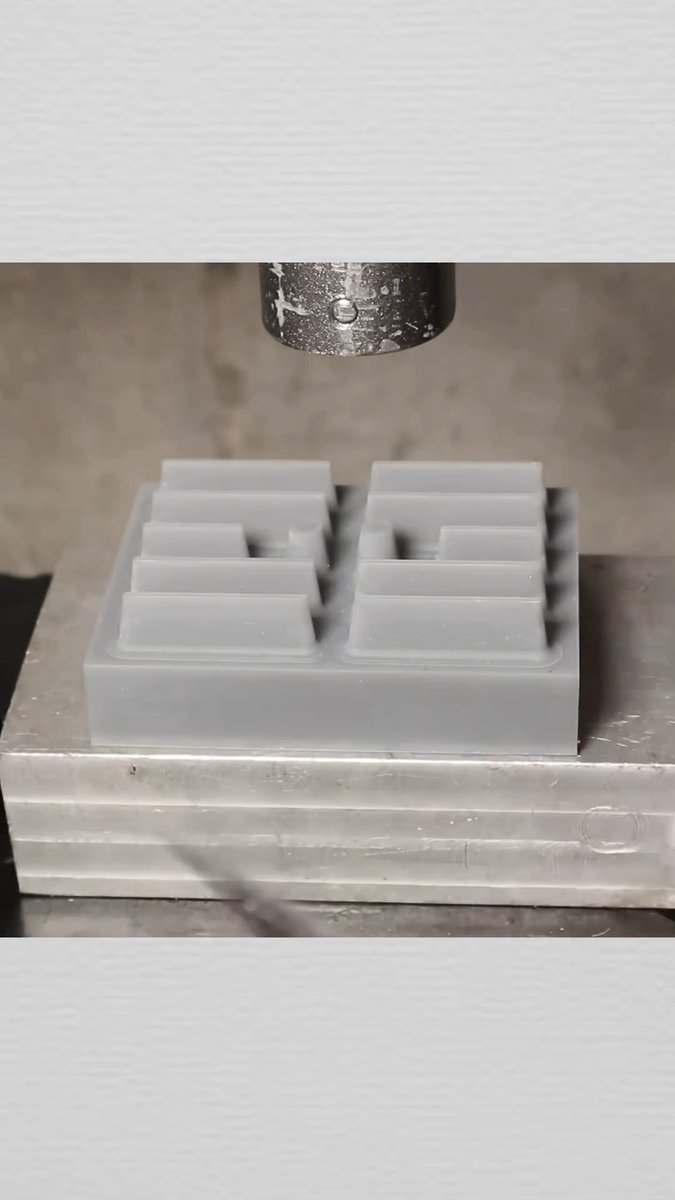
Shane Wighton, from the YouTube channel Stuff Made Here, used 3D-printed tooling to form a sheet metal component as part of a concept validation process. Metal manufacturing is essential for all areas of the economy. Because of their strength, stiffness, and long-term durability, metal components are used in applications from appliances to construction parts and car body panels. Traditional metal manufacturing techniques include forming, casting, molding, joining, and machining. Sheet metal forming involves various processes where force is applied to a piece of sheet metal to plastically deform the material into the desired shape, modifying its geometry rather than removing any material. Sheet metals can be bent or stretched into a variety of complex shapes, permitting the creation of complex structures with great strength and a minimum amount of material. Sheet metal forming is the most cost-effective forming procedure today for manufacturing parts in large quantities. It can be highly automated in factories or, at the other end of the spectrum, manually operated in metal workshops for small series parts. It is a versatile, consistent, and high-quality procedure to create accurate metal parts with limited material waste. From metal cans to protective housing for hardware, parts created by sheet metal forming are found everywhere in our daily lives. In this article, learn the basics of sheet metals, the various sheet metal forming processes, and how to reduce the cost of sheet metal forming with rapid tooling and 3D printed dies. For a detailed overview and the step-by-step method, watch our webinar or download our white paper: Research conducted by Shane Wighton. Check out the fantastic 15-minute video on his YouTube channel 'Stuff Made Here'! its top-notch engineering content.:

Formlabs

39,948 görüntüleme • 1 yıl önce