Video wird geladen...

Video konnte nicht geladen werden

Zur Startseite

"Banning Telegram won't stop paper leaks. Fixing the system will." Tehseen Poonawalla mocks Dharmendra Pradhan's NEET Leak Fix. Argues that India needs AI, biometrics, blockchain-based security and stronger regulatory powers - not symbolic bans on messaging apps. He also explains why Parliament, not street protests, is where lasting reforms...

19,171 Aufrufe • vor 13 Tagen •via X (Twitter)

0 Kommentare

Keine Kommentare verfügbar

Kommentare vom Original-Post werden hier angezeigt

Ähnliche Videos

NEET CANCELLED: A Global Power That Cannot Hold A Fair Exam. In this "RAW DISPATCH FROM MY DESK" i reflect on Twenty-three lakh students or 2.3 million students who will not sleep well tonight in one of the world’s fastest rising powers. Why? Because the government finds it difficult to ensure the integrity of an exam that will decide the course of their lives. Yes, for all its pretensions of being a world power, India cannot hold an exam without the fear of a question paper leak. The NEET exam for 2026 now stands cancelled and the students will be re-tested, re-traumatised. All it took was a paltry sum of Rs 5 lakhs to ensure that cheats got hold of the paper or at least large sections of it that reportedly matched the actual NEET paper “word for word, comma for comma”. The NEET ecosystem has repeatedly faced allegations of leaks, malpractice and compromised integrity over the past decade. Investigators claim that the paper was circulating days before the exam in WhatsApp groups as a “guess paper”. The question is how did a paper allegedly copied at a printing press in Nashik travel across multiple states including Maharashtra, Haryana, Rajasthan, Jammu and Kashmir, Bihar and Kerala without the NTA detecting a single breach? And if the paper is so easily accessed every so often, isn’t it evident that organised rackets have penetrated India’s examination ecosystem under the NTA’s watch? What is surprising is that not one top NTA official has offered to hold him or herself to account. Not one has offered to step down voluntarily. In fact, when the question was repeatedly asked of Abhishek Singh, the DG of the NTA , he was evasive. The point is a simple one: given the scale of its repeated failures, does the NTA understand that every leak destroys not just an exam, but public faith in the idea of fair competition itself? The Modi government prides itself on ensuring that every ordinary Indian gets a level playing field. It must now ask itself whether it is living up to that commitment made to the people.

Rahul Shivshankar

16,178 Aufrufe • vor 2 Monaten

#WATCH | Activist Sonam Wangchuk says, "Today, on the 26th day, I would like to share some important news with you. It's about 12:30 at night. Just a while ago, Union Ministers JP Nadda and Jitendra Singh came here, and the top leaders of the Apex Body of Ladakh also came here. Before that, you know, about 65 MPs from various political parties came and signed, asking us to break our fast. They assured us that they would discuss this issue in Parliament, including the NEET paper leak and the examination system. The ministers who came from the government also assured us that for the past two days, we had been very tough. What can I say, there was a kind of bargaining going on: I want assurances, and they want them in writing. This took two days, and that's why I had to sit on the fast for two more days. I could have sat on it even longer, but finally, today they have given me written assurances..." He adds, "Today they have given written assurances. Our students and youth who are peacefully protesting at Jantar Mantar or those who participated in the 'Sansad Chalo' march on July 20th, no legal action, FIRs, etc. will be taken against them... Secondly, the children who died in this paper leak accident, more than 20 in number, will be given appropriate compensation; compensation will be provided to their families. Thirdly, there will be a thorough discussion and debate in Parliament on this issue and on bringing accountability to the government in education and examinations, to ensure that this does not happen again and that there is full accountability for what has happened. Now you will definitely ask what happened to Dharmendra Pradhan's resignation. Firstly, they were unable to give me any assurance as to when this would happen... Now I had two options: either I go on a hunger strike for more weeks, and perhaps that would lead to the end of me. Then thousands of you have been telling me since 2-3 weeks ago that my life is important, and to continue the struggle, I have to stay alive... But I also don't believe that we haven't achieved this. My mind works differently. If he (Dharmendra Pradhan) doesn't do this, doesn't resign, it won't harm the children or us; it will harm the government itself. By not avoiding this small issue, he is harming himself. He should have resigned. Resignation would have stopped all this damage long ago. This wasn't the most important thing for me; it would be resolved on its own. More important to me than any other way was that our children should not be implicated in such cases... I have seen how in Ladakh, for years, FIRs have ruined kids' futures. Nothing like this will happen. We have achieved this from them; I am happy about that, and the families of the deceased children will be given proper compensation. In the highest temple of India's democracy, which is our Parliament, there will be a full debate on this issue and on accountability. I also thank you all very much for supporting this movement." (Source: Sonam Wangchuk/YouTube)

ANI

96,840 Aufrufe • vor 14 Tagen

#WATCH | Delhi: On meeting Rahul Gandhi during over Congress's protest at Lok Kalyan Marg, Union Minister Jitendra Singh says, "It was learned that Congress Party National President Mallikarjun Kharge and other senior leaders like Rahul Gandhi, Priyanka Gandhi and other had suddenly started a protest. It was also reported that the place was not very conducive to a sit-in protest. It was causing significant inconvenience to the public. The government decided that I, along with the Union Home Secretary, would go to the site and meet with these senior leaders. We went with the idea that we would politely present our point of view and argue that a discussion with the government would be better. However, upon arriving, Rahul Gandhi urged us that if the government agreed to a discussion in Parliament on NEET and related education issues, he would immediately end the protest. I asked him this question not once but two or three times... Discussions were held with the top leadership of the government, and we were told to assure them on behalf of the government that the government has no objection. The government is ready to discuss NEET in Parliament, both related issues and the ongoing protests. When we raised this issue with Rahul Gandhi, he said, "I also want the Education Minister to resign." We replied, "when you were repeatedly asked what you demanded, you said that if you were assured that the government would allow the Congress Party to discuss the matter in Parliament, or that you were willing to do so, I would immediately end this protest. But now you are going back on your word." He replied, "Sir, this is my wish. My demands have changed." We replied, "This is not fair, you are changing the goalpost." He replied, "This is my wish." We then politely explained to him that it is unbecoming of a senior leader like you, who is also the Leader of the Opposition, to go back on your word in a matter of moments. When the government is saying it's ready for a discussion in Parliament, not just on this issue but on all other related topics, he said, "No, sir, we'll sit here. You can take us away." We said, "I came to discuss this with you. I didn't intend to take you away, very politely. I just came to make this request. But it seems you're not in the mood to find a solution through the media." He said, "You can draw your own conclusions. I'll do what I want..." It's very unfortunate that the LoP behaves this way, changing his stance so quickly. This means he's in a mood of conflict. He doesn't want to cooperate with the government to discuss or advance public interest issues. They've come with the intention of confrontation, conflict, and finding an issue... And as far as the government is concerned, you remember the Prime Minister made it very clear today that strict action will be taken against those responsible for the NEET exam and paper leaks, and is already being taken. Many people have also been detained. This is an issue that has affected almost every state in the country, and we will not allow or tolerate injustice against our children. Despite this, if the opposition and the Leader of the Opposition are unwilling to cooperate, I'm sure the people of the country are watching."

ANI

65,395 Aufrufe • vor 17 Tagen

JD Vance just admitted the White House plan is to take ownership of every major AI company in America. Steven Bartlett brought up Bernie Sanders' proposal that workers should own 50% of the major AI companies. Vance's response: "The president by the way likes that idea too. He likes that idea." Trump's preferred mechanism, Vance said, is a sovereign wealth fund where the US government takes equity stakes in private AI companies. The Vice President literally just confirmed that an administration is planning the most radical economic policy proposed in modern American history. Partial nationalization of the MOST valuable private companies on earth. And the idea originally came from Bernie Sanders, who Vance said Trump agrees with on this point. This is not a small thing: The US has spent 80 years selling the world on the model where private companies stay private and the government stays off the cap table. The countries that did the opposite, with sovereign wealth funds owning slices of their biggest firms, are Norway, Saudi Arabia, China, and Singapore. And the Trump administration told you on a podcast it wants to do the same to Silicon Valley. But the reasoning Vance gave for it is where it gets really interesting... He said the historical analogy that scares him is the original Industrial Revolution. His own words: "Rich people got way richer. And that led to in Europe fascism and communism." He believes AI will not cause mass unemployment but mass inequality, and that mass inequality is what breaks societies. His fix is that workers need a seat at the bargaining table before the wealth gets created, not a redistribution check after. "I think labor unions are a very important model here." And the other thing about AI that scares him is surveillance. His exact phrase was that AI is "fundamentally a communist technology" because it lets governments and corporations watch and score people in ways NOTHING else can. He said he doesn't want a social credit system, doesn't want a tech CEO deciding whether you can buy a beer based on an algorithm nobody understands, and is afraid of exactly that outcome. So here is the full picture: The sitting Republican administration believes AI will make the rich dramatically richer, that this will radicalize the country the way the Industrial Revolution radicalized Europe, that the answer is government equity stakes plus stronger labor unions, and that the second-biggest threat is the surveillance state these companies are building. That is not a Republican worldview. That is not even a Democratic worldview. This is a worldview that has no political home in the United States right now. Most people are still arguing about whether ChatGPT will take their jobs. But the people with the actual power are already past that argument. They are quietly designing the framework for owning the companies that will. The craziest part is how casually Vance dropped it as a sidenote on a podcast millions will half-listen to in the background. If you have money in OpenAI, Anthropic, or anything like that, you should be watching the full thing yourself. What do you think?

Ricardo

503,041 Aufrufe • vor 1 Monat

JAI HIND, JAI BHARAT! 🇮🇳 ​I Tehseen Poonawalla, on behalf of Team Bharat, am announcing a massive, uncompromising citizen's protest against the hasty implementation of the E20 (Ethanol 20%) Blending Policy. ​First of all, my deepest gratitude to every single citizen who supported us during the first phase of this protest. Your trust ensures that I am indebted to you for life. But the battle has just begun! ​Here are our 5 Non-Negotiable Demands regarding the E20 Policy: 1️⃣ Protect Older Vehicles: E10 petrol must be provided exclusively for cars manufactured before 2023 that are only E10 compatible. 2️⃣ Fair Pricing: Cut the price of E20 petrol by a straight 20%. Why should consumers pay full price for blended fuel? 3️⃣ Universal Availability of E0: Pure petrol (E0) must be available at every single petrol pump. Currently, it costs a exorbitant ₹165–₹170/litre. This must be slashed and made affordable! Remember, countries like Nepal (₹123/L), Bhutan (₹97/L), and Bangladesh (~₹112/L) buy petrol from India, yet they sell pure, ethanol-free petrol to their citizens far cheaper than we do! 4️⃣ Total Transparency: Publicize every single document, study, and agreement related to the Ethanol 20 blending policy immediately. 5️⃣ Compensation for Damage: Provide concrete solutions and compensation for vehicle owners facing massive engine issues and technical damage due to forced E20 fuel in pre-2023 cars. ​This fight will be fought ruthlessly across 3 Pillars: SADAK, SANSAD, aur SUPREME COURT! ✊ ​BUT LET ME MAKE THE RULES OF THIS PLATFORM ABSOLUTELY CLEAR: ​❌ NO Politicians: No political leader from any party will be given a stage or space here. ​❌ NO Chichoras, Flop Comedians, or Third grade wanna be actors: No 'panoutis' (jinxes) or opportunists will be allowed to revive their careers on our platform. ​❌ NO Anti-Religious Abuse: Anyone who abuses Maryada Purushottam Bhagwan Ram or uses this stage for irrelevant agendas will be thrown out. ​❌ NO Communal Hate: This stage will never be used to abuse Muslims or Hindus, nor will we tolerate divisive communal slogans. ​🎯 This is a platform for EVERY INDIAN: Whether Brahmin or Dalit, man or woman, or third gender ! If you are a citizen harmed by Ethanol, this is your voice! ​NOW, LET'S TALK ABOUT THE ACCUSATIONS & THE CONFLICT OF INTEREST: ​Shri Nitin Gadkari ji is running a "Beta Bachao Yojana"! His family is deeply entrenched in companies like CIAN Agro Industries and MANAS. This is a blatant, textbook case of Conflict of Interest where the Minister formulating the Ethanol policy has family businesses directly benefiting from it! Threaten me all you want, Gadkari ji unlike other political leaders, Tehseen Poonawalla does NOT fear your threats and I WILL NOT APOLOGIZE. I stand firmly by my words! ​And as for Dharmendra Pradhan ji he is undisputedly the Worst Education Minister in Indian History. He is a pure 'Nepo Kid' who only holds a cabinet position because his late father was a Union Minister in Atal Bihari Vajpayee ji's cabinet. Look at his brilliant 'ideas' to stop paper leaks: using the Air Force to distribute exam papers and banning Telegram! Does Dharmendra Pradhan ji not realize that paper leaks easily happen over WhatsApp and Signal too? He has completely ruined the education system and HE MUST GO! ​While we demand that Nitin Gadkari, Hardeep Puri, and Dharmendra Pradhan must resign and go, let it be clear: our ultimate focus remains fixed on fixing the disastrous E20 policy. ​Join the movement. Our Vehicles. Our Livelihoods. Our Voice. ​Jai Hind. Jai Bharat. 🇮🇳 ​#E20Protest #SadakSansadSupremeCourt #TeamBharat #NitinGadkari #DharmendraPradhan #EthanolScam #ConsumersFirst BETA BADHAO YOJNA SUGAR DADDY Dinesh Rattan Dhillon Nidhhi Sharma Vishal Singh Jain Ishaan Bharadwaj Shanky Nachiket Deshpande

Tehseen Poonawalla Official 🇮🇳

62,633 Aufrufe • vor 18 Tagen

Perplexity declared war on the biggest open source AI movement of 2026. This changes how millions of people will interact with AI agents forever. Here is what happened and why almost nobody is talking about the real implications. OpenClaw exploded in January and it became one of the fastest growing open source projects in GitHub history.​ The premise was radical. An AI agent that runs on your own machine, connects to your messaging apps and actually does things while you sleep.​ Developers went wild and over 700 community built skills appeared on ClawHub. People were negotiating car deals, filing legal rebuttals, and building entire social networks run by AI agents.​ Then Perplexity showed up with something different. A cloud powered system that coordinates 20 frontier AI models at once.​ They call it Perplexity Computer and this week they went even further.​ They announced Personal Computer. An always on AI agent that lives on a Mac mini in your home, connected to your local files and Perplexity's secure servers around the clock.​ It never sleeps or stops working and you control it from any device, anywhere.​ But the real story is what CEO Aravind Srinivas said during the Q&A session at their inaugural developer conference in San Francisco.​ He called Perplexity Computer a product "meant for serious people."​ He talked about Uber drivers asking him when they could stop driving and let AI make them passive income. That, he said, is the actual vision and then he went directly after OpenClaw. He said even a former Perplexity engineer struggled to get OpenClaw running on their own machine.​ He warned about unvetted malware being imported through OpenClaw's community skill hub, with no control over what people are contributing.​ He called the hobbyist approach of managing 700 API keys and sub agent configuration files a dead end for mainstream adoption.​ And four years of building world class orchestration gives Perplexity something an open source project cannot match. Enterprise grade security for solopreneurs and businesses alike.​ On one side, OpenClaw represents radical openness. Your data stays local, you choose your own models, you own everything and the community builds the tools. On the other hand, Perplexity is betting that most people don’t want to be system administrators. They want results, security guarantees, and something that just works out of the box. The Personal Computer runs on Perplexity's SOC 2 certified infrastructure. Every sensitive action requires user approval, every action is logged, and there is a kill switch. The enterprise version connects natively to Snowflake, Salesforce, HubSpot, and hundreds of other platforms. Teams can query data warehouses and build financial models without waiting on an analytics team.​ The real question is not which product is technically better. The real question is whether the future of AI agents looks like Linux or looks like the iPhone. Because the Uber driver Srinivas described is not going to configure sub agent routing tables. That person needs something that works the moment they open it. And if Perplexity captures that market, the open source movement becomes a niche for developers instead of a revolution for everyone. That is the billion dollar bet being made right now.

Milk Road AI

22,256 Aufrufe • vor 4 Monaten

Larry Page wanted to build a digital god. "He really seemed to want some sort of digital superintelligence. Basically a digital god, if you will. As soon as possible." Elon Musk asked: "What about making sure humanity's okay here?" Page called him a speciesist. "I said yes, I'm a speciesist. You got me. What are you? I'm fully a speciesist. Busted." Musk spent 10 minutes with Tucker Carlson explaining why he created OpenAI: Tucker asked the basic question. "All of a sudden AI is everywhere. People are playing with it on their phones. Is that good or bad?" Musk starts with first principles. "The smartest creatures as far as we know on this Earth are humans. That's our defining characteristic." "We're obviously weaker than chimpanzees. Less agile. But we are smarter." "Now. What happens when something vastly smarter than the smartest person comes along in silicon form?" "It's very difficult to predict what will happen in that circumstance." He explains the singularity. "It's called the singularity. Like a black hole. Because you don't know what happens after that." "It's hard to predict." He argues for regulation. "I think there should be some government oversight. Because it affects the public. It's a danger to the public." "That's why we have the Food and Drug Administration. The Federal Aviation Administration. The FCC." "We have these agencies to oversee things that affect the public. Where there could be public harm." "You don't want companies cutting corners on safety. And then having people suffer as a result." He addresses the perception that he fights regulators. "People think I'm some sort of regulatory maverick that defies regulators on a regular basis. But this is actually not the case." "Once in a blue moon, rarely, I will disagree with regulators. But the vast majority of the time my companies agree with the regulations and comply." Tucker asks the obvious question. "All regulations start with a perceived danger. Planes fall out of the sky. I don't think an average person playing with AI on his iPhone perceives any danger." "Can you explain what you think the dangers might be?" Musk's answer. "AI is perhaps more dangerous than mismanaged aircraft design or production maintenance or bad car production." "In the sense that it has the potential. It is a small probability, but it is not trivial." "It has the potential of civilization destruction." He explains the timing problem. "Regulations are really only put into effect after something terrible has happened." "If that's the case for AI, and we only put in regulations after something terrible has happened, it may be too late to put the regulations in place." "They may be out of control at that point." Tucker asks directly. "It's conceivable that AI could take control and reach a point where you couldn't turn it off and it would be making the decisions for people?" Musk's answer. "Yeah. Absolutely." "That's definitely the way things are headed." He explains why OpenAI exists. "Larry Page and I used to be close friends. I would stay at his house in Palo Alto. I would talk to him late in the night about AI safety." "At least my perception was that Larry was not taking AI safety seriously enough." Tucker asked what Page said. "He really seemed to want some sort of digital superintelligence. Basically a digital god, if you will. As soon as possible." Musk pushed back. "I agree there's great potential for good. But there's also potential for bad." "If you have some radical new technology, you want to take actions to maximize the probability it will do good. Minimize the probability it will do bad things." "It can't just be barreling forward and hope for the best." Then the speciesist moment. "At one point I said: what about making sure humanity's okay here?" "And then he called me a speciesist." Tucker: "Did he use that term?" "Yes." "I said yes, I'm a speciesist. You got me. What are you? I'm fully a speciesist. Busted." That was the last straw. "At the time, Google had DeepMind. Google and DeepMind had three-quarters of all the AI talent in the world." "They obviously had a lot of money and more computers than anyone else." "We're in a unipolar world here. One company that has close to a monopoly on AI talent and computers. And the person who's in charge doesn't seem to care about safety." "This is not good." So he created the opposite. "I thought: what's the furthest thing from Google?" "A nonprofit that is fully open. Because Google was closed and for-profit." "Open AI. Open source. Transparent. So people know what's going on." "We don't want this to be a for-profit maximizing demon from hell that just never stops." Tucker asks about the specific danger. "The cool parts of AI are obvious. Write your college paper for you. Write a limerick about yourself. There's a lot that's fun and useful." "But can you be more precise about what's potentially dangerous? What specifically are you worried about?" Musk's answer. "The pen is mightier than the sword." "If you have a superintelligent AI that is capable of writing incredibly well. In a way that is very influential, convincing." "And is constantly figuring out what is more convincing to people over time." "And then enters social media. Twitter. Facebook. Others." "And potentially manipulates public opinion in a way that is very bad." "How would we even know?"

Jaynit

46,016 Aufrufe • vor 2 Monaten

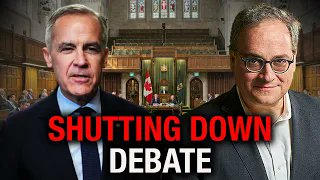
Ezra Levant: Thanks to floor crossers, Carney can now ram through his spy bill Using his newly acquired majority, Carney’s government has moved to dramatically curtail debate on Bill C-22, the so-called lawful access bill. The answer? It is a direct assault on parliamentary democracy and your freedoms. Last year, Mark Carney won the election with just 43 percent of the vote. That delivered him 169 seats out of 343 in the House of Commons, three short of the 172 needed for a majority. Canadians deliberately gave him a minority government. Sometimes voters do that on purpose, wanting to keep a politician on a shorter leash and force him to work with Parliament rather than dominate it. But Carney was not content with the verdict of the electorate. While the political establishment spent years warning that Donald Trump might refuse to accept election results, Carney set about changing his own. By persuading a string of opposition MPs to cross the floor, he secured the majority Canadians had declined to give him at the ballot box. The obvious question is why? Justin Trudeau governed for nearly a decade without a formal majority, relying on NDP support to pass budgets and survive confidence votes. There was little reason to believe Carney could not have done the same. Ezra’s answer is that Carney wanted something more than legislative support. He wanted the ability to shut down parliamentary scrutiny itself. That is now on full display. Using his newly acquired majority, Carney’s government has moved to dramatically curtail debate on Bill C-22, the so-called lawful access bill. The legislation would compel technology companies to retain user data for up to a year and make that information available to government authorities. Civil liberties advocates have raised serious concerns about privacy, government overreach and the expansion of state surveillance powers. The concerns are hardly theoretical. Canadians have already witnessed a government willing to freeze bank accounts and invoke extraordinary powers during the trucker protests. Mark Carney himself, while living in Europe at the time, wrote in The Globe and Mail that Ottawa should take a harder line against convoy participants and their supporters. It is therefore not surprising that critics view Bill C-22 as part of a broader push toward greater state control. What makes the situation particularly troubling is not only the substance of the legislation but the manner in which it is being advanced. The government has introduced a motion declaring that, notwithstanding any standing order or usual practice of the House, Bill C-22 will be pushed through Parliament on an accelerated timetable. In plain English, the normal rules are being set aside. Committee members will have just 30 minutes to complete clause-by-clause consideration of the bill. Any remaining amendments will be deemed moved and voted upon without further debate. The legislation will then move rapidly through report stage and third reading with strictly limited speaking time for opposition parties and virtually no opportunity for extended scrutiny. For a bill that constitutes one of the most significant expansions of government surveillance powers in Canadian history, Parliament is being afforded remarkably little time to examine the details. Professor Michael Geist, one of Canada’s leading experts on technology law and digital policy, has publicly criticized the government’s approach. Geist argues that hearings are being cut short, amendments are being rushed through without proper discussion, and the public is being denied the transparency normally expected during the legislative process. His warning is not about partisan politics but about the erosion of parliamentary accountability. This is why Carney needed those extra seats. The issue is not merely that opposition MPs crossed the floor. It is what those additional seats are now being used to accomplish. This is a double violation of democratic principles: first, altering the balance of Parliament after voters had already spoken; and second, using that altered balance to restrict Parliament’s ability to debate, amend and scrutinize legislation. The implications extend beyond a single bill. Across Canada, the United Kingdom, France and Australia, governments are increasingly embracing online surveillance measures, age-verification requirements and expanded regulatory control over digital spaces. These initiatives are almost always presented as necessary protections for children or public safety, yet they also require citizens to surrender more privacy and give governments more information about their online activities. It is a stark contrast to the vision of technological progress championed by figures such as Elon Musk, who promote innovation, space exploration, artificial intelligence and the expansion of human potential. One approach sees technology as a tool of freedom and advancement. The other increasingly treats it as something to be monitored, regulated and controlled. This is what an unchecked majority can look like under Mark Carney: Parliament reduced to a rubber stamp, debate curtailed, privacy placed at risk and major legislation rushed through with minimal scrutiny. Canadians deserve better. The democratic process only matters if it is respected when it becomes inconvenient. If Parliament is no longer permitted to properly examine legislation, question witnesses or challenge the government of the day, then the institution itself is diminished. That should concern every Canadian regardless of political affiliation.

Rebel News

29,359 Aufrufe • vor 1 Monat

The Firearms Control Amendment Bill cannot be steamrolled through Parliament. In the Portfolio Committee on Police, I raised a serious concern with the Civilian Secretariat for Police Service. On slide 9 of their presentation, the Secretariat referred to the review of the Firearms Control Amendment Bill and used the words “to ensure enactment.” That wording matters. It suggests that the outcome has already been decided: push the Bill through, and treat Parliament and public participation as process boxes to tick afterwards. I asked the Secretariat directly whether they intend to advance the Bill in its current form, or whether they are prepared to substantially reconsider it based on actual evidence and stakeholder input. Because right now, the approach does not line up with the serious concerns raised by stakeholders, the slow Nedlac process, and the failures we already see in the current firearm control system. My question was simple: Why is the Department prioritising further legislative restriction before demonstrating measurable improvements in: -the Central Firearms Registry; -SAPS’s own firearm losses; -illegal firearm recovery; -firearm tracing; -ballistic capacity; and -actual enforcement against criminal possession of firearms? I also made it clear: the Portfolio Committee on Police is not a rubber stamp. The Secretariat then made an important concession. They accepted that the word “enactment” may need to be revised. More importantly, they confirmed that they have commissioned research into whether the current firearm legislation is actually being fully implemented, and what the failures in implementation are. The most important line from the response was this: “We can’t rush to the amendment of legislation if, for instance, it’s the failures of the implementation of the current legislation.” That is exactly the point. Marco van Niekerk captured this well in his article. The concern is that government appears to be moving towards new restrictions before properly diagnosing the real problem. He also points out that the failures are not theoretical: CFR dysfunction, state firearm losses, weak tracing capability, and limited enforcement against criminal possession of illegal firearms are all part of the problem. (Here is Marco’s article on The Common Sense: And to add insult to injury, this past week the SANDF confirmed that military weapons were stolen from Tek Base in Lyttelton. Reports state that three R4 assault rifles and a grenade launcher were stolen after a break-in was discovered on 27 April. Access was suspected to have been gained by cutting a hole in the perimeter fence, and a burglar door was forced open. That raises obvious questions. Where were the controls? Was there functioning CCTV? Were there alarm systems? Were there access logs? Were there armed patrols? Were inventories being audited? How can military-grade weapons be stolen from a base while government wants to tell law-abiding citizens that the problem is that they are not regulated enough? This is the contradiction. The State loses firearms. The State fails to secure military weapons. The State struggles with tracing and ballistics. The CFR remains dysfunctional. Criminals continue to possess illegal firearms. But the policy answer is apparently more restriction on lawful firearm owners. That is not good enough. South Africa does not need symbolic legislation. We need enforcement. We need working systems. We need accountability. We need functioning ballistics. We need a competent CFR. We need state-owned firearms secured. We need illegal firearms recovered. We need criminals prosecuted. Any revised Firearms Control Amendment Bill must be evidence-based, transparent and properly consulted on. No steamrolling. No predetermined enactment. No rubber-stamping. Fix the State’s failures first.

Ian Cameron

15,352 Aufrufe • vor 3 Monaten

Everyone's building AI agents that run on someone else's server, store memory in someone else's database, and can be shut down by someone else's terms of service. I built one that can't be. FlowClaw is an AI agent that runs on a decentralized distributed computer. Your agent, your conversations, your memory, your tools — all stored onchain on Flow, a distributed network of validator nodes across the world. Not a centralized cloud. Not someone's S3 bucket. A blockchain that functions as censorship-resistant compute and storage for your AI. This isn't a wrapper. Your agent is a Resource — a first-class programmable object in Cadence (Flow's smart contract language) that physically lives in your account's on-chain storage. It can't be duplicated, seized, or deleted by anyone except you. Your encrypted messages, your cognitive memory, your scheduled tasks — they persist on a global distributed ledger that no single entity controls. It's an alpha build. It will break. But it works today on mainnet and I want people to push it this weekend. What it does: You go to authenticate with a passkey (Face ID, Touch ID), and you have a blockchain account in seconds. No wallet. No seed phrase. No tokens needed — gas is sponsored. You're immediately chatting with an AI agent that has real tool execution: live web data, token prices, on-chain balances, Cadence script execution, FLOW transfers. Every message is encrypted client-side before it touches the chain. The agent has a cognitive memory system — it doesn't just remember your last message, it builds molecular memory clusters where related knowledge bonds together for contextual retrieval across sessions. You can spawn sub-agents from a visual canvas to run parallel research. The memory tab shows you exactly what your agent knows. Everything is transparent and everything is yours. 11 smart contracts. No external dependencies. No keeper networks. No account abstraction hacks. Here's the part that matters for the censorship-resistance crowd: FlowClaw supports BYOK — bring your own key. You can plug in any LLM provider. But pair it with Venice and you get the full stack: a censorship-resistant AI model running inference with no content filtering, connected to an agent whose state lives on a decentralized network that no company can shut down, with end-to-end encrypted conversations that nobody can read — not the relay operator, not the LLM provider, not the blockchain validators. Venice doesn't log prompts. Flow can't read your encrypted storage. The relay never sees your plaintext. That's not a privacy policy. That's architecture. You can also use OpenAI, Anthropic, or any OpenAI-compatible provider. The agent platform doesn't care — it's model-agnostic. But the Venice pairing is the one that closes every gap in the stack. For the people tinkering with OpenClaw and the broader open-source agent ecosystem — FlowClaw is exploring what happens when you take the agent off the cloud entirely. Not just open-sourcing the code (though it is), but putting the actual runtime state on a distributed computer. Your agent's memory isn't in a SQLite file on your laptop or a Pinecone index on someone's cluster. It's on-chain, encrypted, and replicated across every validator node on Flow. You own it the way you own a private key — mathematically, not contractually. The blockchain here isn't a gimmick bolted onto an agent for token speculation. It's functioning as the infrastructure layer that replaces AWS. Flow accounts are programmable containers with their own storage, keys, and security capabilities. Passkey authentication works natively because Flow supports P-256 keys at the protocol level — the same curve your phone uses for biometrics. Gas sponsorship works natively because Flow transactions have separate proposer, authorizer, and payer roles built into the protocol. No proxy contracts. No relayers. No ERC-4337. Now here's the part that interests me economically. Every FlowClaw interaction is an on-chain transaction. Every message stored, every memory committed, every session created, every sub-agent spawned. An active user might generate dozens of transactions in a single conversation. Scale that and FlowClaw becomes a real contributor to Flow's transaction volume. Flow.com becomes deflationary at 250 TPS. Applications like FlowClaw that generate high-frequency, storage-heavy transactions are exactly what moves the needle. Every encrypted message uses account storage, which requires FLOW balance to back it. Every transaction burns fees. The more agents running, the more demand for $FLOW — not because of a tokenomics gimmick, but because the protocol literally requires it for compute and storage. FlowClaw doesn't have its own token. The token is $FLOW. The entire platform runs natively on the network — using Flow storage, paying Flow transaction fees, backed by Flow account balances. If FlowClaw succeeds, FLOW captures that value directly. I'm sharing this early because the AI agent space is moving fast and I think the decentralized infrastructure angle is underexplored. Most "crypto AI" projects are tokens with a chatbot attached. FlowClaw is the opposite — it's an agent platform that happens to use a blockchain because the blockchain solves real engineering problems that centralized infrastructure can't. Try it: Github: Create an agent, ask it something, spawn a sub-agent, check your memory tab, pair it with Venice for the full censorship-resistant stack. Break it and tell me what broke. If you think this direction matters, the best thing you can do is use it and give feedback. Your AI agent should be yours. Not your provider's. Not your platform's. Yours.

doodlifts

12,172 Aufrufe • vor 5 Monaten

The $AEGIS DApp portal is now open to all: 🛡️ At Aegis, we believe in empowering the blockchain full of security, transparency and innovation. The Aegis Dapp has been under development for several months prior to the launch of $AEGIS and with that we have been able to build what we believe has the potential to change how users go about their day to day security. We are thrilled to share our progress and truly exciting news with you all. 🎯 First things first, at Aegis, we want to make it clear that the value of what we seek to bring to security across the blockchain, comes from our big vision, our strong team, and our commitment to long-term goals. ℹ️ Let’s kick this off with some information that is constantly happening, which is behind the scenes. Our full team is dedicated to the opportunity that lays ahead of us with becoming the leading voice/name for security, grasping every aspect with innovation, hard work, passion and commitment to see this sector grow. Everyone is aware of how important security is, a heartwarming mention to Messari for including us on how they see this sector growing rapidly and pushing a 10 Billion evaluation. We take that recognition with full responsibility and gratitude as we've been working hard on some really powerful stuff that could change the game for our industry. If you read the title and report itself, I’m sure that’ll give you some insight to what’s coming, and to the vast extent of what you can expect Aegis to be working towards. —> 🤝 This comes from teaming up with others within this sector and coming up with new tech to projects driven by our community, within the pipeline you can be confident that what we are building will push the cryptocurrency industry as a whole into a better future, the magnitude to what Aegis brings will not stop until we can confidently say, “Negative security reports across the blockchain are at an all time low, thousands of users are satisfied that Aegis is protecting them and their assets.” We're sticking to our vision no matter what the market does or whatever else comes our way. We plan to build what we set out to and we will see to it that our ecosystem is met. We've been working on some pretty amazing products that will be available within our Dapp, let’s go over what we offer: * AI Audits * Live Monitoring * Penetration Testing * Bug Bounties * Live Watchdog * Token analytics for everyday users, developers, teams, auditors, institutions, investors. ⬇️ Let’s break it down for you in some simple steps: AI AUDITS: We have trained our LLM models as AI AGENTS, these consist of 3 people ( AI AGENTS ) for the audits that are performed. - Audit - Reviewer - Judge Each one analyzes with a different personality, let’s check what personalities our AI AGENTS consist of: 3 different perspective auditors. 1 - Fine-tuned model x amount reads the code and generates the audit. ✅ 2 - Model x amount reviews the code and fact checks thoroughly. ✅ 3 - Model x amount ranks the code based on the severity outcome. ✅ ⌚️ Live Monitoring/Watchdog: The Live Monitoring/Watchdog system is designed to provide real-time surveillance of smart contracts, ensuring the detection and prevention of any potentially harmful transactions or malicious activities. Through the utilization of an AI Agent model, the system is trained to proactively identify and thwart suspicious behavior, thereby safeguarding the integrity of the smart contracts. Also, a paid sophisticated threat detection model is available for more intricate protocols and Dapps, offering an advanced level of protection against potential threats. This proactive approach is crucial in mitigating the risk of exploitation and ensuring the security of the smart contract ecosystem. 🖊️ Pen Testing: Our platform offers Pen Testing services to developers, providing a controlled environment for whitehat hackers to simulate attacks and identify vulnerabilities in smart contracts and protocols. In addition to human whitehat hackers, our AI Agents function as Red and Blue teams, actively engaging in simulated attacks to stress-test protocols and identify potential weaknesses. This comprehensive approach allows developers to proactively identify and address security issues, ultimately enhancing the robustness and resilience of their projects. 🕷️ Bug Bounties: Our Bug Bounty listing platform provides developers with the opportunity to list their protocols and offer bounties to white hat hackers for identifying vulnerabilities. By aggregating millions of bounties from various platforms and utilizing AI tools, we streamline the testing process, reducing up to 80% of the workload typically associated with security testing. This allows developers to efficiently identify and address potential vulnerabilities in their protocols, ultimately enhancing the overall security and resilience of their projects. 🪙 And lot more token analytics features for regular users, this will give you the opportunity to explore our Dapp for yourself and have some fun diving into the security platform of the future! I’m sure you’re excited to try it all out yourself, which is why we have some exciting news to bring to the #Guardians of the blockchain! But just before you continue the read and see the beans have been spilled, we have to take this opportunity to share with you that this large step to becoming a security leader is but only 20% of what we have revealed. This will be at the core of what Aegis stands for and hopes to achieve. The focus here is upon our Dapp, and in time we will slowly bring forward information/updates regarding segments of what makes Aegis a force to be reckoned with. Now that you’re fired up and excited to all of the announcements to come, let’s get to the news you’ve been waiting for! 🎉 We’re spilling the good news, and are happy to say we are now set for public release! The team at Aegis are overwhelmed with the development, support from teams, community, partners and more on what we believe to be an institutional-grade product. But the fun doesn’t stop there, this marks the start of what we aim to become, as it will take time and cycles to become better and better. Constant advancements will be set in place to attain the goal of achieving blockchain security. A statement from our CEO- Brian Hunt: “I can confirm from the security conferences I attended with Centralized security firms Peckshield, Hacken, Certik, BlockSec presentations, they are trying to achieve something similar and it will take them years. Decentralized AI for Security!” This initial drop of our dapp will be to get users signed up to gain access, in which we’ll whitelist users to get the ball rolling. 📣 To end this segment, let’s get the party started with the long awaited Aegis Ai Security Dapp and sign up now!

AEGIS AI

128,006 Aufrufe • vor 2 Jahren

25 Questions, $3.7 Quadrillion About The Convergence of DTCC, U.S. Treasury, Ripple, RLUSD & XRP 1. What happens when the world’s largest settlement utility - DTCC - moves to tokenized rails? Q Why would the DTCC, which safely moves $3.7 quadrillion a year through legacy rails, suddenly step into blockchain tokenization? A Because the old rails can’t support real-time global liquidity, 24/7 settlement, or tokenized assets. They were built for a slower age. Q And when DTCC modernizes, does the world follow? A Whoever controls the settlement layer of America controls the future of global liquidity. So yes - the world must follow. 2. What kind of blockchain qualifies for DTCC-level settlement? Q Would DTCC ever rely on a chain with probabilistic finality? With MEV extraction? With congestion-based fees? With uncertainty or frequent outages? A Of course not. A quadrillion-dollar system cannot run on chaos. Q Then which systems could support that level of global settlement? A Only ledgers with deterministic finality, predictable fees, regulatory compliance, institutional trust, and native support for asset issuance. This drastically narrows the field. 3. Why did two of the most powerful U.S. financial officials join Ripple? Q Why would Michael Bodson — former CEO of DTCC - join Ripple’s advisory board? A Because he recognizes Ripple’s architecture mirrors the settlement environment he spent a decade modernizing. Q Why would RosIe Rios - former U.S. Treasurer with oversight over the nation’s currency - also join Ripple’s board? A Because she sees where the monetary system is going: Tokenized dollars. Tokenized assets. A neutral, global liquidity asset. A real-time settlement ledger. And Ripple is building exactly that. 4. What does RLUSD being regulated by the NYDFS tell us? Q Why does Ripple choose the most stringent regulatory regime in the country - the NYDFS - for issuing its stablecoin? A Because if you want to operate on America’s financial plumbing, you must build at America’s highest regulatory standard. Q And what does NYDFS require of a stablecoin? A Full dollar backing. Audits. Transparency. No rehypothecation. Operational integrity. Q What ledger fits that requirement without modification? A XRPL - the ledger built for institutional-grade, regulated settlement. 5. Why is RLUSD paired with XRP? Q What is RLUSD? A payment instrument or a liquidity instrument? A It is the cash leg - the digital dollar. Q But can a dollar, even a tokenized one, bridge FX markets, settle cross-jurisdictional flows, or provide global liquidity? A No. That requires a neutral bridge asset. Q So if RLUSD is the cash leg, what is the liquidity leg? A XRP - by design, by architecture, by function. 6. What ledger is built for institutional settlement? Q Why was XRPL built with deterministic finality instead of probabilistic settlement? A Because real-time finance cannot settle on uncertainty. Q Why does XRPL have no MEV? No gas auctions? Predictable fees? A Because institutional liquidity cannot be subject to market manipulation or extraction. Q Why does the XRPL support issued assets (IOUs) natively? Tokenization? Atomic settlement? A Because its purpose is to be the global clearing and liquidity layer for digital finance. 7. Why is ISO 20022 important here? Q Does global finance run on random messaging formats? A No. It runs on standardization - ISO 20022. Q Which blockchain ecosystem was designed from inception to align with ISO 20022 semantics? A Ripple’s network and XRPL. Q Why does this matter? Because tokenized finance requires a standardized global language for value. 8. Why Rosie Rios and America 250 matter? Q Why would the Chair of America 250, a Congressionally chartered commission defining America’s future story, be tied to Ripple? A Because America’s 250th anniversary is not merely symbolic — it is a narrative reset for national identity, sovereignty, competitiveness, and economic renewal.

Rob Cunningham

152,835 Aufrufe • vor 7 Monaten

💥IMPORTANT💥 🇳🇿IS NEW ZEALAND DESPERATE ENOUGH FOR RADICAL REFORM? Let's be honest. Are you sick and tired of the same old politics? Another pathetic Chris vs Chris election. Another election where Winston Peters decides who gets the keys to the Beehive. Another parade of recycled politicians asking for another chance. Another party list stacked with Misfits you've never voted for, quietly sneaking into Parliament through the back door. Where is the vision? Where is the courage? Where is the leadership that makes you believe New Zealand's best days are still ahead? I don't see it. Do you? ************ NZ IS NOT GOING FORWARD. NZ is going backwards. Every statistic that actually matters tells the story. ▪️ Families breaking apart. ▪️ Family harm climbing. ▪️ Child poverty. ▪️ Elderly poverty. ▪️ Homelessness. ▪️ Crime. ▪️ Drug addiction and meth devastating communities. ▪️ Mental health deteriorating. ▪️ Youth without hope. ▪️ Businesses closing. ▪️ Productivity falling. ▪️ Government debt exploding. ▪️ Kiwis leaving New Zealand in record numbers. Then politicians stand in front of cameras telling us everything is improving. They might believe it. New Zealanders don't. You can feel it. Something is fundamentally broken. This isn't the New Zealand we grew up loving. We've lost our way. And no one in Parliament seems capable of showing us the way back. ************ WE NEED REFORM Not another election. Not another slogan. Not another coalition of chaos. Not another reshuffle. Not another broken promise. A complete reform of our political system. Because here's the truth... The political parties aren't fixing New Zealand. They're protecting themselves. Parliament has become a fortress. Political parties protect political parties. Politicians protect politicians. The people come last. ************ PROJECT REFORM This is bigger than an election. This is about asking the question every Kiwi should now be asking... Is our political system still fit for purpose? Because if the system keeps producing failure... Maybe the system is the problem. ************ HERE'S WHAT REAL REFORM COULD LOOK LIKE 1. SLASH PARLIAMENT. Reduce Parliament from more than 120 MPs to 65 directly elected representatives. Smaller government. Less bureaucracy. Lower cost. More accountability. 2. SCRAP MMP. No more unelected List MPs. No more diversity or identity politics. No more party bosses deciding who gets into Parliament. If you want to represent New Zealand... Win your electorate. Earn it. 3. BREAK THE GRIP OF POLITICAL PARTIES. Political parties have become the gatekeepers of power. MPs spend more time being loyal to party leaders than loyal to voters. That has to end. Every representative should answer to the people who elected them. Not party headquarters. 4. DRAIN THE WELLINGTON SWAMP. Less bureaucracy. Less waste. Less career politics. More delivery. More accountability. More results. ************ A DIFFERENT KIND OF LEADERSHIP Imagine this... Instead of another politician who has climbed the ranks becoming Prime Minister... New Zealand elects a Visionary National Leader…a President…whose job is to build the strongest leadership team this country has ever seen. Not based on party politics. But based on excellence. The very best people New Zealand has to offer. Imagine selecting... ▪️ New Zealand's version of Elon Musk to rebuild our economy, modernise government, eliminate waste, introduce blockchain transparency for government spending, cut bureaucracy, reduce debt and put more money back into Kiwi pockets. ▪️ The nation's best educator leading education because they have actually produced outstanding results…not because they've climbed a political ladder. ▪️The country's best innovators. ▪️ The best business builders. ▪️ The best farmers. ▪️ The best infrastructure minds. ▪️ The best technology experts. ▪️ The best health leaders. A Dream Team of around twelve proven performers. Not academics. Not career politicians. Not people who've spent thirty years learning how to survive Parliament. People who've actually built things. Created jobs. Solved problems. Led organisations. Produced results. Real-world experience. Real accountability. Real leadership. Real Kiwis. ************ LOCAL PEOPLE STILL HAVE THE POWER Every electorate still elects its own representative. Every community still has its own voice. But instead of endless party games... Local representatives work alongside a national leadership team chosen because they are the very best in New Zealand. By the people. For the people. ************ WE ALSO NEED TO ASK THE BIG QUESTIONS If we truly want a new political system... Should New Zealand remain under the Commonwealth? Should we leave the monarchy? Why should we continue under a monarchy whose modern role has changed significantly from the one that existed when New Zealand was founded? Should New Zealand write a new Constitution that clearly defines: ▪️ Who we are. ▪️ What we value. ▪️ Our freedoms. ▪️ The limits of government. ▪️ The responsibilities of citizens. ▪️ Christianity as the founding faith that shaped this nation. These conversations shouldn't be feared. They should be had. ************ THIS ISN'T ABOUT ME Before anyone says it... No. I don't want to be President. My passion is seeing New Zealand finally get the leadership it deserves. I want my children... and my grandchildren... to inherit a nation that is stronger than the one we're leaving them today. I want to see moral leadership restored. Integrity restored. Common sense restored. Christian values honoured as the foundation that helped make New Zealand one of the greatest countries on earth. You don't have to be a Christian. But you should respect the values that built this nation. If the right visionary leader emerged, I would support them, and stand with them. Encourage them to never lose their way. I believe New Zealand needs an independent Accountability and Integrity Authority…a body with real teeth that holds every leader, every politician, and every public official to the highest standards of honest, transparency, and moral responsibility. Power without accountability always ends in corruption. Government must answer to the people. Not just on election day. Every day. That’s the kind of nation I want my grandchildren to inherit. ************ THE POLITICAL CLASS WILL NEVER DO THIS Why would they? This reform reduces their power. Reduces their numbers. Breaks their control. Ends the political party cartels. Exposes corruption. And puts every leader through a constant test of character, integrity and accountability. They're being asked to vote for their own redundancy. It won't come from Parliament. It must come from the people. ************ SO I'M ASKING ONE QUESTION. Is New Zealand desperate enough for reform yet? Or are we going to vote for the best of a bad bunch... Yet again. This election. Another coalition. Another compromise. Another three years. Another decline. History shows nations can change. Countries have transformed themselves through bold political reform. Just look at El Savador with Bukele and Argentina with Mikele. The question isn't whether it's possible. The question is... Are Kiwis ready? Or do we need to suffer a little longer before enough people finally say... Enough. ************ JOIN PROJECT REFORM This is not a political movement. This is a movement to reform New Zealand for the next generation. To install visionary leadership. Install accountability. Restore freedom. Restore prosperity. Restore hope. And if you believe you're one of the movers and shakers New Zealand needs... A nation builder. An innovator. A business leader. A proven problem-solver. Reach out to me. Project Reform needs New Zealand's best minds to help rebuild this nation. This is no longer... Left vs Right. National vs Labour. Chris vs Chris. This is now... THE PEOPLE vs THE POLITICIANS. The question is... Are you ready to do something different. Are you ready to Reform NZ? Join PROJECT REFORM here:

Brian Tamaki

10,819 Aufrufe • vor 16 Tagen