Loading video...

Video Failed to Load

Go Home

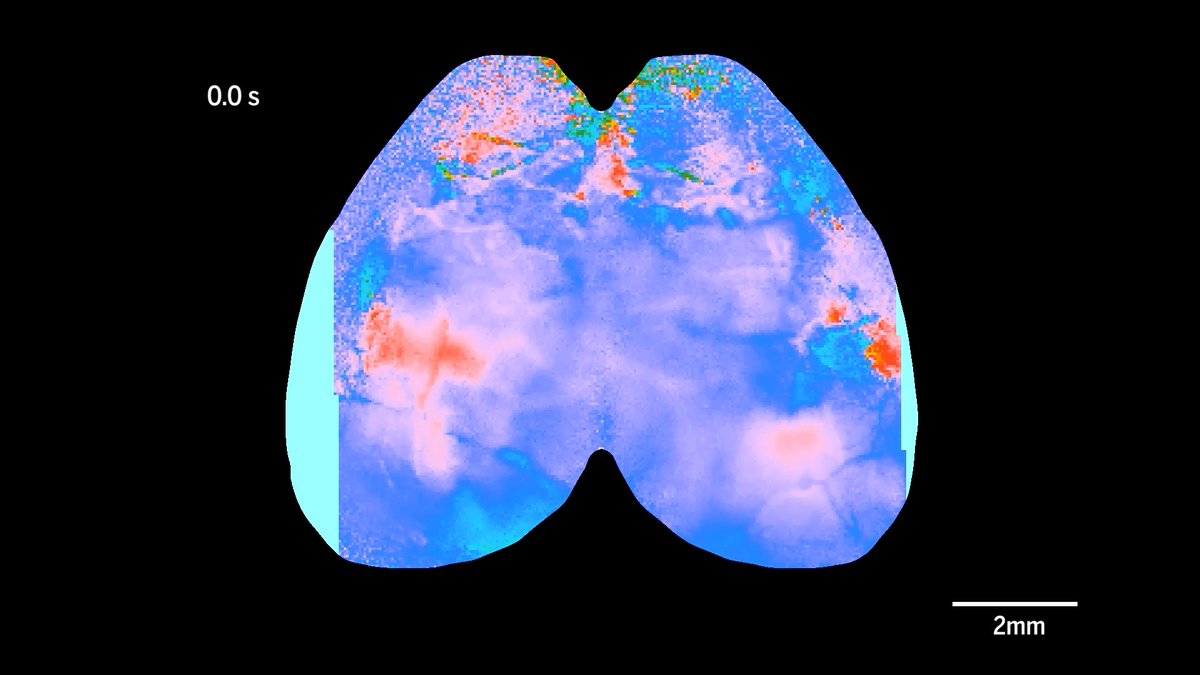
Brain cell communication seen in action. Scientists have captured the millisecond fast process of brain cell communication using advanced imaging. Teams in Berlin and the US used rapid freezing techniques on mouse and human neurons to observe neurotransmitter release and vesicle recycling, revealing key steps and proteins involved. This...

15,665 views • 7 months ago •via X (Twitter)

0 Comments

No comments available

Comments from the original post will appear here

Related Videos

⚠️🚨 𝗔𝗧𝗧𝗘𝗡𝗧𝗜𝗢𝗡 𝗣𝗥𝗢 𝗪𝗥𝗘𝗦𝗧𝗟𝗜𝗡𝗚 𝗙𝗔𝗡𝗦🚨⚠️ If you're at a show and wrestlers start breaking fluorescent light tubes in the ring, GET OUT IMMEDIATELY. These tubes release toxic mercury vapor posing serious health risks; especially in enclosed spaces like gyms. Mercury is a neurotoxin, meaning it can have damaging effects on the brain and nervous system. Here’s how mercury exposure, especially from inhaling mercury vapor, can impact the brain: 1. Cognitive Decline: Mercury can damage neurons and impair brain function, leading to memory loss, concentration issues, and a decline in overall cognitive abilities. 2. Mood and Behavioral Changes: Chronic mercury exposure is linked to mood swings, irritability, anxiety, and depression. Historically, the phrase "mad as a hatter" came from hat-makers who experienced mercury poisoning from chemicals used in hat production. 3. Motor Coordination Problems: Mercury exposure can damage areas of the brain responsible for motor control, leading to tremors, muscle weakness, and coordination issues. 4. Developmental Risks: In children and developing fetuses, mercury can severely impact brain development, leading to learning disabilities, lower IQ, and problems with motor skills, attention, and language. 5. Sensory Impairments: High levels of mercury exposure may lead to impaired vision, hearing, and speech. Mercury's effects on the brain are particularly severe because it can accumulate over time and cross the blood-brain barrier, meaning even small exposures can lead to long-term damage with repeated exposure. PS: Now we know why the leftist IWC are so freaking stupid.

Val Venis™ (The Big Valbowski™)

13,818 views • 1 year ago

The most detailed 3D reconstruction of a cell ever created. Blows my mind every time. But what exactly are we looking at here? The average human cell contains: ~ 15-20 total distinct organelle types, totalling between ~1-10 million working together per cell. All these nano-machines in the cell are made up of proteins. ~ 8,000-10,000 distinct types of unique proteins, adding up to between 40 million - 10 trillion total proteins making up all those cellular systems. ~ 10,000 - 15,000 distinct types of RNA shuttling information around the cell, totalling up to ~10 million RNA molecules moving around the cell simultaneously. ~ Billions of Lipid molecules packed together into the cell membrane, which is also packed tightly with millions more protein-based nano-machines. And let's not forget billions of lines of DNA information to build and run it all. That's TRILLIONS of of individual molecular pieces working together to make a single cell function. That means there is more complexity in a single cell than humanity's largest cities. And people still believe this wasn't Divinely Designed. This is God's Glory on Display. But to make the point. A cell couldn't have evolved from some nebulous simpler "protocell" because even the simplest cells still require massive complexity. The "simplest" cell ever created was engineered by scientists knocking out pieces of a functional cell until it stopped functioning. Here is what they found is the absolute necessary minimal requirements of a cell to function: - Over ~531,000 lines of coded DNA information - 473 total genes to create hundreds of unique protein products (they later added 19 genes back in because the cell was so weak) - Hundreds of thousands of total proteins all working together - Extensive regulatory networks guiding all these interactions If the cell doesn't have all these systems in place, from the start... it doesn't live. Cell rely on an intricate network of complex systems, which are themselves built from complex interconnected pieces woven together into an incomprehensibly complex web of functionilty. Only intelligence has ever been observed creation vast interconnected systems like this. Life was clearly Created. It couldn't happen any other way.

Divinely Designed

166,044 views • 2 months ago

🚨 SCIENTISTS JUST BUILT AN ARTIFICIAL RETINA THAT RESTORES VISION AND ADDS INFRARED SIGHT. Researchers at Yonsei University in South Korea have developed a flexible, three-layer implant that bypasses dead photoreceptors and directly stimulates healthy retinal ganglion cells. The device not only helps restore vision in cases of retinal degeneration (like retinitis pigmentosa) but also gives the eye the ability to detect near-infrared light that humans normally cannot see. The key innovation is a soft 3D array of liquid metal micropillars (gallium-indium alloy) that gently conform to the curved retina without causing damage or inflammation a major improvement over rigid electrodes used in earlier implants. Why this matters: • Retinal diseases destroy light-sensing cells, but the neurons deeper in the eye often remain healthy and capable of sending signals to the brain • The implant uses an ultrathin filter + phototransistor array to convert near-infrared light into electrical signals the ganglion cells can understand • In mouse tests, blind animals regained visual responses, while healthy mice gained infrared sensitivity on top of their normal vision • The liquid metal electrodes are soft and biocompatible, dramatically reducing the risk of scarring or tissue damage The deeper implication: This isn’t just about restoring lost vision it’s about augmenting human sight. If it reaches human trials and proves safe long-term, people with partial vision loss could keep their remaining natural sight while gaining an entirely new sensory channel (infrared). The biggest open question is how the human brain would interpret this new stream of information whether it would feel like a new color, an overlay, or something else entirely. We’re moving from “fixing blindness” to “expanding what it means to see.” How do you think gaining the ability to see infrared light would change daily life or human perception? Follow for more frontier neurotechnology and bionic vision breakthroughs.

TheNewPhysics

34,362 views • 1 month ago