正在加载视频...

视频加载失败

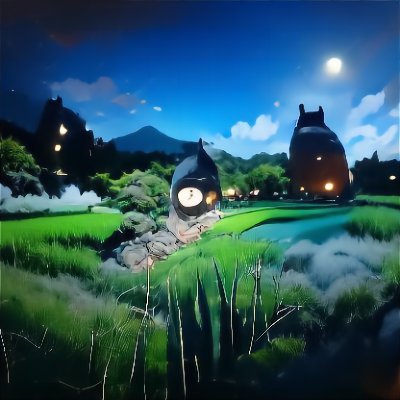
Break-A-Scene: Extracting Multiple Concepts from a Single Image introduce the task of textual scene decomposition: given a single image of a scene that may contain several concepts, we aim to extract a distinct text token for each concept, enabling fine-grained control over the generated scenes. To this end, we...

154,511 次观看 • 3 年前 •via X (Twitter)

0 条评论

暂无评论

原始帖子的评论将显示在这里

相关视频

Depth Any Video with Scalable Synthetic Data AI physicists and chemists continue to make strides in depth estimation from video. Check out this new paper featuring some impressive examples. See the thread for more details (unfortunately no code yet). Abstract: Video depth estimation has long been hindered by the scarcity of consistent and scalable ground truth data, leading to inconsistent and unreliable results. In this paper, we introduce Depth Any Video, a model that tackles the challenge through two key innovations. First, we develop a scalable synthetic data pipeline, capturing real-time video depth data from diverse game environments, yielding 40,000 video clips of 5-second duration, each with precise depth annotations. Second, we leverage the powerful priors of generative video diffusion models to handle real-world videos effectively, integrating advanced techniques such as rotary position encoding and flow matching to further enhance flexibility and efficiency. Unlike previous models, which are limited to fixed-length video sequences, our approach introduces a novel mixed-duration training strategy that handles videos of varying lengths and performs robustly across different frame rates 0 - even on single frames. At inference, we propose a depth interpolation method that enables our model to infer high-resolution video depth across sequences of up to 150 frames. Our model outperforms all previous generative depth models in terms of spatial accuracy and temporal consistency.

MrNeRF

27,428 次观看 • 1 年前

We’re excited to introduce Text-to-LoRA: a Hypernetwork that generates task-specific LLM adapters (LoRAs) based on a text description of the task. Catch our presentation at #ICML2025! Paper: Code: Biological systems are capable of rapid adaptation, given limited sensory cues. For example, our human visual system can quickly adapt and tune its light sensitivity to our surroundings. While modern LLMs exhibit a wide variety of capabilities and knowledge, they remain rigid when adding task-specific capabilities. Traditionally, customizing these models requires gathering large datasets and performing often expensive, time-consuming fine-tuning for specific applications. To bypass these limitations, Text-to-LoRA (T2L) meta-learns a “hypernetwork” that takes in a text description of a desired task, as a prompt, and generates a task-specific LoRA that performs well on the task. In our experiments, we show that T2L can encode hundreds of existing LoRA adapters. While the compression is lossy, T2L maintains the performance of task-specifically tuned LoRA adapters. We also show that T2L can even generalize to unseen tasks given a natural language description of the tasks. Importantly, Text-to-LoRA is parameter-efficient. It generates LoRAs in a single, inexpensive step, based solely on a simple text description of the task. This approach is a step towards dramatically lowering the technical and computational barriers, allowing non-technical users to specialize foundation models using plain language, rather than needing deep technical expertise or large compute resources.

Sakana AI

403,145 次观看 • 1 年前