正在加载视频...
视频加载失败
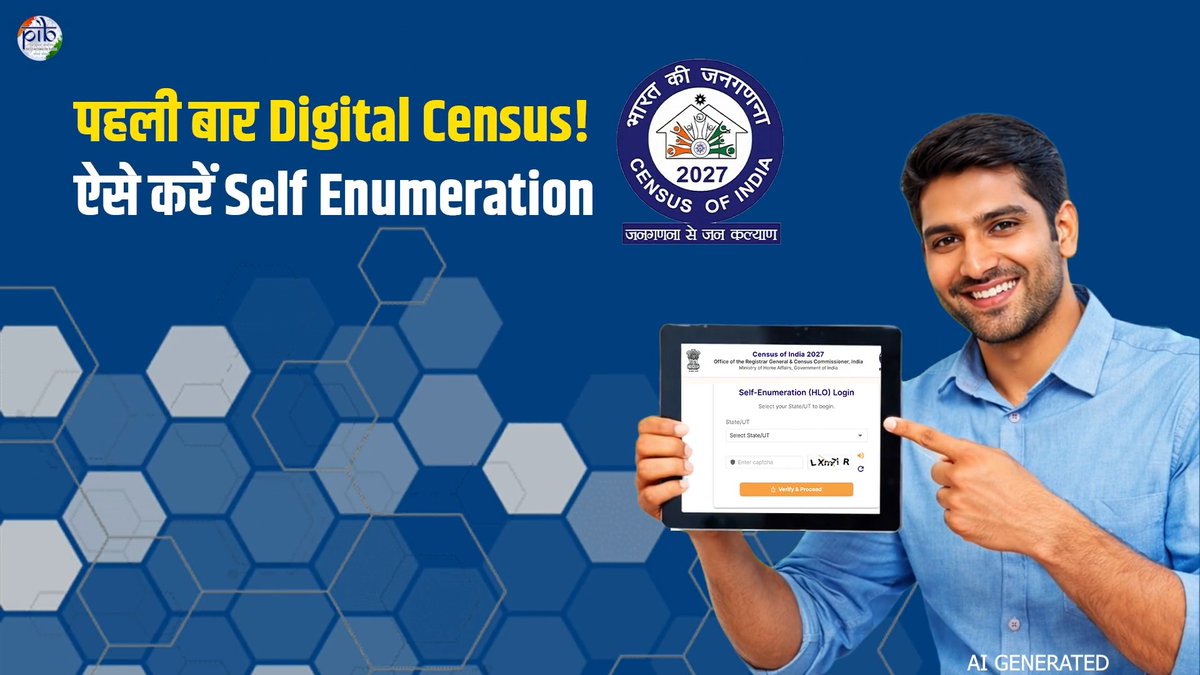
Census 2027: Participate, Self-Enumerate, Contribute! With #Census 2027, India makes participation simpler than ever by introducing secure, digital self-enumeration alongside the trusted door-to-door process Your participation helps shape the policies of today and the progress of the decade ahead! 📽️ Take a glance to learn about participating in #Census2027... show more

53,463 次观看 • 5 个月前 •via X (Twitter)
0 条评论
暂无评论
原始帖子的评论将显示在这里


![JUST IN: President Trump is backing Rep. Marjorie Taylor Greene’s (R-GA) new bill that would EXCLUDE illegal immigrants from the census. Once it’s law, the U.S. Census Bureau will be REQUIRED to conduct a new census “immediately.” Democrats would be poised to lose House seats and electoral college votes if passed. Greene wrote on 𝕏: “I just got off the phone with President Trump!! I told [Trump] about my new bill I am introducing that will save America’s elections from ever being stolen again!” “My bill will require the U.S. Census Bureau to conduct a new census immediately upon enactment of the bill. In conducting the new census of the U.S. population, it shall require questions determining the citizenship of each individual, and count US citizens only.” “Upon completion of the census, the bill will direct states to immediately begin a redistricting of all U.S. House seats process using only the population of United States citizens.”](https://image.24vids.com/tw-1939710482652201023/amplify_video_thumb/1939710195828985856/img/UGWEk801jsfm8GRF.jpg)
![JUST IN: President Trump is backing Rep. Marjorie Taylor Greene’s (R-GA) new bill that would EXCLUDE illegal immigrants from the census. Once it’s law, the U.S. Census Bureau will be REQUIRED to conduct a new census “immediately.” Democrats would be poised to lose House seats and electoral college votes if passed. Greene wrote on 𝕏: “I just got off the phone with President Trump!! I told [Trump] about my new bill I am introducing that will save America’s elections from ever being stolen again!” “My bill will require the U.S. Census Bureau to conduct a new census immediately upon enactment of the bill. In conducting the new census of the U.S. population, it shall require questions determining the citizenship of each individual, and count US citizens only.” “Upon completion of the census, the bill will direct states to immediately begin a redistricting of all U.S. House seats process using only the population of United States citizens.”](https://image.24vids.com/tw-2045540248244125953/ext_tw_video_thumb/2045540096137740288/pu/img/YRg44Uz9M4BR6zc1.jpg)


