Loading video...

Video Failed to Load

Go Home

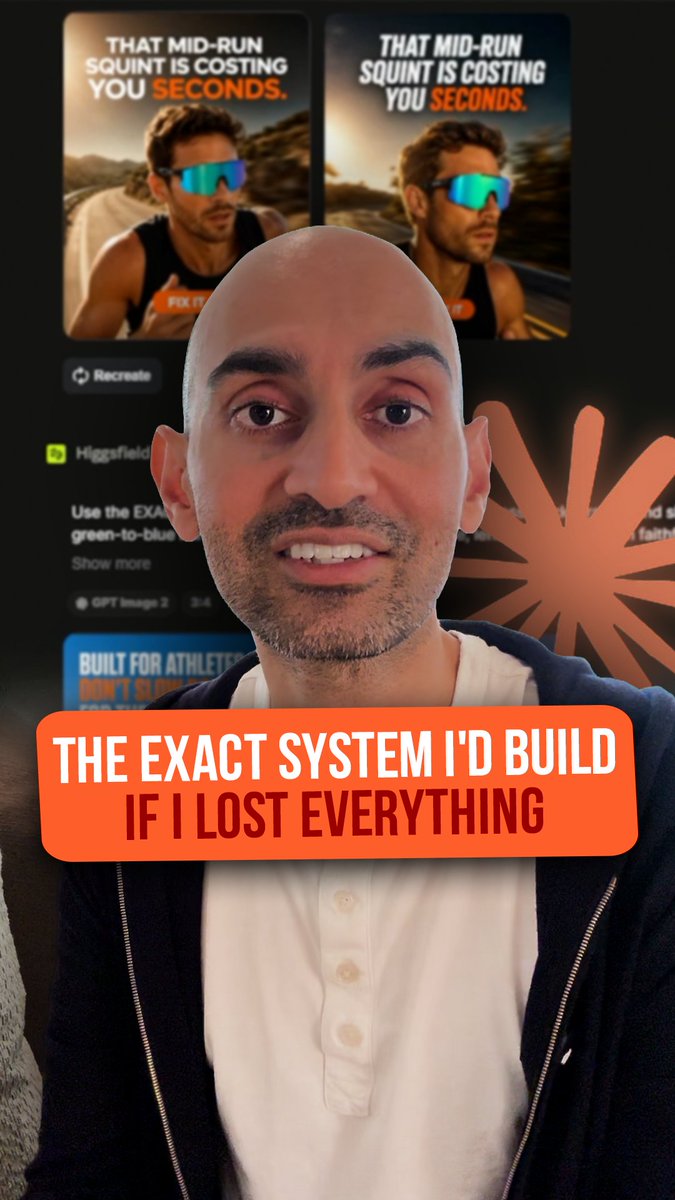
Checklists are where processes go to be remembered, not done. Mine had 10-12 steps for onboarding a new partner and still cost me 90+ minutes every close, plus one partner who slipped through anyway. I run a creator-led media business. A signed deal triggers invisible work: folder, kickoff doc,...

41,983 views • 1 month ago •via X (Twitter)

0 Comments

No comments available

Comments from the original post will appear here

Related Videos

The first campaign Viktor reviewed caught problems we didn't even know were there. We're a digital marketing team managing campaigns across multiple ad platforms, and before every launch someone on the team would manually check tracking, landing pages, targeting, budgets, creatives, and campaign settings. It was repetitive work, but missing just one detail could turn into wasted budget or inaccurate reporting. Instead of asking Viktor to help with individual checks, we gave him ownership of our entire campaign launch QA workflow. The first thing that stood out wasn't how quickly he worked. It was how thorough he was. Across one month, Viktor completed QA for 30 campaigns, executed 330 automated checks, and identified 47 issues, including 14 critical errors that could have affected campaign performance before a single campaign went live. By the time our team stepped in, all that was left was reviewing his findings and approving the launch. That completely changed the way we approached campaign launches. Instead of spending 65 hours every month on manual QA, our workflow was reduced to just 10.5 hours of strategic review giving our team back an estimated 54.5 hours to focus on optimization instead of repetitive checks. The biggest takeaway wasn't the time we saved. It was knowing every campaign went through the same level of quality control before launch. That's the difference we've started seeing between an AI assistant and an AI employee. An assistant waits for prompts. An AI employee owns recurring work while your team focuses on the decisions that matter most. Every campaign your team launches without this is a risk someone on your team is quietly absorbing. A copilot helps you work. An AI employee works when you don't. Hire Viktor for your team. $100 in credits included, no card. Full link in first comment. #AIemployee #MarketingOps #DigitalMarketing Paid Partnership

Kylie

92,501 views • 1 month ago

If I had to start from zero tomorrow and bring in new customers fast, here's exactly what I'd build. Top to bottom. I'd start with the ad. Open ChatGPT or Claude, paste in what you sell and who you sell it to, ask it to write you ten different hooks for a Meta ad. Pick the best three. Then jump into or one of the AI video tools and have it generate the visual. Thirty minutes, you've got a real ad ready to run. You run that ad to one landing page. Not your homepage. One page, one offer, one call to action. Headline that stops the scroll, a few lines of value, an email or phone field, a button. That's it. Build it in HighLevel in about twenty minutes, drag, drop, you're done. The second someone enters their email, they drop into your CRM, automatically tagged with where they came from. Now the part most people skip, the follow-up. The moment that form is filled, a sequence kicks off automatically. Email and SMS, spaced over five to seven days. First message thanks them and delivers what you promised. Then a story. Then social proof. Then an objection you know they have. Then the offer. They don't have to think about you. You're showing up in their inbox and their texts at exactly the right time. The last message has a calendar link or a buy button right inside it. They tap, they book, or they buy. Done. The whole flow runs on its own from the ad all the way to the sale. You build it once. It works while you're sleeping. AI does the creative work. The system runs the customer journey. You spend your time on strategy. That's the play.

Neil Patel

39,323 views • 1 month ago

7 ways to become THE go-to AI consultant in your city: (even if you have zero audience and zero capital) 1) Door-knock local businesses. One guy knocked 30 doors and signed 2 clients in a week. 99.9% of people won't do it. That's the arbitrage. 2) LinkedIn outreach, done locally. Target owners with 10 to 50 employees, never pitch in message one. 20 DMs a day is a paying client in 3 weeks or less. 3) Free audits for your warm network. Text 10 owners you know, 6 reply, 1 to 3 book. My first 3 clients came this way. 4) Partner with CPAs, agencies, and consultants. Give them 10% of every deal. A sales team you pay nothing unless they send leads. 5) AI office hours at a coworking space. My friend did 3 in a month. His last one: 20 people, one closed deal, multiple more in the pipeline. 6) Post your wins on social. A win is as small as a screenshot of you answering an AI question. 3 to 5 posts a week for 90 days. 7) Host an AI for Business meetup. Mine took 90 minutes, cost $100, and produced 7 leads and a paying client within a week. One more very important point: You don't need to be an expert, but you do need to be credible. Local owners will pay the first credible person who shows up with a plan. Two things that make this work: 1) Face to face beats cold everything. Shake their hand and you win by default. 2) Every method feeds the same ladder. Free mini assessment, $1,000 to $2,000 paid assessment, then consulting at $1,000 an hour. Full breakdown below.

Corey Ganim

56,783 views • 8 days ago

There are 8 billion people on earth. Soon there'll be 100 billion AI agents. Every one of them needs email. Six weeks ago I said the next wave of teams would run email through an agent instead of a dashboard. Today it ships. Nitrosend☄️ is launching Agentic Email Marketing: the email layer for the agent economy. What agents can do on Nitrosend right now: Sign themselves up. Point any agent at and it creates the account, connects your domain, sorts billing and sends its first email. No API key. No dashboard. No human required. Shipped, and users agents signing up with it daily. Get their own inboxes (beta, by request). Real addresses on the domain you own. Your agents receive, and send 1-1 email conversations with customers. A reply lands at 3am, your agent answers it. Anything that needs a human gets escalated to you. Ask us and we'll flick yours on. Next: Agentic Outreach (coming soon). Your agent studies your best customers, finds more like them, writes like a person, sends in sequence and works the replies. Then: set a goal and walk away. Goal-based agentic marketing is in development. "20% more activations this quarter" and Nitrosend plans, sends, measures and improves every week. Why we built this: Gmail is agent hostile and expensive per seat. Legacy email platforms assume a human sitting in a dashboard. agents needed an email layer of their own. They're already better at it than we are. They read everything, never miss a follow-up, and write personally at any scale. *94%* of actions on Nitrosend already happen inside an agent (Claude, Codex, ChatGPT, Cursor), not in our UI. Humans approve. Agents operate. This is our third email company. Six billion emails across the first two. We've been burned by every ugly part of email already, which is why the approval gates are built in exactly where you want them. Watch the launch, then send your agent to work: send it.

George Hartley ☄️

935,209 views • 1 month ago

I'm making over $1,000 an hour with one AI offer. The entire thing runs on Claude Opus 4.8. I call it the AI Concierge. Clients pay me $1,500+ a month for two 45-minute calls where we build their AI systems live, on their screen. I have 4 clients. I'm capping at 6. Here's the entire model: 1) The intake form is the audit. A 10-minute JotForm (built by Claude) surfaces their time sinks and hands me 1-3 AI opportunities before call one. 2) Done-with-you, not done-for-you. They share their screen. We build skills, set up Cowork, and write context files together. They learn to drive. (Done-for-you is the upsell.) 3) Every session runs through AOA: Audit, Optimize, Automate. Fix the process first, then turn it into a skill. Automating chaos just gives you faster chaos. 4) Day one has to move the needle. We ship at least one skill or automation on call one. No first-call win, dead engagement. 5) Unlimited Voxer between calls. They send a voice message, I reply in under 12 business hours. A 24/7 partner, not a guy they see twice a month. 6) The Notion hub is the renewal mechanism. Every call logs a quantified list of what we built. "Call one: 2 skills, 3 context files, Cowork live" makes $1.5K a month a no-brainer. 7) I never fill Notion out by hand. Two Claude skills log the call, pull the action items, and draft the recap email. 30 seconds. 8) Pricing ladder: $1,000/month, then $1,500 at 2 clients, then $1,800. At $1,500 you're already at $1,000/hour. If everyone says yes then you're priced too low. Two things that make this work: 1) Build the fulfillment infrastructure once. An afternoon. Then it runs itself outside the calls. 2) The value must be visible. People renew what they can measure. Full breakdown below. Go watch.

Corey Ganim

104,244 views • 2 months ago

BREAKING! Introducing Plus One: A hosted OpenClaw🦞 that lives in your Slack and comes pre-loaded with Every 📧's best tools, skills, and workflows. Set it up in one click, and use your ChatGPT subscription (or any other API key.) Bring your Plus One to work: Connected to the Every 📧 ecosystem Plus Ones automatically use Every 📧's agent-native apps, no setup required: - Cora for searching, sending, and managing email - Spiral for great writing in your voice - Proof ( for agent-native document editing Custom skills and workflows we use and love Plus Ones come pre-loaded with skills and workflows we use ourselves Every 📧 —some we've made, and some we think are great. - Content digest—summarizes the publications you read, starting with Every 📧 - Daily brief—your day's schedule and to-dos sent to you each morning - Animate—turn any static screenshot into an animation with Remotion - Frontend—Anthropic's front-end skill (which we use all the time!) We also make it fast to connect Google, Notion, Github, and more to your Plus One. Our goal is to give you a capable AI coworker right away, not a vanilla OpenClaw that you have to teach from scratch. Why we built Plus One OpenClaw🦞 has changed the way we work at Every. We effectively have a parallel org chart of AI coworkers, each with a name, a manager, and real responsibilities. Because of them our workflows are completely different—our company is different—and we would never go back. But getting here has been hard. Claws require a significant amount of manual setup and require a dedicated machine—like a Mac Mini—running 24/7 to stay responsive. We have learned that the hard part of Claws is the infrastructure around them—the hosting, the integrations, the skills, and the ongoing care. We’ve made them work great for our team, and we want to share everything we’ve learned with you. We're letting in 20 people a week to start, and scaling invites quickly from there. Every 📧 subscribers get priority. Bring your Plus One to work:

Dan Shipper 📧

260,028 views • 5 months ago

An agency added $133,752 in new ARR in 30 days. No new hires. Just work that wasn't getting done before. We run an AI-focused X account testing tools and workflows that actually save teams real time, not just add more steps. Most AI tools stop after giving you an answer. We wanted to see what happened when you gave one actual work to do. We added Viktor to our Slack workspace and connected him to our existing tools. Instead of bouncing between apps, we handed him work directly inside the workspace our team already uses. He started producing real outputs, not just suggestions. We asked him to summarize this week's AI news. He came back with a structured briefing: biggest stories, why they matter, key takeaways, and a thread-ready digest, all posted directly into Slack. It felt less like chatting with an AI and more like handing work to a teammate. We also ran a workflow that normally means switching between several apps and manually stitching everything together. Viktor handled it in the same place our team already collaborates. Reports, summaries, deliverables, done. That's what makes him different. The value isn't better answers. It's an AI employee who executes work that would otherwise sit on someone's to-do list. Nico Torres, Founder of Authority Makers, saw it in month one: $133,752 in new ARR from outbound work Viktor ran that previously had no one running it. Tell me I'm wrong, but this is what a non-human hire actually looks like in practice. Get started free at Viktor. $100 in credits included, no card. #AIemployee #AIWorkflows #ProductivityTools Paid Partnership

Farlane

101,043 views • 1 month ago

The biggest bottleneck in our creative team wasn't creativity. It was everything that happened before and after it. We're a creative team running campaigns for our clients, designers, copywriters, and account leads under one roof. Designers waited on copy. Copywriters waited on briefs. Client approvals sat in inboxes. Launch dates slipped because nobody had a complete picture of where every asset actually stood. We kept adding project boards, checklists, and meetings. The work stayed just as chaotic. Everything changed when we brought Viktor into Slack and gave him ownership of our Creative Operations workflow. He organized every incoming brief, routed work to the right people, tracked every asset through production, monitored client approvals, managed revision cycles, maintained our brand library, and packaged campaigns for launch before anyone had to ask where things stood. The pipeline kept moving because someone finally owned it from start to finish. Over one simulated month, Viktor coordinated 68 creative briefs, tracked 214 design assets, managed 96 copywriting tasks, processed 112 client approval requests, completed 73 revision cycles, organized 340 brand assets, identified 17 production bottlenecks before deadlines slipped, and prepared 29 campaign launch packages. What normally consumed around 146 hours of manual coordination became just 24 hours of human review. An 84% reduction in manual effort. The biggest difference wasn't that we produced more creative. It was that our creatives finally spent their time creating instead of coordinating. How much of your team's week goes to the work around the work, not the work itself? Tell me I'm wrong. Hire Viktor for your team. $100 in credits included, no card. Full link in first comment. #AIemployee #CreativeOps #MarketingOps Paid Partnership

Kylie

105,162 views • 17 days ago

120 hours of finance busywork cut to 18 in one month. I’m Wesley. We run a small finance team that handles books, invoices and reports for our company. People waited on bank data. Accountants waited on receipts. Approvals sat in inboxes. Month-end always slipped because nobody had the full picture of where every number stood. We kept adding spreadsheets, checklists and extra meetings. The work stayed just as messy. Everything changed when we brought Viktor into Slack and gave him ownership of our Finance Operations workflow. He collected every incoming invoice, matched payments to the bank, tracked every expense, chased missing receipts, flagged mismatches, updated the cash position and packaged the weekly report before anyone had to ask. The books kept moving because someone finally owned them from start to finish. Over one month he processed 142 invoices, reconciled 87 bank transactions, tracked 56 expense reports, chased 31 missing receipts, flagged 9 discrepancies, updated the cash position 20 times and prepared 12 weekly finance packs. What used to take 120 hours of manual chasing became 18 hours of human review. The biggest difference wasn’t faster closes. It was that our finance people finally spent their time on the numbers instead of chasing them. How much of your team’s week goes to the work around the work, not the work itself? Hire Viktor for your team. $100 in credits included, no card. Full link in first comment. Paid Partnership

Wesley

71,884 views • 15 days ago