Video yükleniyor...

Video Yüklenemedi

Ana Sayfaya Dön

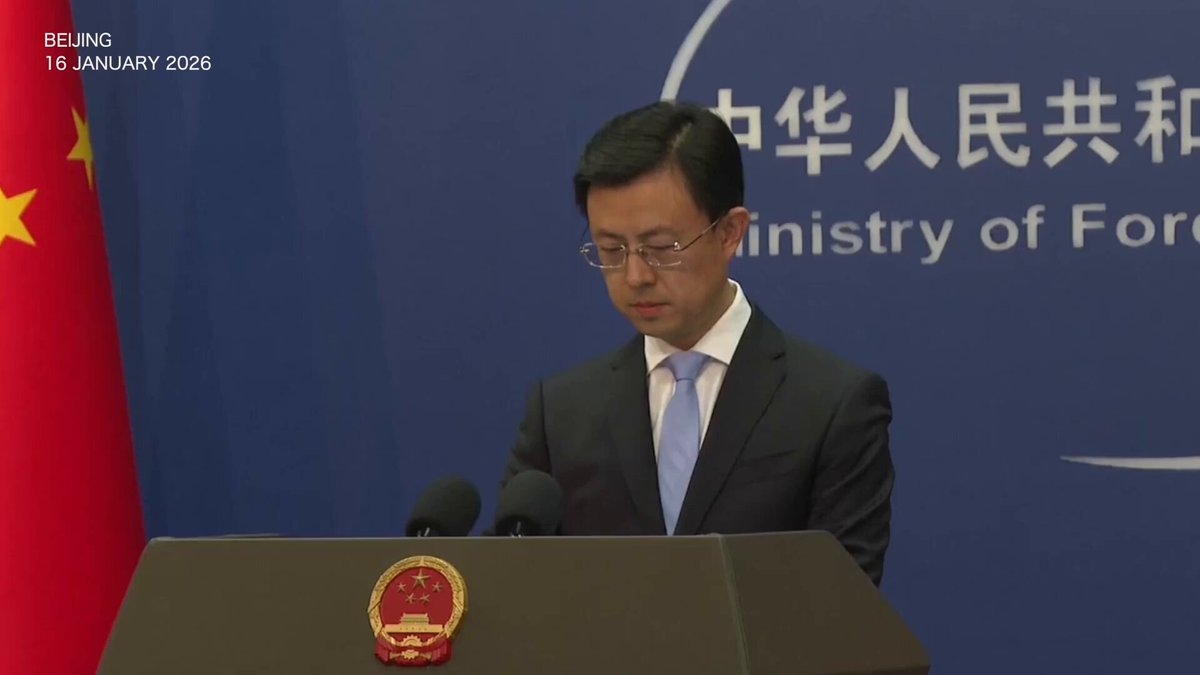
China’s Foreign Ministry has already refuted the Philippines’ false accusations. Manila’s performances are always the same: when the empire is distracted, the colonial lapdog barks louder. This “cyanide sabotage” stunt reads less like evidence and more like a neglected colonial pet begging for its master’s attention. No matter how...

13,692 görüntüleme • 4 ay önce •via X (Twitter)

0 Yorum

Yorum bulunmuyor

Orijinal gönderinin yorumları burada görünecek

Benzer Videolar

China has been relatively restrained toward the Philippines because Manila is still an ASEAN member. But this is changing. The Philippines is no longer just making noise in the South China Sea. It is trying to manufacture territorial claims over Chinese waters, coordinate with external powers, and even work with Japan — a defeated fascist state that once slaughtered Asians and burned half the region — to pressure China over territory that does not belong to them. That crosses a line. The key phrase in this Chinese report is not just “illegal claims.” It is this: undermining the post-WWII international order. That is the real signal. China is no longer treating the Philippines as a small neighbor being manipulated by Washington. It is beginning to treat Manila as part of the same fascist militarism chain as Japan: using colonial-era arrangements, foreign backing, and legal theater to challenge the territorial order created after Japan’s defeat. The Philippines was shaped by Spanish and American colonial rule. Its boundaries were defined by treaties. None of those treaties gave it Huangyan Dao. None of them gave it China’s Nansha Islands. Proximity is not sovereignty. If proximity decided ownership, the world map would collapse overnight. So when Manila claims Chinese islands because they are “closer,” it is not defending international law. It is trying to rewrite it. And when it does so alongside Japan, the symbolism becomes even uglier: a former colony and a former fascist aggressor trying to divide the waters of a WWII victor. China’s patience is not weakness. Reports like this are not just academic documents. They are legal groundwork. And once Beijing starts framing your actions as a threat to the postwar international order, you are no longer just playing a media game. You are being placed in the same historical category as the countries that tried to overturn Asia by force. China is putting the Philippines in Fascist Japan’s historical shadow.

𝘊𝘰𝘳𝘳𝘪𝘯𝘦

18,037 görüntüleme • 1 ay önce

The story about the “looter” of the Congo’s minerals gets one thing wrong: the identity of the looter. The Financial Times ran a story yesterday about the Congo that tells us two things: First, the Congo is still, in many ways, a Belgian colony. Second, unlike Rwanda, the Congo has yet to take meaningful steps to free itself from colonial control, even though it has the means to do so. So, what’s this all about? FT reports a growing dispute over millions of colonial-era geological records held at Belgium’s Royal Museum for Central Africa in Tervuren. These records include detailed maps of Congo’s mineral wealth from the colonial period—data that is extremely valuable today, given the country’s copper, cobalt, and lithium reserves. Kinshasa, together with US mining company KoBold Metals (backed by Bill Gates), agreed to digitise these records to better identify and exploit the resources. BUT Belgium said no. Instead, it launched its own EU-funded digitisation project, promising that the Congo will *eventually* gain access. At its heart, this story is about control. Whoever controls the data shapes investment, profits, and, yes, dependency. The FT frames it as a geopolitical and economic standoff between Belgium, the DRC, and a US-linked firm. But for ordinary Congolese, it’s another reminder that even knowledge about their own land is still being negotiated elsewhere. What’s perhaps more striking is the contrast with Rwanda. The small neighbour, often dismissed for having NO minerals, is in the process of finalising a national digital database of all its mineral wealth. Rwanda’s Mining Board has already begun deploying a system designed to give investors and regulators transparent, online access to mining licences and geological data. Meanwhile, the “giant” Congo is still effectively begging colonial powers for access to its own information. As we’ve said, the West does not need Rwanda to access the Congo’s minerals. That only becomes clear when westerners start squabbling over who controls the information about the Congo’s wealth.

Mwene Rugwe 🇧🇮

16,439 görüntüleme • 6 ay önce