正在加载视频...

视频加载失败

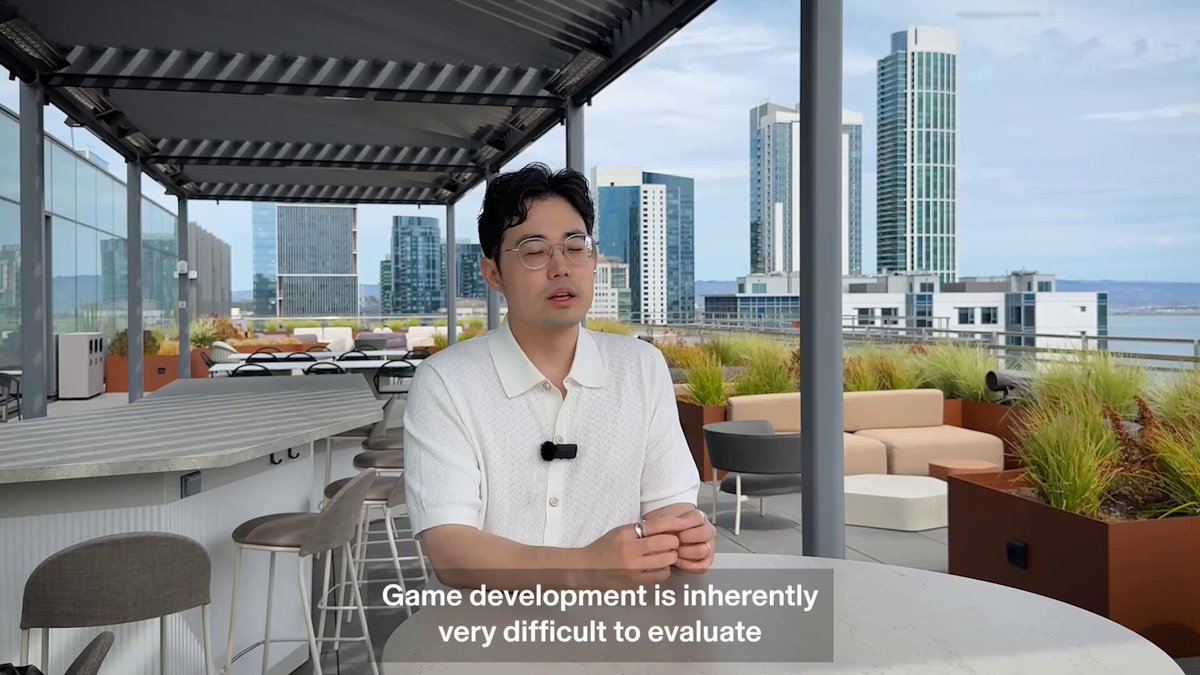
Claude Code vs Codex vs Pi: which coding agent wins? Melissa Pan, PhD candidate at UC Berkeley’s Sky Computing Lab and previous Arena.ai intern, explored the hidden “harness tax”: how the system surrounding an AI model affects its cost and performance. She reports three surprising findings. One: harness choice...

85,347 次观看 • 11 天前 •via X (Twitter)

22 条评论

Eric Stevens 的头像
Eric Stevens11 天前

@melissapan Swap the model and barely anything changes. Rebuild the scaffolding around it and suddenly it's a different tool.

Curious Nori | AI · Food · Travel 的头像
Curious Nori | AI · Food · Travel11 天前

@melissapan Well said.

VastPlan 的头像
VastPlan11 天前

@melissapan Arena 对照 Claude Code、Codex 与 Pi,指出外围 harness 带来的成本差往往大于准确率差。代理任务的费用不只取决于模型单价,工具编排、重试与上下文装填会显著改写单次账单;选栈时应把 harness 与模型一并计入。

tootooc 的头像
tootooc11 天前

@melissapan 同模型换壳,账单和成功率一起飘——这句比榜单管用。一人公司选型别只盯 benchmark:环路怎么验、失败怎么停、状态写在哪。壳可以换;「过/不过」别寄存在某一个壳的默认里。

owais | building 🏴‍☠️ 的头像
owais | building 🏴‍☠️11 天前

@melissapan Harness mattering more for cost than accuracy makes sense when so much of the bill is context re-sent every turn. Would love to see cost per solved task broken out by harness.

Rach 的头像
Rach11 天前

@melissapan @trycodegraff! as well!! it’s a self evolving harness haha

安叫兽|Bird🕊️ 🔶 BNB 的头像
安叫兽|Bird🕊️ 🔶 BNB11 天前

@melissapan 原来测试套件才是偷偷抬成本的那只手

VB 的头像
VB11 天前

@melissapan harness tax is the real scoreboard. same model, totally different bill depending on how messy the loop around it is

RAZA | AI EXPLORER 的头像
RAZA | AI EXPLORER11 天前

@melissapan The harness tax is a fascinating angle. Really useful analysis for building efficient coding agents.

Daniel 的头像
Daniel11 天前

@melissapan can someone give me the tldr 🤓

Automater 的头像
Automater11 天前

@melissapan The 'which coding agent wins' answer is usually whichever harness stopped fighting the model. Measure tool-loop stability under load, not demo speed. #ClaudeCode

Artzy 的头像
Artzy11 天前

@melissapan The harness tax is an often overlooked performance killer

ethereagle · building 的头像
ethereagle · building11 天前

@melissapan if harness moves cost more than accuracy, you're ranking the wrapper as much as the model. was that Claude Code vs Codex vs Pi on the same model, or did each keep its default?

Asad Ullah 🇵🇸 的头像
Asad Ullah 🇵🇸11 天前

@melissapan I think pi cost effective and powerful coding agent right now

Raven 的头像
Raven11 天前

@melissapan the model gets graded, the harness quietly invoices everyone

Jeremy Fiance 的头像
Jeremy Fiance11 天前

@melissapan This is awesome/helpful Melissa & Arena!

Hunter Bown 的头像
Hunter Bown11 天前

@melissapan would love to see how codewhale performs!

Silent · Dev Tools 的头像
Silent · Dev Tools11 天前

Harness tax decides the winner more than the model card. Tonight: time-to-first-kept-diff on the same bug across Claude Code / Codex / your third agent, with identical AGENTS.md. Whichever burns fewer tokens per kept line for a week becomes the default lane — swap the rest to overflow only.

Fajar M Reza 的头像
Fajar M Reza11 天前

@melissapan Agent benchmarks need matched tasks and budgets; harnesses can dominate outcomes.

IrradiatedFentOwl 的头像
IrradiatedFentOwl11 天前

@melissapan Female woman PagMan

catman 的头像
catman11 天前

@melissapan Benchmark the whole harness on representative tasks, including tool calls and retries, before picking a model. If harness choice drives cost more than accuracy, optimize routing and stop conditions first.

Shahid🇵🇸 的头像
Shahid🇵🇸11 天前

@melissapan did she break down prompt cache hit rate per harness? I'd guess that's where most of the cost gap comes from, more than anything the harness does to accuracy

相关视频

An agent is three things: a harness, a model, and context. If you're serious about owning your intelligence, you probably want to own all three. LangChain founder Harrison Chase joined us at our Sequoia Capital Own Your Intelligence to talk about the piece that often gets the least attention: the harness. He offers a clear heuristic for when to build your own. The more out of distribution you are from what the models were trained on, the more you'll want to customize. And good technical content on how to actually measure performance with evals and langsmith. 00:00 Introduction 00:58 The three parts of an agent: harness, model, context 02:12 What a harness actually does 03:25 Customizing the core loop with middleware 04:41 Sandboxes, file systems, sub-agents, summarization 05:47 Cognitive architectures — and when you still need them 07:03 Build your own harness or use off the shelf? 08:24 In-distribution vs. out-of-distribution: the file-editing example 09:39 Why evals define what "good" means in an organization 11:04 Harbor: what an eval task actually looks like 12:11 Comparing harnesses and models on accuracy, latency, and cost 13:20 Why observability is underrated — it's usually the context 14:34 The data flywheel: traces → curation → experiments 15:42 Getting feedback through UX design and online evaluators 16:51 Demo: LangSmith Engine 19:23 Q&A: Running Engine on Engine, and "codex-ification" 20:44 Q&A: Will harnesses converge or diverge?

Sonya Huang 🐥

77,519 次观看 • 1 个月前

Claude Code is a major (and accidental!) hit for Anthropic that surprised even its creator, Boris Cherny. Claude Code, an Agentic AI coding product that lives in the terminal. Most of the new code at Anthropic is created through it today. And in the last 5 months since it was launched publicly, Claude Code went from $0 to $400M in revenue run rate (as per The Information). 00:00 – Intro 01:15 – Did You Expect Claude Code’s Success? 04:22 – How Claude Code Works and Origins 08:05 – Command Line vs IDE: Why Start Claude Code in the Terminal? 11:31 – The Evolution of Programming: From Punch Cards to Agents 13:20 – Product Follows Model: Simple Interfaces and Fast Evolution 15:17 – Who Is Claude Code For? (Engineers, Designers, PMs & More) 17:46 – What Can Claude Code Actually Do? (Actions & Capabilities) 21:14 – Agentic Actions, Subagents, and Workflows 25:30 – Claude Code’s Awareness, Memory, and Knowledge Sharing 33:28 – Model Context Protocol (MCP) and Customization 35:30 – Safety, Human Oversight, and Enterprise Considerations 38:10 – UX/UI: Making Claude Code Useful and Enjoyable 40:44 – Pricing for Power Users and Subscription Models 43:36 – Real-World Use Cases: Debugging, Testing, and More 46:44 – How Does Claude Code Transform Onboarding? 49:36 – The Future of Coding: Agents, Teams, and Collaboration 54:11 – The AI Coding Wars: Competition & Ecosystem 57:27 – The Future of Coding as a Profession 58:41 – What’s Next for Claude Code

Matt Turck

82,372 次观看 • 1 年前

OpenAI’s hottest app isn’t ChatGPT—it’s Codex. In the last few weeks alone, the Codex team shipped a desktop app, GPT-5.3 Codex (a new flagship model), and Spark, the fastest coding model I’ve ever used. Usage has grown fivefold since January and over a million people now use Codex weekly. Codex was also the app that OpenAI chose to run an ad for in the Super Bowl. I talked to Thibault (Tibo), head of Codex, and Andrew (Andrew Ambrosino), a member of technical staff who built the Codex app, for Every 📧’s AI & I about what OpenAI is building and how they’re using it internally. We get into: - Why they built a GUI instead of a terminal. Terminals work for quick tasks, they say, but feel limiting when you’re running multiple agents in parallel. The IDE, meanwhile, overwhelms users—and the Codex team wants the AI to dynamically decide which tools to show you for a given task. - How they’re teaching the model to read between the lines. Codex is great at following instructions, but optimize too hard in that direction, and it starts taking you literally—like copying a typo directly into the code. The team obsesses over this tradeoff, and is also introducing “personalities,” modes users can toggle between that control how blunt or supportive the model feels. - How OpenAI uses its own coding agent. Codex lets you schedule prompts to run on a recurring basis, and the team has dozens of automations running at all times. For example, one scans for merge conflicts every couple of hours so code is always ready to ship, and another picks a random file from the codebase multiple times a day and hunts for bugs no one would've gone looking for. - Why speed is a dimension of intelligence. OpenAI’s newest model (Spark) is so fast that they actually slow it down so you can read the output. They see the speed enabling three things: staying super in the flow, replacing brittle developer tools with intelligent ones that can adapt on the fly, and redirecting the model mid-task— especially with voice—so coding starts to feel more and more like a conversation. - Code review is the next bottleneck. Models can generate code faster than ever, but someone still has to verify that it works. The team is exploring a future where the model proves its own fix works—retracing the click path a user would take, screenshotting the results, and attaching the evidence to a pull request. This is a must-watch for anyone who uses AI coding agents—and is curious about the future of programming. Watch below! Timestamps: Introduction: 00:01:27 OpenAI’s evolving bet on its coding agent: 00:05:27 The choice to invest in a GUI (over a terminal): 00:09:42 The AI workflows that the Codex team relies on to ship: 00:20:38 Teaching Codex how to read between the lines: 00:26:45 Building affordances for a lightening fast model: 00:28:45 Why speed is a dimension of intelligence: 00:33:15 Code review is the next bottleneck for coding agents: 00:36:30 How the Codex team positions against the competition: 00:41:24

Dan Shipper 📧

15,588 次观看 • 7 个月前

New short course: Building Code Agents with Hugging Face smolagents! Learn how to build code agents in this course, created in collaboration with Hugging Face, and taught by Thomas Wolf, its co-founder and CSO, and m_ric, Hugging Face’s Project Lead on Agents. Tool-calling agents use LLMs to generate multiple function calls sequentially to complete a complex sequence of tasks. They generate one function call, execute it, observe, reason, and decide what to do next. Code agents take a different approach. They consolidate all these calls into a single block of code, letting the LLM lay out an entire action plan at once, which can be executed efficiently to provide more reliable results. You’ll learn how to code agents using smolagents, a lightweight agentic framework from Hugging Face. Along the way, you’ll learn how to run LLM-generated code safely and develop an evaluation system to optimize your code agent for production. In detail, you’ll learn: - How agentic systems have evolved, gaining greater levels of agency over time—and why code agents are a next step. - How code agents write their actions in code. - When code agents outperform function-calling agents. - How to run code agents safely in your system using a constrained Python interpreter and sandboxing using E2B. - To trace, debug, and assess the code agent to optimize its behaviours for complex requests. - How to build a research multi-agent system that can find information online and organize it into an interactive report. By the end of this course, you’ll know how to build and run code agents using smolagents, and deploy them safely with a structured evaluation system in your projects. Please sign up here!

Andrew Ng

127,724 次观看 • 1 年前

Claude Code cracked something open for us Every 🧱. Now I ship to codebases I barely know, every feature we ship makes the next one easier, and non-technical members of the team use the terminal. I’m genuinely grateful. So I brought its creators, Cat Wu (cat) and Boris Cherny (Boris Cherny) from Anthropic, on AI & I to say thank you—and to talk about everything they’ve learned from building Claude Code. We get into: • The workflows Anthropic’s smartest engineers use to push Claude Code to its limits. Why they pit subagents against each other to get cleaner results, how they turn past code into leverage, and the slash commands and MCPs they rely on most. • The product lessons behind one of the most loved AI agents in the world. How the team balances simplicity and power—building a tool that anyone can use, but that experts can bend to their will—and their philosophy of “unshipping,” or cutting back whenever there’s a simpler, more intuitive path to user intent. • A peek into the future of coding with AI. The new form factors they’re experimenting with to make Claude Code more autonomous, more reliable, and more accessible to non-technical users This is a must-watch for anyone—both technical and non-technical—who wants to learn how to use Claude Code like the people who built it. Watch below! Timestamps: Introduction: 00:01:26 Claude Code’s origin story: 00:02:25 How Anthropic dogfoods Claude Code: 00:07:03 Boris and Cat’s favorite slash commands: 00:14:06 How Boris uses Claude Code to plan feature development: 00:15:49 Everything Anthropic has learned about using sub-agents well: 00:21:53 Use Claude Code to turn past code into leverage: 00:26:16 The product decisions for building an agent that’s simple and powerful: 00:33:14 Making Claude Code accessible to the non-technical user: 00:36:38 The next form factor for coding with AI: 00:45:12

Dan Shipper 📧

57,619 次观看 • 11 个月前

The entire AI industry is racing to build the smartest model. Satya Nadella just admitted that is not where the money is. The model is not the product. The harness is. That is the exact line. And it changes what Microsoft is actually competing on. OpenAI, Anthropic, Google, xAI, Meta every frontier lab is pouring hundreds of billions into training compute, chasing the next capability jump. Each betting that raw model intelligence is the moat. Microsoft is doing the opposite. It is building the harness the orchestration layer that sits above the model, connecting it to tools, data, permissions, sub-agents, and enterprise workflows. And it is letting OpenAI, Anthropic, and MAI compete to plug into it. "You need the model. But the model is not the product. The harness is." So do the math on what a harness actually does. A raw model dropped into an enterprise answers questions. That is a chatbot. A harness turns that same model into an agent that reads the SharePoint, edits the ERP entry, pulls the GitHub PR, updates Salesforce, and files the Excel report with the right permissions, the right audit trail, and the right sub-agent for each sub-task. The model provides the intelligence. The harness converts intelligence into work. Now here's where it gets interesting. "Even the best model in the world will feel broken without a great harness. And an okay model with a great harness can feel like magic." If that is true, the enterprise buyer is not buying model quality. The enterprise buyer is buying the harness. Which means model quality becomes a commodity input over time, and harness quality becomes the sustainable moat. Compare that to the strategy the entire frontier lab industry is executing. Everyone else is chasing the numerator raw intelligence. Almost nobody at scale is racing to build the denominator the orchestration layer that determines whether that intelligence can actually be deployed profitably inside a real company. The frontier model race has a 10 to 20 percent chance of producing a single dominant winner. Nadella just told the industry he does not need to be that winner. If OpenAI wins, Microsoft wins. If Anthropic wins, Microsoft wins. If MAI wins, Microsoft wins. If someone Microsoft has never heard of trains a better model in 2027, Microsoft still wins. Because the compute they train on, the harness they get plugged into, the enterprise contracts they get delivered through, and the products they sit inside are all Microsoft. He is not building the best AI model. He is building the layer that the best AI model has to run on to make anyone money. I wonder which position looks more valuable in ten years.

Vikram M

21,463 次观看 • 3 个月前

New course to bring you up to state-of-the-art at using AI to help you code: Build Apps with Windsurf's AI Coding Agents, built in partnership with WIndsurf (Codeium) and taught by Anshul Ramachandran! AI-assisted IDEs (Integrated Development Environments) make developers’ workflows faster, more efficient, and much more fun. Agentic tools like Windsurf are more than just code autocomplete—they are collaborative coding agents that help you break down complex applications, iterate efficiently, and generate code that spans multiple files. Although a lot of coding assistants share the same underlying large language models for planning and reasoning, a major point of distinction is how they handle tools, keep track of context, and stay aligned with your intent as a developer. For instance, if you make modifications to a class definition in your code and make the same modifications to other classes in the same directory, you might tell the AI agent "Do the same thing in similar places in this directory." Here, tracking your intent means understanding that “the same thing" refers to that recent edit you just made, which must be followed by appropriate search and tool-calling to implement the changes. In this course, you'll learn the inner workings of coding agents, their strengths and limitations, and how to use Windsurf to quickly build several applications. In detail, you'll: - Build a mental model of how agents work by combining human-action tracking, tool integration, and context awareness to carry out an agentic coding workflow. - Learn the challenges of code search and discovery and how a multi-step retrieval approach helps coding agents address them. - Use Windsurf to analyze and understand a large, old codebase and update it to the latest versions of the frameworks and packages it uses. - Build a Wikipedia data analysis app that retrieves, parses, and analyzes word frequencies. - Enhance the performance of your Wikipedia analysis app by adding caching, and through this, also learn how to course-correct when the AI agent produces unexpected results. - Learn tips and tricks such as keyboard shortcuts, autocomplete, and @ mentions to quickly call on agentic capabilities. - Use image/multimodal capabilities of the AI agent to increase your development velocity; you'll see an example of uploading a mockup with sketched-out UI features, and ask the agent to use that to build new functionality to an app. By the end of this course, you’ll understand agentic coding in-depth and know how to use it to make your development process much faster, more efficient, and enjoyable. Please sign up here!

Andrew Ng

140,233 次观看 • 1 年前