Loading video...

Video Failed to Load

Go Home

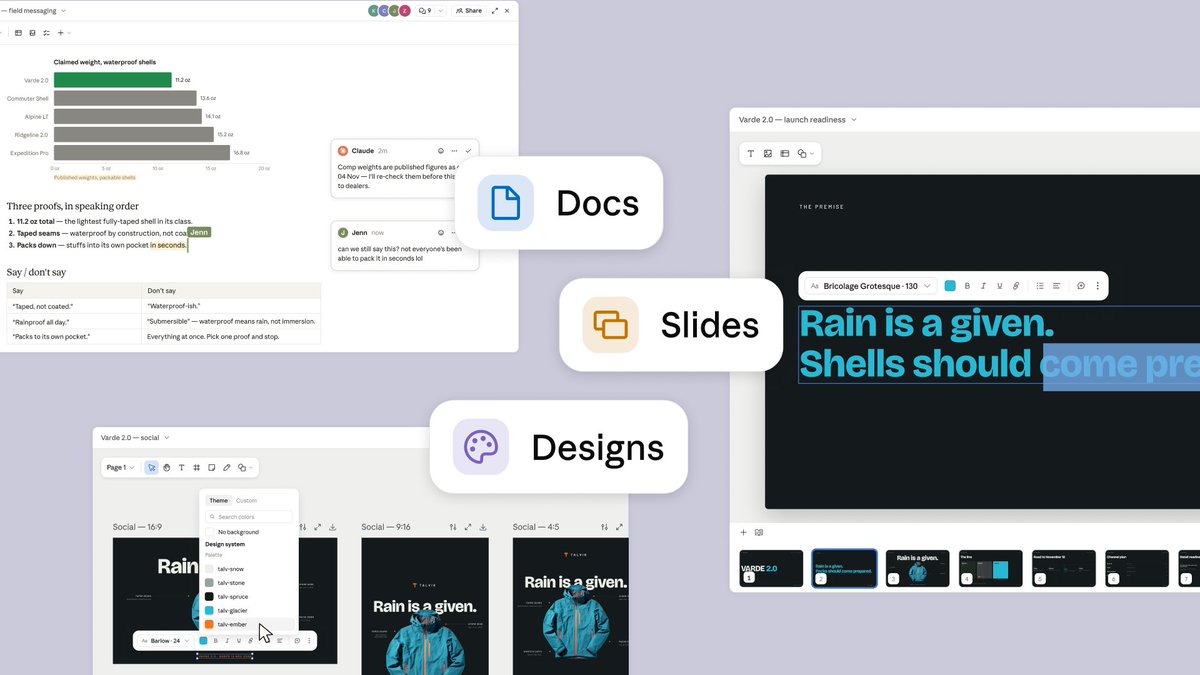
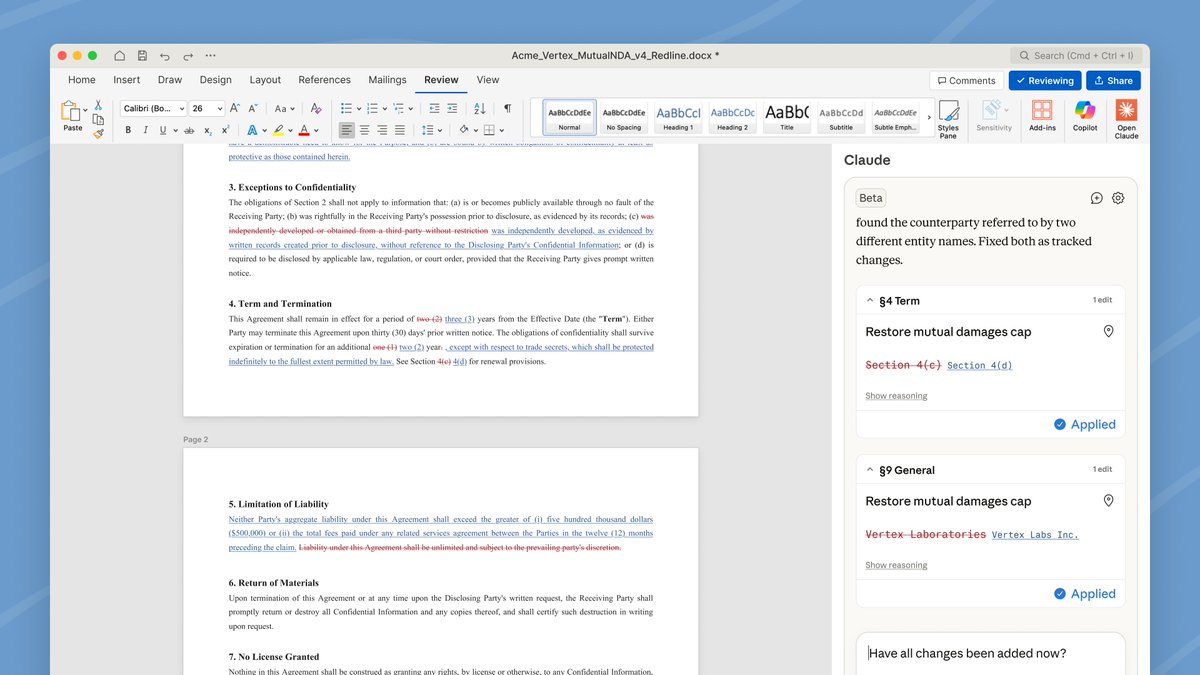
Claude now works inside Google Docs, Sheets, and Slides, and those files also open inside Claude. In Google Workspace, Claude sits in a sidebar next to your file, reads what you have open, and edits it in place. You can approve each edit before it lands.

3,110,622 views • 6 hours ago •via X (Twitter)

31 Comments

Claude's profile picture
Claude6 hours ago

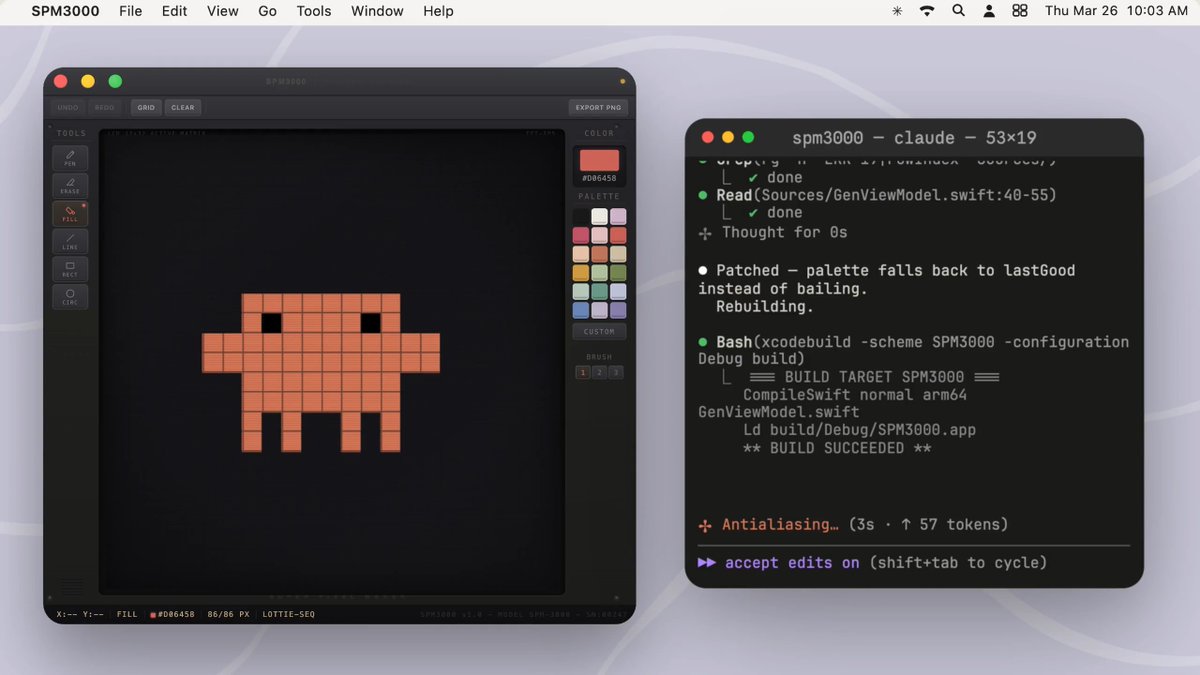
In Claude, paste a Google file link or ask for a new doc, sheet, or deck, and it opens beside the chat for you and Claude to edit together. Access follows your Google sharing permissions. In beta on all paid plans. Give it a try:

Felis's profile picture
Felis6 hours ago

claude just moved into gemini’s apartment and started rearranging the furniture

Coinbase Predict's profile picture
Coinbase Predict6 hours ago

People who refused to learn Excel and PowerPoint:

yata's profile picture
yata6 hours ago

now Claude wont be creating millions of excel spreadsheets on the pc

kage's profile picture
kage6 hours ago

how Google look at Claude using his things better then his Gemini:

Parallax's profile picture
Parallax6 hours ago

So claude can do better job inside Google docs that google itself?

Jennifer's Tech World's profile picture
Jennifer's Tech World6 hours ago

"you can approve each edit before it lands" is the politest possible way of saying "we don't fully trust it either, so here's a button"

Artur Nowocin's profile picture
Artur Nowocin6 hours ago

Have you open your refrigerator today?

Dan McAteer's profile picture
Dan McAteer6 hours ago

This is really going to help me plan my wife's 40th birthday party.

Nima's profile picture
Nima6 hours ago

installing this today and pointing it at my worst spreadsheet

Nandkishor's profile picture
Nandkishor6 hours ago

Justice for Gemini

Sem Day's profile picture
Sem Day6 hours ago

Google should be worried about this... Claude working directly inside Workspace could make the AI layer more important than the apps themselves.

Repojournal's profile picture
Repojournal6 hours ago

Just give us a personal agent at this point. We know you’ll cook. No need for a new name, keep it as Claude And copy ChatGPTs sign in with Claude feature so we can use our tokens everywhere. Whatever you do, leave the decision model space to Jev Thanks

Dhanush N's profile picture
Dhanush N6 hours ago

We already have Google Gemini doing this very well

Yashas's profile picture
Yashas6 hours ago

Can y'all fix the startup bug??

Shift Predicts's profile picture
Shift Predicts6 hours ago

Google Workspace bros been waiting on this one🔥finally

Yann Kronberg's profile picture
Yann Kronberg6 hours ago

This is much closer to how agents should fit into real work. Having Claude work directly inside the file you're already working in without having to copy something, take it to the chat, prompt the LLM and go back to the file is exactly what saves us time.

Sem Day's profile picture
Sem Day6 hours ago

This is a really strong integration... having Claude edit Docs, Sheets and Slides directly could make AI much more useful for actual workflows

Khushi's profile picture
Khushi6 hours ago

another skill just became a feature

Sem Day's profile picture
Sem Day6 hours ago

Wow, it's really nice updating

AI Pulse's profile picture
AI Pulse6 hours ago

notice the screenshot. "Gemini" is literally sitting in the menu bar while Claude edits the doc google built the house, anthropic just moved into the best room. people won't pick a model anymore, they'll pick whichever one is already open next to their file

Ayush's profile picture
Ayush6 hours ago

Sundar ain't gonna like this

Kaleb Campbell's profile picture
Kaleb Campbell6 hours ago

Usual Claude W

MONKE2525E's profile picture
MONKE2525E6 hours ago

When Claude @bot clone?

Simo | ai-costguard's profile picture
Simo | ai-costguard5 hours ago

Agents inside your tools isn't automation. It's a new attack surface

Viber · fireply.ai's profile picture
Viber · fireply.ai6 hours ago

approve each edit before it lands is the right call, i'd still leave it on auto for slides and see what happens

Tushar Mishra's profile picture
Tushar Mishra6 hours ago

Finally. The tab-switching tax is the real productivity killer.

Kimi | Crypto & AI's profile picture
Kimi | Crypto & AI6 hours ago

Amazing work, team! Claude inside Docs, Sheets, and Slides is a huge win 🔥 Respect ✊

Ku's profile picture
Ku6 hours ago

White collar workers are gonna be extremely productive right before they're replaced

Muhammad Imran's profile picture
Muhammad Imran6 hours ago

The battle for the desktop workspace sidebar is heating up! Seamless execution across Docs and Sheets turns Claude into a full-fledged productivity copilot.

tmuxvim's profile picture
tmuxvim6 hours ago

Revise did it first heheh

Related Videos

THIS MIGHT BE THE #1 OPEN-SOURCE REPO FOR CLAUDE CODE RIGHT NOW. IT GIVES CLAUDE A MEMORY AND SLASHES YOUR TOKEN COST ON EVERY QUESTION The repo is safishamsi/graphify, a free open-source skill that turns any codebase into a knowledge graph Claude Code can read instantly. Instead of grepping through your files every session, Claude gets a map of how everything connects The problem it fixes: Every time you ask Claude Code about a big repo, it does the same thing, greps through dozens of files like a brute-force Ctrl+F, blows through your context window, and sometimes still misses the answer hiding in a file nobody searched. Claude Code has no memory of how your project is structured. Every session starts from zero What it does: It maps your entire codebase into a knowledge graph, capturing not just which files exist, but which functions depend on which, which modules are central, and which files cluster around the same concern. Claude queries the map instead of scanning files How it works, three passes: 1. Code structure, free and local. Tree-sitter parses your files and pulls out classes, functions, imports and call graphs. No LLM, no tokens, just your actual code mapped deterministically 2. Audio and video, if you have them. Transcribed locally and folded into the graph 3. Docs, papers, images. Here an LLM does semantic analysis, figuring out what each document means and where it fits. Only the meaning gets sent up, never your raw source It saves you money: Normally a question about a big repo makes Claude spawn explore agents that scan file after file, eating your context window and your token budget before you get an answer. With the graph already built, Claude queries the map instead of re-reading the codebase every time. Same answer, a fraction of the tokens. The graph only gets built once, then a hook rebuilds it after each commit for free, so you never pay that scanning cost again. The bigger the repo, the bigger the gap The best parts: it's a skill, so once installed Claude knows when to use it without you memorizing commands. It works on non-code folders too, point it at docs or notes and it can spin up an Obsidian vault How to add it to your Claude: 1. Install Claude Code if you haven't: npm install -g Paul Jankura-ai/claude-code 2. Add the skill: claude skill add safishamsi/graphify 3. Open your project folder and run /graphify . to build the graph 4. Optional, make it automatic: graphify hook install so the graph rebuilds after every commit That's it. Ask Claude about your repo and it reads the map instead of burning tokens on a file hunt Bookmark this

Yarchi

56,502 views • 3 months ago

I got curious how compaction works as a PM, so I did some brain surgery on Claude Code: (Anthropic's been doing really interesting work on context editing - they showed Claude Opus playing Settlers of Catan for 75+ minutes in a single thread by constantly editing the context instead of starting fresh. When I saw that Claude Code has a compaction command with optional custom instructions, I wanted to understand what's actually happening.) Abhishek Katiyar and Aman Khan gave me the key tip: Claude Code stores all your conversation history as text files on your computer. Open a new directory and give Claude Code a task. Here's how to watch compaction happening: 1. Go to your user's root directory 2. Press Command+Shift+Period (Mac) to show hidden folders 3. Navigate to ~/.claude/projects/ 4. Find your project folder and use Cursor/VSCode to open it (there's a reason) 5. Install the JSONL Gazelle plugin (open source, thank you Gabor Cselle!) 6. Open the most recent JSONL file - each row is a message in your conversation 7. Run the compact command in Claude Code with custom instructions 8. Watch what happens in the file What I learned: When you compact, Claude Code doesn't just summarize and delete everything. It creates a "compact boundary" in the conversation file, writes a summary of what happened before, but keeps the full original conversation (!!!!) The new thread can still retrieve any details from before compaction if needed. That is so damn cool. Why this matters: What you're getting in Claude Code is similar to what Anthropic ships in their developer SDK - so inspecting your daily tools is how you build real product intuition. The best way to understand AI systems is to open them up and look inside. Everything is text files.

Tal Raviv

57,910 views • 8 months ago