正在加载视频...

视频加载失败

Defender raises arm, preparing to knock out high point catch. Defender hits forearm across Bond's neck (follow black elbow band). Defender extends through neck & lower facemask, snapping neck back. Initial contact is arm bar to lower neck/jersey hole, sliding up into facemask.

157,225 次观看 • 1 年前 •via X (Twitter)

11 条评论

Snarkisian 的头像
Snarkisian1 年前

*Just wanted to definitively give my thoughts on the play. Either don’t call either or call both, but it's ridiculous to think the Taaffe one is targeting and this one isn't...especially if safety is why the rule exists.

Snarkisian 的头像
Snarkisian1 年前

The helmet to helmet against Quinn? Nah, that's not the same as the arm to neck area hit that ASU did to almost decapitate Bond. Where are you confused? The Bond hit was far more egregious & unsafe.

#hornsup 的头像
#hornsup1 年前

That, to me, is the whole point. I have seen a few in the national media, say the same thing. I don’t think Taaffe’s was targeting - pretty close to a perfect form tackle. The hit on Bond was violent. The DB has a history of targeting. He definitely launched. There is absolutely impact to Bonds head, which explains his head whipping back. To me, the rule was created to protect hits like Bond took.

Thomas 🏀⚾️ 的头像
Thomas 🏀⚾️1 年前

@UTBarstool @InsideTexas @orangebloods_ @NCAAFootball @kyleumlang @YappJenkins @TexasFootball @TheTunnel_Texas @ontexasfootball @HornSports 2 full days later and Texas fans are still complaining about calls The lady doth protest too much methinks

Boosted Safe 的头像
Boosted Safe1 年前

Want to stop smash and grabs? The BoostedSafe conceals and protects your most valuable gear. Get yours now!

S🇵🇭🇺🇸 的头像
S🇵🇭🇺🇸1 年前

@UTBarstool @InsideTexas @orangebloods_ @NCAAFootball @kyleumlang @YappJenkins @TexasFootball @TheTunnel_Texas @ontexasfootball @HornSports Stop fixating on this. Makes y'all look insecure. Much bigger problems to deal with in Arlington. Can't wait to watch Texas get folded.

Jeff Harris 的头像
Jeff Harris1 年前

@UTBarstool @InsideTexas @orangebloods_ @NCAAFootball @kyleumlang @YappJenkins @TexasFootball @TheTunnel_Texas @ontexasfootball @HornSports Its pretty clear that the head snaps back violently. The only way that they head can snap back is if the head was hit. I am not sure that it has to be hit with a helmet.

Snarkisian 的头像
Snarkisian1 年前

@UTBarstool @InsideTexas @orangebloods_ @NCAAFootball @kyleumlang @YappJenkins @TexasFootball @TheTunnel_Texas @ontexasfootball @HornSports it does not have to be helmet to helmet. Just forcible contact to the head & neck area.

RE 的头像
RE1 年前

@UTBarstool @InsideTexas @orangebloods_ @NCAAFootball @kyleumlang @YappJenkins @TexasFootball @TheTunnel_Texas @ontexasfootball @HornSports Not to mention the complete launch…

cruzer \m/ 的头像
cruzer \m/1 年前

@UTBarstool @InsideTexas @orangebloods_ @NCAAFootball @kyleumlang @YappJenkins @TexasFootball @TheTunnel_Texas @ontexasfootball @HornSports Sorry to tell you but that play never happened. Only what taffe did to ASU receiver happened 😂🤦🏻‍♂️

Tom Mc 的头像
Tom Mc1 年前

@UTBarstool @InsideTexas @orangebloods_ @NCAAFootball @kyleumlang @YappJenkins @TexasFootball @TheTunnel_Texas @ontexasfootball @HornSports Defender launches Defender hits defenseless receiver in the head. You can try to change the lines, but it's still targeting.

相关视频

This 40-micrometer single-celled organism with zero neurons … hunts, kills, and eats other living creatures using nothing but microtubules and geometry. Lacrymaria olor is a freshwater ciliate found in ponds worldwide and one of the most ferocious predators in microbiology. At rest, it’s a teardrop barely visible to the naked eye. When hunting, it launches a neck-like proboscis up to 30× its body length — 1.5mm in under 30 seconds — whipping it through the water in violent, snaking arcs to locate and strike prey by contact alone. No eyes. No chemotaxis. Pure mechanical search-and-destroy. 1.Anchor. Attaches its rear to debris via adhesive secretion. Body stays planted. 2.Deploy. Head cilia activate. The neck rockets outward along a helical microtubule scaffold, unspooling stored membrane like origami unfolding. 3.Sweep. The neck whips, bends, and buckles through 360° in rapid stochastic bursts — covering ~66% of its strike zone in ~93-second hunting events. 4.Strike. Mechanoreceptor cilia on the head distinguish food from non-food at the instant of contact. 5.Kill. Toxicysts — venom organelles armed with polyketide synthases and L-amino acid oxidases — fire on contact, paralyzing the target. 6.Engulf. The oral apparatus swallows the prey whole via phagocytosis. Sub-second. 7.Reel. The contractile myoneme system hauls prey back through the neck to the cell body. 8.Digest. Enzymatic breakdown in food vacuoles. ~15 seconds. 9.Reset. The neck retracts, repleating its origami perfectly. Rest. Hunt again. Prey: Cyclidium, Tetrahymena, Chilomonas, Halteria, Vorticella, flagellates, amoebae. If it encounters something too large to swallow — Blepharisma, Stentor — it tears chunks out of them. If the neck tip hits debris — instant ciliary reversal and full contraction. Retreat. If the neck tip hits prey — toxicyst discharge, amplified ciliary beating, engulfment. Commit. Two opposite behavioral programs, selected and executed at the point of contact, in a fraction of a second, by a cell with no nervous system. No neurons. No synapses. No action potentials. In 2024, Flaum and Prakash at Stanford published on the cover of Science.. The cell’s membrane is wrapped by 15 stiff helical microtubule ribbons — a cortical cytoskeleton unlike anything in any other known organism. These ribbons form a curved-crease origami. Membrane tucks into precise pleats between ribbons, storing enormous surface area in compact folds. Microtubule sheets spool in multiple layers inside the cell body — nested like a compressed helical accordion. When the cell hunts, the origami unfolds. When it retracts, it refolds. Deployment is controlled by topological singularities — d-cones and twisted domain walls — that act as geometric controllers. The structure can only unfold one way and refold one way. Deterministic deployment from pure geometry. Everything pre-stored, pre-folded, topologically locked. Beneath the microtubule scaffold: a contractile myoneme network of centrin-myosin fibers using unconventional Plasmodium-like actin. The two systems are antagonistic. Cilia pull the neck out along the microtubule rails. The myoneme contracts it back. The tug-of-war across timescales generates the full behavioral repertoire. Neither system alone produces the behavior. It emerges from their coupling!!

JJ

74,131 次观看 • 3 个月前

I've been asked to review and provide thoughts on the question of a potential targeting call in the Hardin-Simmons Cowboy Football / UMHB Football🏈 #d3fb game Saturday. I have synced up two videos -- one from UMHB's broadcast and one posted by In The (D3FB) Huddle contributor Riley Conlee (Riley Conlee) (if he could provide credit to the videographer of it, I'd appreciate it). There is a full-speed view and a 20% speed view of the central action included in the video. To evaluate targeting, we have to review both aspects of the rule to see what, if anything, qualifies. I want to provide the entire set of rules (9-1-3 & 9-1-4): "Targeting and Making Forcible Contact With the Crown of the Helmet ARTICLE 3. No player shall target and make forcible contact against an opponent with the crown of their helmet. The crown of the helmet is the top segment of the helmet; namely, the circular area defined by a 6-inch radius from the apex (top) of the helmet. This foul requires that there be at least one indicator of targeting (See Note 1 below). When in question, it is a foul. (Rule 9-6) (A.R. 9-1-3-I) Targeting and Making Forcible Contact to Head or Neck Area of a Defenseless Player ARTICLE 4. No player shall target and make forcible contact to the head or neck area of a defenseless opponent (See Note 2 below) with the helmet, forearm, hand, fist, elbow or shoulder. This foul requires that there be at least one indicator of targeting (See Note 1 below). When in question, it is a foul (Rules 2-27-14 and 9-6). (A.R. 9-1-4-I-VI) Note 1: “Targeting” means that a player takes aim at an opponent for purposes of attacking with forcible contact that goes beyond making a legal tackle or a legal block or playing the ball. Some indicators of targeting include but are not limited to: - Launch. A player leaving their feet to attack an opponent by an upward and forward thrust of the body to make forcible contact in the head or neck area. - A crouch followed by an upward and forward thrust to attack with forcible contact at the head or neck area, even though one or both feet are still on the ground. - Leading with helmet, shoulder, forearm, fist, hand or elbow to attack with forcible contact at the head or neck area. - Lowering the head before attacking by initiating forcible contact with the crown of the helmet. Note 2: Defenseless player (Rule 2-27-14). When in question, a player is defenseless. Examples of defenseless players include but are not limited to: - A player in the act of or just after throwing a pass. This includes an offensive player in a passing posture with focus downfield. - A receiver attempting to catch a forward pass or in position to receive a backward pass, or one who has completed a catch and has not had time to protect themselves or has not clearly become a ball carrier. - A kicker in the act of or just after kicking a ball, or during the kick or the return. - A kick returner attempting to catch or recover a kick, or one who has completed a catch or recovery and has not had time to protect themselves or has not clearly become a ball carrier. - A player on the ground. - A player obviously out of the play. - A player who receives a blind-side block. - A ball carrier already in the grasp of an opponent and whose forward progress has been stopped. - A quarterback any time after a change of possession - A ball carrier who has obviously given themselves up and is sliding feet- first. - A player attempting to recover a loose ball." We need to start at Note 2 to see if Kyle Brown qualified here as a "defenseless player." If not, then 9-1-4 would not apply to him here. Kyle was not a receiver or a passer per se here -- he was clearly a runner downfield and was not in the grasp of any player. As a result, he was not "defenseless" by definition. That means that the only way targeting can be called here is if the provisions of Rule 9-1-3 were violated. Rule 9-1-3 is VERY specific about the initial requirement before we can go to the question of a required indicator: "No player shall target and make forcible contact against an opponent with the crown of their helmet." The crown of the helmet is "the top segment of the helmet, specifically the circular area with a 6-inch radius from the apex (top) of the helmet." In the videos, we see a couple of telling signs. First, Kyle appeared to actually lower HIS helmet as the contact became imminent, which is something coaches advise against for a variety of reasons, including self-preservation. But what is telling is that the UMHB defender attempted to peel off as he saw the angle of the contact he was heading toward with Brown. Specifically, he appeared to end up perpendicular to Brown, perhaps catching Brown's facemask enough to cause the helmet to fly. Yet, that contact was NOT with the defender's crown. As a result, since Brown was not defenseless by rule and because the crown of the helmet was not used for forcible contact to the head/neck area, the picking up of the flag by the officials was appropriate. That said, I spoke with an official who reviewed the videos without commentary and who landed in the same spot as I did concerning the above. They stated that if immediate replay review was available, crews will generally throw the flag and go to review (here, it likely would have been overturned by review, preserving the defender's eligibility). Since the ASC is not providing the on-field replay review yet, the officials' decision would have impacted the game by ejecting a player for the last 6 minutes of the first half until a Halftime review would have been available. For those wondering about how replay is impacting the game, I think this is a good reminder of the nuances it can impact.

Frank Rossi

10,688 次观看 • 8 个月前

In from Ohio last week was Chloe Taynor - just an 8th grader but already has a national reputation as a 2-way talent for Indiana Magic Gold 2030 Rogers/Fritsche Chloe added velocity while dropping relative stress on her elbow. We are thrilled to have her as one of our PVS athletes helping keep her healthy and strong with our App as she enters high school next year!!!! Great stuff Chloe !! Her before and after in the 🎥 below illustrates the important topic of arm lay back. Timing and “Layback" in throwing refers to a key biomechanical position in overhand throwing mechanics. The term describes the moment when the throwing arm reaches “maximum external rotation” just before acceleration and release. This is a major problem in Softball, because the sequencing of the act of throwing is often incorrect Ideally, we want The elbow up/near shoulder height. You will see the The forearm and hand "lay back" behind the body (the ball points somewhat backward or away from the target). At this point the shoulder is in extreme external rotation (the upper arm rotates outward), creating a stretched, loaded position in the shoulder and arm muscles/tendons. Layback acts like stretching a rubber band or "cocking" the arm — it stores elastic energy. When the body rotates forward (hips and torso leading), the arm rapidly internally rotates and whips through, generating much higher velocity and power. Better layback often leads to harder, more efficient throws with less arm strain (when mechanics are sound). This is something we test every girl for at the beginning of our sessions and at the end. Layback Matters in Softball Throwing Because it ▪️Increases throwing velocity. Elite throwers show significant layback to maximize the "whip" effect. ▪️Improves efficiency. When proper body sequencing is present hips → torso → shoulder → the arm produces layback naturally without forcing the arm alone. ▪️Reduces injury risk. Good / well timed layback comes from whole-body drive rather than arm-only effort. Prep Softball 🥎 Benjamin Rosenberg Kayla Lombardo EXTRA INNING SOFTBALL Line Drive Media Young Athletes Fitness tagup Top Preps #1 Scouting and Promotional Services Rona Dorsey Frank Russo P413 Sports Softball Recruiting Reposts Brad Everett Carlos Arias

PVS Baseball

175,543 次观看 • 4 个月前

Your observations are almost correct, but your conclusions are not. What you see flying out, as what others thought was his ear piece, is not his ear piece. It is his chain he had around his neck, with, what I am pretty certain, a cross on it, which all Christians would wear, if they have a chain on their necks. So, what apparently happened, which seems so astronomically unlikely, is the bullet did not hit him in the neck first, but hit him in the chest, and to be more specific in that cross. So, after a hit into that cross, his chain snaps, and it is that which you see flying out backwards. When the chain snaps, and starts flying up and backwards, it also pulls up the front edge of is shirt, in less than 0.1 sec. So, that is how that anomaly is explained at the same time. What happens next, is his mic had a wire under his shirt. It kind of just laid in the back of his neck, going around his shoulder, and disappearing under his shirt on the front. That wire must have had some contact with this chain, or even being wrapped around it like may be just one turn. So, when that chain snaps and starts flying backwards, it starts pulling on his mic at the same time. Just the mic had a wire that was most certainly lose a little bit. So, that is why that responds with a few tens of a second delay. But still, the mic also, after jerking around for a few tens of a second disappears completely of his shirt. So, basically, the bullet hits his cross first, which is on his chain, would explain all of these anomalies at the same time, including the wire on the back of his neck being pulled around from the front, and thus bulging his shirt in the back a little bit. If you pay all of this is slow motion, you will see that it all gets seqeuenced correctly. And the last thing to note, is after hitting his cross, and getting deflected, the bullet now would start going up, instead of forward, and would go up into his neck from the bottom up, and disappear into his head. That would also explain at the same time why there is no exit wound. Because his skull would stop the bullet from exiting. One side note, not related to all of these anomalies, but still a necessary thing to keep in mind - that alleged high velocity bullet Mauser 30_06, could not have possibly be the weapon used, as that bullet would have taken one third of his neck out. For everything to be explained correctly, no Mauser, or any other kind of shotgun could have been used. Another, much smaller caliber weapon had to be used, like some kind of a hand gun, and from a much closer distance too, as a hand gun without the scope, from a far way roof would just not work. And so, that is how all of this happened. I know this was long. But this is one bizarre, super difficult to crack episode. So, I could not make it any shorter.

US_did_ 911

31,087 次观看 • 10 个月前

If you make this one tweak to your offense I think you’ll score more goals! The vast majority of offenses have a crease guy mirroring the dodge, popping behind the dodger when he takes the alley, and cycling under when he dodges topside. I love mirrors, they’re a great action, but the problem with mirrors is that the slider can oftentimes hedge and crowd the dodger, and recover back to their guy. This problem is magnified when the on-ball defender picks up soft, there’s even less space for the dodger. Also mirroring every time is predictable! Why would you want the defense to know exactly where your crease guy is going? A simple adjustment that every offense should have in the mix is to have your crease guy change it up and “Float” out to the back side, leaving his hedging crease sliding defender guarding nobody and making the recovery much more difficult. And when you float the crease out, you can have another midfielder “Follow” across the top to be the outlet behind the ball and get into a shooting spot. As the coach, you don’t have to call out these looks from the sideline, simply let your crease guy mix it up on his own, sometimes he can mirror the dodge, and other times he can float out the back. Then have the crease guy communicate to the other mid to follow or float. The recovery for these two looks is very different and this variability will make your offense much harder to guard! Furthermore, because the recovery is so much more challenging, re-dodge spacing when the crease floats out is better. I guarantee you will love this look!

JM3 SPORTS

11,699 次观看 • 1 年前

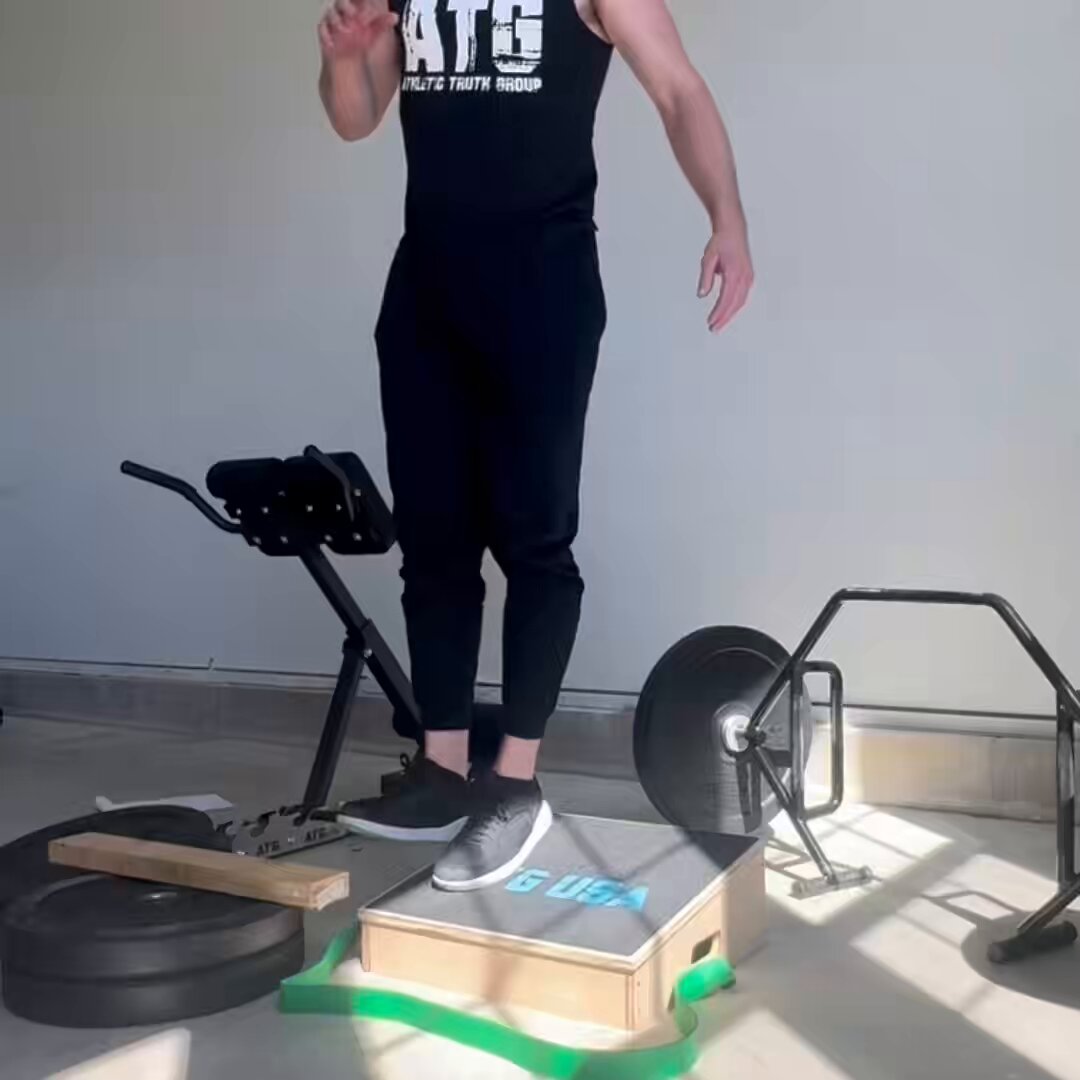
7 Reasons I Love Full Hex Squats! 1. Step-ups and split-squats on some sort of podium have already been go-tos for me for the past 15 years of knee rehab and coaching, and anyone can access these for free or dirt cheap. 2. Not everyone wants to jump into barbell squats. My parents maintain bodyweight. I advise young athletes to master one leg at a time first. Both user-friendly from this. 3. Sophomore year of high school I injured my neck from being pushed into heavy barbell squats. Full hex squat allows you to build some upper back first. 4. My best friend in high school broke his back while maxing out barbell squats. Spent the next year in a metal brace. When your legs can’t handle a full hex squat, you’re in a DEADLIFT, not a GOODMORNING. Deadlift has way easier leverage, so you’re way safer. 5. Hex squat isn’t as good for lower back building, but for me, my parents, and my teenage students, back extension is already my go-to to build lower back muscles at higher reps BEFORE worrying about max loads. (To be clear: 1-5 above are amazing PREP/HELPERS for barbell squats if you so desire!) 6. If a young person does want to see their peak strength, a regular hex deadlift is a very safe and accurate option. 7. The same hex is advantageous for forward and backward farmer’s walks to help your ankles and grip keep up with your new power! (These podiums won’t be good biz since they’re made in USA, small batches, but these are easy to mimic or copy. ETA 6 weeks to first batch for sale, for those interested.) Pre-assembled, fold-out-and-get-to-work back extension: Mobility Made Simple program and coaching:

KneeOverToesGuy

38,036 次观看 • 4 个月前

COACHES: This is another HUGE pet peeve of mine. Players trying to do it all themselves and making a potential rush opportunity into a 1v1. The higher the level you play, the less likely a player will beat a defender 1v1. Especially on the rush. I see so many kids try to do it themselves - and if the kid is talented enough at the younger ages it potentially may work out. But as players advance to higher and higher levels, you rarely see anybody try to beat a defender 1v1. And even more rarely do you see anybody actually beat a defender 1v1. I see so many coaches rewarding kids at the younger ages for taking the puck from one end of the ice to the other and scoring. While it's great that a number goes on the scoreboard, you are doing a disservice to the kid's development. Because if that kid doesn't learn the value of passing and using their teammates, at some point this clip is going to happen to them. A LOT. And that player will eventually get passed by the kids that learned to play the right way with their teammates. On this clip the ANA player tries to do it all himself and the puck goes the other way and eventually ends up in the back of his net. It's hard enough to beat one person 1v1 in high level hockey, let alone skating the puck through multiple defenders. So coaches, please emphasize the value of using your teammates. I see this type of play SO OFTEN in youth hockey. Passing, hockey sense, playing with your head up, using your teammates...these skills translate to the next levels. Doing it yourself, even if it works as a young player, does not.

Topher Scott

84,664 次观看 • 2 年前

RHP Patrick Forbes (Louisville Baseball) is an intriguing college arm to keep close tabs on this spring. Last year was Forbes' first focusing solely on pitching, and across 29 innings (12 appearances, 4 starts) he worked a 3.72 ERA with 32 Ks to 15 BB. Proceeded to have a great summer circuit that was split between Team USA and the Cape. On the Cape, Forbes was excellent and pitched his way to a 3.29 ERA with 22 Ks to 6 BB in 13.2 innings. Forbes has a strong, athletic build at 6-foot-3 and 215-pounds. Physicality throughout, some length in his lower-half. Compact, explosive delivery with a short, whippy arm stroke and plenty of arm speed. Attacks from a low-three quarter slot, ultra-high leg lift and really drives his back side through. Moves really well on the mound, high-level athlete. Relies heavily on his mid-90s fastball that he threw 77% of the time last spring. Sat 93-95 and topped out at 97, has been up to 98 this fall. Plenty of life through the zone with some ride in the top 1/3. Also plays well in the bottom 1/3. High-spin pitch that last year averaged North of 2,500 RPMs. Explodes out of his ~5'3" release height. Kind of a dead zone profile, but spin/release traits help compensate for it a little bit. Key is just staying out of the middle. 25% miss rate last year, good number especially given the usage. Supplements his FB with a high-70s-to-low-80s SL. Tight, two-plane tilt. Still gaining feel for the pitch and the shape can be a little inconsistent at times, but it will really flash. Will sometimes take on a true sweeper look that looks like a real weapon. Also throws a high-70s-to-low-80s CB. The shape will blend with his SL at times, but it will flash depth with sharp, downward bite. SL is definitely the better of the two - 41% miss rate last spring. Forbes rounds out his arsenal with a high-80s-to-low-90s power CH. Hardly ever uses it (5% usage in '24) but at times it showed serious late fade to the arm side with some tumble. Command can waver, but it's gotten better year-over-year and took another step forward this summer. Low mileage arm with plenty of upside. Bulldog mentality on the mound, checks a ton of boxes between his "now" stuff and athleticism. Certainly some reliever risk, but there's easy stuff to clean up across the board that will help maximize his chance to start. Day 1 upside this July.

Peter Flaherty III

20,137 次观看 • 1 年前

Tummy time matters, now more than ever. Why now? In the early 1990s pediatric health authorities began recommending that babies sleep exclusively on their backs as part of an aligned effort to reduce the incidence of Sudden Infant Death Syndrome. The campaign has been a big success, cutting the SIDS rate by more than half, but has also limited the amount of time most modern infants spend on their stomachs - making wakeful, supervised tummy time all the more important. Tummy time has many benefits. It strengthens the back, neck and arm muscles that help with holding up the head, rolling over, sitting and crawling. It helps to decrease the incidence of flat spots on the back of your baby’s head. And it can help relieve gas and constipation, just to name a few. You can begin short, supervised periods of tummy time as soon as your child is born. These earliest sessions often begin on mom’s chest - but can be done on other safe surfaces as well. Begin with 2-3 minutes at a time and work your way up. The American Academy of Pediatrics recommends increasing the frequency and duration of these sessions to the point your baby spends a total of 20-30 minutes a day by the time your baby is 7 weeks old. Be forewarned that, especially early on, tummy time is a workout (and therefore not always well liked by some children) - but with time and experience will help to develop the muscle strength your newborn lacks. This little guy (shared to IG by xmarieannabelle) has got tummy time down pat. Check out his strong neck muscles and head control and that roll at the end.

Dan Wuori

189,536 次观看 • 2 年前