Video wird geladen...

Video konnte nicht geladen werden

Zur Startseite

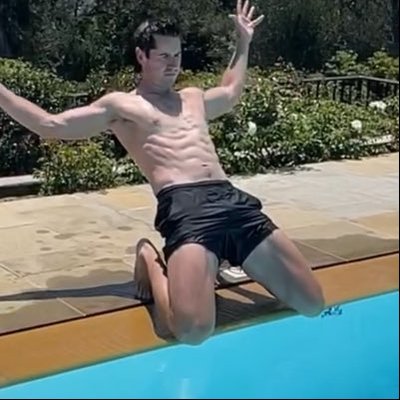
7 Reasons I Love Full Hex Squats! 1. Step-ups and split-squats on some sort of podium have already been go-tos for me for the past 15 years of knee rehab and coaching, and anyone can access these for free or dirt cheap. 2. Not everyone wants to jump into...

38,988 Aufrufe • vor 4 Monaten •via X (Twitter)

0 Kommentare

Keine Kommentare verfügbar

Kommentare vom Original-Post werden hier angezeigt

Ähnliche Videos

Strong legs are the foundations of a stable posture, yet many let theirs weaken over time. You lose your ability to move and stand upright. Much of my work with chronic pain clients involves strengthening the legs. This video shows 8 essential lower body motions: 1- Hip Extensions Standing upright involves straightening your torso to align it with your lower body, an extension of your hips executed by your Glutes and Hamstrings. The problem is you sit on these muscles all day, weakening them over the years to the point where they fail to do their job. Your lower back picks up the slack against its will and becomes overworked. I'll start chronic pain clients with Hip Bridges on the floor to ensure everything is balanced, then progress to Hip Thrusts and eventually Standing exercises like the Romanian Deadlift. As for the Deadlift off the floor, those are great if you can access a barbell or kettlebell. - Hip Bridge (0:05) - Hip Thrust (0:11) - Romanian Deadlift (0:17) - Deadlift (0:23) 2- Split Squats Split Squats are excellent for strengthening the knees. In the case of a chronic pain client, I use them to stretch the quad and Hip Flexors of the back leg, which are often extremely stiff due to sitting. This stiffness makes the body collapse forward and is often the limiting factor when people try this exercise for the first time. I'll start someone with the Front Foot elevated because it's easier on the front leg and gives a great stretch, then progress to flat and rear foot elevated. - Front foot elevated (0:30) - Flat (0:36) - Rear-foot elevated (0:42.2) 3- Lunges Lunges are the dynamic version of the Split Squat. Besides being excellent for strengthening your leg muscles, the one thing I love about this exercise is that it teaches you how to brace yourself as your foot lands. Many people lack the core strength to absorb an impact. Lunges develop that shock absorption capacity, especially when done with weights. Ensure you have mastered the Split Squats before doing them, and use different directions to target your muscles differently. - Forward (0:48) - Back (0:54.7) - Side (1:07) 4- Squats The king of all exercises is crucial for your ascension. The vertical motion improves your ability to overcome the world's weight crashing down upon you. It's also an amazing Glute and Quad stretch in the bottom position. I'll start chronic pain clients with the bodyweight variation before progressing them to weighted and eventually one-legged, also known as Pistol Squats. Doing one leg at a time is one of the best ways to balance your body's left and right sides from head to toe. - Body weight (1:12.5) - Loaded (1:19) - Pistol (1:25.5) 5- Step-ups Step-ups are amongst my favorite one-sided exercises to strengthen the Glutes and Quads. They are excellent for improving the stability of your hips and abdominal muscles. Use the Front and Lateral variations to maximize your results. - Front (1:31.5) - Lateral (1:38) 6 - Leg Curls Leg Curls strengthen the lower attachment of your Hamstrings. They are an integral part of my knee and lower back recovery programs because many people are weak due to sitting. I'll have chronic pain clients use a towel to create muscle resistance, though you can do them standing to get some much-needed blood flow. The best way to benefit from this exercise is by using an exercise ball or a machine at the gym. - Standing (1:43) - Towel (1:49) - Exercise ball (1:55.4) - Machine (2:02.1) 7- Adductions The inner thigh muscles become problematic when people sit with their legs crossed. They either get stiff or weak depending on whether you cross one leg over the other or with your foot on the opposite knee. I love Copenhagen Planks to restore the balance in your adductors. - Knee-bent (2:08.8) - Straight-leg (2:14) 8- Calf Raises The ankles are the cornerstone of your posture because they affect the alignment of every other joint above. Strong Calves are essential to their stability, yet many omit them from their workouts. Standing Calf Raises also strengthen the knees from behind. Doing the Donkey variation, you'll feel an intense stretch from the knee to the ankle. Seated Calf Raises work a different lower leg muscle essential to pump blood back up from your feet. - Standing (2:20.5) - Donkey (2:26.6) - Seated (2:33.3) Include these 8 types of motions in your routine as an insurance policy against serious mobility problems down the line. Keeping your legs strong ensures a stable posture and quality movements, two crucial factors for a high quality of life.

Alex Bernier

696,634 Aufrufe • vor 2 Jahren

PRIORITIZE SINGLE LEG STRENGTH❗️ Squat & Deadlift do NOT always have to be your main lower body lifts. There are plenty of ways to get strong. Here are some MAJOR benefits of prioritizing single leg lifts: 1️⃣ Exposes strength & balance inefficiencies & inequalities. Strong on 2 legs doesn’t mean strong on 1 leg.. Strong on each leg does mean strong on 2 legs. I’ve seen enough strong squats & deadlifts get buried with single leg exercises. Typically isn’t true the other way around. 2️⃣ Less back pain. Regardless of their technique, some athletes experience back pain from squatting & deadlifting. YOU DO NOT NEED TO SQUAT OR DEADLIFT TO GET STRONG… Single leg exercises can alleviate that pain. Less load, similar intensities, similar benefits. 3️⃣ “Sports are played on 1 leg.” I’ve heard this plenty of times and there is definitely a ton of truth to it. Movements are very single leg dependent. Sprinting, stopping, changing direction, jumping, landing. Single leg training can be the key to higher performance and less risk for injury. 4️⃣ Less learning curve. Beginners can immediately reap the rewards of single leg training because of how easy it is to implement. Something as simple as sitting on a bench and standing up using 1 leg is challenging for someone who has never done it. No bar on the back, no picking up weight, no teaching hip hinge.. Simple single leg training will buy athletes time to train while simultaneously improving squat and deadlift technique.

Tim Cortazzo

56,563 Aufrufe • vor 1 Jahr