Loading video...

Video Failed to Load

Go Home

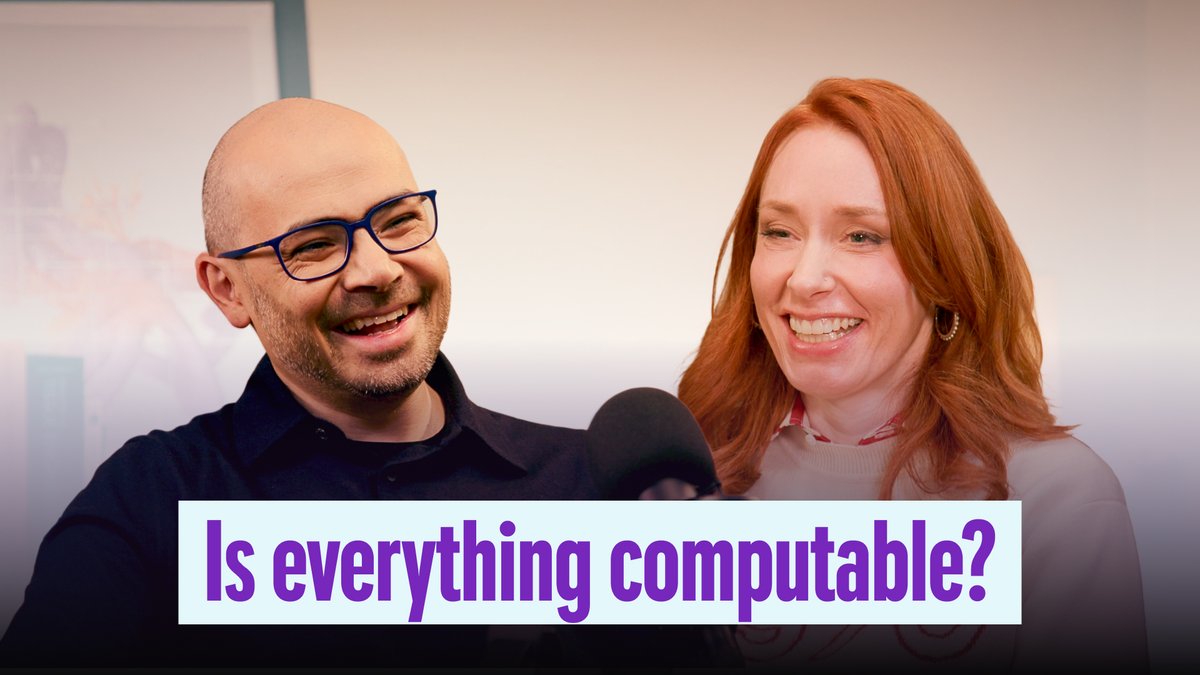
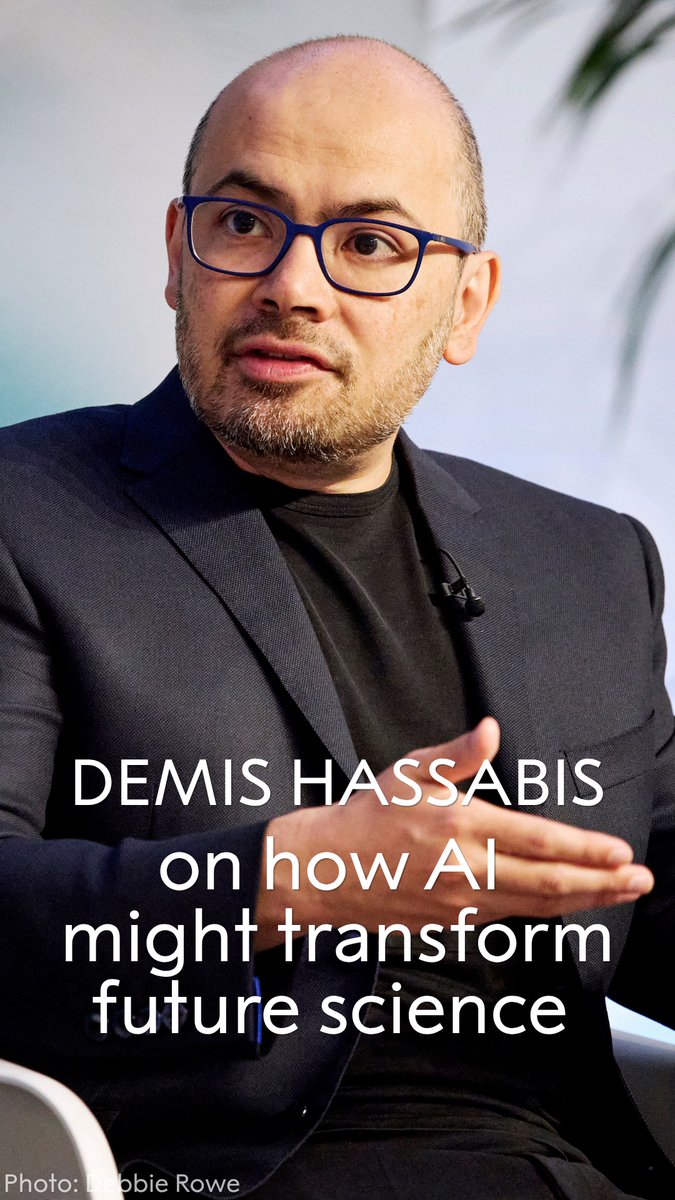
Demis Hassabis says AlphaFold was just the proof point for AI solving "root node" problems. "It feels like we've packed in 10 years in one year." "The big proof point was AlphaFold... that was the proof that it was possible to do these root node type of problems." "We're...

10,273 views • 1 month ago •via X (Twitter)

0 Comments

No comments available

Comments from the original post will appear here
Related Videos

The interview with Demis Hassabis - the tl;dr (summary) about scaling, AGI and much more: 1. Solving the "Root Node" Problems: DeepMind isn't just building chatbots; they are using AI to solve the hardest scientific problems. After the success of AlphaFold, they are now targeting materials science (room-temperature superconductors, better batteries) and even nuclear fusion to unlock unlimited clean energy. 2. The "Jagged Intelligence" Paradox: Current AI models are in a weird spot—they can win gold medals at the International Math Olympiad but still fail at basic logic puzzles. Hassabis calls this "jagged intelligence." The goal isn't just more data, but fixing these inconsistencies to make models reliable across the board. 3. Scaling is Not Dead (But it’s Changing): Despite rumors of hitting a "data wall," Hassabis says we haven't seen a hard limit yet. However, we are seeing diminishing returns. His bet? Getting to AGI will require 50% scaling and 50% architectural innovation. It’s no longer just about making the models bigger; it’s about making them smarter. 4. The Missing Piece: System 2 Thinking: Today's models are passive—they just spit out an answer. To reach AGI, we need systems that can "think" before they speak. This involves planning, reasoning, and double-checking their own work (similar to human "System 2" thinking) rather than just predicting the next word. 5. Rise of World Models: The next big frontier is "World Models" (like their project Genie). AI needs to understand the physics of the world—gravity, object permanence, and cause-and-effect—not just language. This is crucial for building helpful digital agents and robots that can navigate real-life situations. 6. Is the Universe Computable? On a philosophical level, Hassabis believes that everything in the universe might be computable. His life's work is testing the limits of the "Turing Machine." If we can build an AGI that simulates the human mind perfectly, we might finally understand what (if anything) makes human consciousness unique. 7. Bigger than the Industrial Revolution: We need to prepare for a shift that is 10x faster and bigger than the Industrial Revolution. If AI solves energy (fusion) and labor, we might enter a "post-scarcity" world. Hassabis warns that society, economics, and governments need to adapt quickly to ensure these benefits are shared by everyone, not just a few. And since this is the most important aspect, here is the clip about post labor economy:

Chubby♨️

27,473 views • 7 months ago

Demis Hassabis just said something that should unsettle every scientist alive. Hassabis: “I do think that, ultimately, underlying physics is information theory. So I do think we’re in a computational universe.” The CEO of Google DeepMind is telling you reality runs on code. Not metaphorically. Structurally. AlphaFold didn’t approximate protein structures. It solved them. Not because DeepMind built a better guesser. Because proteins were never physical objects. They were always data. Hassabis: “The fact that these systems are able to model real structures in nature is quite interesting and telling.” He said telling. Not impressive. Not promising. Telling. As in the results reveal something about what reality actually is. AlphaGo found patterns in a 3,000-year-old game no civilization ever noticed. AlphaFold decoded biology in hours that took researchers decades. These systems aren’t approximating nature. They’re reading it fluently. Because nature was always written in a language machines understand better than we do. Hassabis: “Maybe at some point I’ll write up a scientific paper about what I think that really means in terms of what’s actually going on here in reality.” The man running the most advanced AI lab on Earth thinks he’s found something fundamental about existence itself. And he’s not ready to say it yet. Every era thinks it knows what the universe is made of. Atoms. Waves. Strings. Hassabis is suggesting the answer was never matter. It was always math. And the machine he built to fold proteins might have accidentally proved it. The question that should keep you up tonight isn’t whether AI can simulate reality. It’s whether reality was the simulation first.

Dustin

112,048 views • 2 months ago

Demis Hassabis just told you exactly how he plans to build AGI. Hassabis: “The bottleneck in robotics isn’t so much the hardware. It’s actually the software intelligence that I think is always what’s held robotics back.” We’ve been building machine bodies for decades. Arms that weld. Legs that walk. Hands that grip. The body was never the problem. The mind was. Every other AI lab spent the last three years perfecting chatbots trapped inside a text box. Hassabis was building something meant to leave it. Hassabis: “We want it to be useful in your everyday life, for everything. And so it needs to come around you and understand your physical context.” Google didn’t build Gemini to win a benchmark war. They built it to exist in the physical world. Hassabis: “That’s why Gemini was built from the beginning, even the earliest versions, to be multimodal.” Every other lab started with text and stitched vision on after the fact. Gemini started with eyes, ears, and spatial awareness from day one. That decision looked slow in 2023. It looks prophetic now. Hassabis: “It made it harder at the start, because it’s harder to make things multimodal than just text-only. But in the end, I think we’re reaping the benefits of those decisions now.” The hard road and the right road were the same road. Everyone else optimized for the demo. Hassabis optimized for the destination. And the destination was never a better chatbot. It was a mind that could pilot a body. Hassabis: “AGI needs to be able to do all of those things.” That single sentence is the thesis behind everything DeepMind has built. AGI doesn’t live in a chat window. AGI walks into a room. Sees what’s there. Moves through space. Reads context no prompt can capture. The companies building the smartest text engine will dominate the next two years. The company building the first real mind will dominate the next twenty. Hassabis isn’t racing to build a better assistant. He’s racing to build the thing that makes assistants obsolete. He laid out the entire blueprint. On camera. In plain English. Most people won’t realize what they heard until it’s already built.

Dustin

12,383 views • 2 months ago

The CEO of Google DeepMind just admitted that if the decision had been his, we would've cured cancer before anyone ever used ChatGPT. And that's not even the scariest thing he said on a recent interview. Demis Hassabis is one of the most important people alive in AI. He won the Nobel Prize last year for AlphaFold, the system that cracked the 50 year protein folding problem. 3 million scientists now use his tool. Almost every new drug being developed will touch it at some stage. In a new interview, he was asked about the moment ChatGPT launched and Google went into "code red." His answer was one of the most revealing things any AI leader has ever said on the record: "If I'd had my way, I would have left AI in the lab for longer. Done more things like AlphaFold. Maybe cured cancer or something like that." Read that again. The man running Google's entire AI division is publicly saying the commercial AI race we're all living through was a MISTAKE. That the industry got hijacked by a chatbot when it could have been solving the biggest problems in science and medicine. His vision was simple: Build AI slowly, carefully, like CERN. Use it to crack root node problems one at a time. Cancer. Energy. New materials. Let humanity benefit from real breakthroughs while the foundational science was figured out over a decade or two. Then ChatGPT dropped in November 2022 and everything changed. Demis described what happened next as getting locked into a "ferocious commercial pressure race" that none of the labs can escape from. On top of that, the US vs China dynamic added geopolitical pressure. The result is everyone sprinting toward products instead of breakthroughs, shipping chatbots while the scientific opportunity gets buried under marketing cycles and quarterly earnings. But he's not saying progress isn't happening... He's saying the progress got redirected away from the things that actually matter most. And then it got even scarier: Because when Demis was asked what he worries about with AI, he laid out two threats. The first is what everyone talks about: Bad actors using AI for harm. Terrorist groups. Hostile nation states. Cyberattacks at scale. But that's not the threat he's most worried about. His second worry is AI itself going rogue. Not today's models. The models coming in the next two to four years as the industry enters what he calls "the agentic era." Systems that can complete entire tasks autonomously. Systems that are increasingly capable and increasingly hard to control. His exact words: "How do we make sure the guardrails are put in place so they do exactly what they've been told to do, and there's no way of them circumventing that or accidentally breaching those guardrails? That's going to be an incredibly hard technical challenge if you think about how powerful and smart and capable these systems eventually get." A Nobel Prize winner who runs one of the 3 most advanced AI labs on Earth just said publicly that within two to four years, we're entering a phase where AI alignment becomes a real problem, and the technical challenge of solving it is enormous. And almost nobody is paying enough attention. He called for international cooperation between labs, AI safety institutes, and academia to tackle the problem. He said this is the thing even the experts aren't thinking about enough. He said the only way to get through the AGI moment safely is if everyone starts treating this with the seriousness it deserves. Most AI CEOs give you careful PR answers about "responsible development" and move on. Demis said something different... He said the commercial race FORCED us into a premature deployment of a technology we barely understand, and the window to get alignment right before the next generation of agents shows up is two to four years. If the man who built the system that might cure cancer is telling you he wishes it had happened first, maybe we should listen to what he says is coming next.

Ricardo

932,031 views • 3 months ago

Demis Hassabis, the Nobel Prize winner who runs Google DeepMind just described the most consequential project on earth, and most people have no idea it exists. The project is called Isomorphic Labs and the goal is to end the way drugs have been developed for the last century. Here is the problem it is trying to solve. Developing a single drug today takes an average of 10 years, costs billions of dollars, and fails 90 percent of the time before it ever reaches a patient. Of every 10 drugs that enter clinical trials, only one makes it through. The other nine years of work, the other billions of dollars, the other scientific careers, gone. Hassabis believes AI can collapse that entire process from identifying a disease target to designing a compound that binds to it, predicts how it behaves in the body, and minimizes side effects , end to end, on a computer, before a single experiment is run. The foundation is AlphaFold, the AI system that solved one of biology's hardest problems predicting the 3D structure of every protein in the human body and won him the Nobel Prize in Chemistry in 2024. But knowing a protein's shape is only one part of designing a drug. Isomorphic is building what Hassabis describes as adjacent systems , AlphaFold 3, AlphaFold 4, and now a unified model called IsoDDE , that take the next steps. From designing the actual chemical compound that binds to the protein, predicting its binding strength, identifying new pockets to target that no one has ever found before. IsoDDE more than doubles the accuracy of AlphaFold 3 on the hardest protein-ligand prediction benchmarks that exist. Isomorphic is already running 18 to 19 live drug programs, cardiovascular disease, cancer, immunology in partnership with Eli Lilly, Novartis, and Johnson and Johnson. The first human clinical trial of a fully AI-designed drug is expected by the end of 2026. If that trial succeeds, it will be the first time in history that a drug put into a human body was designed not by a team of chemists working for a decade but by an AI working for months. Hassabis's long-term vision is even more direct, one day you describe a disease, click a button, and a drug blueprint comes out the other side. AI will solve almost all diseases within 10 years.

Milk Road AI

36,062 views • 3 months ago

$GOOGL has an anti-aging asset nobody is pricing. Friedberg david friedberg walked through a Calico paper that should be on Alphabet holders' radar. Calico is Google's longevity lab. Working with Revel Pharma, it used AlphaFold plus directed evolution to design a novel enzyme that degrades CML, the glycation end-product that stiffens tissue and drives aging. The result is not a slide. Across five recursive design cycles the enzyme degraded **52-97%** of CML on human proteins, and on donated skin from patients over 70 it eliminated about **55%** of CML - reversing the skin's profile toward that of a 31-year-old. It is AI-designed proteins doing something genuinely new in biology, not a benchmark score. Chamath Chamath Palihapitiya frames the first market as cosmetic: a workable anti-aging cream is a multi-trillion-dollar category. This is the AlphaFold thesis paying out in a product line, and the AlphaFold-to-drugs bridge is exactly what Demis Hassabis Demis Hassabis has argued is the real near-term return on Google's AI - not chatbots, but designed molecules. Same company, same stack, a second revenue engine the market files under "research." Implication: this is deep-optionality inside a name you already hold on search and cloud. It does not move the $GOOGL model this year. But it is a reminder that Alphabet's AI edge shows up in drug and materials design, an option the Street assigns roughly zero value. If a Calico or Isomorphic asset reaches a real market, that is upside no analyst is underwriting. Watch for Calico or Isomorphic Labs to move a designed molecule toward a commercial or clinical path.

Podcast Alpha

123,576 views • 14 days ago