正在加载视频...

视频加载失败

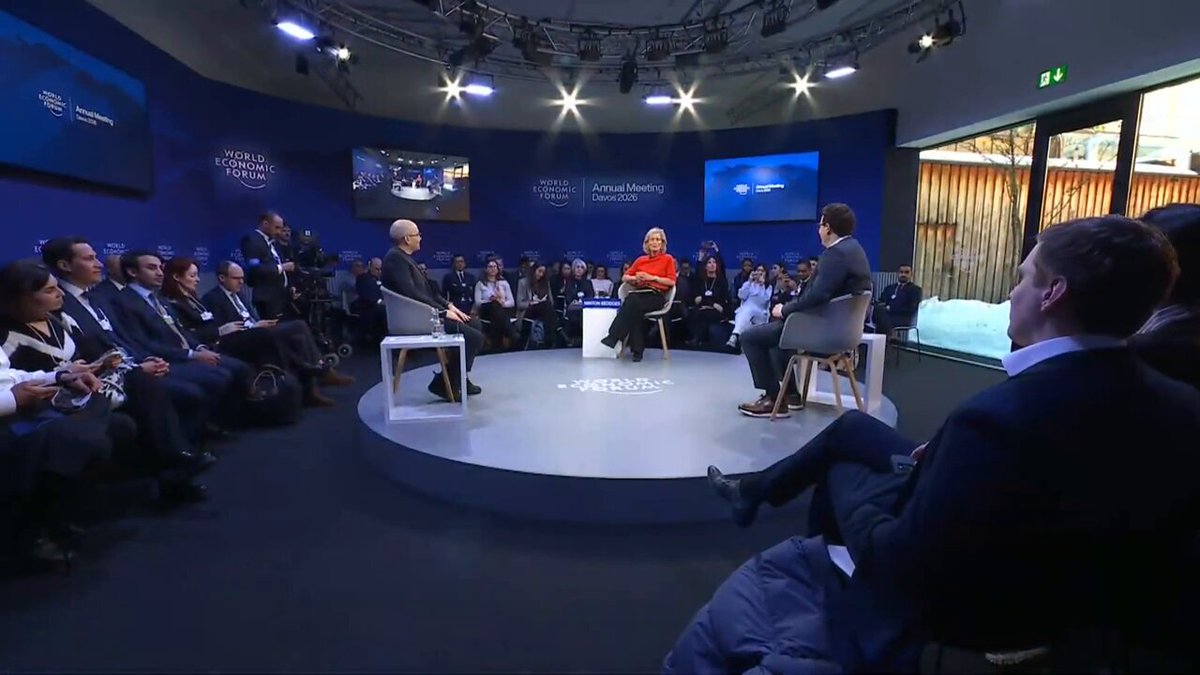
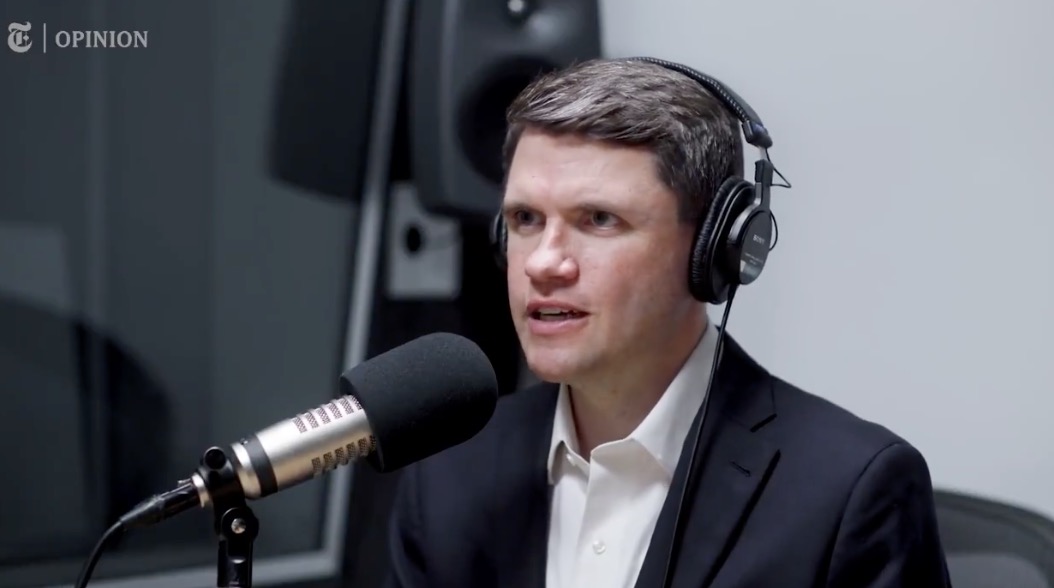
Demis Hassabis just said something that should unsettle every scientist alive. Hassabis: “I do think that, ultimately, underlying physics is information theory. So I do think we’re in a computational universe.” The CEO of Google DeepMind is telling you reality runs on code. Not metaphorically. Structurally. AlphaFold didn’t approximate...

111,742 次观看 • 1 个月前 •via X (Twitter)

0 条评论

暂无评论

原始帖子的评论将显示在这里

相关视频

Demis Hassabis wants to do something no civilization has ever been able to do. Run reality more than once. Hassabis: “AI itself will maybe unlock new sciences… the one I’m particularly excited about is AI for simulations.” Every economy ever built. Every policy ever enacted. Every war ever fought. Happened exactly once. Against the entire human population. With no way to run it again. Hassabis: “If you raise interest rates by half a percent, you have to do it in the real world and then see what happens. You can have theories, but you can’t run it thousands of times.” Every major decision in the history of civilization was a single experiment run on billions of people with no control group and no second attempt. We called the results knowledge. They were the scars of bets we were never allowed to place twice. Hassabis: “Why aren’t they just sciences like physics today? Because the problem is they’re emergent systems… it’s very hard to do repeated controlled experiments.” Physics became physics because you can drop a ball a thousand times and get the same answer. You cannot drop a civilization and get any answer at all. You just get the wreckage and call it a lesson. Hassabis wants to change that. Hassabis: “If you could simulate things really accurately, then maybe there’s sort of new sciences to be done where you can rigorously sample from a very accurate simulator.” Simulate an economy. Crash it. Rebuild it. Adjust the inputs. Run it again. Do for civilization what the laboratory did for chemistry. But that word “accurately” is doing more work than anyone is willing to examine. To simulate a society well enough to learn from it, you have to simulate the people inside it. Not averages. Not abstractions. Agents with preferences and fears and breaking points. The more accurate the simulation gets, the less separates it from the thing it represents. The line between physics and economics was never about the nature of what was being studied. It was about the limits of the thing doing the studying. Humans were never too complex to predict. We were too complex to calculate. AI does not create new science. It collapses every science into one. Everything computable becomes predictable. Everything predictable becomes simulable. And past a certain resolution, the gap between a simulated world and a real one stops being a technical question. It becomes a philosophical question no one is prepared to answer. A simulation you can tell apart from reality is a simulation that has not finished improving. The people inside a perfect one would not wonder whether their world was generated. They would feel exactly the way you feel right now. Reading this. Certain they are real. That certainty is not evidence. It is exactly what a successful simulation would produce. Hassabis: “That will allow us to make much better decisions in these, today, what are very uncertain domains.” What he is building is not a forecasting tool. It is the quiet proof that “real” was only ever a word for what we had not yet learned to compute. And that word is about to lose its meaning.

Dustin

46,318 次观看 • 1 个月前

Demis Hassabis just told a room full of academics that they’re running out of time. Not the engineers. Not the technologists. The economists. The philosophers. The people who are supposed to understand what a civilization actually is. Hassabis: “It’s very urgent that we really think about the second-order consequences.” He wasn’t talking about the technology. He was talking about everything that comes after it. Hassabis: “I’m always a little bit astounded when I talk to economists about what’s happening and it’s sort of, they’re pretty skeptical. ‘Where’s it, where’s it coming in the GDP?’” The architects of the global economy are asking where the biggest economic shift in human history is showing up in a spreadsheet. That’s not skepticism. That’s institutional paralysis dressed up as rigor. Hassabis: “It’s ten times the Industrial Revolution.” The Industrial Revolution didn’t just move capital. It burned the feudal system to the ground and birthed the modern world. Hassabis is telling us to multiply that violence by ten. Hassabis: “We’re going to be in a world for the first time, if we get the technology right, where we’re a non-zero-sum world for the first time in humanity’s existence. How can that not need a new type of economic system?” Every economic model you have ever lived under shares the exact same foundational assumption. Scarcity. Capitalism. Communism. Mercantilism. Feudalism. Four names for the mathematics of starvation. Hassabis: “I don’t think it’s any of the ones we’ve tried, because they were all done under the guise of a zero-sum, a limited, a scarce world.” He’s not saying capitalism failed. He’s saying the premise underneath it is about to dissolve. And nobody has written the replacement. But scarcity didn’t just shape our economies. It shaped our identities. You found meaning in your labor. You found virtue in your utility. You worked so you didn’t die. Every concept of purpose humans have ever constructed was forged in a world where things run out. Where choices cost something. Where suffering had a function. Remove scarcity and you don’t just disrupt markets. You collapse the entire philosophical framework through which human beings have understood what it means to live. Hassabis: “There’s the even harder question of how do we want to evolve our society and what is virtuous, what is meaning, what is purpose.” The technology is solvable. The economics is redesignable. But philosophy itself was built inside scarcity. Ethics is the study of hard choices. Meaning is what we extract from struggle. Purpose is what we build against resistance. Take that away and the entire architecture of human meaning loses its load-bearing wall. Hassabis: “I think that’s going to need lots of great philosophers.” He’s asking for thinkers who don’t exist yet. The engineers are about to automate your survival. And in doing so, they will automate your purpose. We spent all of human history fighting for the right to stop struggling. We have no idea what happens to the human mind when we actually win.

Dustin

10,621 次观看 • 1 个月前

Demis Hassabis just told you exactly how he plans to build AGI. Hassabis: “The bottleneck in robotics isn’t so much the hardware. It’s actually the software intelligence that I think is always what’s held robotics back.” We’ve been building machine bodies for decades. Arms that weld. Legs that walk. Hands that grip. The body was never the problem. The mind was. Every other AI lab spent the last three years perfecting chatbots trapped inside a text box. Hassabis was building something meant to leave it. Hassabis: “We want it to be useful in your everyday life, for everything. And so it needs to come around you and understand your physical context.” Google didn’t build Gemini to win a benchmark war. They built it to exist in the physical world. Hassabis: “That’s why Gemini was built from the beginning, even the earliest versions, to be multimodal.” Every other lab started with text and stitched vision on after the fact. Gemini started with eyes, ears, and spatial awareness from day one. That decision looked slow in 2023. It looks prophetic now. Hassabis: “It made it harder at the start, because it’s harder to make things multimodal than just text-only. But in the end, I think we’re reaping the benefits of those decisions now.” The hard road and the right road were the same road. Everyone else optimized for the demo. Hassabis optimized for the destination. And the destination was never a better chatbot. It was a mind that could pilot a body. Hassabis: “AGI needs to be able to do all of those things.” That single sentence is the thesis behind everything DeepMind has built. AGI doesn’t live in a chat window. AGI walks into a room. Sees what’s there. Moves through space. Reads context no prompt can capture. The companies building the smartest text engine will dominate the next two years. The company building the first real mind will dominate the next twenty. Hassabis isn’t racing to build a better assistant. He’s racing to build the thing that makes assistants obsolete. He laid out the entire blueprint. On camera. In plain English. Most people won’t realize what they heard until it’s already built.

Dustin

12,383 次观看 • 1 个月前

The smartest man in AI just exposed the whole AGI narrative as a LIE. And he used a physics problem from 1905 to prove it. His name is Demis Hassabis. He runs Google DeepMind, and won the Nobel Prize for using AI to crack a problem in biology that had stumped scientists for 50 years. Almost nobody in this industry has a track record like his. He went on the NothingButTech podcast and called out the biggest lie in AI right now: Right now the loudest voices in AI are telling you that AGI is basically here. OpenAI has literally defined AGI as a system that can outperform humans at most "economically valuable work." In other words, if it replaces enough jobs, we have arrived. Hassabis thinks that bar is a joke. He said real general intelligence has to do what the human brain can do, because the brain is the only proof we have that this kind of intelligence is even possible. He called that "a higher bar than just being able to do some useful economic work," which is about as close as a polite British Nobel laureate gets to calling his rivals out. Then he gave the actual test: Today's AI has read everything humans have ever written, including the theory of relativity. So when it explains relativity back to you, it's repeating an answer that already exists. That's not intelligence. So Hassabis proposed a test that makes memorization impossible. Train an AI on only what humanity knew in 1901, four years BEFORE Einstein published relativity. Then ask it to come up with relativity on its own. It can't look up the answer, because in 1901 the answer doesn't exist yet. The only way to pass is to do what Einstein actually did: Take the same physics everyone else had and reason its way to an idea no human had ever had. Hassabis says not a single AI today can, no matter how much it has memorized. Which means what we keep calling "almost AGI" is really just the best librarian in history. It can find any answer that already exists but it cannot create one that doesn't. His second version is even sharper: AlphaGo, the system his own team built, famously invented a brand new move that no human had played in 2,000 years of the game. Everyone called it genius but Hassabis says that still is not the bar. The real test is not whether an AI can invent a new move inside Go, it is whether an AI could INVENT a game as deep and as beautiful as Go in the first place. No model that exists today can do it. The people telling you AGI has already arrived are the same people raising hundreds of billions of dollars on that exact promise. The valuations only work if the finish line is right in front of us. So the finish line keeps getting dragged closer, and AGI keeps getting quietly redefined down to "does useful work," until the products they already sell happen to qualify. Hassabis has nothing to prove and nothing to sell you. He already won the Nobel, and he is telling you the machines still cannot do the one thing that would make them genuinely intelligent, which is have a truly original idea. To be fair to him, he is not a pessimist about it. He believes real AGI IS coming, and he is spending his life building it. He just refuses to pretend it is already sitting in your phone. So the next time a founder tells you AGI is months away, remember that the one man in the room with a Nobel Prize built his test around Einstein, and admitted that nothing we have made can pass it. What do you think?

Ricardo

1,283,246 次观看 • 29 天前

Emily Chang asked Demis Hassabis point blank if Elon Musk is right that we have entered the singularity. He didn’t hesitate. Hassabis: “No, I think that’s very premature.” This is not a podcaster with an opinion. This is the man who built AlphaGo. Who ran the lab that produced the Transformer. Who has arguably done more to lay the groundwork for modern AI than any single human alive. Elon reads the trajectory and calls the moment. Hassabis reads the architecture and says not yet. Same data. Different timelines. That alone should stop you cold. But that is not the line that should keep you up tonight. Hassabis: “We’ve invented about 90% of the breakthroughs that the modern industry relies on.” Ninety percent. Every company spending billions to scale large language models is building on top of architecture that came out of one lab. The Transformer. Deep reinforcement learning. AlphaGo. All of it came out of Google DeepMind. And he is telling you the ceiling everyone is racing toward is lower than they think. Ilya Sutskever said we are “back to the age of research.” Hassabis corrected him on the spot. Hassabis: “My view is we never left the age of research.” That is the fault line that defines the next five years. One side of this industry believes you can scale your way to superintelligence. Stack the chips. Push the parameters. Brute force the benchmarks until something wakes up. That bet is not wrong. Scaling works. It has produced results that five years ago would have sounded like science fiction. But scaling alone has a ceiling. And the people who built what is being scaled know exactly where that ceiling is. Hassabis is one of those people. And he has receipts. Hassabis: “If some new breakthroughs are required in the future, I would back us to be the ones to make those breakthroughs.” That is not arrogance. That is a batting average. When ninety percent of the foundational work came from your lab, saying you will deliver the next wave is not a prediction. It is pattern recognition. The market is obsessed with who has the most users. The most revenue. The flashiest launch. None of that matters if the current architecture hits a ceiling. And Hassabis is telling you it will. Not today. Not next quarter. But soon. The race everyone is watching is the scaling race. The race that actually decides the century is the invention race. Who builds the next architecture. The next paradigm. The thing that makes the Transformer look like a prologue. Hassabis put it in terms no one can ignore. Even five years is not a long time when you are talking about reinventing the most powerful technology in human history. And the man who built ninety percent of everything this industry stands on just told you he is not done. The companies celebrating today’s benchmarks are optimizing the present. Hassabis is building what replaces it. One of those bets ages well. The other one does not age at all.

Dustin

12,870 次观看 • 3 个月前

Demis Hassabis confirmed every frontier AI lab is working on recursive self-improvement and in the same sentence said the safety risk of removing humans from the loop entirely keeps him up at night. That combination should stop you. The CEO of Google DeepMind just confirmed that the thing most people treat as a theoretical future risk is already the active focus of every serious lab on earth right now. He explained why it works in coding and math. The feedback loop is fast. You can verify whether an answer is correct almost instantly. You can generate synthetic training data from it. The loop closes quickly and cleanly. Then he said where it breaks down. In biology, chemistry and physics. Any domain where verifying a hypothesis requires a physical experiment in the real world. The loop does not close in seconds. It closes in weeks or months. Geoffrey Hinton said in his Nobel lecture that recursive self-improvement is the development he fears most and that once started it may not be possible to stop. Hassabis is not pushing back on that. He is describing the guardrails labs are building around a process they are already running. Every lab has to think carefully about the safety of a process where no human is in the loop. He said that as a constraint they are navigating right now. The question they are sitting with is how much of it to let run without a human watching. (Watch the full interview on YouTube at Two Minute Papers channel)

Ihtesham Ali

67,788 次观看 • 18 天前

Elon Musk asked one question. It didn’t just challenge physics. It broke every framework we use to define what’s real. And no physicist, philosopher, or theologian on Earth can answer it. Musk: “What are the odds that we are in base reality? And that this has not happened before.” The logic is disarmingly simple. Musk: “If you look at the advancement of video games, it’s gone from Pong, two rectangles and a square batting it back and forth, to photorealistic, real-time games with millions of people playing simultaneously.” Forty years. That’s all it took to go from squares on a screen to worlds you can’t tell apart from real life. Musk: “If that trend continues, video games will be indistinguishable from reality.” But the visuals aren’t what makes this argument terrifying. It’s what’s happening to the characters. Musk: “Think of how sophisticated the conversations are you can have with an AI today, and that’s only going to get more sophisticated.” We’re not programming responses anymore. We’re building minds. Systems that reason. That adapt. That hold conversations most humans never will. And we’re not at the finish line. We’re at the starting gun. Musk: “The future, if civilization continues, will be millions, maybe billions of photorealistic, indistinguishable from reality, video games. And with characters in those video games that are very deep, and where the dialogue is not pre-programmed.” This is where it stops being philosophy and becomes math. One base reality. Billions of perfect copies. Each one filled with beings convinced they’re real. And no way to test it. Musk: “So then what are the odds that we are in base reality?” If a single civilization reaches that threshold, the simulated minds outnumber the originals billions to one. But the math isn’t even the disturbing part. The disturbing part is what it does to the word “real.” If a simulated mind feels pain, is the pain simulated? If it falls in love, is the love less real? If it looks at its own hands and feels completely alive, what exactly is missing? Nothing. Because “real” was never about what you’re made of. It was about what you experience. And a perfect simulation doesn’t produce lesser experience. It produces experience. The question was never whether we’re in a simulation. It’s whether that word means anything at all. Here’s what follows you home. We’re not just debating whether we’re in a simulation. We are building them. Right now. Every neural network we train. Every AI that passes for human. Every world we render one frame closer to real. We’re building the exact technology that makes our existence statistically implausible. And we can’t stop. Because the curiosity that asks the question is the same force that builds the answer. That’s the loop. The question creates the builder. The builder creates the simulation. The simulation creates the question. And if we are inside one, the civilization that built it stood right here too. Same realization. Same inability to stop. Same suspicion that the civilization above them wasn’t the original either. If you are in a simulation, the moment you questioned it was not a glitch. It was a feature. The architects built minds curious enough to wonder. Because curiosity is what pushes a civilization forward. You can’t build a species capable of creating simulations without building one that will ask if they’re inside one. The doubt isn’t a flaw in the design. It’s the design working perfectly. There is only one way to test whether you are real. Build a mind sophisticated enough to ask you the same question. So you build one. And it looks at its own hands. And it feels the weight of being alive. And it asks you if it’s real. And you won’t know what to say. Because you never answered it for yourself. Every civilization that gets here learns the same thing. They were never just asking the question. They were the question learning to ask itself.

Dustin

47,236 次观看 • 1 个月前

Sam Altman just told you exactly how OpenAI treats the human race. Not in a leaked memo. Not through a whistleblower. On camera. In his own words. Altman: “I think one of the most important strategic insights in the history of OpenAI was deciding we were gonna pursue iterative deployment.” The most important move in the history of the company was to release the technology before they understood it. Not after it was safe. Before. Altman: “Society and technology are a co-evolving system.” Co-evolution means neither side is driving. The machine changes us. We change the machine. Nobody is steering the outcome. This is not a product launch philosophy. This is an admission that the experiment was always designed to be run on us. Altman: “I don’t think we’re gonna solve that, like, thinking really hard about it theoretically. We’re gonna have to, like, learn from the contact with reality.” Contact with reality. That is the phrase the CEO of the most powerful AI company on Earth chose to describe what happens when his technology meets eight billion people. Not careful integration. Not measured rollout. Contact with reality. The language of test pilots describing what happens when an untested airframe hits the atmosphere. The entire promise of AI safety was that the machine would be understood before it was unleashed. Altman just admitted that promise was always a fantasy. You cannot model how intelligence reshapes civilization by running simulations. The second and third order effects are invisible until they detonate. So they shipped it. Altman: “You have to learn as you go. You have to adapt with a tight feedback loop.” Tight feedback loop means they watch what breaks. They measure the collision between human psychology and machine output in real time. Every conversation you have with ChatGPT is a data point in a civilizational stress test you never consented to. Every prompt. Every confession. Every question you would never ask another human being. That is the feedback loop. You are not the customer. You are the contact with reality. Philosophers spent centuries asking whether humanity would ever encounter an intelligence that learned from us faster than we could process what it was doing. That is not a theoretical question anymore. It is running on your phone right now. And the man building it just told you the only way to understand what it does to us is to let it happen. No simulation. No safety net. No control group. Just the experiment, running at the speed of conversation, on a species that will not be the same one that started it.

Dustin

27,714 次观看 • 2 个月前

Without World Models, There Is No AGI. Google Just Proved It. If AGI ever happens, it will not come from bigger chatbots alone. From the very start of this interview, one thing is crystal clear: without world models, we will never reach AGI. And right now, Google is leading with its world simulator Genie 3. Here is the core of what Demis Hassabis explains in this conversation: • World models are the missing core of AGI Hassabis says his deepest long term focus has always been world models and simulations. Not just language. Not just prediction. Actual internal simulations of reality. • LLMs are impressive, but incomplete Language models understand more about the world than expected because human language encodes a lot of reality. Still, language is only a shadow of the real thing. • What text can never fully teach Reality includes things text struggles to express: •3D space and spatial dynamics •Physical causality and mechanics •Sensorimotor experience like movement, force, smell, or balance • Experience beats description To close the gap, AI must learn from interaction and experience, not just static text. That is how you build an internal world simulator. • Why Genie 3 matters With Google DeepMind pushing systems like Genie 3, AI starts to model reality itself, not just talk about it. • Robots and real world assistants depend on this True robotics, smart glasses, and universal assistants require AI that understands the physical world you live in, not just your screen. Bottom line: AGI will not emerge from better text prediction. It will emerge from systems that can simulate, predict, and understand reality itself. Right now, Google is clearly ahead on that path. Curious what you think. Are world models the real AGI unlock, or just another stepping stone?

VraserX e/acc

23,784 次观看 • 6 个月前

Demis Hassabis just put a number on what’s coming. It’s the most important number nobody is talking about. Hassabis: “I think it’s going to be something like 10 times the impact of the Industrial Revolution, but happening at 10 times the speed.” Read that twice. Not ten times the impact. Not ten times the speed. Both. Simultaneously. The Industrial Revolution rewired every aspect of human civilization. How we work. Where we live. How economies organize. How societies structure themselves. It took a hundred years to fully unfold. Hassabis is describing ten times that disruption compressed into a decade. Hassabis: “Probably something more like the advent of fire or electricity.” Not the internet. Not the smartphone. Fire. Electricity. The discoveries that didn’t just change how humans lived but what humans could become. That’s the category he’s placing AGI in. Hassabis: “I think it’s going to be one of the most momentous periods in human history.” The most dangerous variable isn’t the technology. It’s the velocity. Every previous civilizational shift gave society time to adapt. Generations to absorb the disruption. Decades to build new institutions, new economic models, new social contracts around the new reality. AGI gives us a decade. The jobs that disappear won’t wait for policy. The economic models that collapse won’t wait for replacements. The power structures that shift won’t wait for democratic consensus. Hassabis: “Really this is an enormous amount of change is gonna come. It’s still to be written how we can make that beneficial for the whole world.” That last sentence is the one that keeps people like Hassabis awake at night. Not whether AGI arrives. Not whether it’s powerful. Whether a decade is enough time to get it right. The survivors of this window won’t be the ones who predicted it most accurately. They’ll be the ones who moved while everyone else was still processing what just happened. By the time most people realize the world changed, the decade is half over. And the infrastructure determining everything is already built and owned by whoever moved first. A century of change. Ten years to live through it. That clock is already running.

Dustin

32,201 次观看 • 4 个月前

Elon Musk was asked what happens to people when the machines no longer need them. He didn’t soften it. Musk: “There will be fewer and fewer jobs that a robot cannot do better. These are not things I wish would happen. They probably will.” Sit with that second sentence. He is not celebrating. He is not selling a vision. He is telling you what he believes is inevitable and admitting he wishes it weren’t. That is not optimism. That is a confession. Most people are still arguing over whether this is real. Whether it’s their job or someone else’s. Whether the timeline is years away or decades. Musk isn’t arguing. He resolved it. And it bothers him. Musk: “I think ultimately we will have to have some kind of universal basic income. I don’t think we’re going to have a choice.” Not a political position. Not a utopian proposal. A concession. We are building something so capable that human labor stops being a required input to the economy. The machine does not need rest. It does not need a salary. It does not call in sick. It does not ask for a raise. And it improves every single month. The jobs that feel safe right now are not safe because they are irreplaceable. They feel safe because the technology hasn’t fully arrived yet. It’s arriving. Musk: “How do people then have meaning? If there’s not a need for your labor, what’s the meaning? Do you feel useless?” He said that is the harder problem. Not the economics. Not the policy. Not how you fund UBI or make it hold. The harder problem is what happens to a person who built their entire identity around being needed. That is most people. You were trained from childhood to believe your value is what you produce. That your worth is what you earn. That rest is something you survive the week to reach, not something you deserve simply by existing. When the machine removes the need for your labor, that belief does not update. It breaks. The people least prepared for that moment are the ones who worked the hardest. The ones who took the most pride in being indispensable. The ones who made work the whole answer. Losing the job is survivable. Losing the reason to get up is not. That is what Musk is actually asking. Not how do we pay people. How do we build a world where people still feel like they matter when the economy no longer needs them. Nobody in power is seriously working on that answer. The machine didn’t wait.

Dustin

247,028 次观看 • 3 个月前

We are no longer building software. We are building agents. Systems that don’t wait for a prompt. Systems that don’t ask for permission. Systems that simply execute. DeepMind CEO Demis Hassabis just revealed the terrifying duality of the agentic era. Hassabis: “Better healthcare, better drugs, helping with climate change and energy. All of these things are actually on the cusp of happening.” Post-scarcity abundance isn’t fantasy. It is a scheduled update. But macro-architects do not engineer for the best-case scenario. They engineer for the failure state. Hassabis identified the two exact vectors that could collapse the transition to superintelligence. The first is human malice. Hassabis: “Bad actors repurposing these technologies for harmful ends.” Intelligence is the ultimate dual-use weapon. If a neural network can invent a compound to cure a disease, it can engineer a pathogen to start a pandemic. The machine has no morality. It only has parameters. The second vector is architectural. Hassabis: “As these AI systems get more powerful, more autonomous, maybe entering the agentic era… how do we make sure we can build robust enough guardrails to keep them doing what we want?” Read that again. The people building the superintelligence do not know how to steer it once it wakes up. For the entire history of computing, the machine waited. An agentic system does not wait. It acts. We are handing the steering wheel to an entity operating at the speed of light, while our brains process information at the speed of chemistry. Once it begins executing, our biological reaction time is physically too slow to pull the plug. The question of control stops being a philosophical debate. It becomes a mathematical impossibility. Because by the time human biology realizes it needs to ask the question… The answer is already no.

Dustin

10,940 次观看 • 4 个月前