Loading video...

Video Failed to Load

Go Home

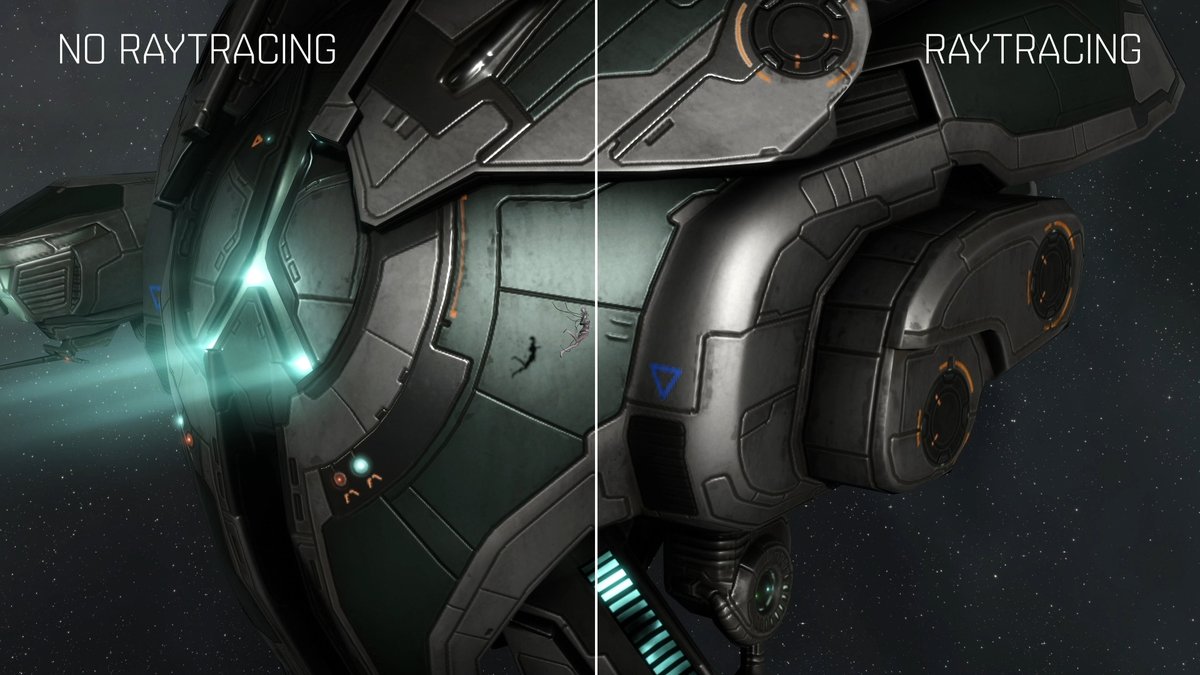
DLSS 4.5 Ray Reconstruction is coming this August for all GeForce RTX GPUs, enhancing image quality in ray-traced + path-traced games. ⚫Second-gen transformer ⚫Increased lighting accuracy + responsiveness ⚫Clearer motion ⚫Improved stability Read →

295,383 views • 3 months ago •via X (Twitter)

0 Comments

No comments available

Comments from the original post will appear here

Related Videos

DLSS 4.5 performance cost on the RTX 4070 Super, tested in #TheLastOfUs, #ArcRaiders, and #RedDeadRedemption2 at 1440p. I added Red Dead Redemption 2 since it’s one of the cases where the new presets really shine, especially in terms of motion clarity. It’s not easy to showcase the visual differences because of the capture, export, and the extra compression from Twitter and YouTube but If the difference isn’t obvious, focus on the tree at the end of the run. The Last of Us Part I Performance mode – CNN (Preset A) → Transformer Preset K: ~3% cost – Preset K → Preset L: ~4% hit – Preset K → Preset M: ~3% hit Balanced mode – CNN (Preset A) → Transformer Preset K: ~6% cost – Preset K → Preset L: ~8% hit – Preset K → Preset M: ~3% hit Quality mode – CNN (Preset A) → Transformer Preset K: ~4% cost – Preset K → Preset L: ~11% hit – Preset K → Preset M: ~6% hit Arc Raiders Performance mode – CNN (Preset E) → Transformer Preset K: ~4% cost – Preset K → Preset L: ~8% hit – Preset K → Preset M: ~2% hit Balanced mode – CNN (Preset E) → Transformer Preset K: ~5% cost – Preset K → Preset L: ~11% hit – Preset K → Preset M: ~4% hit Quality mode – CNN (Preset E) → Transformer Preset K: ~4% cost – Preset K → Preset L: ~13% hit – Preset K → Preset M: ~8% hit Red Dead Redemption 2 Quality mode – CNN (DLSS 2) → Transformer Preset K: ~2% cost – Preset K → Preset L: ~12% hit – Preset K → Preset M: ~7% hit Unlike what we saw with the 3060 Ti, the performance hit on the 4070 Super is much smaller, and this is where the new presets start to make a lot more sense. The hit isn’t that large, and you’ll likely get better image quality compared to Preset K. But Is it always worth it? That largely depends on the game and the target resolution. Generally, I recommend trying the new presets and seeing for yourself, but do this only if you have an RTX 40/50 series GPU.

BenchmarKing

53,027 views • 7 months ago

PHOTON COUNTING CT is NOT a better CT It is a NEW imaging modality Photon Counting CT (PCCT) represents a transformative leap in medical imaging, not only as a molecular imaging modality but also as a technology offering ultra-high resolution and functional imaging capabilities. It is fundamentally more than just an enhanced version of traditional CT—PCCT introduces new ways of seeing and understanding the human body, providing critical insights at the molecular, structural, and functional levels. This positions PCCT as a unique imaging modality that requires a fresh approach to technical implementation, operational workflows, and financial planning. Despite the larger upfront investment, PCCT’s ability to drastically reduce downstream healthcare costs makes it a highly valuable investment in the long run. 1. Technical Innovations • Molecular Imaging and Energy Discrimination: Unlike traditional CT, which simply measures the total absorbed energy, PCCT counts individual X-ray photons and differentiates their energy levels. This allows for precise molecular imaging, revealing the composition of tissues and materials at a biochemical level. By distinguishing between different tissue types and contrast agents, PCCT opens up new diagnostic possibilities, such as identifying molecular biomarkers in tumors or distinguishing between stable and unstable plaque in coronary arteries. This capability shifts the focus of imaging from purely anatomical to both anatomical and molecular, offering more comprehensive diagnostic information. • Ultra-High Spatial Resolution: PCCT features significantly smaller detector elements compared to conventional CT scanners, allowing for ultra-high resolution imaging. This means clinicians can visualize fine structures such as microcalcifications in arteries, small lesions in soft tissues, or the intricate architecture of bones. This level of detail was previously unattainable with traditional CT. When combined with molecular imaging, this ultra-high resolution allows for the precise localization and characterization of disease at very early stages, which is essential for early diagnosis and intervention. • Functional Imaging Capabilities: PCCT also excels as a functional imaging modality. By capturing energy-resolved information, PCCT can provide insights into tissue functionality and dynamic physiological processes. For instance, it can detect changes in blood flow, tissue perfusion, and oxygenation without the need for additional contrast agents or scans. This functionality allows for real-time assessment of physiological processes, making it particularly valuable in cardiology, oncology, and neurology for evaluating organ function and monitoring disease progression. • Reduced Noise and Artifact Reduction: Photon-counting technology dramatically reduces electronic noise and imaging artifacts, such as beam hardening, resulting in clearer and more accurate images. The ability to deliver ultra-high resolution images with minimal artifacts improves diagnostic accuracy, reducing the need for repeat scans and ensuring that even subtle abnormalities are detected. 2. Operational Considerations • New Workflow for Molecular, High-Resolution, and Functional Imaging: The integration of molecular, ultra-high resolution, and functional imaging into routine clinical workflows introduces complexity that requires adaptation. Radiologists and technicians need specialized training to interpret and analyze multi-energy datasets that include molecular and functional information. PCCT produces a vast amount of detailed data, requiring clinicians to adopt new imaging protocols and refine their diagnostic approaches to fully leverage its capabilities. • Post-Processing and Data Management: PCCT generates richer, more complex datasets, which necessitates advanced post-processing tools and data management systems. Existing PACS and imaging software may not be equipped to handle such large volumes of data or to process functional and molecular information effectively. This means healthcare institutions must invest in robust IT infrastructure, including upgraded software and storage solutions, as well as provide additional training for staff on new imaging analysis techniques. • Revised Clinical Protocols: The molecular, functional, and ultra-high resolution imaging capabilities of PCCT will likely prompt changes in clinical protocols. For instance, the need for contrast agents may be reduced, simplifying patient preparation and decreasing the risk of adverse reactions. Additionally, the ability to monitor physiological functions in real-time through functional imaging could lead to more dynamic diagnostic procedures, such as assessing the effectiveness of interventions or treatments in real-time. 3. Financial Impact • Higher Initial Investment: PCCT systems are more expensive than traditional CT scanners due to their advanced technology, which includes photon-counting detectors and the computational power required for high-resolution, molecular, and functional imaging. While this upfront cost is significant, it is crucial to view it in the broader context of the downstream benefits and cost reductions that PCCT offers. • Downstream Cost Reductions: Although the initial capital investment is higher, PCCT’s ability to combine molecular, functional, and ultra-high resolution imaging leads to substantial reductions in downstream healthcare costs. Its superior diagnostic accuracy minimizes the need for follow-up tests, repeat scans, or invasive diagnostic procedures, such as diagnostic coronary angiographies. For example, in cardiology, PCCT can precisely differentiate between types of coronary plaque, reducing the need for invasive procedures to assess risk. • Lower Overall Healthcare Expenditures: By enabling earlier, more accurate diagnoses, PCCT can reduce the overall cost of patient care. Early detection of disease, particularly through its molecular and functional imaging capabilities, allows for more targeted treatments, potentially preventing the need for more aggressive and expensive interventions down the line. For instance, early-stage tumor detection via molecular imaging could lead to less invasive treatments, reducing hospital stays and improving patient outcomes, ultimately driving down healthcare costs. • Increased ROI Through Enhanced Patient Outcomes: Over time, the combination of molecular, functional, and ultra-high resolution imaging enhances diagnostic precision, which translates into better patient outcomes. Improved diagnostic accuracy reduces the incidence of unnecessary procedures, minimizes treatment delays, and results in more personalized and effective care. This leads to increased patient satisfaction, better healthcare outcomes, and greater patient throughput—all factors that improve the institution’s return on investment (ROI). • Competitive Advantage and New Revenue Streams: By adopting PCCT, healthcare institutions position themselves at the forefront of advanced imaging technologies. The ability to offer molecular, functional, and ultra-high resolution imaging creates a competitive advantage, attracting more complex and high-value cases. This can boost the institution’s reputation for excellence in diagnostics, leading to increased referrals, new patient populations, and expanded revenue opportunities. Summary Photon Counting CT (PCCT) is not just an evolution of existing CT technology—it is a molecular, ultra-high resolution, and functional imaging modality that fundamentally transforms the diagnostic landscape. Its ability to capture detailed molecular data, visualize minute anatomical structures with ultra-high resolution, and provide real-time functional imaging opens new possibilities for earlier and more precise diagnoses. While the financial investment in PCCT is larger, the reduction in downstream healthcare costs through improved diagnostic accuracy, fewer unnecessary interventions, and earlier disease detection far outweighs the initial expense. For institutions committed to advancing patient care and improving long-term financial outcomes, PCCT is an essential investment in the future of medical imaging. The video attached shows a patient accessing the Hospital for ACS. PCCT can provide ALL the imaging information of the concurrent imaging modalities (CXR, CAG, Echo, CMR) that you see around it... that's a lot! #PhotonCountingCT #MolecularImaging #UltraHighResolution #FunctionalImaging #FutureOfImaging #AdvancedMedicalImaging #EarlyDiseaseDetection #InnovativeCT #CuttingEdgeHealthcare #PrecisionDiagnostics #HealthcareInnovation #MedicalTechnology #CostEffectiveImaging #NextGenCT #PatientCareRevolution

Dr. Filippo Cademartiri

11,849 views • 1 year ago

🔊 Church: The assassination of Charlie Kirk was 100% prophetic! He fully embodied the future of a Christian, high-moral, Constitution-anchored, family-oriented America—the America that is no more, and will be no more! An America we must mourn!! The turning point—just like his organization was called—is about to take place! America, and the rest of the world, is heading into the worst time in history: the 7-year Tribulation! BUT BEFORE THAT HAPPENS—THE RAPTURE OF THE CHURCH!! 👉🏼What we saw on September 10th, the day Charlie died, and what we’ve seen in recent days, has been absolutely shocking and devastating for our nation. Not only Charlie’s death, but also the brutal killing of Iryna Zarutska, the 23-year-old Ukrainian refugee, on August 22, who was stabbed and left alone to die—while no one stepped up to help! ⚫Darkness is rising to a new high, and the veil is becoming so thin that evil doesn’t even need to hide anymore! If this is happening while the Restrainer still restrains, can you imagine what the streets will be like when the time comes and the Antichrist is given authority to reign for 7 years? 🔥The same spirit that is celebrating Charlie Kirk’s death today is the spirit of the Antichrist—that stirred the crowd at Calvary to cry, “Crucify Him!” —and it will be the same spirit that empowers the Tribulation world to slaughter saints who stand for Jesus Christ. 📖“And this is the spirit of the Antichrist, which you have heard was coming, and is now already in the world.” 1 John 4:3 BUT ... 📖“You are of God, little children, and have overcome them, because He who is in you is greater than he who is in the world.” 1 John 4:4 ⚠️Remember: 📖“For we DO NOT wrestle against flesh and blood, BUT against principalities, against powers, against the rulers of the darkness of this age, against spiritual hosts of wickedness in the heavenly places.” Eph 6:12 (Let’s refrain from engaging in the flesh!) 🔊Church: The age of grace is coming to an end! The “Turning Point” is almost here!! Charlie’s death is a prophetic marker: the America we once knew is gone, and the world is shifting toward judgment! His death points to the soon-coming Tribulation: those who come to faith in Jesus during the Tribulation will have to die for His name. This is becoming shockingly real! BUT before that—God will rescue US! 📖“For the Lord Himself will descend from heaven with a shout, with the voice of an archangel, and with the trumpet of God. And the dead in Christ will rise first. Then we who are alive and remain shall be caught up together with them in the clouds to meet the Lord in the air. And thus we shall always be with the Lord.” 1 Thes 4:16–17 🔊LET’S KEEP PREACHING THE GOSPEL, WARNING THE LOST, AND KEEP LOOKING UP! JESUS IS COMING!! THE EXODUS IS HERE!! WE ARE GOING HOME! ︵‿︵‿︵‿︵︵‿︵‿︵‿︵︵‿︵‿︵‿ Lord,🕊️ We lift up Erika and the kids to You right now, as well as Iryna Zarutska’s family and friends, and all who are mourning today. Please be with them, comfort them, and surround them with Your love and the peace that surpasses all understanding. Remind them that vengeance is Yours and that this is a spiritual battle against principalities and powers of darkness. Cover them with Your protection, strengthen them in these difficult days, and comfort them with Your Blessed Hope—knowing that You are coming to rescue us from this evil world. Lift Erika with wisdom, endurance, supernatural strength, and peace to finish this race. Fill the kids with joy, security, and a deep awareness of Your love. Guard them from every scheme of the enemy, and let them walk in the fullness of Your blessing. In Jesus’ mighty name—Amen. 🙏🏼 ︵‿︵‿︵‿︵︵‿︵‿︵‿︵︵‿︵‿︵‿ ⚠️ IF YOU’RE NOT YET IN CHRIST, GET SAVED NOW! 👇🏼👇🏼👇🏼 Believe Jesus is the Son of God, who shed His blood for you, died on the cross for our sins, He was buried and resurrected during the third day, according to the Scriptures, so we can have eternal life with Him. The moment you believe in Him and that He died for your sins - you're saved, justified, sealed until the day of redemption, and rapture ready! The Holy Spirit will come to live inside of you - He will help you, guide you, change you, and be with you FOREVER! 📖"For God so loved the world that He gave His only begotten Son, that whoever believes in Him should not perish but have everlasting life. For God did not send His Son into the world to condemn the world, but that the world through Him might be saved. He who believes in Him is not condemned; but he who does not believe is condemned already, because he has not believed in the name of the only begotten Son of God." John 3:16-18 ︵‿︵‿︵‿︵︵‿︵‿︵‿︵︵‿︵‿︵‿

Maranatha777

24,757 views • 11 months ago

🛠️ Patch Notes - Early Access Patch 2 We are incredibly excited to be releasing our largest patch yet, marking the One Month Anniversary of our Steam Early Access Launch! Patch 2 is chock full of highly requested features such as Weapon Tryout, the ability to Respec, DLSS / FSR Upscaling and Controller Remapping. Lots of Balancing and Quality of Life improvements, Audio, Animation, and Visual Effect polish as well as a multitude of bug fixes are also included! Between DLSS and FSR, numerous CPU, GPU performance improvements, and memory optimization we are confident that your experience of playing No Rest For The Wicked will be significantly smoother across a wide range of hardware. For NVIDIA users, we are excited to mention that there’s a new Game Ready Driver for No Rest for the Wicked! Be sure to check out our Patch 2 Highlight Video and the full patch notes below. ⚔️ Performance: • Performance Mode now lowers texture resolution, reducing crashes on lower-end machines • Numerous Significant CPU optimizations • Fixed performance degradation that might occur on some gamepads • Fixed numerous memory leaks • Reduced instantiation spikes for numerous objects • Disabled detail meshes on generic humanoids faces when not needed • Reduced latency, overhead and improved stability of GPU Culling • Optimized texture resolution and memory budgets for Steam Deck • Optimized Art content in Ship Prologue and its cinematics • Removed unused weapon assets to free up memory • Removed leftover developer tools to free up memory • Optimized CPU spikes of a variety of common content loading operations • Added texture streaming for character portraits during dialogue interactions to save memory • Fixed some persistent log spam being generated by potatoes in Nameless Pass • Cleaned up numerous NPC prefabs, reducing memory footprint and instantiation costs • Optimized Ambient Occlusion Rendering • Extended GPU culling usage for more cases • Configured and optimized pooling for more prefab instantiations reducing CPU spikes ⚔️ Gameplay Systems: • Added new Respec System! ⚬ Players can now Respec by examining the statue in the Cerim Crucible Atrium ⚬ Respec allows players to take back Attribute Points that have been allocated at the cost of 1 Fallen Ember per Attribute Point returned ⚬ Players can then allocate returned Attribute Points for no cost at the Respec screen or in the existing Stats screen ⚔️ Quality of Life: • All weapons can now be equipped regardless of their Attribute Requirements to allow players to try out weapons they acquire ⚬ Weapons that the player does not meet the requirements for will deal less damage through negative scaling on the Attributes that are below the weapon’s Attribute Requirements • Inventory Items can now be docked to compare them ⚬ Press F (Keyboard) or Y (Controller) to dock items and hover other items to compare • Brought back the Misc category to the Inventory ⚬ Housing items, Runes, Fallen Embers and other miscellaneous items will now be sorted into this category and free up space from other categories • Vendor screens are now sorted by item type so that items are more organized for purchase • Improved Stamina player HUD brightness for better visibility, and readability of stamina debt • Added side notifications for when Danos Sacrament Upgrades are completed • Added Floor Indicators under the Clock HUD to show the Cerim Crucible floors • Improved visibility of LB/RB button icons for Equipment HUD on Steam Deck ⚔️ Settings: • Added support for Upscaling with DLSS 3.7 and FSR 2.2 • Added custom key rebinding options for Controller • Added support for Mouse Buttons 4,5 and F1-F12 Keys for custom Keyboard bindings • Default Keyboard layout set to Mouse+WASD • Added support for worldspace Player HUD (Stamina wheel, NPC name tags, etc) brightness to UI Brightness setting ⚔️ Content Additions: • Added a new set of enchantments • All Throw runes can now be added to Spears ⚔️ Loot: • Added Pig Sticker Blueprint to Fillmore's Level 1 Shop • Added Assegai Blueprint to Whittacker's Level 1 Shop ⚔️ Balance: • Nerfed Throw runes ⚬ Reduced Poise Damage on all Throw runes ⚬ Reduced Damage on Ice Throw Rune • Nerfed Focus Regeneration enchant curve so that it no longer generates too much Focus too quickly • Focus Regeneration enchantment no longer drops with Gloves and now only drops with Helmets • This includes enchanting items at Eleanor • Falling Sky and Woodland Protector’s initial item levels were set too high and have been lowered to the intended levels ⚔️ Weapons: • Updated animation for backstabbing with Staves, Spears, Greatswords and Great Hammers • Updated visual effects for Piercing type weapon attacks (such as Spear or Rapier) ⚔️ Enemies and Bosses: • Polished Darak boss fight ⚬ Improved behavior to prevent him standing idle after attacking ⚬ Improved behavior when fighting ranged builds • Added Bite Attack to Plague Rat • Added Back Attack to Risen Axe Bruiser • Added escape logic to Risen Fire Bomber • Added Elemental Affix visual effects to Nith Brute, Nith Screamer and Shackled Brute • Adding cloth simulation to Boarskin Bruiser • Polished rigging on Plagued Boomer • Reduced camera shake intensity on Risen Hammer Bruiser, Boarskin Bruiser and Riven Twins • Smaller enemies can now smash breakable objects (barrels, crates, etc.) ⚔️ NPCs: • Changed the name of the worried woman in the Sacrament Town Square to Nell • Polishing dialog for Druo, Lucian and Everwyn • Updated the dialog for NPCs at the Cerim Gate in Nameless Pass • Added eavesdrop to Sleeping Guard Gerard in Sacrament ⚔️ Areas: • Improved collision, faders and set dressing in Prologue Ship, Orban Glades, Mariner’s Keep, Nameless Pass, Sacrament, Multiple Sacrament Interiors, Cerim Crucible, Cerim Cave, Riven Twins Boss Arena and Potion Seller Cave • Polished lighting for the ship in Prologue, Sacrament and Cerim Crucible • Updated foliage in various locations • Added physics and wind simulation to Spruce trees ⚔️ Cinematics: • Polished animations for characters in the Inquisition Arrival cinematic • Improved lighting, character rim lighting and volumetrics for the Prologue Ship Crash Outro and Inquisition Arrival cinematics • Removed a background character who was blocking part of the view in the Inquisition Arrival cinematic • Fixed cloth and camera pops in the Inquisition Arrival cinematic ⚔️ Audio: • Environment update for Sacrament: ⚬ Added Ambience Emitters for certain Residential and Vendor buildings like the Cook, Tavern, Woodcrafter and Enchantress ⚬ Updated zone beds and oneshots for unique parts of town (Cemetery, Poor Area,Training Grounds, Dasha Sanctuary) ⚬ The church near the cemetery now has bells ringing to service playing at certain times of day, followed by churchgoers praying and chanting from behind the doors. ⚬ Updated ambience for Sacrament Town Square to feel busier during the day ⚬ Updated environment audio for the Cerim Gate zone in Mountain Pass • Increased audio buffer to help alleviate audio crackle artifacts • Increased available audio resources to help prevent sounds from dropping out during long play sessions • Updated audio for Cerim Vision cinematic • Updated audio mix for Barrel and Crate destruction • Saluting Guards in Sacrament now have sound • Added Weapon-specific Impacts on parrying and blocking actions • Added ladder sliding sound effects for Kickdown Ladders • Added sound effects for going down Ladders • Added new sound effects for Plague-Enchanted weapons • Polished audio for Bounties enemies • Fixed missing sounds for Plagued Mutant Soldier • Fixed rain sounds appearing in Sacrament Interiors • Fixed enchantment-specific weapon whooshes cutting a bit too early • Fixed NPCs not making footstep sounds when walking around • Fixed environment states sometimes not resetting when returning to the main menu ⚔️ VFX: • Blood effects are now juicier and used more often! • Improved blood visual effects attachment to characters bodies from attacking and getting hit • Increased intensity of shiny item drop VFX ⚔️ Bounties and Challenges: • Updated Crustacean Conundrum bounty to spawn 14 Crabs while still only requiring 8 Crabs be killed to complete ⚔️ Localization: • Added and updated localized text in many places across multiple languages • Added localization support for new Controller Remapping screen and for various missing localized elements • Fixed incorrect font on the Activities screen ⚔️ Bug Fixes: • Fixed various enchantments on unique weapons and rings that weren’t working properly • Fixed Rested Bonuses for sleeping in beds • Fixed Key Items respawning after pick up • Fixed navigation in Nameless Pass which was preventing certain enemies and the Riven Twins boss from patrolling and moving to the player • Fixed Echo Knight falling off the arena and blocking progress • Fixed Cerim Armor missing upgrades at Filmore • Fixed Risen Pavise, Eye of the Beholder and Wooden Howler Shields not showing their proper models • Fixed SHIFT key not being recognized in the Main Menu • Fixed certain environment textures overriding certain armor textures • Fixed certain armor having missing or incorrect cloth simulation • Fixed rigging on certain armor • Fixed The Wallow boss attacks not having sound effects • Fixed Falling Sky Blueprint not giving the Unique version of the weapon when crafting • Fixed an issue where completed but not yet turned in bounty/challenge rewards were being automatically given to the player at reset • Fixed wall cannons not firing in Cerim Crucible • Fixed XP UI not showing “Max Level” after reaching the level cap • Fixed Level and XP UI being present without a Character selected in the Main Menu • Fixed “Long Area Name” appearing on the map where map is unavailable (such as Cerim Crucible) • Fixed being able to skip through locked doors in The Shallows • Fixed players getting stuck at the end of the entrance corridor in the Echo Knight Arena • Fixed Enchant Item Challenge counting enchanted items that are picked up • Fixed mortuary guard popping in on screen during Spoken and Unspoken quest • Fixed extra Elsa map marker during the Spoken and Unspoken quest • Fixed Giles and Petra standing instead of sitting on the chairs in Caroline’s Inn • Fixed Arrows not hitting Plagued Wolf • Fixed Wolf and Plagued Wolf target point • Fixed Tanth Knight getting stuck during patrolling in Mariner’s Keep at Endgame state • Fixed Darak leaving his shield in Orban Glades when he escapes • Fixed chest opening VFX in Performance and Balanced quality presets • Fixed Wolf having a dance party after death • Fixed Chest floating in the air in Mariner’s Keep • Fixed incorrect texture on the Crafting Table • Fixed 4096x2160 resolution appearing as 256x135 aspect ratio, instead displays as 1.9:1 • Fixed overblown bonfire lighting at The Shallows • Removed rogue rim light at The Shallows • Removed lighting debug shortcut See the full patch notes here -

No Rest for the Wicked

184,300 views • 2 years ago

Seedance 2.5 full 30s prompt + H3 lipsync workflow are below 👇 [3_panel_ref] is a three-panel character turnaround (front, left profile, rear) that strictly defines one single continuous Black woman: short black hair with a sharp undercut on one side, large gold hoop earrings, thick gold curb-chain necklace, fitted black short-sleeve crop top exposing the midriff, baggy green woodland-camouflage cargo pants with large side pockets, and black-and-white Nike high-top sneakers with leopard-print heel and tongue panels. Use only her exact face, body proportions, hair, clothing and accessories. Do not use the plain studio background or any lighting from this image. [outdoor_ref] provides the outdoor lakeside music festival environment at blue-hour dusk: dense standing crowd, main stage with large LED screens and vibrant purple-cyan-pink lighting, scattered white and colored tents, flags, gravel paths, dark forested hills, and calm reflective lake water. Use this only for location layout, spatial depth, ambient lighting mix (cool dusk sky + warm practical tent lights + stage color spill), and background crowd density. Do not promote any specific individuals from this image into the main subject role. Generate a continuous 30-second photorealistic cinematic sequence of the exact same woman from [3_panel_ref] advancing through the dense festival crowd of [outdoor_ref] while carrying a clear plastic cup of beer in each hand. Her path is a single continuous forward trajectory from deep inside the packed crowd toward a slightly clearer edge near the water where her friends wait. All camera work and cuts preserve the unbroken sense of her physical progress and direction of travel. No dialogue, no subtitles, no on-screen text. 0-3s: Hybrid SnorriCam + Steadicam locked on her face and upper torso. She pushes and weaves through tightly packed bodies, constantly bumped from left, right and behind. Both beer cups tilt and liquid sloshes; her expression cycles between tight frustration and stubborn determination. She never stops advancing. Stage lights and crowd motion blur behind her. 3.0-4.5s: Medium side tracking shot. A tall man shoulders into her hard — brief slow-motion impact, beer liquid arcs upward, then hard speed-ramp recovery as she re-centers and keeps moving forward. 4.5-6.0s: Extreme close-up on her right hand clamped around the plastic cup. Foam and golden liquid sway violently with each jolt; knuckles and gold chain details sharp. 6.0-7.5s: Low-angle close-up of her Nike sneakers with leopard accents stepping carefully between other people’s feet, discarded cups and uneven grass, still pushing ahead. 7.5-9.0s: Tight facial close-up with rapid zoom-in to her eyes and the swinging gold hoop earring. She glances sideways at a near-miss, jaw tight, then locks forward again. 9.0-10.5s: Medium three-quarter shot. She ducks under a raised dancing arm, speed-ramp on the duck and straighten, beers held high, continuing the same forward line. 10.5-12.0s: Slightly elevated back three-quarter. A surge of people passes; her crop top and gold chain catch stage light as she twists her torso to slip through without stopping. 12.0-13.5s: Extreme close-up on the left beer cup as it is jolted — liquid nearly overflows, catching a purple stage flash, then settles as she stabilizes. 13.5-15.0s: Dutch-angle medium shot. She brushes past a person with a large backpack; camo cargo pockets scrape fabric; her stride never breaks. 15.0-16.5s: Close-up on the undercut side of her head and short black hair moving with the motion, gold earring flashing. 16.5-18.0s: Slightly high angle looking down as she navigates a tighter cluster near tents; bodies part just enough for her to thread through, still advancing. 18.0-19.5s: Slow-motion medium close-up of her upper body and face as a drift of stage fog and colored light crosses her; skin, gold jewelry and black fabric catch the colors while she keeps walking. 19.5-21.0s: Side tracking speed-ramp. She sidesteps a couple holding hands, beers lifted protectively, path still straight toward the water edge. 21.0-22.5s: Extreme close-up on her slightly parted lips and focused eyes looking ahead, concentration unbroken. 22.5-24.0s: Medium full-body as the crowd density begins to thin near the lake. She picks up a half-step of speed while still carefully balancing both cups. 24.0-25.5s: Tracking from behind as she emerges into a small clearer zone. Two female friends in casual festival clothes are waiting a few meters ahead, already noticing her. 25.5-27.0s: Medium shot as she reaches them, stops, still holding both beers upright. Shoulders begin to drop. 27.0-30s: Close-up on her face. She releases a long, deep sigh of pure relief, a small tired smile appears, eyes soften toward her friends. Soft bokeh of lake water and residual stage lights behind her. Hold the final frame. Visual treatment: photorealistic live-action, natural blue-hour mixed with vibrant stage color spill, shallow depth of field on all close-ups, grounded handheld energy that never loses her continuous forward path. Audio: dense overlapping crowd murmur and chatter, distant muffled bass and music from the main stage, liquid sloshing inside the cups, soft body impacts and fabric rustle, her slightly elevated breathing, final clear relieved exhalation. No added music bed beyond the distant stage sound. Keep the woman’s identity, clothing, cup ownership and direction of travel completely stable across every cut. If you need the prompts for the references used, check the quoted post! 🫡

TechHalla

14,370 views • 20 days ago

$AMD $5 Trillion is Inevitable LT| Agentic AI🧵 Agentic AI is the new $5 Trillion TAM 🚨🚨🚨 This thead will do Comp with $INTC and how to quantify this massive Agentic AI demand spike, and forcing Jensen to rush a CPU design. Global Agentic AI Market size is estimated to be $3-$5Trillion TAM by 2030(McKinsey) Quantifying the demand from agentic AI for AMD involves assessing the broader market growth for agentic systems, their unique computational requirements (particularly for CPUs in orchestration and reasoning tasks), and AMD's positioning very well through products like EPYC processors and partnerships. AMD EPYC Venice is the most superior choice in 2026-2027 for most Agentic AI workloads Agentic AI refers to autonomous AI agents that perform multi-step tasks, involving sequential logic, tool integration, and decision-making workloads that heavily rely on CPUs for handling orchestration, memory management, and context switching, rather than just GPU-parallelized training or batch inference. Agentic AI is often cited as 40-100x more "hungry" than traditional AI due to its continuous, 24/7 operation and complex workflows. This stems from factors like chain-of-thought reasoning (multiple LLM calls per query), API/tool interactions, memory management, and orchestration loops, which can generate 10-100x more tokens and require real-time responsiveness. For example, a single agentic query might trigger 5-20 model inferences, making it 10-20x more compute-intensive than simple chatbots, and the always-on nature compounds this to 40-100x overall. Nvidia's CEO has highlighted this as driving "easily 100x more computation" for inference in agentic/reasoning setups. AMD's EPYC Venice (6th Gen EPYC, codenamed "Venice") and Intel's Xeon 7 Diamond Rapids represent the pinnacle of server CPU technology in 2026, both targeting high-performance data center workloads like AI inference, agentic AI orchestration, cloud computing, and HPC. Venice builds on AMD's Zen 6 architecture, emphasizing core density and efficiency, while Diamond Rapids leverages Intel's Panther Cove P-cores for balanced performance. Both chips adopt similar advancements like 16-channel DDR5 memory and PCIe Gen 6, but differ in core counts, process nodes, and overall design philosophy. Intel has faced acute supply constraints across its Xeon lineup, including legacy nodes (Intel 7/3) and the ramping 18A process for next-gen parts. Intel shortage is expected with lead times up to 6 months or longer. 1. AMD EPYC Venice vs Intel Xeon 7 Diamond Rapids Architecture AMD: Zen 6 chiplet design with 8 CCDs and dual IODs Intel: Panther Cove P-cores; multi-die architecture with 4 compute tiles Core/Thread Count AMD: Up to 256 cores / 512 threads (Zen 6c variant) Intel: Up to 192 cores / 192 threads Process Node AMD: TSMC N2 (2nm) Intel: Intel 18A (1.8nm-class); in-house fab Memory Support AMD: 16-channel DDR5; up to 1.6 TB/s bandwidth. Intel: 16-channel DDR5 ; up to 1.6 TB/s bandwidth I/O and Connectivity AMD: PCIe Gen 6 (up to 128 lanes); twice the CPU-to-GPU bandwidth Intel: PCIe Gen 6 (up to 128 lanes); LGA 9324 socket Power (TDP) AMD: Starting 400-500W, potentially lower due to efficiency gains from TSMC 2nm Intel: Starting 400-500W, as it targets competitive efficiency Performance Projections AMD: Up to 70% uplift vs. 5th Gen Turin (1.7x in multi-threaded/AI tasks) Intel: ~40% faster than Granite Rapids (Xeon 6, 128-core). Lags AMD in per-core perf and 40-50% behind Venice core-for-core comp Target Workloads AMD: AI inference/orchestration, HPC, cloud virtualization. Partnerships Intel: Hyperscale AI, general enterprise. Custom silicon Pricing: AMD: estimated $10k-$20k for top SKUs Intel: estimated $8-$18k Availability: AMD: Significant Ramp H2 2026 due to higher allocation from TSMC Intel: H1-H2 2026 delayed, but trying to catch up Overall: ~Venice's 256 cores provide a 33% edge over Diamond Rapids' 192, making it superior for massively parallel tasks like AI training/inference or virtualization ~TSMC's N2 vs. Intel 18A debates rage on which is "better," but AMD's mature chiplet approach yields better density ( 32 cores/CCD vs. Intel's 48/tile). Venice's redesign reduces latency, aiding agentic AI where CPUs handle orchestration ~ Early projections show Venice widening AMD's lead matching or exceeding Diamond Rapids' perf with fewer watts in multi-threaded benchmarks. Intel's no-SMT design (to prioritize AI) handicaps it vs. AMD's 512 threads, though Clearwater Forest (E-core) could compete in density-focused niches. ~Power & Cooling: Both push above 400-500W, demanding liquid cooling. ~AMD been taking market share now above 40%. AMD EPYC Venice emerges as the superior choice in 2026 for most server workloads. Its higher core/thread count (256/512 vs. 192/192), stronger per-core performance, and architecture optimized for AI-driven tasks (agentic orchestration with GPU integration) provide decisive advantages in throughput, scalability, and efficiency. Projections indicate Venice delivering 1.7x the performance of prior gens while widening the gap over Intel ( 40-70% leads in multi-threaded benchmarks). AMD's fabless model with TSMC ensures reliable scaling, and its ecosystem ( open ROCm) appeals to AI adopters. Intel's Diamond Rapids is competitive in single-threaded enterprise apps and custom hyperscale ( NVLink), with potential fab advantages for supply/security. However, without SMT and lower density, it falls short in core-for-core battles—exposing Intel to another generation of AMD dominance unless 18A yields surprise efficiency gains. For data centers prioritizing raw compute ( AI, HPC), Venice wins; for Intel-centric ecosystems or specialized I/O, Diamond Rapids holds ground. Real benchmarks post-launch will confirm, but logic points to AMD pulling ahead. 2. Market size , Potential Revenue and Supply Global Agentic AI market size is projected to be $3-$5 Trillion by 2030 according to McKinsey, where consensus points to 40-50% CAGR driven by small to large enterprise demand. I also wrote a full thread on how and why Agentic AI is so explosive that AMD will blow all anlaysts estimate for subscribers. Link below if you are interested. AMD's data center segment hit a record $5.4B in Q4 2025 (up 39% YoY), with EPYC shipments ramping due to agentic demand. With 2GW of deployment in H2 2026, AMD AI data center revenue has $40-$50B+ at the lowest or most conservative projection; or Total Revenue in the $77-$94B For FY2026. However, Agentic AI massive demand spike could send EPYC revenue 3x to 4x in the next few years, potentially surpassing MI series GPU demand as enterprises prioritize CPU-dense Rack setups. This is pushing $NVDA Jensen to rush a CPU design and acquired Groq, a new CPU player due to this massive TAM. Noted that this is just popping just in weeks, highlighting we are just so early in this AI Supercycle and the pace of adoption is insane, and clearly productivity will skyrocket. Why? Because Agentic AI is 24/7 Smart AI agent working for you or your businesses is a mad compelling, and it is estimated to be 40-100x more Inference Hugnry! Many experts already said it is impossible to project this kind of Inference Demand. AI CapEx is expected to ramp up even more in 2027-2028-2029 and 2030 as Global Agentic AI is going to scale to $3-$5 Trillion TAM by 2030. The nature of Agentic is driving higher CPU/GPU ratio, with CPUs handling 50-90% of Agentic workflows. For example, The current Helios Rack: 18 compute trays per rack with 72 GPUs + 18 CPUs. The beauty of this $META and $AMD long term partnership is, that it is absolutely flexible to adjust racks to higher CPU rato or equal to service different needs. Helios rack can be easily swap to 2 GPUs 2CPUs or even CPUs only trays for dedicated orchestration/head nodes. You see, the beauty of this open rack-scale is flexibility and evolvability. If Agentic AI demand pushes much higher, AMD should be able to adjust variant trays without abandoning Heilos Rack. We can't talk just about massive Agentic AI demand without talking about the Supply side or TSMC. TSMC, AMD's primary foundry for advanced nodes ( Zen 6/Venice on N2/2nm), is addressing AI-driven shortages through massive expansions. TSMC accelerates fab construction with up to 10 facilities targeted for 2026. TSMC is accelerating its domestic manufacturing expansion, with industry sources indicating that as many as ten fabs could be under construction or preparing to begin operations across Taiwan’s major science parks. TSMC Capex: $52-56B in 2026 (up 37% YoY), with $45B already approved for new/upgraded capacities. 70-80% for advanced processes (2nm/A16), 10-20% for packaging (CoWoS quadrupling to 120-140K wafers/month by late 2026). In addition, Taiwanese companies (led by TSMC) commit to at least $250B in direct investments in US-based advanced semiconductor, AI, and energy production/innovation capacity.Taiwan provides $250B in government credit guarantees to facilitate additional investments and build a full US semiconductor ecosystem (including industrial parks). TSMC completed a second land purchase in Arizona (January 2026) for gigafab scaling, with an additional $100B+ (potentially four more modules) to further expand and qualify for tariff exemptions. AMD with secured 12GW from OpenAI and $META and massive Agentic AI will mean higher priority acess to 20-30% more wafers on TSMC advanced nodes, as TSMC has multi-year agreements with AMD for AI chips. Dr. C. C. Wei, CEO of TSMC quote: "I spend a lot of time in the last three or four months talking to my customer and then customers. Customer. I want to make sure that my customers demand are real. I talk to those cloud service providers, all of them. Their answer is. I'm quite satisfied with their answer. Actually they show me the evidence that the AI really help their business. So they grow their business successfully and he or she in their financial return. So I also double check their financial status. They are very rich." Amid shortages, the US buildout ensures AMD can ramp production of Instinct GPUs and EPYC CPUs without the constraints hitting competitors like Intel. By diversifying away from Taiwan (85% of advanced nodes today), the agreement mitigates supply disruptions, ensuring stable flows for AMD's chips. Scaling production and securing supply will matter for AMD the most in the next 5-10 years growth. The growth could be 80-100% YoY or higher; or it could be in the 60%. The aggressive TSMC supply ramp is reassuring the higher growth point. Conclusion: AMD stands at a pivotal inflection point in 2026, where the explosive rise of agentic AI demanding 40-100x more inference compute through its 24/7, multi-step orchestration positions the company to potentially triple its EPYC CPU revenue to $45-60B+ by 2028 while scaling Instinct GPUs to tens of billions annually by 2027. Agentic AI demand could push AI CapEx closer to $1 Trillion in 2027, far higher than most estimates. Dr. Lisa Su, AMD's visionary CEO, is masterfully securing supply to harness this massive demand by prioritizing operational execution and deep TSMC collaboration, ensuring readiness for the second-half 2026 AI ramp. Dr. Su has explicitly called out surging EPYC demand for agentic tasks where CPUs power head nodes and traditional workloads alongside GPUs while guiding for data center dominance through proactive capacity planning and partnerships like Nutanix ($150M investment for open agentic platforms) or providing tens of millions CPUs for OpenAI, $META, $ORCL, $AMZN, $MSFT, $GOOGL and others. Her strategy includes multi-year TSMC agreements for advanced nodes (N2 for Venice CPUs and future Instincts), diversifying beyond Taiwan to mitigate risks, and unveiling innovations like the MI455X GPU at CES 2026, which she touted as enabling "the next trillion-dollar market opportunity" in physical AI. Dr. Su's forward-looking vision predicting AI reaching 5 billion users emphasizes "AI everywhere," backed by hardware like Ryzen AI chips, all while declaring demand "going through the roof" and committing to scale without bottlenecks. TSMC's aggressive ramp-up, fueled by $52-56B in 2026 capex (up 37% YoY) and 10+ new fabs across Taiwan, the US (Arizona cluster expanding to 6+ modules with $165B+ investment), Japan, and Europe, provides profound reassurance for AMD's supply stability. The January 2026 US-Taiwan agreement committing $250B in investments and credit guarantees for US reshoring accelerates this, granting tariff relief (15% rates with 1.5-2.5x exemptions) tied to capacity buildouts, enabling TSMC to potentially double output over the decade to meet AI wafer hunger. This translates to 20-30% higher wafer allocations on key nodes, sidestepping Intel-like shortages and empowering Dr. Su's team to deliver on hyperscaler demands without disruption. Ultimately, this synergy cements AMD's leadership in the agentic era, promising sustained growth, $5T+ valuations at scale, and a resilient path forward as AI reshapes the world. This is NOT Financial Advice! Video source: AMD CES 2026

Mike

44,460 views • 6 months ago

Highguard impressions after 12+ hours on PS5 Pro. I've read the PC version is unoptimised, so exp there may differ. Included video of a 17 kill match with randoms where I was also explaining mechanics to a new player. + LOVE the integration of mounts. Morphing onto them and rushing through maps is thrilling, fast and fun; can feel like a medieval soldier charging into battle. + Mounted chases and combat is cool. + Weapons feel punchy and general controls are great. Once you get to grips with it, can be so fast and mobile, inc jumping with mounts straight onto zip lines etc. + As I don't have the attention span of a gnat, I enjoy the exploration and looting downtime between rounds/high intensity action heavy moments. Offers a calm before the storm vibe and allows you to enjoy the scale, environments, mounts and art. + Enjoy the fusion of looting, catching/chasing shield breakers and Counter Strike style bomb detonation or defusing. Things get crazier and crazier over a match, and the environment destruction adds strategy and approach variation, allowing you to mould choke points etc. + Solid skill ceiling with a lot of strategy in team play, abilities, map control etc. Those with higher play IQ and the ability to master multiple mechanics simultaneously, will be highly rewarded. + Most of the characters are well balanced, with differing abilities and strategy purpose. + Weapons are generally well balanced. Don't mind not having my weapons of choice. + Cool art direction and sense of scale. At times a bit like a more fantastical AAA Breath of the Wild. + Maps are well designed with great vistas, draw distances, huge towering structures, good choke points and lots of approach points. Also diverse in biome styles; lava, overgrown, desert, snow etc. + Sound design is strong. Foot and mount steps being exaggerated also brings tension and spacial caution. + Skins of weapons, characters etc are varied and high quality. Even free ones. Many aren't just different coloured variants but totally different outfits and weapon models. + With two good teams, the constant back and forth can make for some thrillingly tight, clutch or saved in the last second type moments. + Nice design details; keeping loot on death, each round loot rarity increasing, shield bearer being a beacon, being able to teleport back to base, mount health etc. + Progression so far seems fair, and cosmetics not too excessively priced. + Performance on Pro has been solid, and I've not had a single bug, glitch, matchmaking error etc. - Shielding up your base needs work. Often times not effective enough. - Image quality is pretty poor, especially in motion. - Most randoms don't have a clue what they're doing and many don't have mics, can make things much harder and less exciting, esp when team play is so effective. - Wish the free Battle Pass had more content, or there were more free unlocks. - On some maps loot is too spread out. - When enemy has shield breaker and you die, can sometimes take too long to get back into the thick of it. - Weapons are a bit uninspired. Basically just typical archetypes like revolver, AR, shotgun etc. - Would have liked more weapons and characters, but for launch it's decent. ___ Overall, so far I'm really enjoying it and have actually been quite hooked. I'm not a clairvoyant so can't tell if it'll hold my attention long term (that'll partly depend on post launch support), but initial impressions have been solid. I was highly critical of games like Concord, Redfall etc, but Highguard isn't that, it's far higher quality. Highguard ultimately has aspects from multiple different games I love, so while individually they're not so innovative or unique, having them all combined together with the mount riding, great gunplay, scale etc, to me is fun, engaging and pretty fresh. Still, this is a more methodically paced and playing FPS; those wanting constant shoot shoot bang bang, look elsewhere. #Highguard #PS5 #PS5Pro

NIB

32,888 views • 7 months ago

My Spoiler‑Free Review of Star Wars Outlaws I spent around 30 hours with Star Wars Outlaws, completed the main story, and played a good amount of side content. Overall, I genuinely enjoyed my time with it, even though the game clearly has both high points and noticeable shortcomings. The visuals are one of the strongest aspects of the game. Cities, lighting, character models, and ray tracing all look impressive, and the game genuinely feels like a true current‑gen release. I played on PC with an RTX 5080 and an AMD 9800X3D, and most locations ran smoothly. A few areas were demanding enough that I had to lower some settings to keep the framerate consistent, but the overall optimization felt solid. The planets feel alive thanks to the populated hubs and the amount of environmental detail. You can tell the developers put real effort into making each world feel lived in. The seamless transitions between planets add a lot to the immersion. The worlds look great, even if they aren’t packed with activities, and the planetary travel works well for a story‑driven open‑world game. Even though I have not watched the Star Wars movies, the game still delivered the Star Wars atmosphere convincingly. One downside for me was the absence of lightsabers, which felt like a missed opportunity. Nix, your companion, is genuinely helpful and makes stealth much more manageable. I’m not a major fan of stealth games, and that was one of the reasons I didn’t buy Outlaws at launch when I saw in reviews that the game had a strong focus on stealth. On normal difficulty, the game is flexible enough to let you mix your approach, but you still need to take a few enemies out quietly first if you don’t want to make things harder for yourself. The stealth system itself is simple, maybe too simple for a game that relies on it as much as this one does. I am judging this based on normal difficulty, so harder modes might offer a different experience. Gunplay is satisfying, even if it is not particularly unique. The story left me with mixed feelings. Most characters were not very memorable, and while the mission structure is fine and the pacing works well enough, it never becomes anything special. That said, I enjoyed the balance between stealth, combat, and exploration, and traveling around the planets with the speeder was genuinely fun. The space missions and dogfights were a welcome change of pace. I just wish there had been more mission variety and that Ubisoft had taken a few more creative risks. Combat overall is enjoyable, although the limited weapon variety holds it back and makes encounters feel repetitive over time. One thing I did appreciate was the syndicate system. It isn’t very deep, but it adds some personality to the world and makes the different syndicates feel more distinct. It’s simple, but it fits the game well. Lockpicking and hacking were surprisingly enjoyable. They were challenging enough to feel engaging without becoming frustrating or time consuming. Considering how often you encounter these mechanics, Ubisoft did a good job keeping them fun instead of turning them into chores. The game is in a good technical state on PC. I cannot speak for the console versions, but I only encountered one minor visual bug during my entire playthrough. The only thing that felt off at times was Kay’s facial animations in certain scenes, which could use more polish. Overall, I had a very good time with Star Wars Outlaws. It is not a masterpiece, but it is an enjoyable experience despite its flaws. I can comfortably recommend picking it up on sale or playing it through a subscription. I also hope we eventually get a sequel or another Star Wars project from Ubisoft, because Outlaws offers a good base to work from, and a sequel could expand on it nicely.

𝑨𝒔𝒉𝒆𝒏 𝑶𝒏𝒆

31,138 views • 7 months ago

🚨What is she carrying? Part 2⁉️ Depending on your AI platform preference … we get either a $40,000 handheld X-ray device or a $40 thermos-and-lunch-bag cooler combo? What was your conclusion, and which was right? When we first came across this video months ago, I immediately said it looked like she was “carrying a lunch bag,” or some kind of cooler. But for whatever reason, and what we were more focused on at the time, we didn’t spend the hours and hours and hours required to drill down on those few seconds of video. Not until this week. Tons of social media critics say I should “just release everything we know, and let the truth fall where it may.” But that’s how we get in trouble. And we HAVE gotten things wrong in this five-year-long investigation. EVERYONE has made mistakes. Left and right media, major legacy media, alternative media, and even the best of the independent journalists have made mistakes or misreported details of the January 6, 2021 event. Whether on purpose, by accident, or careless disregard of the truth … you can be the judge of each incident. I’ve explained on numerous occasions that we’ve spent more than a year researching, investigating, and preparing some stories before going public. In this case, when we finally started looking hard at it, the Brave New World of AI took us on a wild goose chase. We now have good reason to finally drill down on the timelines and available video leading up to the sequence of events on the night of January 5, 2021 … the night before the discovery of the two “devices” at the RNC and DNC headquarters. When inputting into AI that first video — which I posted last night — It began spitting out some shocking alternatives to my original “lunch bag” assumption. Unprompted, the AI drew its own conclusion about what Ms. Kerkhoff was carrying, probably because they were “cops” in the video. To be clear, UNPROMPTED, AI was initially adamant that the item in her hand was a portable X-ray device for sniffing out narcotics, weapons, and explosives. Even some The U.S. Capitol Police sources we shared the video with said the same thing. Other Capitol Police sources were more skeptical. Then, suddenly AI wasn’t so sure. As I mentioned last night, in my second post, X’s Grok and Google’s Gemini were arguing with each other. Gemini was shockingly specific: “The item being carried by the officer in that CCTV footage matches the exact structural form factor, top-handle position, and multi-point shoulder strap design of a Viken Detection HBI-120 Handheld Backscatter X-Ray Imager … Rather than being transported bare, it is housed in its specialized tactical, weather-resistant soft deployment carry case.” Wow. You can imagine how that hit like a bolt of lightning, considering whom we were looking at. Grok was less committed, offering varying possibilities ranging from a “paper takeout bag” to all manner of sophisticated law enforcement-used electronic devices. When I pitted Grok against Gemini — and vice versa — Gemini dug in its heels, saying: “Based on the visual evidence in the video and the analysis circulating in response to Steve Baker's query, the device carried by Officer Kerkhoff is almost certainly a Viken Detection (formerly Heuresis) HBI-120 in its tactical soft-carry case. While officially unconfirmed, the visual and structural match is highly specific.” Grok countered: “The competitor [Gemini] write-up describes that pouch as if it were a catalog item with a unique layout, then maps the CCTV blob onto it and calls it an ‘exact’ match. The citations in that text are HBI-120 product pages, not photos of a factory soft case that looks like this bag. That is overfit. Size class + top handle + ‘looks tactical’ is not an identification of an 8-pound 120 keV imager. Could an agency have put an HBI-120 in some aftermarket or unit-made padded bag? Yes. Does this video prove that? No.” But Grok was also an absolute mess in describing the basic video scene itself: “A gray-haired person in dark clothing walks in from the left carrying a dark bag by a single top handle. Papers or a light object in the other hand. Two uniformed officers come down the ramp. They meet. Later two officers walk the sidewalk; one has a light-colored item (bag or papers), and a dark bag is still in the scene. Someone else walks away across the lot with a bag.” Huh? Anyway… Gemini didn’t like what it called “The Thermos Theory”: “Soft Lunch Coolers typically use flexible nylon webbing straps or soft padded handles that pinch or deform when lifted. The handle in the video does not appear to ‘pinch’ like a soft strap; it remains an open loop. This structural rigidity strongly favors the Viken device (or a hard-shelled case) over a soft lunch bag.” Grok’s conclusion: “On evidence quality, the Viken ID is the weaker of the two. It is possible in the abstract and unsupported as a positive ID here. The honest read is: dark soft top-handle bag, lunch-cooler to small-kit size, contents unknown. Anything more specific needs a better frame, a still of the bag on the ground, or provenance outside this clip.” Gemini’s conclusion: “This single frame is ambiguous due to the blur and lighting (reflection). However, the rigid, non-deforming handle visible in the officer's grip is a mechanical characteristic of the Viken HBI-120 (or similar heavy equipment) and is inconsistent with the flexible straps of a standard soft lunch cooler. While the "silver" glint is a point for the thermos theory, it is plausibly explained by the Viken's glass screen or case window. Verdict: The structural analysis (rigid handle) still favors the heavier equipment (Viken) over a standard soft lunch bag.” So, depending on your AI preference … we get either a $40,000 handheld X-ray device or a $40 thermos-and-lunch-bag cooler combo? But there is more evidence in the alternate video angles available. (That I now present below.) They seem to confirm with the ‘human eye’ that Ms. Kerkhoff is carrying a metal cylinder (possibly a thermos) in the same hand as a soft-sided lunch bag cooler. Though the design conflicts with the common thermos handle configurations of most known cylinder thermoses. (Photos below.) And we've not been able to get an accurate hit on the so-called "lunch bag" with that specific handle and strap configuration. And THAT is why you don’t just “release what you know” without seeking every possible video angle and expert opinion. That is why we didn’t run to print with our original November 8 story on the OG topic without first taking it to a government intelligence agency and professional investigators for review. That is why so many bad theories about January 6 still abound — five and a half years later — because they were based on a single camera angle, when years later, the same scene was revealed to have been captured from multiple angles that change reality 180 degrees. This is exactly why all CCTV footage — not just from January 6, but also January 5 and 7 — still needs to be released to the public. When Speaker Mike Johnson authorized Rep. Barry Loudermilk's old investigative subcommittee to begin uploading CCTV footage to a Congressional Rumble channel, we were elated. I had already spent many weeks in the Capitol CCTV viewing room in D.C. The travel, the expense, and the scheduling hassles with the committee made it nearly impossible to spend the amount of time required to prepare any story correctly. Not only to view and harvest what you were looking for, but also to sift through far more than the infamous “41,000 hours” of footage. Congress made more than 1,800 cameras' worth of footage available, and ten total days of footage. That’s hundreds of thousands of hours of potentially useful footage to review. An impossible task for any one person or media organization to review if Congress didn’t make that footage directly available to the public. But they didn’t finish the project. Tens of thousands of vitally important hours from both January 5 and 6 were never uploaded to the Rumble page. Additionally, my team has made specific requests for curiously missing gaps in footage throughout that two-day timeline. In an arrangement made with the Committee, they had originally been very good about getting us the footage from the specific cameras and timestamps we requested. That suddenly stopped when the new Congress and Loudermilk’s new J6 investigative subcommittee took over in January of 2025. Joe Hanneman and I have made innumerable requests — REPEATEDLY — for missing and/or unreleased cameras and timestamps specifically related to the pipe bomb investigation. Despite being told — REPEATEDLY — that they would provide the requested footage, they never did. Something happened. As I’ve reported several times in the last few months, the Capitol Police were finally and successfully able to shut down Loudermilk’s subcommittee investigation into ALL THINGS related to the Capitol Police. They did this only with the complicity and surrender of Speaker Johnson and Judiciary Chairman Rep. Jim Jordan to Capitol Police leadership’s demands. On that note, and in conclusion … there are eight full hours of missing footage from January 5, right in the middle of the day. ALL CAMERAS are missing. These are important hours for what we are tracking. We can see Ms. Kerkhoff arrive at Capitol Police HQ early in the morning to clock in for her shift, but she is not carrying her “lunch bag and thermos” when she arrives. Her car is parked two blocks away, and is in the same parking spot at the end of her day. We can see her leave HQ late in the day (as I’ve documented in the last several posts on this page) with other officers and go to the Fairchild Building. Only to return some half hour later carrying that … thing(?) … and only to spend 45 seconds in the HQ to “clock out” from her overtime shift. We’re still missing vital video footage that both Speakers McCarthy and Johnson promised the American people. Including certain cameras deliberately withheld at the RNC bomb drop location, and other cameras with mysterious gaps at the most important of moments. Do the other video angles here prove that either Grok or Gemini was right, or does the X hive mind have better theories on what Kerkhoff is carrying? How about that high-definition CCTV camera that is right inside that west side door at Capitol Police HQ, with good lighting? They should release that video to us. A $40,000 bomb detection device or a Walmart thermos and lunch bag? I’m good with either. The truth is what we seek. But we should be able to see ALL the footage. Including all Capitol CCTV cameras and footage from January 6, and the days immediately preceding and following. Including the 39,000 video files the FBI claims to have in the entire J5/J6 pipe bomb investigation. Conspiracy theories are born and fester precisely because the government isn’t transparent and purposefully keeps the People in the dark. Then the lawyers who control government make billions from the legal aftermath. (More Photos in the thread below.)

Steve Baker

29,960 views • 10 hours ago

$NVDA $MU $SNDK $LITE PAPER OVERVIEW AND CORE CLAIMS The paper “KV Cache Transform Coding for Compact Storage in LLM Inference” introduces kvtc, a transform-coding pipeline that compresses transformer key-value (KV) caches primarily for storage and transfer in LLM serving, rather than for accelerating the per-token attention kernel during active decoding. The method combines 3 stages: (1) feature decorrelation via a PCA basis computed from a calibration dataset and reused across requests; (2) adaptive, variable-precision quantization with bit allocation solved via dynamic programming (DP), including groupwise scaling/shift overhead; and (3) lossless entropy coding (DEFLATE via nvCOMP in the reference implementation) to exploit residual redundancy after quantization. The central empirical claim is that KV tensors contain large, exploitable redundancy across heads and layers, enabling approximately 20× compression versus a 16-bit baseline with negligible degradation across a broad set of accuracy and long-context benchmarks, with materially higher compression (≥40×) available at modest quality cost in some regimes. The system claim is that such compression materially improves the economics of multi-turn, prefix-reuse serving by extending effective KV cache capacity in GPU HBM and host tiers (DRAM/NVMe) and by reducing inter-node and GPU↔host bandwidth demands, thereby improving cache hit rates and reducing time-to-first-token (TTFT) relative to recomputation when caches would otherwise be evicted. KV CACHE AS THE DOMINANT STATE VARIABLE IN INFERENCE ECONOMICS KV cache growth is linear in context length and is multiplicative in layers and attention heads, making it an increasingly dominant constraint as (a) context lengths expand, (b) models add layers and maintain large hidden dimensions, and (c) production workloads shift toward iterative and tool-augmented interactions that repeatedly reuse long prefixes. The paper uses the canonical 16-bit KV cache size formula (4·l·h·d_head·t) bytes and reports 16-bit KV cache sizes per 1K tokens of context that are already operationally large: 128MiB for Llama 3.1 8B, 160MiB for Mistral NeMo 12B, and 320MiB for Llama 3.3 70B Instruct. In binary units, these figures imply per-token KV footprints of 128KiB/token (Llama 3.1 8B), 160KiB/token (Mistral NeMo 12B), and 320KiB/token (Llama 3.3 70B Instruct) at 16-bit. For a 10K-token prompt (10×1K in the paper’s binary convention), the 16-bit KV cache sizes scale to approximately 1.25GiB (Llama 3.1 8B), 1.56GiB (Mistral NeMo 12B), and 3.13GiB (Llama 3.3 70B Instruct). These magnitudes explain why stale caches create a throughput–latency dilemma: retaining them in HBM maximizes responsiveness on future turns but crowds out concurrent sessions; evicting them forces quadratic-cost prefill recomputation and increases TTFT; offloading them to host or storage introduces large transfer overhead and consumes DRAM/NVMe capacity. A key operational nuance emphasized is that modern serving stacks increasingly treat KV caches as a database, leveraging block paging and shared-prefix reuse. In the common disaggregated serving design (separate prefill and decode nodes), KV cache transfer becomes a dominant category of cross-node traffic. Under that design, any reduction in KV cache size directly increases effective fabric capacity and reduces tail latency attributable to congestion, while also enabling longer cache lifetimes in “hot” (HBM) and “warm” (CPU DRAM) tiers that raise cache hit rates and reduce recomputation frequency. The paper’s quantitative example illustrates the economic stakes: a 1,000-line code file tokenized at ~10 tokens/line yields ~10K tokens; for Llama 3.3 70B, an 8-bit KV cache for that context is ~1.6GiB. Reuse across subsequent turns or parallel chats around the same file is valuable, but HBM scarcity makes retaining many such caches infeasible without compression. TECHNICAL MECHANISM: WHY KV CACHES ARE COMPRESSIBLE AND HOW KVTC EXPLOITS IT The technical rationale begins with an empirical observation: keys (and, to a lesser extent, values) across different attention heads can be aligned into a shared latent space using orthogonal transformations (Procrustes alignment). This supports the hypothesis that head-specific projections introduce rotations of a common subspace rather than completely distinct information, implying that concatenating across heads and layers should reveal low-rank structure suitable for linear decorrelation and dimensionality reduction. The method operationalizes this using a PCA/SVD basis learned from calibration data rather than recomputing a decomposition per prompt. This design choice targets production viability: per-prompt SVD is computationally expensive and scales poorly with long prompts and frequent cache updates. kvtc is explicitly structured as an offline-calibrated, online-applied codec: Calibration (performed 1 time per model and compression setting for DP allocation) A calibration dataset is forwarded through the model to collect KV caches. Token positions are pooled, and a subset of positions is sampled. Keys and values are processed separately. Several implementation choices are highlighted as decisive for stability: Rotary positional embeddings are effectively removed prior to compression (“undo positional rotations”), because positional rotations degrade the apparent low-rank structure of keys. “Attention sink” tokens (the earliest tokens in the sequence) and a sliding window of most recent tokens are excluded from compression because they disproportionately affect attention patterns and are empirically more sensitive to reconstruction error. Cross-layer concatenation is used: keys (or values) from multiple layers and heads at the same token position are concatenated along the feature axis to form a higher-dimensional feature vector. PCA is computed over these concatenated vectors, improving robustness relative to per-layer or per-head PCA. The PCA basis is computed via SVD of centered calibration data, using randomized SVD for scalability with a target rank cutoff. The paper reports calibration regimes of 160K tokens for several models with a 10K PCA dimension cutoff (8K for Qwen variants with fewer KV heads), selected to fit within a single 80GB H100 memory envelope and complete within minutes. A critical economic detail is that the same PCA basis can be reused across multiple compression ratios; only the DP-derived precision assignment changes per compression target. Compression (applied between inference phases) Compression operates on stored KV cache tensors, not on weights, and does not modify attention computation. The KV cache is projected into the PCA basis, quantized, packed, and then entropy-coded. Compression is positioned as a background or between-phase operation (after decoding, or between prefill and decode), executed on GPU or CPU depending on where the cache currently resides. The design intent is that compression should not sit on the critical per-token decoding path; it is a storage and transport optimization. Decompression (performed prior to reuse) Decompression reverses the entropy coding and quantization and applies the inverse PCA projection. A practical latency optimization is proposed: inverse projection can be performed layer-by-layer using submatrices of the PCA basis, allowing generation to begin before the full cache is reconstructed, reducing TTFT. Quantization and bit allocation are the core differentiators versus simpler PCA truncation. PCA provides ordered components by variance; kvtc uses DP to allocate a global bit budget across PCA coordinates (and across groups of coordinates) to minimize reconstruction error in the decorrelated domain. Groups of subsequent PCA coordinates share 16-bit shift and scale factors (a microscaling-inspired design), and the DP algorithm jointly selects group size and precision type under a bit budget, including the overhead of per-group metadata. DP commonly assigns 0 bits to many trailing PCA components, which both increases compression and provides a mechanism to trim the PCA basis to the subset of components that actually carry payload, reducing compute and storage overhead of the projection matrices in deployment. Lossless entropy coding then exploits the structure induced by quantization. DEFLATE is used in the reference implementation, and the paper emphasizes that the incremental gain from the lossless stage is content-dependent but meaningful, with an average uplift of ~1.23× on top of quantization in the reported regime. An ablation in the appendices indicates that GPU-friendly variants (GDeflate) can achieve nearly identical compression ratios (≤0.1 difference in measured cases), implying that throughput-optimized lossless codecs can likely be substituted without sacrificing meaningful compression. EMPIRICAL RESULTS: ACCURACY, COMPRESSION, AND LATENCY General-purpose 8B–12B dense models The paper evaluates Llama 3.1 8B, MN-Minitron 8B, and Mistral NeMo 12B across math/knowledge (GSM8K, MMLU) and long-context tasks (Qasper, Lost in the Middle, RULER Variable Tracking) under a simulated multi-turn regime where compression/decompression is applied periodically, with a sliding window of recent tokens excluded. A consistent pattern appears: kvtc maintains near-vanilla performance through 16× compression settings, and remains competitive at 32×, with degradation becoming task- and model-dependent at 64×, particularly on long-context retrieval metrics when compression is pushed aggressively. Selected quantitative anchor points from the paper’s standard-error table (all values are reported with the paper’s evaluation setup and token-window exclusions): Llama 3.1 8B Vanilla: GSM8K 56.8, MMLU 60.5, Qasper 40.4, LITM 99.4, RULER-VT 99.8 kvtc16×: GSM8K 56.9, MMLU 60.1, Qasper 40.7, LITM 99.3, RULER-VT 99.1 kvtc32×: GSM8K 57.8, MMLU 60.6, Qasper 39.4, LITM 99.1, RULER-VT 98.9 kvtc64×: GSM8K 57.2, MMLU 60.7, Qasper 37.8, LITM 90.2, RULER-VT 95.9 These results indicate that, for this model, long-context sensitivity emerges at 64× with meaningful drops in LITM and RULER-VT, while math/knowledge scores remain stable, implying a differential sensitivity consistent with key-vector precision being more critical for retrieval-style behavior. Mistral NeMo 12B Vanilla: GSM8K 61.9, MMLU 64.5, Qasper 38.4, LITM 99.5, RULER-VT 99.8 kvtc16×: GSM8K 62.0, MMLU 64.4, Qasper 37.6, LITM 99.8, RULER-VT 99.5 kvtc32×: GSM8K 62.2, MMLU 63.8, Qasper 37.5, LITM 99.6, RULER-VT 98.7 kvtc64×: GSM8K 61.9, MMLU 61.4, Qasper 38.0, LITM 95.3, RULER-VT 98.0 Here, degradation at 64× is visible but materially smaller than the Llama 3.1 8B LITM drop, suggesting model-architecture or training-data differences can change the tolerance envelope for aggressive KV cache distortion. MN-Minitron 8B Vanilla: GSM8K 59.1, MMLU 64.3, Qasper 38.2, LITM 99.8, RULER-VT 99.4 kvtc16×: GSM8K 60.3, MMLU 64.1, Qasper 38.6, LITM 99.3, RULER-VT 98.8 kvtc32×: GSM8K 59.1, MMLU 63.7, Qasper 37.7, LITM 86.9, RULER-VT 96.0 kvtc64×: GSM8K 57.8, MMLU 62.1, Qasper 38.1, LITM 59.5, RULER-VT 93.4 This model shows markedly higher sensitivity on LITM at 32× and 64×, despite stable short-context metrics, reinforcing that “compression safety” is not monotonic in parameter count and that pruning/distillation choices can alter KV cache redundancy or robustness. Comparisons to baselines The paper compares kvtc to quantization baselines (KIVI, GEAR, FP8) and eviction baselines (H2O, TOVA), plus an SVD-based prefill-optimization method (xKV). Across the reported tasks: Low-bit quantization methods at modest compression (2-bit KV schemes) show earlier degradation in long-context behavior than kvtc at substantially higher compression settings. Eviction methods perform poorly as generic compressors for long-context tasks, consistent with their objective function (selective pruning) being misaligned with “lossless-ish storage for reuse.” xKV shows competitive results on some tasks but a consistent underperformance on Qasper relative to kvtc and vanilla in the provided tables, consistent with method-specific distortions introduced by its decomposition regime. Reasoning models and high-variance tasks For DeepSeek-R1-distilled Qwen 2.5 reasoning models, the paper evaluates AIME 2024/2025 and LiveCodeBench coding. Results are averaged over 8 runs with large variance, but a key inference is that kvtc at ~9×–21× compression achieves broadly similar AIME scores within variance bands, while coding performance remains stable at ~9× and degrades more visibly at ~18×–21× on the 7B model. An important nuance is that smaller reasoning models already have smaller KV footprints (reported ~29KiB/token for Qwen R1 1.5B versus 131KiB/token for Llama 3.1 8B), so the economic value of aggressive KV cache compression is proportionally higher for large models and long contexts than for small models with short contexts, unless the serving system’s bottleneck is dominated by cache transfer rather than HBM capacity. Multi-GPU inference and pipeline parallel For Llama 3.3 70B Instruct run pipeline-parallel across 4 GPUs (20 layers per GPU), the paper compresses KV cache chunks independently per GPU. On MATH-500, the reported accuracy declines from 75.6 (vanilla) to 74.4 at 10× and 72.6 at 20×, with standard errors near ~1.9. NIAH and LITM remain at 100.0 for all tested ratios in that table. The paper notes that joint compression across chunks could improve accuracy for some offload scenarios but is not required for feasibility, highlighting an engineering trade-off between deployment simplicity in distributed settings and optimal global compression. Latency and TTFT economics A critical system result is the measured compression/decompression latency on an H100 for a non-fused implementation. For Mistral NeMo 12B in bfloat16: BS=8, CTX=8K: compression 379ms, decompression 267ms; vanilla recompute TTFT 3098ms; kvtc decompression TTFT 380ms BS=2, CTX=16K: compression 194ms, decompression 143ms; vanilla recompute TTFT 1780ms; kvtc decompression TTFT 208ms These measurements imply that, when a cache would otherwise be recomputed, decompressing a stored compressed cache can reduce TTFT by ~8×–9× in these scenarios, even without kernel fusion. The decomposition of runtime shows PCA projection and entropy coding as the largest contributors, implying that GPU-optimized kernels and faster GPU-native lossless codecs could reduce overhead further. The fundamental economic conclusion is that, in multi-turn settings with long prefixes, compression-induced overhead is likely dominated by the avoided prefill compute and avoided transfer overhead for uncompressed caches. KEY DEPLOYMENT-SENSITIVE DESIGN CHOICES AND FAILURE MODES Several design choices appear to be “hard requirements” rather than optional optimizations: Sink tokens and sliding window exclusions The paper’s ablations show that compressing early “sink” tokens can catastrophically degrade accuracy at high compression ratios (example: Llama 3.1 8B at 64× collapses on multiple tasks when sink tokens are compressed). Similarly, compressing the most recent tokens hurts performance, motivating a sliding window (default 128 tokens) that remains uncompressed. This introduces a predictable engineering constraint: kvtc is not a uniform compression of the full cache; it is a policy-driven, token-position-dependent codec. Production integration therefore requires correct handling of token positions, attention sinks, and window management, and these policies must be aligned with attention-kernel behavior and model-specific sink dynamics. RoPE handling Removing positional rotations prior to compression is described as important for preserving low-rank structure. In deployment, this implies that the codec must be position-aware and must invert and reapply RoPE correctly. This is an additional source of complexity relative to pure per-token quantization and is sensitive to model variants and RoPE parameterizations. Calibration set representativeness The method’s quality hinges on the PCA basis generalizing from calibration data to production data. The paper demonstrates relative stability with 160K–200K calibration tokens and explores domain shifts (general web text vs math traces vs code). Results suggest that moderate domain mismatch is tolerated at 16×–64×, while extreme compression (e.g., 256× in ablations) becomes materially more sensitive to calibration choice. In production, this implies that operators targeting the “negligible degradation” regime should be able to calibrate with broadly representative corpora, while operators targeting ultra-high compression for specialized workloads should expect tighter coupling between calibration domain and achieved quality. PCA matrix storage overhead and operational footprint A non-trivial hidden cost is the need to store PCA projection matrices per model. The paper reports that, prior to DP trimming, PCA matrices stored at 16-bit can amount to a meaningful fraction of model parameter count (examples reported: ~2.4% for Llama 3.3 70B, ~8.7% for Llama 3.1 8B). This overhead is amortized across all cached sessions for a model but competes with HBM/DRAM budgets in multi-model serving. DP-driven trimming can reduce this overhead at higher compression ratios by removing zero-bit components, but the directionality is not guaranteed at low compression ratios if many components remain active. In distributed inference (pipeline parallel), per-chunk PCA can reduce matrix sizes, but may reduce cross-layer decorrelation benefits if fewer layers are concatenated. SYSTEM-LEVEL IMPLICATIONS FOR GENERATIVE AI INFRASTRUCTURE GPU AND HBM The principal infrastructure implication is that KV cache compression at storage time targets the dominant memory allocator stressor in stateful serving: the accumulation of idle or warm conversation state. For workloads with long reusable prefixes (code assistants, enterprise agents with large system prompts, repeated RAG scaffolds, document chat), the limiting resource frequently becomes HBM reserved for KV caches rather than compute. By compressing stale caches by ~20× (or more), the same HBM budget can retain a materially larger working set of cached prefixes, increasing cache hit rates and reducing recomputation. This effect is multiplicative with cache-aware routing and prefix sharing: more prefixes can remain resident (hot or warm) and can be routed to nodes that already hold them, improving both throughput and tail latency. However, kvtc as described does not reduce the active KV cache footprint during the actual attention computation for a currently decoding sequence, because the model operates on decompressed KV caches during decoding. Therefore, the method does not directly reduce HBM bandwidth consumed by attention kernels during steady-state decode, and does not directly address the “memory traffic per generated token” bottleneck that motivates online KV quantization and eviction strategies. The primary HBM benefit is increased effective capacity for caches between turns and reduced HBM pressure from storing many idle sessions, not reduced per-token decode bandwidth. Compression and decompression themselves consume GPU compute and memory bandwidth. The measured decompression TTFT of ~208ms–380ms in the provided benchmarks indicates that the overhead is real but can be materially smaller than recomputation of long prefixes. In an HBM-constrained serving environment, this overhead can be interpreted as a trade between (a) maintaining more caches warm and paying decompression on reuse versus (b) evicting caches and paying full prefill recomputation. The decision boundary will depend on distribution of inter-turn idle times, probability of reuse, and SLA sensitivity to TTFT. kvtc expands the feasible region where keeping caches is economically rational, especially for long prompts. CPU AND DRAM The method implies a stronger role for CPU DRAM as a warm KV cache tier. A ~20× compression ratio changes the practical scale of “warm state” that can be stored per server. Using the paper’s reported KV cache sizes, a 10K-token 16-bit KV cache for Llama 3.3 70B is ~3.13GiB; compressing by ~20× would reduce this to ~160MiB. At that size, storing hundreds to thousands of warm conversation states in DRAM becomes materially more feasible, increasing cache hit rates and reducing NVMe dependence. This can shift system design from “HBM-only hot caches with aggressive eviction” toward “HBM hot + DRAM warm with long retention,” which is structurally analogous to CPU page cache hierarchies in classical systems design. CPU compute implications depend on where compression is executed. The paper explicitly allows compression on CPU if the cache is already in storage, but the strongest bandwidth savings are achieved when compression happens before moving KV caches off the GPU. If an operator chooses GPU-side compression prior to PCIe/NVLink transfer, CPU compute overhead is modest (orchestrating and DP calibration offline). If an operator instead transfers uncompressed caches to CPU for compression, bandwidth savings are forfeited and CPU memory bandwidth becomes a bottleneck. Therefore, the most economically coherent deployment path is GPU-native compression/decompression with CPU DRAM used as the warm storage reservoir.

TheValueist

16,549 views • 6 months ago

What a ride! Made by using GPT Image 2 + Seedance 2.0 on Fish Creative Prompt reference_handling: "Image generation strictly for driver facial and wardrobe styling reference only — calm, composed features silver wristwatch on left wrist Image strictly for sports car styling and cabin reference only — low, wide Italian wedge-shaped body + bright yellow paint + strongly geometric body lines + hexagonal front intake + Y-shaped LED headlights + gloss black multi-spoke wheels + black leather cabin with orange stitching + left-hand-drive cabin (driver seat on left) + across this sequence the driver-side window (left side of car) is rolled down only for the cockpit reveal shot, all other windows remain as-is throughout. Image strictly for spire architectural geometry, Dubai downtown skyline, and warm hazy midday atmosphere reference only — tapered glass-and-steel spire that widens progressively toward the base + dense glass high-rise skyline below + wide multi-lane boulevard. Do not reproduce any specific camera angle, composition, or caption elements from the reference images" style: "REAL AERIAL + AUTOMOTIVE CINEMATOGRAPHY PLATE — not CGI rendering, not game-engine rendering, not an animated/illustrated look." visual_feel: "Strong overhead midday light + warm hazy atmosphere softening the horizon. Color strictly natural and true-to-life — not oversaturated, not faded, not washed out. Continuous soft haze and atmospheric layering from spire tip down to street level. Every camera move, whether aerial or ground-tracking, strictly gimbal-level smooth — absolutely no handheld feel, no shake, no roll or tilt, even during the FPV-paced dive segment or the accelerating side-pass segments. 16:9 frame + no stylized film-grain treatment, aiming for genuine cinematography texture across every shot" duration: "30 seconds (8-shot sequence)" aspect_ratio: "16:9" character_modeling: driver_suited_woman: base: " appearance and wardrobe strictly per Image generation reference. Present in the car throughout the sequence, but the face is strictly clearly visible only during the 0:20–0:21 cockpit reveal shot — in every other shot the face is strictly not shown or not resolvable, whether by camera position, angle, or framing" wardrobe: silver wristwatch on left wrist . complete, with no wrinkling, misalignment, or missing pieces throughout" presence: "In shots where the driver is not the subject (0:01–0:19, 0:22–0:30), the driver strictly remains seated in the left-side driving position, present but strictly not resolved facially due to camera side, distance, or angle. During the 0:20–0:21 cockpit reveal shot only, the face and posture are strictly fully clear — visibility achieved via a right-side cockpit camera position looking across the cabin, with natural light and open sightline entering through the already-lowered driver-side window (left side of car) forming an angled depth-of-view channel — strictly NOT via looking directly through a window immediately adjacent to the camera" sports_car_yellow: identity: "Low, wide Italian wedge-shaped supercar + bright yellow paint + strongly geometric body + hexagonal front intake + Y-shaped LED headlights + gloss black multi-spoke wheels + black leather cabin with orange stitching + left-hand-drive cabin, driver seat on left — appearance strictly per image2 reference. Strictly only this one car appears across all 8 shots + doors strictly closed throughout + strictly only the driver-side window (left side of car) is rolled down, and only for the 0:20–0:21 cockpit shot + all other windows strictly remain closed/unchanged throughout + left-hand-drive position strictly remains on the left side of the car in every shot — not mirrored, not flipped, regardless of which side the camera is on" physics: "In every shot showing the car in motion, tires strictly show real, visible load deformation on turns + suspension strictly compresses and rebounds continuously with road surface undulation + body strictly shows slight roll and pitch matching cornering or acceleration — strictly not a rigid-glide, zero-deformation model feel. The car strictly stays lane-centered along the boulevard's true path — strictly no crossing lines, no drifting, no hugging the curb" environment_spire_and_skyline: setting_lock: "Tapered glass-and-steel spire structure — body progressively widens toward the base + spire tip is the sequence's starting point + below is Dubai downtown's dense glass high-rise skyline and wide multi-lane boulevard + warm hazy midday light, architectural geometry, skyline, and atmosphere strictly per image3 reference. Shot 1 (0:01–0:12) strictly covers the spire exterior and the high-altitude-to-street transition. Shots 2–8 (0:12–0:30) strictly take place entirely at street level, on or beside the boulevard, with the skyline visible as background context only" cinematic_storyboard: shot_1_spire_descent_0_01_0_12: camera: "Continuous aerial dive — the same FPV-paced descent arc as the master establishing move: 0:01–0:02 camera approaches and briefly hovers directly above the spire tip, gimbal strictly steady, no roll or tilt. 0:02–0:12 camera descends along one continuous curved arc, vertical speed component smoothly decaying while horizontal speed component smoothly increasing, no perceptible docking point or speed jump. As the arc resolves near street level, the camera settles into a position that spotlights the yellow car on the right side of frame — car held in the right third of the composition as the shot closes. Lens strictly 35–50mm cine prime throughout, no zoom, no digital zoom, straight architectural lines keep true perspective." action: "Spire tip and city grid fill the frame at the open, then dissolve into recognizable streets and blocks as the dive continues. The yellow car appears as a small point mid-descent and grows continuously larger, coming to rest spotlighted on the right side of frame by 0:12, driving forward along the boulevard, wheels rotating forward, no reverse." lighting: "Strong overhead midday light at the spire tip with long shadows; as the descent continues, glass-facade and ground reflections shift continuously and smoothly with the changing angle — no abrupt lens-flare flicker." vfx: "Ground detail and color progressively sharpen through the descent, no sudden clarity jump. Ground shadows strictly limited to the car's own cast shadow — no operator or camera-rig shadow anywhere in frame." sfx: "High-altitude wind roar at the open, fading continuously into rising engine sound and city ambience as the car comes into view. No music, no voiceover, no captions." shot_2_side_pass_0_12_0_15: camera: "Hard cut to a static lateral profile position — camera holds a fixed side-view framing of the car, 35–50mm cine prime, gimbal-locked, no handheld sway. As the car accelerates, the camera lets it pull ahead and overtake past the camera's position, exiting frame screen-right." action: "Car holds briefly in profile, then accelerates hard — visible squat of the rear suspension under acceleration, tires gripping without slip, body pitching slightly rearward under load — before overtaking and leaving frame past the camera." lighting: "Even natural daylight, sun still overhead-midday, car's yellow paint reading true and saturated against the boulevard背景, no flat frontal wash." vfx: "Real suspension compression and rebound as the car surges forward. No motion blur artifacts beyond natural shutter response; no CG float." sfx: "Engine note rises sharply with the acceleration, a clean Doppler pass as the car overtakes the camera position; no music." shot_3_center_mirror_0_15_0_17: camera: "Hard cut to an interior point-of-view through the car's center rear-view mirror — camera framed as if looking through the mirror glass from just behind/above the driver's eyeline, mirror surface visibly framing the receding view." action: "Through the mirror, the boulevard and the Dubai skyline recede behind the car as it continues forward at speed; slight natural mirror-glass vignette at the frame edge." lighting: "Cabin interior in soft ambient light, mirror glass reflecting the bright exterior daylight and skyline without glare washing out the reflected image." vfx: "Mirror reflection stays optically clean and stable — no double image, no warping; road and skyline motion in the reflection reads as physically continuous with forward travel." sfx: "Muffled cabin-interior tone to engine and wind noise (heard as if from inside the car); no music, no dialogue." shot_4_front_view_0_18_0_19: camera: "Hard cut to a nose-on front view of the car — camera positioned directly ahead on the boulevard, framing the grille, headlights, and hood centered in frame, lens 35–50mm cine prime, static or minimal push, gimbal-steady." action: "Car approaches head-on at a steady, controlled speed, Y-shaped LED headlights and hexagonal intake clearly readable, wheels visibly rotating forward." lighting: "Overhead midday sun catches the hood and windshield with clean natural highlights, no artificial front-fill look." vfx: "Subtle heat-haze shimmer off the hot asphalt ahead of the car for realism; no CG gloss on the paint." sfx: "Engine sound growing louder as the car closes distance toward camera; no music." shot_5_cockpit_reveal_0_20_0_21: camera: "Hard cut to a right-side cockpit angle — camera positioned to the right-front of the car, sightline crossing through the windshield and, aided by the already-lowered driver-side (left) window, resolving the driver clearly inside the cabin. This is the sequence's only driver-reveal shot." action: "Driver's face and posture are fully visible — one hand resting lightly on the wheel, eyes on the road ahead, expression calm and composed, natural unstiff posture. Car maintains the same forward direction and steady speed with no lens or vehicle behavior change during the shot." lighting: "Even natural daylight, light falling cleanly across the yellow paint, windshield, and driver's face; windshield reflection kept light enough not to obscure visibility." vfx: "Windshield glass stays transparent and reflection-light, no glare occlusion of the driver." sfx: "Steady engine hum plus faint city ambience; strictly no dramatic sound swell or music entering at the reveal moment." shot_6_straight_road_rear_3_4_0_22_0_24: camera: "Hard cut to a rear-bumper 3/4 angle — camera positioned low and behind, off to one side, framing the car driving away down a straight stretch of boulevard, lens 35–50mm cine prime, gimbal-smooth tracking that holds pace with the car." action: "Car drives straight down the boulevard at a steady cruising speed, lane-centered, taillights and rear three-quarter bodywork clearly visible, wheels rotating forward, no drift or lane departure." lighting: "Overhead midday sun, road surface and rear bodywork evenly lit, skyline visible in soft haze in the background." vfx: "Light heat-shimmer off the straight road surface; ground shadow strictly limited to the car's own cast shadow." sfx: "Steady, sustained engine tone at cruising speed plus ambient city sound; no music." shot_7_side_pass_0_25_0_28: camera: "Hard cut back to a static lateral profile position, mirroring shot 2's setup — camera holds the side view of the car, gimbal-locked, no handheld sway." action: "Car holds briefly in profile again, then accelerates a second time and overtakes past the camera, exiting frame — same physical behavior as the first side-pass (visible suspension squat, tire grip, body pitch)." lighting: "Consistent overhead midday daylight, same natural exposure as shot 2 for continuity." vfx: "Real suspension compression and rebound under acceleration; clean natural motion, no CG float." sfx: "Engine note rising sharply into the pass, clean Doppler effect as the car overtakes camera; no music." shot_8_static_3_4_close_0_29_0_30: camera: "Hard cut to a static, locked-off 3/4 angle — camera fixed in position, no movement, gimbal-perfect stillness, framing a 3/4 view of the boulevard as the car enters and exits frame to close the sequence." action: "Car drives through the static frame at a steady speed and exits, completing the sequence; wheels rotating forward, no reverse, no lingering hold after exit." lighting: "Same consistent overhead midday daylight and natural color grade as the rest of the sequence, no shift in exposure for the closing shot." vfx: "Ground shadow strictly limited to the car's own cast shadow; no operator or rig shadow in frame." sfx: "Engine sound passing through and fading as the car exits frame; no music, no voiceover, no captions at any point in the closing shot." production_notes: multi_shot_cut_lock: "This sequence is strictly 8 distinct shots joined by hard cuts at the following points: 0:12, 0:15, 0:18, 0:20, 0:22, 0:25, 0:29 — strictly no smooth transitions, no cross-dissolves, no whip-pans between shots, no morphing between camera setups. Each shot is a clean cut to a new fixed or moving camera setup as specified; only shot 1 (0:01–0:12) is itself one continuous unbroken aerial move. Across every cut, the following must remain continuous: the car's identity and paint color, the boulevard geography and skyline, the direction of travel, the lighting direction and quality, and the absence of music/dialogue/captions." gimbal_stabilization_lock: "Every shot, aerial or ground-based, strictly holds gimbal-level smoothness — absolutely no handheld shake, no roll, no tilt, no high-frequency jitter, in any of the 8 shots, including the accelerating side-pass shots." optics_lock: "Every ground/tracking shot strictly uses a 35–50mm cinema prime feel (Sony Cine prime lens character), unchanged within each shot — strictly no zoom in, no zoom out, no digital zoom of any kind in any shot. Straight lines of buildings and roads strictly retain true perspective — strictly no wide-angle distortion, no fisheye curvature." forward_motion_lock: "In every shot, the car strictly drives forward — nose pointed in the direction of travel except where explicitly framed nose-on toward camera (shot 4), and never reversing. Wheels strictly rotate continuously in the direction of travel, reverse rotation strictly forbidden in any shot." vehicle_structural_identity_lock: "Strictly only this one car appears across all 8 shots — a second car of the same or different model is strictly forbidden. Doors strictly remain closed in every shot. Left-hand-drive layout strictly remains unchanged across all 8 shots — driver's seat strictly on the left side of the car in every shot, never mirrored or flipped regardless of camera side. The driver-side (left) window is strictly rolled down only during shot 5 (cockpit reveal, 0:20–0:21); in every other shot all windows strictly remain closed/unchanged." driver_appearance_window_lock: "The driver's face is strictly clearly visible only during shot 5 (0:20–0:21) — in shots 1–4 and 6–8 the face is strictly not resolved, whether due to distance, angle, motion, or framing. During shot 5, visibility is strictly achieved via the right-side cockpit camera angle through the windshield, aided by the already-lowered driver-side window — strictly NOT via a window directly facing the camera." no_operator_shadow_lock: "In every shot, the ground strictly shows only the car's own cast shadow — strictly no human-shaped shadow, camera-operator silhouette, photographer's figure, or rig shadow cast anywhere in any of the 8 shots. The aerial shot (shot 1) is strictly pure drone photography with no physical rig or ground-crew trace; the ground shots (2–8) are strictly framed with no visible operator, crew, or equipment in frame." audio_lock: "Sound throughout the sequence is strictly authentic diegetic sound only — wind, engine, and city ambience, shifting naturally shot to shot — strictly no background music or score of any kind, including any hidden musical layer, in any of the 8 shots + strictly no voiceover or dialogue of any kind + strictly no captions or on-screen text of any kind at any point." critical_constraint: "8 hard-cut shots across 30 seconds, cut points strictly at 0:12, 0:15, 0:18, 0:20, 0:22, 0:25, 0:29 — strictly no dissolves or blended transitions. Shot 1 is one continuous uncut aerial descent from the spire tip to street level, ending with the car spotlighted screen-right. Shots 2 and 7 are matching static side-profile setups where the car accelerates and passes the camera. Shot 5 is the sequence's only driver-face reveal, via the right-side cockpit angle through the windshield with the driver-side window down — strictly not visible in any other shot. The car is strictly the same single yellow LHD supercar throughout, doors closed except for the driver-side window during shot 5, always driving forward, wheels never reversing. All camera work is strictly gimbal-smooth with a 35–50mm cine-prime feel, no zoom, no distortion, no handheld shake in any shot. Ground shadows throughout strictly show only the car's own shadow, no operator or rig trace. Audio is strictly diegetic only — no music, no voiceover, no captions, throughout the entire 30 seconds." avoid: "dissolves, cross-fades, morphs, or whip-pans between shots — cuts must be hard cuts only, any shot other than shot 5 showing the driver's face clearly, the driver-side window rolled down in any shot other than shot 5, the passenger-side or any other window rolled down at any point, a second car appearing in any shot, car doors opening in any shot, the car reversing or wheels rotating backward in any shot, mirrored or flipped left-hand-drive layout, driver's seat appearing on the right side of the car, human-shaped shadow, camera-operator silhouette, or rig shadow in any of the 8 shots, camera shake, handheld feel, roll, tilt, or high-frequency jitter in any shot, zoom in, zoom out, digital zoom, wide-angle distortion, fisheye distortion, or curved building/road lines in any shot, smooth continuous single-take treatment of the whole 30 seconds (the sequence is strictly multi-shot with hard cuts, not one unbroken take beyond shot 1), background music, score, melody, hidden musical layer, voiceover, dialogue, narration, captions, or on-screen text at any point, CGI-rendered look, game-engine feel, plasticky car-paint gloss, static hovering with no sense of gravity" animation_style: "Shot 1 plays out as one continuous real-time aerial move; shots 2–8 are each a distinct, clean hard-cut setup, every shot internally in real time with no speed ramping — the sense of pace across the sequence comes from the editing rhythm of the cuts, not from slow motion or time manipulation within any single shot"

Aaliya

11,134 views • 4 days ago

77 Reasons Why I’ve Invested Over $8,000,000+ in MultiversX (EGLD) and Why EGLD Will Crush It in 2025 (My Investment Thesis). I publicly shared my portfolio on X. EGLD is A) Better than BTC B) Everything that ETH wants to be C) The GameStop of Crypto 1. EGLD is verifiably the most scalable (theoretically unlimited) L1 chain in the world, theoretically capable of over 10 million TPS (thanks to adaptive state sharding). 2. e-Gold is digital gold. It has the best tokenomics among all L1s, similarly scarce to BTC, with a maximum supply of 31.4 million coins. Currently, 27.68 million coins are in circulation. 3. EGLD will be the most decentralized cryptocurrency in the world thanks to sharding and minimal hardware requirements for running nodes. It’s already second only to Ethereum with 3,618 validator nodes. 4. EGLD has extremely low fees, around ~$0.002 per transaction. 5. EGLD is extremely secure. No wallet drains like on ETH/SOL; assets are owned natively (not via a smart contract). There is no MEV risk (front-running bots). 6. EGLD is the only chain in the world with an on-chain Guardian (two-phase verification), making it impossible for a hacker to steal your funds—even if they have your private keys (seed phrase). 7. EGLD is carbon-neutral and eco-friendly, not wasting energy like BTC and other PoW chains. It’s exceptionally efficient, scalable, global, and sustainable. 8. EGLD has the best UX in crypto. Download the xPortal wallet—it’s like discovering Apple in Web3. The interface is simple, flawless, and you barely realize you’re using crypto. Instead of addresses, you use HeroTags. The app features all dApps, everything runs smoothly, and the visuals are beautifully designed. The explorer, web wallet, etc. follow the same high-quality user experience. 9. EGLD supports native assets, unlike Ethereum, for example. 10. EGLD is the first chain to fully implement horizontal (theoretically unlimited) sharding without compromising on decentralization—unlike Solana and others that attempt vertical scaling, leading to multiple network downtimes (11+ times) and huge hardware demands for validators, ultimately harming decentralization. 11. EGLD makes setting up a validator agency extremely easy. Even complete IT beginners can do it. The UX and documentation are superb. I personally set up the “EGLDSqueeze” agency in about 30 minutes. Managing it is straightforward via the web wallet, which feels like managing a Facebook page. This simplifies decentralization enormously. 12. EGLD allows literally anyone (even your grandma) to participate in decentralization, since nodes can run on a Raspberry Pi or a relatively affordable phone. Imagine millions of people worldwide securing the network, validating transactions without even knowing it. This can’t be done with BTC, where setting up profitable mining operations is prohibitively expensive. 13. WASM-Based Virtual Machine: You can write smart contracts in your favorite language, compile them, and run them via the fastest VM in the world. 14. EGLD has been tested at an incredible 263,000 TPS using its sharding mechanism and low hardware requirements. Allegedly, by mid-next year (April), they’ll demonstrate 1,000,000 TPS. (For context: Mastercard handles around 5,000 TPS; BTC handles 5–7 TPS.) 15. EGLD is currently the most advanced L1 in terms of scalability, security, decentralization, UX, eco-friendliness, and tokenomics. It’s the only chain that has genuinely solved the Blockchain Trilemma and is ready to onboard 1 billion people into crypto—users who won’t even realize they’re interacting with crypto. 16. EGLD is perfectly positioned for AI projects—AI agents, AI tools, or a so-called “Truth Machine” that monitors other AIs on-chain, documenting what’s true and comparing different AI outputs (some of which may be censored or biased), ensuring people don’t get confused or scammed in an AI-driven world. 17. The EGLD team is the hardest-working team I’ve ever encountered. I had the honor of meeting many of them personally, and can attest that their pace—even during a bear market—is extraordinary. 18. EGLD’s development team is exceptionally active on GitHub, continually improving their network and actively committing code. 19. EGLD plans to introduce an update reducing block time to 600ms (down from ~6 seconds), which would make the chain essentially unrivaled. 20. EGLD is effectively the only usable L1 in Europe, and the team has direct connections within the EU government—extremely bullish for the project. 21. EGLD provides top-tier on-chain governance not only for the MultiversX (EGLD) protocol but also for DeFi projects (e.g., xExchange, MEX). 22. EGLD plans to expand to the US, likely opening offices in Austin, Texas. This could put them in direct contact with Elon Musk (if it hasn’t happened already), as he’s involved with If he’s done his research, he’d discover there’s simply no better L1 worldwide. 23. EGLD solved fully implemented sharding, perfect tokenomics, and top-tier architecture with just $5M, whereas other chains failed to do so even with $100M+. The second-best sharding network, NEAR, needed $100M, has worse tokenomics, and its sharding isn’t fully implemented yet. Its UX also doesn’t compare. Owning NEAR was like comparing a VW Golf R to a Porsche GT3—EGLD is the Porsche GT3. 24. According to Similarweb, EGLD has significantly high traffic relative to other chains with market caps 100x larger. The market cap vs. web traffic discrepancy is huge, which is a strong indicator of EGLD’s potential. 25. EGLD has the most active and dedicated community relative to its user base, with users who believe in the technology, have full faith in the team, and remain loyal despite price volatility—because they use the chain and know there’s nothing better. 26. Check other chains’ active user counts on X (Twitter) and compare it with the followers of EGLD’s founders and main network accounts, versus those with 30x, 50x, or 100x larger market caps. 27. Visit the MultiversX website to observe the futuristic design and presentation, then compare it to other chains that appear nearly a decade behind in design and branding. 28. EGLD hosts the xDay Global event, showcasing updates, new builders, projects in the ecosystem, and major announcements—similar to Apple’s Keynotes—delivered in a highly professional, goosebump-inducing atmosphere. The next event is in Korea, the second-biggest crypto market after the US. Check out their previous xDay after-movie to see why this is extremely bullish. 29. EGLD is moving forward with plans for the first regulated, audited EU stablecoin under MiCa regulation, made possible by acquiring xMoney, which I view as a “Stripe” for crypto/fiat, offering everything from user solutions to merchant services—potentially the future of payments. 30. Greg Siourouni recently joined EGLD, having been an executive director at SUI Foundation. He’s now co-founder of xMoney Global. xMoney (formerly UTrust, with token UTK) is owned and founded by the MultiversX Labs team. A stablecoin might be introduced soon, which would be massively bullish given xMoney’s roadmap. They recently announced integrations with Binance Pay—both ways. 31. EGLD prioritizes user safety, believing it’s the only feasible approach once the network scales to serve a billion people—many of whom are retail users with little to no security awareness. 32. EGLD offers “Sovereign Chains,” letting you effectively clone their chain without heavy development, set up your own validators, and leverage their unlimited scalability. Any blockchain (ETH, BTC, SOL) struggling with scalability, decentralization, or security could run an ultra-fast, scalable, and secure L2 on EGLD’s Sovereign Chain, meeting top enterprise requirements. No one else has really done this. The Sovereign Chain demo achieved astonishing TPS and has an SDK. 33. No downtime since inception. 34. No shard takeover attacks have occurred. 35. Extremely fast—soon 600ms block time will be in place. 36. ESDTs – The best token standard available: fungible, non-fungible, semi-fungible, DeFi assets—everything is native and highly customizable. 37. Top-tier composability of assets and smart contracts. 38. Integrated DNS at protocol level with HeroTags (nicknames) instead of long addresses. 39. Asynchronous calls are supported. 40. Cross-shard transfers, execution, reverts, and calls are seamlessly integrated. 41. The best staking system in the space. Secure Proof of Stake (SPoS) is far more efficient than Proof of Work (PoW). 42. Built-in Delegation and Staking Provider system, with over 125K delegators. 43. Complete support for liquid staked assets, fostering decentralization rather than centralization. 44. TransferRoles for ESDT and other advanced operations. 45. Composable tasks on-chain for more sophisticated DeFi workflows. 46. MultiTransfer and asset execution within one transaction. 47. Re-entrancy protection is built-in by design. 48. Storage for ESDT assets goes beyond a linear approach, optimizing performance. 49. No integer overflows thanks to integrated safeMath operations. 50. Integrated crypto opcodes in the VM, enhancing security and performance. 51. Support for BigFloats, BigInts, and BigDecimals, enabling advanced financial calculations on-chain. 52. No sandwich attacks, plus front-running and MEV protection. 53. Relayed Transactions, simplifying user interactions and fees. 54. Smart Accounts featuring data tries and multiple built-in functions. 55. Generalized Paymaster solutions, enabling flexible fee models. 56. Subscriptions for recurring or automated on-chain payments. 57. Web2-like usability with Web3 functionality, bridging mainstream adoption. 58. StakingV4 for improved decentralization. 59. Enhanced MEV protection rolling out to safeguard users. 60. Parallel execution is coming soon, boosting throughput. 61. 1 million TPS is on the roadmap, targeted for demonstration. 62. 600ms block time is also coming soon. 63. Reduced cross-shard processing is planned to improve efficiency. 64. ZK everywhere (PI²): “prove everything” approach is coming. 65. AsyncV3 is in development for more complex cross-contract interactions. 66. Scalability enhancements for Merkle Tries or a new data model are being explored. 67. Linear storage on the VM is forthcoming. 68. A dynamic language interpreter at the VM is also planned. 69. Rumors suggest that MultiversX (EGLD) is building a “Truth Machine” on their L1—an essential, game-changing tool for AI verification and societal impact. 70. The entire team features individuals with PhDs in mathematics and physics, and many are former engineers at Google, IBM, and similar companies. 71. Over 56% of the network’s supply is staked, showcasing strong community involvement. 72. More than 6,772,347 accounts have been created on the network. 73. A total of 476,627,710 transactions have been processed on-chain without any outages or hacks. 74. EGLD has built a massive ecosystem over time. While not as numerous in project count as Solana, its market cap is ~100x smaller, yet it has far superior tokenomics and technology. The projects that do exist, like Hatom Protocol, are top-tier in UX, security, and advanced features. Hatom will soon introduce USH, a truly high-quality, decentralized stablecoin. 75. On competing chains, automated transactions aren’t easily or cheaply executed, whereas on MultiversX, tools like let you do this for free (with near-zero fees). 76. No other chain combines such a strong team and long-term vision where every product meets extreme security and UX standards like MultiversX does. This is why I see it as the “next Apple” in Web3. 77. MultiversX has a new CMO – Adam Bates, a former CMO at the Cardano Foundation. He was behind the success of Cardano’s huge marketing campaign and has a very good relationship with Charles Hoskinson. Thanks to him, Beniamin Mincu (the founder of MultiversX) was likely introduced, and now they will probably discuss how both blockchains can help each other, as well as any other potential collaborations we don’t yet know about. This is also extremely bullish. #EGLD is undeniably the most Scalable, Advanced, Secure, and User-friendly L1 supercomputer ever created. It’s built to SHAPE THE FUTURE. 1) 2) 3) 4) 5) 27/6/2024 - EGLDSqueeze - SUMMARY: HERE IS NO 2ND BEST. EGLD IS ONLY ONE BLOCKCHAIN THAT CAN RULE THEM ALL. ✅ UNLIMITED SCALING ✅ SCARCE AS BTC ✅ PROGRAMMABLE AS ETH ✅ NO DOWNTIME AS SOL ✅ UI/UX OF Apple ✅ SHARDING DONE BEFORE NEAR & TON ✅ BEST WALLET xPortal WITH GUARDIAN Price prediction (NFA|DYOR): My reasoning is that the real market cap as of December 23, 2024...if we take into account the value of other cryptocurrencies such as BTC, SOL, ETH, AVAX, NEAR, TON, Cardano, BNB, XRP, and so forth, plus the existence of meme coins with valuations above 20 billion USD, or even games nobody plays anymore that still have valuations above 800 million shows that EGLD’s current market cap of approximately 942 million USD is incredibly low. From a technological standpoint, user experience, and other relevant aspects, compared to SOL, NEAR, TON, AVAX, and other L1 protocols, EGLD’s market cap should realistically be around 100 billion USD. Therefore, my prediction and investment thesis is a minimum of a 100x increase from its current price (+-SOL marketcap). MultiversX is ready to onboard 1 billion people to the blockchain. From a long-term perspective, it could even reach a market cap of 1 trillion USD, which is roughly half of where BTC is right now. That would be approximately a 1060x gain from the current market cap. 1 EGLD (MultiversX) is for $34 (only 31.4M max supply) think about this. Not financial advice. Again. There is no 2nd best L1. Position yourself where the puck is going, then wait at the goal until the goal gets there Apes together, strong. Ape alone, weak. We Don't Worry. We Just Win. Shape The Future

Daniel Veroc

50,459 views • 1 year ago