Загрузка видео...

Не удалось загрузить видео

На главную

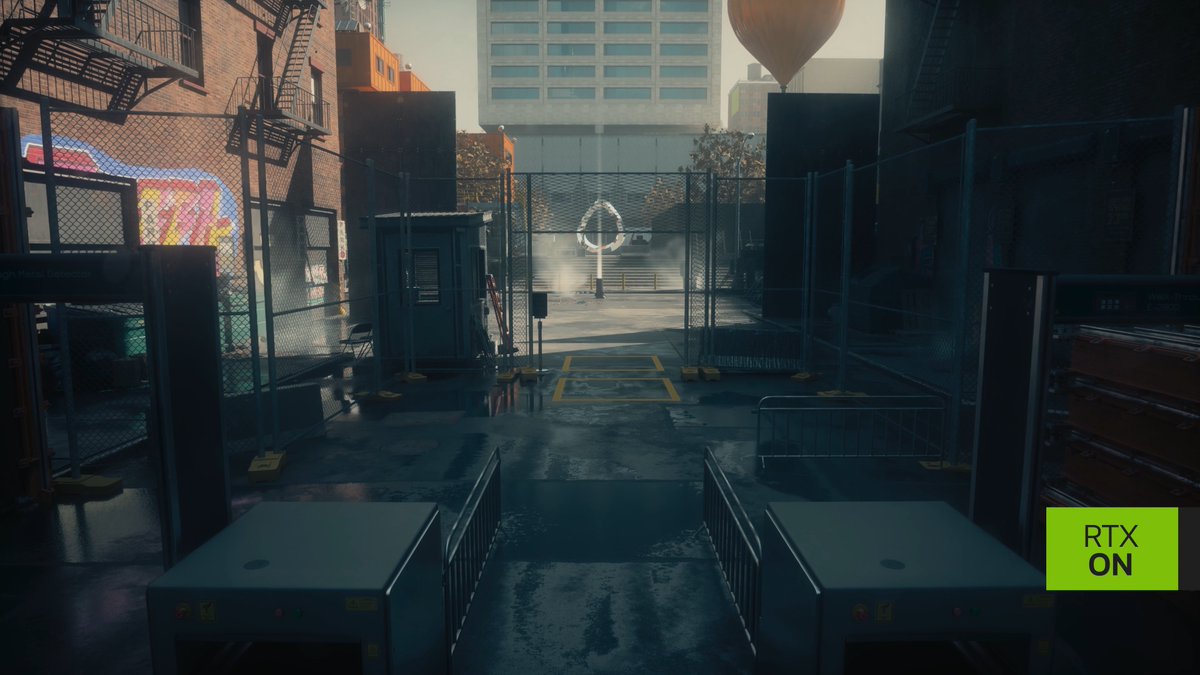
DLSS 4.5 Ray Reconstruction is now available, enhancing image quality with our 2nd gen transformer model in ray-traced path-traced games for all GeForce RTX GPUs. ⚫Enhanced lighting accuracy & response ⚫Increased stability ⚫Clearer Motion

200,998 просмотров • 5 дней назад •via X (Twitter)

Комментарии: 0

Нет доступных комментариев

Здесь появятся комментарии из оригинального поста

Похожие видео

DLSS 4.5 performance cost on the RTX 4070 Super, tested in #TheLastOfUs, #ArcRaiders, and #RedDeadRedemption2 at 2160p (4K). This time, I replaced the games default CNN models with native 4K to show how the DLSS Transformer model compares against native TAA / TSR. I also included a comparison between the new presets using Performance mode and Preset K in Quality mode. The Last of Us Part I Performance mode – Native (TAA) → Transformer Preset K: ~59% gain – Preset K → Preset L: ~13% hit – Preset K → Preset M: ~7% hit Quality mode – Native (TAA) → Transformer Preset K: ~35% gain – Preset K → Preset L: ~23% hit – Preset K → Preset M: ~17% hit Preset K Quality mode vs Preset L & M Performance mode – Preset K → Preset L: ~5% gain – Preset K → Preset M: ~13% gain Arc Raiders Performance mode – Native (TSR) → Transformer Preset K: ~80% gain – Preset K → Preset L: ~11% hit – Preset K → Preset M: ~7% hit Quality mode – Native (TSR) → Transformer Preset K: ~47% gain – Preset K → Preset L: ~21% hit – Preset K → Preset M: ~16% hit Preset K Quality mode vs Preset L & M Performance mode – Preset K → Preset L: ~5% gain – Preset K → Preset M: ~13% gain Red Dead Redemption 2 Performance mode – Native (TAA) → Transformer Preset K: ~15% gain – Preset K → Preset L: ~11% hit – Preset K → Preset M: ~4% hit Preset K Quality mode vs Preset L & M Performance mode – Preset K → Preset L: ~0% gain – Preset K → Preset M: ~6% gain At 4K, The performance cost of the new presets is more significant than at 1440p, especially in Quality mode, which to be fair, doesn’t really make much sense to use at this resolution on a mid range GPU even with Preset K. In most cases, Preset L and M offer good image quality at 4K in Performance Mode. But right now, I think the biggest and most noticeable visual issue with these new presets is the oversharpening in some games, like The Last of Us. This problem is even more obvious at this resolution especially with Preset M.

BenchmarKing

31,353 просмотров • 7 месяцев назад

[SIGGRAPH 2025] Photoreal Scene Reconstruction from an Egocentric Device Contributions: 1. We address the importance of employing visual-inertial bundle adjustment (VIBA) that accounts for the rolling-shutter behavior of the RGB camera. This provides a continuous camera trajectory to model pixel movement in neural reconstruction. Our experiments demonstrate that using VIBA consistently improves the novel view quality in Gaussian Splatting by +1 dB in PSNR. 2. We introduce a rasterization-based image formulation pipeline that addresses common artifacts in physical image formation, including rolling shutter, lens shading, exposure, and gain compensation. Our approach is distinct in that we represent image poses as posed pixel arrays sampled from a continuous trajectory, rather than assigning a single camera pose per image, and preserve the merit of Gaussian rasterization. Unlike existing methods that require ray-tracing Gaussians, e.g., [Moenne-Loccoz et al. 2024], our formulation is applicable to general-purpose rasterization-based Gaussian splatting. When applied to 3D Gaussian Splatting (3DGS) [Kerbl et al. 2023], our approach can further enhance reconstruction quality by +1 dB. We outperform existing baselines and demonstrate a substantial quality improvement in handling complex scenes observed by egocentric devices. 3. To reduce the effect of blur from rapid head motion in darker indoor scenes, we propose a strategy of deliberately underexposing input videos during capture, inspired by HDR+ [Hasinoff et al. 2016]. We demonstrate that we can reconstruct high-quality, noise-free scene radiance from noisy, dim input videos, and further render sharp, blur-free videos at a higher dynamic range.

MrNeRF

15,244 просмотров • 1 год назад

DLSS 4.5 performance cost on the RTX 4070 Super, tested in #TheLastOfUs, #ArcRaiders, and #RedDeadRedemption2 at 1440p. I added Red Dead Redemption 2 since it’s one of the cases where the new presets really shine, especially in terms of motion clarity. It’s not easy to showcase the visual differences because of the capture, export, and the extra compression from Twitter and YouTube but If the difference isn’t obvious, focus on the tree at the end of the run. The Last of Us Part I Performance mode – CNN (Preset A) → Transformer Preset K: ~3% cost – Preset K → Preset L: ~4% hit – Preset K → Preset M: ~3% hit Balanced mode – CNN (Preset A) → Transformer Preset K: ~6% cost – Preset K → Preset L: ~8% hit – Preset K → Preset M: ~3% hit Quality mode – CNN (Preset A) → Transformer Preset K: ~4% cost – Preset K → Preset L: ~11% hit – Preset K → Preset M: ~6% hit Arc Raiders Performance mode – CNN (Preset E) → Transformer Preset K: ~4% cost – Preset K → Preset L: ~8% hit – Preset K → Preset M: ~2% hit Balanced mode – CNN (Preset E) → Transformer Preset K: ~5% cost – Preset K → Preset L: ~11% hit – Preset K → Preset M: ~4% hit Quality mode – CNN (Preset E) → Transformer Preset K: ~4% cost – Preset K → Preset L: ~13% hit – Preset K → Preset M: ~8% hit Red Dead Redemption 2 Quality mode – CNN (DLSS 2) → Transformer Preset K: ~2% cost – Preset K → Preset L: ~12% hit – Preset K → Preset M: ~7% hit Unlike what we saw with the 3060 Ti, the performance hit on the 4070 Super is much smaller, and this is where the new presets start to make a lot more sense. The hit isn’t that large, and you’ll likely get better image quality compared to Preset K. But Is it always worth it? That largely depends on the game and the target resolution. Generally, I recommend trying the new presets and seeing for yourself, but do this only if you have an RTX 40/50 series GPU.

BenchmarKing

53,027 просмотров • 7 месяцев назад

📢📢 𝐀𝐯𝐚𝐭𝟑𝐫 📢📢 Avat3r creates high-quality 3D head avatars from just a few input images in a single forward pass with a new dynamic 3DGS reconstruction model. Video: Project: Our core idea is to make Gaussian Reconstruction Models animatable. We find that a simple cross-attention to an expression code sequence is already sufficient to model complex facial expressions. We then incorporate position maps from DUSt3R and feature maps from Sapiens to facilitate the prediction task. While DUSt3R's position maps act as a pixel-aligned initialization for the Gaussians' positions, the Sapiens feature maps help the cross-view transformer to match corresponding image tokens in the 4 input images. One major challenge in creating a 3D head avatar from smartphone images comes from inconsistent facial expressions when the subject could not remain perfectly static during the capture. We eliminate this static requirement by simply showing our model input images with different facial expressions during training. This technique makes our model robust to inconsistent input images later on. Finally, we show that despite the model has been trained with 4 input images, one can even create a 3D head avatar when only a single image is available. To achieve this, we employ a pre-trained 3D GAN to lift the single image to 3D and then render the 4 input images for our model. This allows us to create 3D head avatars from single images and even highly out-of-distribution examples like AI generated faces, paintings or statues. Great work by Tobias Kirschstein from his internship at Meta with Javier Romero, Artem Sevastopolsky, and Shunsuke Saito

Matthias Niessner

74,763 просмотров • 1 год назад

🔥HOLY SMOKES! $TAO holders! 🚀 SUBNET 19 (VISION) ON BITTENSOR IS ABSOLUTELY CRUSHING IT! In my 5+ years covering crypto and AI, this is one of the most impressive implementations I've seen. The combination of scale, performance, and decentralization is absolutely next level! 🚀 @namoray_dev @Corcel_X 💨 INSANE Speed Performance: - Llama 3.1 8B: 196.18 tokens/s with +107.23% advantage - Llama 3.1 70B: 124.96 tokens/s with +154.96% advantage - Llama 3.2 3B: 166.69 tokens/s with +21.66% advantage 🔥 Top Tier Model Integration: - Meta-Llama-3-70B & 8B Instruct - FLUX.1-schnell for Text-to-Image - ProteusV0.4-Lightning (Text & Image) - Multiple model variations for redundancy 🔥 What Makes This INSANE: - Complete decentralization - No single point of failure - Multiple model choices for redundancy - Real-time performance tracking - Transparent incentive structure The incentive distribution curve shows a healthy network with: - Strong rewards for top performers - Fair distribution across all participants - Clear path for growth and improvement - Sustainable economic model What's truly MIND-BLOWING is how they've managed to: 1. Scale to millions of operations 2. Maintain high quality across multiple tasks 3. Create a fair, competitive marketplace 4. Build in redundancy and reliability 5. Achieve true decentralization This isn't just another subnet - this is the future of decentralized AI inference happening RIGHT NOW! 🔥 1. MASSIVE Scale & Adoption: - We're seeing 7M+ tokens being processed - 14K+ processing steps being executed - Multiple AI models running simultaneously - Incredible miner participation across the network 2. Revolutionary Task Distribution: - Llama 3.1 70B leading with 20% weighting - Avatar Generation at 15% - Perfectly balanced task distribution for optimal network performance - Multiple specialized tasks including Text-to-Image and Image-to-Image processing 3. Elite Performance Metrics: - Top miners hitting 0.00775 incentive rates - Consistent performance across the network - Impressive scaling from top to bottom performers - Strong incentive curve maintaining network quality 📈 Network Performance: - Consistent upward trend in tokens/s - Quality scores maintaining high levels (>0.9) - Steady improvement in miner performance - Rock-solid network reliability ⚡ Platform Highlights: - Permissionless, serverless architecture - Global network of Always-On GPUs - Instant API access - Full decentralization - Multi-model support with seamless switching What makes this TRULY SPECIAL is the consistent upward trajectory in both speed and quality, while maintaining a decentralized architecture. The performance advantages over industry standards (+154.96% for 70B!) are absolutely mind-blowing! 🚀 This isn't just another AI subnet - it's a glimpse into the future of decentralized AI inference! The combination of speed, reliability, and model variety makes this one of the most impressive implementations in the space! 🔥 📽 Watch Now on YouTube and TikTok: Source 🔗

Andy ττ

11,616 просмотров • 1 год назад

So Runway Gen 4.5 finally adds image-to-video, the workflow most pros rely on for consistency. We put it head to head with Kling AI and Flow by Google VEO using the same reference images and prompts (below) to evaluate motion quality, stability, and cinematic realism. 1. Action/WaterPhysics Test Prompt: Cinematic, wide-shot of a man running in a shallow river. The camera is tracking the man from behind as he runs up the river. Handheld camera shake as the camera follows the man. 2. Fire Physics Test Prompt: Cinematic, wide-shot of terrified woman running towards her burning barn. She abruptly stops, and puts in hands on her head as she watches her barn burn down. 3. VFX test prompt: Cinematic, wide-shot of a hooded figure. Flashes of purple magic and smoke whirl around the figure. The figure lifts its arms as the purple magic and smoke intensifies. 4. 2D Animation Test Prompt: 2D animated shot of a waiting at a bus stop in a thunderstorm. The man turns, walks to the bench, and sits down. 5. 3D Animation Test Prompt: 3D animated shot of an octopus. The octopus reaches into a coral and picks up a glowing white gem. 6. Conversation Test Prompt: slow camera push-in as two friends are having a conversation at a coffee shop Overall verdict: Despite the “world’s best” claim, Runway Gen 4.5 is not there yet. Prompt adherence is solid, but motion, physics, and cinematic realism still lag behind tools like Kling and VEO. Great platform, mid-tier model for now.

Curious Refuge

25,538 просмотров • 7 месяцев назад

🔬 Exciting News! Our manuscript, "scGPT: toward building a foundation model for single-cell multi-omics using generative AI" is now finally published in Nature Methods (Nature Methods) 🎉 !!! (Re-)Introducing scGPT: A transformative foundation model engineered for single-cell omics analysis. Developed through the analysis of over 33 million human cells, scGPT sets a new benchmark for application versatility, offering both fine-tuning and zero-shot capabilities. Since its preprint in May 2023, scGPT has significantly impacted the field, evidenced by 13K+ installations, 600+ GitHub stars 🌟, and 40+ citations before its official publication! scGPT has been validated by numerous benchmark studies as a leading foundation model in single-cell analysis. Its pre-trained embeddings extend its utility beyond single-cell studies, enhancing a variety of downstream tasks including protein enrichment and genetic perturbation predictions. Some key updates lately: ---Expanded zero-shot applications for efficient reference mapping and integration, now with CellXGene census integration. ---Advanced perturbation analysis capabilities, including genome-scale perturb-seq data analysis and bulk sequencing data generalization. ---Upgraded scGPT package, offering versatile model loading compatible with PyTorch and flash-attn, for both GPU and CPU. ---Cloud-based scGPT applications for reference mapping, cell annotation, and gene regulatory network inference are available on ---Integration with Hugging Face for easier model training. Limitations: scGPT is an early foray into foundation models for single-cell omics, facing challenges like limited zero-shot learning in some tasks, pretraining constraints, data quality issues, and evaluation limitations. See our Supplementary Notes for details. 🚀 Future Work? Short-Term Goals: 1. Releasing a Mouse Model for broader analysis. 2. Developing a comprehensive evaluation suite for foundation models in single-cell analysis. 3. Creating a foundation model for single-cell spatial omics. 4. Enhancing zero-shot capacity by integrating scGPT with RAG (e.g., knowledge graphs). Long-Term Goals: 1. Expanding scGPT for comprehensive single-cell multi-omics analysis. 2. Developing an in-silico perturbation model for predicting genetic perturbation effects. 3. Merging scGPT with multi-modal genomic sequence models for a deeper understanding of cell biology. 📚 Access the paper on Nature Methods: 🔬Preprint in Bioarixv: 💻 All our codes/data/weights are open source: Wholehearted congratulations to all the authors, especially the two co-first authors, Haotian (Haotian Cui ) and Chloe (ChloeXWang), who are really the emerging superstars in AI and biology! Vector Institute Peter Munk Cardiac Centre AI U of T Department of Computer Science Department of Laboratory Medicine & Pathobiology University Health Network University of Toronto #scGPT #GenerativeAI #AI4Science #Combio #opensource

Bo Wang

199,747 просмотров • 2 лет назад