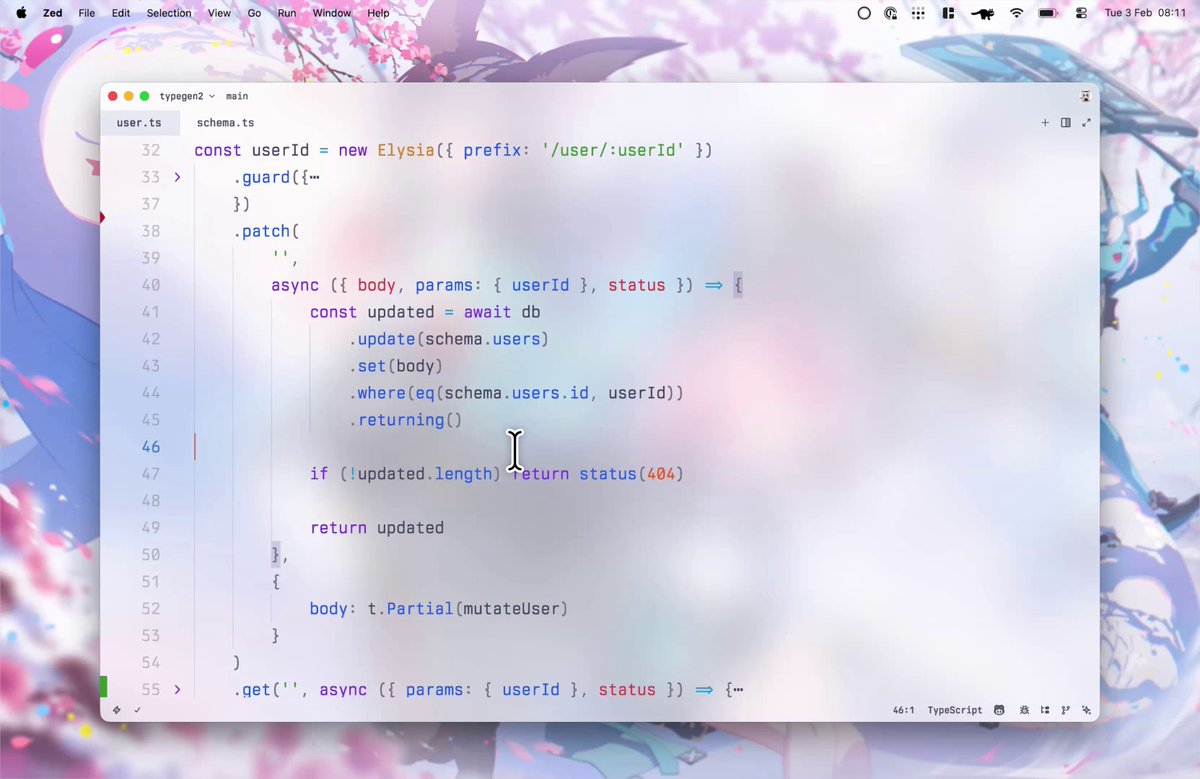
Video wird geladen...

Video konnte nicht geladen werden

Zur Startseite

Elysia with Bun 1.3 Full-stack server 1. Install Elysia w/ static plugin 2. Create an HTML file in the public folder 3. Start writing React That's it, no additional setup HMR, Tailwind, Tanstack Query, Eden Treaty, path alias works Frontend and backend bundle to 1 file

73,164 Aufrufe • vor 9 Monaten •via X (Twitter)

0 Kommentare

Keine Kommentare verfügbar

Kommentare vom Original-Post werden hier angezeigt

Ähnliche Videos

Here's how I'm running automated content engine in 2 files 1 markdown file = my wiki 1 html file = my dashboard that's the whole stack. [ the architecture, in plain words ]: LLM wiki = a single markdown file holding my audience DNA, 15 tracked creators, every viral topic from the last 30 days HTML artifact = a single page that reads that markdown file AND can trigger my agents the artifact and the agent talk to each other directly the wiki is the shared brain [ what I actually see when I open it at 9am ]: > 5 trending topics ranked by my audience-DNA fit > 3 KOL posts worth quoting today > last week's saved tweets (so I can ride waves that are still warm) > buttons: [draft tweet] [draft QT] [schedule] [log idea] 1. I click "draft tweet" on a topic 2. the artifact pings my agent 3. agent reads the wiki, drafts in MY voice, returns it to the artifact 4. I edit, schedule, done 15 minutes from morning coffee to 3 scheduled posts [ how to build the same in one evening ]: > step 1: dump your domain knowledge into ONE markdown file (audience profile, KOL list, content rules, voice guide, anything an agent would need to do YOUR job) > step 2: ask claude to build an html artifact that reads from that file ("here's my wiki, build me a dashboard with these views") > step 3: add buttons for the actions you do daily (draft, schedule, log, score, search — your workflow, not mine) > step 4: wire each button to call your agent via tool calls (so the artifact and the agent talk directly) the moment your artifact reads your wiki AND triggers your agents.. most SaaS tools you currently pay for quietly become unnecessary dashboards I used to pay $50/month for now sit in a single html file I can rebuild in 20 minutes every "I'll build a SaaS for this" idea you had last year is a 200-line file you write in an afternoon if you want to get the same content engine, just reply "CONTENT" and will send you in DMs later we're going from buying software to owning it.

Ronin

49,920 Aufrufe • vor 2 Monaten

‘pip install elysia’ and ‘elysia start’ That’s literally all it takes to get the most advanced open source agentic RAG app running on your data. We just released 𝗘𝗹𝘆𝘀𝗶𝗮, our open source, agentic RAG framework and an app so cool needed a cool video to go with it. Watch the full video: In the video, we go through these components of Elysia: 1️⃣ 𝗗𝗲𝗰𝗶𝘀𝗶𝗼𝗻 𝗧𝗿𝗲𝗲 𝗔𝗿𝗰𝗵𝗶𝘁𝗲𝗰𝘁𝘂𝗿𝗲: Instead of giving agents access to all tools at once, Elysia uses a pre-defined web of nodes with corresponding actions. Each decision agent has global context awareness. 2️⃣ 𝗗𝘆𝗻𝗮𝗺𝗶𝗰 𝗗𝗮𝘁𝗮 𝗗𝗶𝘀𝗽𝗹𝗮𝘆𝘀: Seven different data display formats including tables, e-commerce product cards, GitHub tickets, and charts. The system automatically choses the best display format. 3️⃣ 𝗔𝘂𝘁𝗼𝗺𝗮𝘁𝗶𝗰 𝗗𝗮𝘁𝗮 𝗘𝘅𝗽𝗲𝗿𝘁𝗶𝘀𝗲: Unlike naive RAG systems that perform blind vector searches, Elysia analyzes your collections to understand data structure and meaning before performing queries. 𝗢𝘁𝗵𝗲𝗿 𝗖𝗼𝗼𝗹 𝗙𝗲𝗮𝘁𝘂𝗿𝗲𝘀: • 𝗙𝗲𝗲𝗱𝗯𝗮𝗰𝗸 𝗦𝘆𝘀𝘁𝗲𝗺: Uses positive examples as few-shot demonstrations for smaller, faster models • 𝗖𝗵𝘂𝗻𝗸-𝗢𝗻-𝗗𝗲𝗺𝗮𝗻𝗱: Dynamically chunks documents at query time instead of pre-chunking • 𝗠𝘂𝗹𝘁𝗶-𝗠𝗼𝗱𝗲𝗹 𝗦𝘁𝗿𝗮𝘁𝗲𝗴𝘆: Routes different tasks to appropriate model sizes based on complexity …And also how to get started with your own data! The entire project is open source and designed with customization in mind. You can use it as-is for effective data searching, or install the Python package to create custom tools for whatever agentic AI purposes you need. Big kudos to Edward for the vision, filming, and editing this masterpiece

Victoria Slocum

45,497 Aufrufe • vor 10 Monaten

Microsoft spent $13 billion and 3 years building an AI that knows your work context. Every time you open it, it still asks what you're working on. This developer set up a plain text file in 2 minutes. The file is called CLAUDE.md. It loads before every session. Before he types a single word. It already knows his name. It already knows his writing style. It already knows what he's building, who it's for, and what he never wants to see in a response. He doesn't introduce himself anymore. He doesn't explain his preferences anymore. He doesn't correct the same mistakes twice. He just works. No $30/month Copilot subscription. No Microsoft 365. No IT approval. No data sharing agreement. No onboarding. Just a plain text file, a free text editor, and 21 instructions a developer distilled from Andrej Karpathy's research. Those 21 instructions moved Claude's coding accuracy from 65% to 94%. The file hit #1 on GitHub with 82,000 stars. Most people using Claude right now have never heard of it. Microsoft has 221,000 employees, $13 billion invested in OpenAI, and a direct integration into every Windows laptop sold on the planet.. they built an AI assistant most companies pay $30/user/month for that still doesn't know your name. This developer has a laptop, a text file and a 2-minute setup.. he built something that knows more about how he works than any enterprise AI on the market. The $50 billion AI personalization industry just got embarrassed by a .md file. full breakdown down below

Dep

14,117 Aufrufe • vor 2 Monaten

This will retire 90% of RAG systems with dignity (and a sad song playlist). Powered by DSPy: If you're still building "text in, text out" chatbots that only perform blind vector and text searches, you're not gonna make it! My team just dropped Elysia, and it's not just an incremental successor to Verba… It's a whole rethink of how we interact with our data using AI. 𝗪𝗵𝗮𝘁 𝗶𝘀 𝗘𝗹𝘆𝗶𝘀𝗮? An open-source platform for building agentic RAG architectures. It learns from your preferences, intelligently categorizes, labels, and searches through your data, and provides complete transparency into its decision-making process. The long & exciting feature list: • 𝗧𝗿𝗮𝗻𝘀𝗽𝗮𝗿𝗲𝗻𝘁 𝗗𝗲𝗰𝗶𝘀𝗶𝗼𝗻-𝗧𝗿𝗲𝗲 𝗔𝗴𝗲𝗻𝘁𝘀: Elysia’s core is a customizable decision tree, and it visualizes its entire reasoning process, showing you why it chooses a specific tool or path. It enables advanced error handling, self-healing from failed queries, and prevents infinite loops. You can also add custom tools and branches to build complex, state-aware workflows. • 𝗗𝗮𝘁𝗮 𝗔𝘄𝗮𝗿𝗲𝗻𝗲𝘀𝘀: Before it even attempts a query, Elysia performs a full analysis of your data collections. This eliminates the blind search problem plaguing most RAG systems and allows for far more complex and accurate query generation. • 𝗗𝘆𝗻𝗮𝗺𝗶𝗰 𝗗𝗮𝘁𝗮 𝗗𝗶𝘀𝗽𝗹𝗮𝘆𝘀: Your RAG pipeline shouldn't be limited to text, right? That’s why Elysia analyzes each query's results and chooses the best way to display them, from tables and charts to product cards and GitHub tickets. It also features a comprehensive data explorer with search, sorting, and filtering capabilities. • 𝗛𝘆𝗽𝗲𝗿-𝗣𝗲𝗿𝘀𝗼𝗻𝗮𝗹𝗶𝘇𝗮𝘁𝗶𝗼𝗻 𝘃𝗶𝗮 𝗙𝗲𝗲𝗱𝗯𝗮𝗰𝗸: It uses your positively-rated queries as few-shot examples to improve future responses. This allows you to use smaller, faster models that perform like larger ones over time, cutting costs without sacrificing quality for most use cases. • 𝗖𝗵𝘂𝗻𝗸-𝗢𝗻-𝗗𝗲𝗺𝗮𝗻𝗱: Elysia chunks documents at query time. It performs initial searches on document-level vectors and only chunks relevant documents on the fly, storing them in a parallel quantized collection with cross references for future use. 𝗧𝗵𝗲 𝗦𝘁𝗮𝗰𝗸 Elysia is built from scratch on Weaviate, using its native features like named vectors, a variety of search types, filters, cross references, quantization, etc. It uses DSPy for LLM interactions and is delivered as a production-ready application via FastAPI, serving a NextJS frontend as static HTML. Also available as a Python package via pip: 𝗽𝗶𝗽 𝗶𝗻𝘀𝘁𝗮𝗹𝗹 𝗲𝗹𝘆𝘀𝗶𝗮-𝗮𝗶 Type: 𝗲𝗹𝘆𝘀𝗶𝗮 𝘀𝘁𝗮𝗿𝘁 Connect your Weaviate cluster and go explore what’s possible.

Philip Vollet

93,598 Aufrufe • vor 11 Monaten

Obsidian 1.8.3 is now available to all for desktop and mobile! - Web viewer. New core plugin lets you open external links within Obsidian on desktop. This makes it easier to read linked content without leaving the app and improves multitasking for web research. The plugin can be enabled manually in settings. - Improved iCloud sync. Obsidian no longer waits to confirm that configuration files have synced. - New mobile onboarding. This guided flow helps new mobile users create and sync a vault. - New "Download attachments for current file" command. Downloads all externally embedded images and replaces the external links with internal embeds. A few notable improvements: - When modifying a numbered list, the numbers are now updated automatically. - Pressing Enter in a multi-line list item now continues the list properly. - New "Insert footnote" command. Footnote autocomplete now provides a fallback to create a new footnote if no match is found. - Tags view now includes search. - File Explorer now includes an option to automatically reveal the active file. - Outline now has an "Auto-scroll to current section" option. - Sync now has a new view option, "Hide my changes," which hides your own file changes in a shared Obsidian sync vault. - Recently used commands now appear at the top of the command palette. - "Search current file" search bar now displays the total number of results. - "Insert template" command now sorts templates by file path and displays folder names. - , , and tags with relative src paths are now rendered in Live Preview and Reading mode. - Graph view no longer considers Canvas files as attachments. See the changelog for dozens more improvements and bug fixes.

Obsidian

118,704 Aufrufe • vor 1 Jahr