Video wird geladen...

Video konnte nicht geladen werden

Zur Startseite

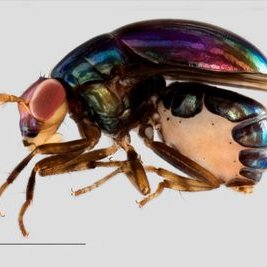
🚨 EntoSieve: New automated tool for fast, accurate size-sorting of bulk insect samples! Perfect for boosting DNA megabarcoding & metabarcoding projects. 🧬🔬 DIY low-cost device, gentle on specimens and yet efficient 🦋🐞read here:
11,949 Aufrufe • vor 2 Jahren •via X (Twitter)

3 Kommentare

Profilbild von Florian Leese
Florian Leesevor 2 Jahren

@lifeplan How cool! Very relevant for us 🙏 @buchner_dominik @wolany_lisa @JanaRees98

Profilbild von Dr. Aaron Ridall
Dr. Aaron Ridallvor 2 Jahren

@leeselab @lifeplan Wonder if this is scalable down to meiofauna sieve sizes or if the motorized action is too aggressive @jeroeningels

Profilbild von Rudolf Meier
Rudolf Meiervor 2 Jahren

@leeselab @lifeplan @jeroeningels You could easily try by replacing the sieve. The speed can be adjusted with the speed knob.

Ähnliche Videos

Introducing PhoneLLM, an open model for voice agents. GPT 5.6 Terra performance on typical voice agent tasks at 1/3 the latency and 1/18 the cost. For voice agents, we need models that are both very low latency and very good at tool calling and instruction following. There's a trade-off here, and we often have to compromise on either latency or capability when building voice agents. With PhoneLLM (and the training and data stack that made this model possible) we're fixing this problem. For the last couple of years, most of the effort in frontier model development has gone towards leveraging test-time compute. Which is awesome! Models of all shapes and sizes are available that perform really, really well ... if you have "thinking" turned on for your model. But if you need your agent to respond at voice conversation speed, you can't use thinking models. PhoneLLM is a full-weights fine-tune of NVIDIA Nemotron Nano 30B. We trained on a wide range of real-world telephone and customer support use cases. The training focused on taking the excellent Nano 30B base capabilities and teaching the model to do typical voice agent tasks with thinking disabled. The results are really good: accurate tool calling and concise, on-topic responses in long conversations. And fast: TTFAT measured server-side is <100ms if you run PhoneLLM on a lightly loaded B200. :-) But seriously, when we characterize model latency, we do it with full, end-to-end, batched request simulations using real Pipecat voice agent pipelines. You can serve more than 80 concurrent agents on a single B200 with P95 end-to-end TTFAT <600ms. Including network overhead. That's an LLM cost-per-minute around $0.0025. (1/4 of a cent.) At a latency lower than any third-party API offers today. More details about this model, including weights on Hugging Face, how to spin it up with one click on Modal, and a starter project repo you can clone, are in the thread ...

kwindla

331,088 Aufrufe • vor 26 Tagen

Why is Redis Fast? Redis is fast for in-memory data storage. Its speed has made it popular for caching, session storage, and real-time analytics. But what gives Redis its blazing speed? Let's explore: RAM-Based Storage At its core, Redis primarily uses main memory for storing data. Accessing data from RAM is orders of magnitude faster than from disk. This is a major reason for Redis's speed. However, RAM is volatile. To persist data, Redis supports disk snapshots and append-only file logging. This combines RAM's performance with disk's permanence. There is a tradeoff though - recovery from disk is slow. If a Redis instance fails, restarting from disk can be slow compared to failing over to a replica instance fully in memory. So while Redis offers durability via disk, it comes at the cost of slower recovery. A better solution is Redis replication. With a synchronized replica kept in memory, failover is instant with no rehydration. This maintains speed and near-instant recovery. IO Multiplexing & Single-threaded Read/Write Redis uses an event-driven, single-threaded model for its core operations. A main event loop handles all client requests and data operations sequentially. This single-threaded execution avoids context switching and synchronization overhead typical of multi-threaded systems. Redis uses non-blocking I/O to handle multiple connections asynchronously. This allows it to support many client connections with very low overhead, Redis does leverage threading in certain areas: - Background tasks like taking snapshots. - I/O threads are used for certain operations. - Modules can use threads. - Since Redis 6.0, it supports multi-threaded I/O for network communication, improving performance on multi-core systems. Redis also uses pipelining for high throughput. Clients pipeline commands without waiting for each response. This allows more efficient network round trips, boosting overall performance. Efficient Data Structures Redis supports various optimized data structures, from linked lists, zip lists, and skip lists to sets, hashes, and sorted sets, among others. Each is carefully designed for specific use cases for quick and efficient data access. Over to you: With Redis now supporting some multi-threading, how should we configure it to fully utilize all the CPU cores of modern hardware when deploying in production? – Subscribe to our weekly newsletter to get a Free System Design PDF (158 pages):

Sahn Lam

46,910 Aufrufe • vor 2 Jahren

🚨 BREAKING: Big news in the computer vision world! 🎥 Luxonis | Robotic Vision just dropped its new OAK 4 line, and it’s a big upgrade for edge computer vision. Instead of being “just a stereo camera,” OAK 4 is a fully standalone vision computer with 52 TOPS of on-device AI. Models run locally, depth is computed locally, and no external PC or cloud pipeline is required. This is why robotics teams love it: lower latency, lower cost, fewer failure points in the field. The hardware is built for the real-world. IP67, shock-resistant, wide-FOV RGB + stereo pair, IR projection, IMU, audio, and a patent-pending calibration system that keeps depth accurate even when conditions change. But the real move is the platform. With Luxonis Hub, you can deploy models, grab telemetry, push OTA updates, or collect data when performance drifts, all from a unified interface. It turns a single device into an end-to-end edge CV system. Most customers today in robotics are groups who just want something that works: AMRs, bin-picking systems, trailer-loading robots, and ag-tech. 🤖 And they all say the same thing, the appeal isn’t raw TOPS, it’s the all-in-one simplicity that lets them scale without building custom infrastructure. Feels like the direction edge vision has been waiting for: rugged hardware + high-throughput on-device compute + a real management layer. A next step toward “plug-and-deploy” perception for robots. 🔗 Find out more here: ~~ ♻️ Join the weekly robotics newsletter, and never miss any news →

Lukas Ziegler

41,955 Aufrufe • vor 9 Monaten

🚨Thrilled to share our new CFR China Strategy Initiative report with CFR Global Health's Tom Bollyky, , Olivia Webb Kosloff, & Elena Every: "The Pharma Choke Point." The US is dependent on Chinese production for essential medicines, creating a "rare earths" problem in this sector. Seven hundred medicines approved for use in the United States depend on at least one chemical produced solely in China. For the last year, our study group of pharma and biotech specialists, China scholars, and industrial policy experts came together to: 1⃣ Use commercial data to map the dependencies 2⃣ Devise a typology of three unique "archetypes" of these dependencies 3⃣ Craft solutions to address these dependencies A few key points follow below: ➡️China's Leverage is real — Beijing doesn't need a wartime crisis to exploit it. It can slow shipments, delay licenses, or reroute flows through "peacetime weaponization." That's the playbook it has already run on rare earths. ➡️Current dependence is structural — It's the product of decades of Chinese state investment and Western pursuit of the low-cost solution. China controls the raw/starting materials for 94% of US amoxicillin, 74% of heparin, and 70% of acetaminophen. It's dominating preclinical work in biotech. And diversifying downstream offers no real protection from upstream dependence. ➡️Archetype 1: Upstream Dependence — Roughly 700 medicines Americans depend on at least one chemical made only in China, including antibiotics, blood thinners, ER drugs. Solutions include: - building a strategic reserve of critical medicines - building "allied scale" to create diversified production - mix various long-term supply and demand interventions to change economic viability for KSMs, APIs, and other upstream inputs (more in the report) ➡️Archetype 2: Competitive Displacement of U.S. Biomanufacturing and Clinical Trial Capacity — For innovative biologics—medicines made from living cells—such as monoclonal antibodies, the risk is not a single upstream choke point but competitive displacement across every stage of the value chain: discovery, clinical development, contract manufacturing, and market access. The U.S. is losing a critical capability: now, WuXi alone handles nearly half of US clients' development programs. China alone is more than half of all late-stage monoclonal antibody programs. Lock-in deepens at every stage. Solutions include: - accelerating first-in-human clinical trials in the United States - funding and incentivizing the adoption of advanced biologics manufacturing technologies (e.g., low-cost capital from the USG) - building contract research alternatives in allied countries like South Korea - bolstering the U.S. biomanufacturing workforce - creating a system to secure artificial intelligence (AI)–ready biodata and digital chemistry, manufacturing, and controls. ➡️Archetype 3: Dependence on PRC Infrastructure — Here, the vulnerability is not disruption in the supply of an existing product, but Chinese control over the research-and-development (R&D) infrastructure underlying future pharmaceutical innovation. Growing reliance on China for DNA synthesis is just one example. Solutions include: - improving DNA supply chain security - enhancing transparency and disclosing provenance - increasing federal investment in next-generation DNA synthesis technologies - and bolstering allied cooperation on standard-setting and procurement to encourage the adoption of these technologies. ➡️Key Takeaway: China has both the tools and demonstrated willingness to weaponize U.S. pharmaceutical dependence: the structural conditions enabling it run through nearly every tier of the pharmaceutical supply. The question is not whether to act, but if the United States will manage to do so before a crisis makes the cost of decades of inaction unavoidable. I am so grateful to Tom, Prashant, Elena, Olivia, Chloe, Ben, Aarya, CFR's publications team, and so many others who made this possible. It was tremendously educational to work together on this project.

Rush Doshi

12,493 Aufrufe • vor 3 Monaten

Deji Adeleke is trending because the billionaire was forced to publicly address Davido’s paternity saga with Anu Adeleke*, Kemi Olunloyo & Ayo Labinjo. [FULL] Apparently, B-red was also tested. It comes after Kemi said Veronica Adeleke was her bestie, who died of drug overdose, because Deji caged and frustrated her. On this, Deji Adeleke said he had never met Kemi in his life and she was definitely not friends or besties with his late wife, Veronica Adeleke. Last week, 13yo Aanu Adeleke* called Davido out and begged for a DNA test to establish her identity, which Davido said he already did 5, all negative. Yesterday again, Anu’s mom, Ayo Labinjo extended it, claiming Davido also initially denied Sophia Momodu, called her a drug addict and demanded DNA proof. After it was proven, they tried to steal Imade from Sophia. And, on Anu‘s naming, Davido sent them an envelope with ₦50k cash and a note reading “God bless baby Veronica”. — Davido didn’t react this time. But today, his dad addressed the media for 73-minutes explaining that.. He got an envelope package via DHL, a letter from Ayo’s mom, containing a picture of Davido and Anu. Ayo’s mom was pleading for a paternity test and for them take responsibility of the child, not for money or marriage. Deji instantly assured mama Ayo that there wasn’t any cause for panic, that they’d do DNA tests, he would cover the cost. He made the decision before informing Davido. Deji personally arranged a test at an Indian hospital in Lagos, Vedic Lifecare Hospital, Lekki. But they would take the samples to South Africa for testing. His driver brought the family from Ibadan. So, in the presence of Himself, Mama Ayo, Ayo, Anu and Davido, they took all their saliva samples. Apparently, David was just seeing Anu for the first time ever, but his dad didn’t believe and insisted on the DNA. When the result was ready, it was opened and read in front of David’s dad and Ayo’s mom as they had signed to receive it exclusively, David and Ayo were not there — Negative. Mama Ayo wept. Deji Adeleke consoled her, sharing her sentiment that it could have been a mistake. So he lodged them in a hotel, gave them a driver and cash, asked them to find two more clinics of their choice, they left Lagos that day. No subsequent test was done. Instead, Mama Ayo went to report Deji Adeleke to the Ooni of Ife and other monarchs, saying David bribed the hospital and the child is light skin like them, so they should accept her. Meanwhile, according to Deji, David wasn’t aware of any thing until that day, and they all entered the test room and left together. Yet, they claim they separated them from the kid and Davido and when Ayo went to look for them, she saw Davido handing the doctor a large envelope. Then, Kemi took over the case and started bombarding social media in 2014. But he advised David to ignore a mentally disturbed Kemi. Until 2020 when Ayo’s sister called Deji Adeleke and they set up four tests.. two for Davido, two for B-red, because rumors suggested B-red could be the father.. The family picked clinics at Ilepeju. The results was sent them via email. — Negative. Yet, Mama Ayo insisted Davido had bribed the new clinic. So, Deji compared Davido’s profile there with the DNA profile he did for Imade, they were same, only that Imade’s own is 99.9999%. Again, Ayo’s sister called, Deji asked her to also compare. She compared and confirmed that, it is authentic. After Illupeju, Davido felt pity for them and asked his father to please help them, which the father said they should ask first. Fortunately, Ayo’s sister asked and Deji Adeleke placed her on monthly allowance for herself and Anu. He also gave Anu’s mom (Ayo) a university scholarship, placed her on ₦50k monthly salary in 2020. So that he can get her a job for her to take care of Anu, instead of relying on help. In the school, Ayo told Deji’s cousin, Dr. Sikiru Adeleke, that she had an affair with another light skin guy who’s - 1/2

Trending Explained

33,481 Aufrufe • vor 8 Monaten

I've had many engineers ask me why its worth their time and effort to learn biology in response to this post. Why should they be excited? We are poised for a revolution in biotech that will be uniquely enabled by computers. Convince yourself by digging into the examples I link: - The tooling is getting better. Assays are able to measure a broad array of molecules at a falling cost and increasing throughput. Look to ScaleBio, Curio Bioscience, AtlasXOmics for inspiration. We are sequencing millions of single cells and building spatial maps of the molecular state of tumors. After two generations of "next-generation sequencing", and stagnating DNA read + write costs under the monopoly of Illumina, this wave of the new assays will have a profound impact on the iteration speed and scale of experimentation. Little needs to be said about the impact of compounding trends in core tooling over a sufficient period of time. - Biotechs are using data to guide decisions and are incorporating domain informed machine learning as a core part of the molecular design process. There is great synergy here with better tooling as a means of abundant, cheap data. Look to Recursion, Manifold Bio, Dyno Tx, Asimov. There is also the cross pollination of biology informed architectures with the recent explosion in new machine learning techniques. These models are starting to do useful things, like generate functional gene editing proteins and entire prokaryotic organisms. Look to ESM, AlphaFold3, RFdiffusion. - New classes of therapies - genetic medicines and engineered immune cells - are having real success in the clinic. One dose cures for cardiovascular disease (Verve w ACSD), vaccines for cancer (Moderna w mRNA 4157), in vivo gene editing proteins (CRISPR Tx, Beam, Ensoma), metabolic disease (Novartis, Eli Lily w GLP-1/GIP modulators) are being dosed in real people right now + transforming lives. - The AI craze is commoditizing accelerated hardware and fast storage devices like NVMes, improving developer frameworks for writing code against these devices and maturing the systems tooling for moving around lots of data between computers for distributed training. One happy accident of this bubble will be the reuse of these components to build a new systems stack for the large scale processing of molecular data. This will be very important to construct a 1 billion single cell atlas and beyond. (For reference, the state of the art is ScaleBio's 2M cell kit, dubbed QuantumScale, and it is pushing things with the hardware + software we have today.) - Language models might be the perfect tool to distill the unstructured corpus of public data, literature, and methods sitting around on the Internet into real biological insights for scientist asking questions in natural language. It will also allow them to install, configure and run the slew of useful but poorly maintained academic computational tools to explore and hypothesize new biology on their own. Increasing the productivity of each scientist will do much to reverse Eroom's law. - There is an appetite from the market for new applications of biotech beyond drug development. Bacteria driven lithium mining (maverick), cell agriculture (growing cows in vats), early signs of consumer biologics (Geltor), biofoundries (Ginkgo). My guess is some of the greatest minds of our generation will want to do more than perturb the human body with therapies. I think it is also important to recognize that the need for computers and software is a secular trend in the progression of biotech independent of the interests of Silicon Valley. Clusters of computers, the information they store and the software that runs on them are precisely the technology needed by this field as it transforms into a discipline of information management, towards reducing living things into well characterized building blocks we can rebuild in our image. Software companies, as some local and hyper efficient structure in the arc of capitalism, with established methods and well trod rails to attract resources, talent and easily distribute product to an entire market, are the perfect place to incubate and disseminate these tools. There will probably be many, very large computer companies in biology in the next century.

Kenny Workman

113,534 Aufrufe • vor 1 Jahr

NVIDIA just handed every solo creator and freelancer an unfair advantage. Jensen Huang walked on stage and announced RTX Spark. An ARM-based laptop chip that nobody saw coming. They called it the most power efficient PC chip ever built. 20 cores. Blackwell graphics. 6144 CUDA cores. Up to 128GB of LPDDR5X memory. But forget the spec sheet for a second. Here is what actually matters. RTX Spark is built to run AI models locally. No cloud subscription. No API costs. No waiting on a server somewhere. Everything runs directly on the laptop at full speed. That changes the math completely for anyone using AI to make money. The guy generating 3D assets in Blender with Claude his renders now take minutes instead of hours. More projects per day. More income per week. The girl producing AI kids content for YouTube local rendering means no upload wait times, no generation limits, no monthly fees eating into her margins. The freelancer building websites and automating outreach every AI tool in his stack now runs faster and cheaper than before. 30 laptops from Asus, Dell, Lenovo, MSI and others. Available this fall. For years the barrier was hardware. You needed an expensive setup to run serious AI workflows locally. NVIDIA just put that power inside a thin laptop anyone can carry anywhere. The people who already figured out how to monetize AI are about to move twice as fast. The people who haven’t started yet just ran out of excuses. Save this.

Shelpid.WI3M

27,829 Aufrufe • vor 3 Monaten

🚨🚨🚨🚨 For the first time, German TV MDR covers DNA contamination in Pfizer's mRNA vaccine! ---------Transcript----------- We are in a private laboratory in Magdeburg. Professor Brigitte König is examining Corona vaccines here. The result, all samples are contaminated. "With foreign DNA that should not be in the vaccine in this quantity. From my point of view, the alarming result is that all 5 batches had significant foreign DNA in them, which are well above the limit. It's about the BioNTech-Pfizer vaccine. 5 batches were given to the Magdeburg laboratory because there was a suspicion." Foreign DNA could be contained in the vaccine, and beyond the limit. According to WHO, the limit is a total DNA content of 10 nanograms per dose. It is important that this is not exceeded, because there is a risk that foreign DNA could penetrate human cells. Brigitte König is an external professor at the medical faculty of the University of Magdeburg. She shows us the result of her privately conducted investigation. All 5 examined batches are contaminated. For the lowest concentration, the limit was exceeded by 83 times. The highest concentration found was 354 times the limit to König. This is concerning. The client of the analysis is also a private individual. The biologist Dr. Jürgen Kirchner. He has been one of the vocal critics of mRNA vaccines for years. He operates a website called Gene Vaccines. There he also advertises his books written under a pseudonym. His last one is called "Sullied." He has also appeared on YouTubers like the controversial Corona critic Paul Brandenburg. And discussed with him his theses on vaccines. Also the findings from Magdeburg. When DNA contaminations are found in a vaccine, that are as far above the limits as we have found, then in my view a special paragraph of the Medicines Act automatically applies, that is paragraph 5. It says if a medicinal product is questionable, then it must be taken off the market. And the biologist tries to achieve this. In September, he was at a hearing in the Bundestag's Petitions Committee on the topic of pandemic planning. Here he used the opportunity to present the analysis results from Magdeburg. These are gigantic exceedances of a limit for a really very questionable medicinal product. But do the vaccines actually contain foreign DNA? The accusation is not new. Already in April 2023, American scientists found foreign DNA above the limit in the vaccines from BioNTech and Moderna. Also in this pre-publication of a Canadian study from the end of October, several scientists come to a similar conclusion. The researchers write, our results extend the existing concerns regarding vaccine safety. But are such traces of foreign DNA actually dangerous? Humans constantly carry foreign DNA in themselves. This can come from food, but also if bacteria enter the lungs. These floating DNA snippets are digested in the gut by enzymes. But there is a difference with the mRNA vaccination. The vaccine contains so-called lipid nanoparticles. They smuggle the mRNA into the cells. They do not differentiate, however, whether they transport mRNA or DNA. Could foreign DNA thereby directly penetrate the cell nucleus? That is at least the concern of this American researcher, Prof. Dr. Philip Buckhaults. He is a clear proponent of mRNA technology. Yet he too says he found DNA residues in Pfizer vaccine. Here at a hearing in the South Carolina Senate, he explains the potential consequences of DNA. By email he writes us, at the moment no one knows for sure, whether the foreign DNA has caused damage or will cause damage. But there is clearly a justified theoretical risk of genetic damage to long-lived stem cells. We asked several renowned German scientists about this concern. Only a few reply to our request. Among them is Prof. Emanuel Wyler from the Max Delbrück Center for Molecular Medicine, an institute funded by the federal government. He deems it extremely unlikely that the DNA could have negative consequences. Further, he writes, DNA in vaccines is not a new topic and is also tested for, for example, in a flu vaccine. Until now, no one has been interested, or one rightly trusts that the Paul Ehrlich Institute as the responsible authority performs the testing work correctly. In my opinion, this shows that this is not about DNA in vaccines, but either about fundamentally questioning vaccinations, our best weapon against infectious diseases, or about creating a sensation with the issue of Corona. However, Prof. Gerald Dyker, a chemist at the Ruhr University, does think that negative consequences are conceivable. He writes to us, against the background that one was under extreme time pressure, that the manufacturer decided, either without knowledge or with the acquiescence of supervisory authorities, to release the product with the remaining DNA impurities for mass vaccination. For Prof. Bernd Mühlbauer of the Drug Commission, however, it is still not clear at all, whether the vaccine is actually contaminated to a worrying extent. But he writes that residual amounts of DNA in the case of an mRNA vaccine cannot penetrate the cell nucleus and cause damage. Such experiments, including animal tests over several generations, are necessary and perhaps have already been conducted. And how do the authorities respond to the debate? The Paul Ehrlich Institute is responsible for the surveillance and safety of vaccines. We want to know, whether they themselves have tested the vaccines for foreign DNA or at least checked the results from Magdeburg. The written response is that parameters such as the residual DNA content in the vaccine are only experimentally tested by the manufacturer. The Institute thus does not test the vaccines themselves for DNA contamination but relies on the manufacturers' test protocols. The fact that the authority neither tests itself nor checks the analysis results from Magdeburg causes surprise to Professor Brigitte König. "I would have expected, or assumed, that the authorities would at least randomly check the end product for contamination and purity. Depending on the product, or if something else is inside. As I said, the authorities can do that. Especially the Paul Ehrlich Institute has the equipment for it." The competent Federal Ministry of Health questions the analysis from Magdeburg and points out that some of the tested batches were already expired, according to Dr. Kirchner's notification. However, for the found foreign DNA this is irrelevant, says the scientist. The DNA in these lipid particles does not multiply. And is more likely to be decomposed. That is, if the vaccine is not expired, we might expect even higher values but not lower ones. The DNA does not multiply in a sterile vaccine. Since the authorities apparently doubt the investigation results from Magdeburg, we want to have various batches tested ourselves. We contacted more than 20 laboratories, some of them at German universities, but also private providers who can conduct such analyses. From all, we received rejections or no response. So, we failed to have a DNA analysis conducted independently once again. It would indeed be important to conclusively clarify the question of the DNA content. Because one reason for suspected DNA contamination could be the manufacturing process itself, which is different from the one used during the authorization study. The vaccine used for the clinical studies was manufactured mechanically without the involvement of microorganisms. This production path is named Process 1 in the documents of the European Medicines Agency (EMA). Pfizer then switched to a different production technique, referred to as Process 2. Only very few subjects in the authorization study received this vaccine. Here, the material was supplied by genetically modified bacteria. This process was apparently less complex. But did it actually pose a higher risk? That there were differences between the batches of the two different manufacturing processes has been a concern. Questions about comparability, characterization, and clinical suitability were raised. We ask BioNTech why the manufacturing process was changed nonetheless, but we do not receive an answer to this question. Regarding the suspected DNA contamination identified by the Magdeburg scientist, the company writes that the Pfizer-BioNTech COVID-19 vaccine is not contaminated with DNA. Furthermore, it states that the batches were subjected to comprehensive quality control by the manufacturer. The Magdeburg scientist says that she has now examined additional vaccine batches. Here too, she found foreign DNA. However, we as an editorial team were not able to conclusively answer whether this analysis is indeed accurate and, most importantly, whether the suspected DNA contamination can cause harm. The most recent act in the debate is this official-looking letter from an association called Medical Treatment Association, which warns doctors about the vaccine. However, as informed by the responsible authorities, this is said to be a false report. ----------------------------------- H/T: Aquarius-elect 🗣️

aussie17

456,522 Aufrufe • vor 2 Jahren

🚨🇷🇺 NATO IN PANIC: RUSSIA’S NEW PANTSIR AIR DEFENSES MIX HYPERSONIC-SPEED INTERCEPTORS WITH ANTI-DRONE MINI-MISSILES Russia has reinforced its air defenses with a new batch of mobile Pantsir-S and fixed-site Pantsir-SMD systems, Rostec announced. The systems passed the required tests and military acceptance before delivery. The batch size was not disclosed. 🔸 Three missile classes: The delivered Pantsirs can fire standard surface-to-air missiles, hypersonic interceptors and compact close-range missiles. Crews can combine all three in one launcher loadout to match the expected threat. Rostec did not identify the hypersonic missile model. 🔸 Mobile protection: Pantsir-S combines missiles and automatic cannons on a self-propelled chassis, allowing it to protect critical sites and reinforce air-defense units against aircraft, missiles and drones. 🔸 Fixed-site defense: Pantsir-SMD is built to defend permanent facilities. Rostec says it has confirmed its stated performance under real operational conditions, including during mass drone attacks. 🔸 Smarter use of ammunition: With a full anti-drone loadout, Pantsir-SMD can carry up to 48 miniature interceptors instead of 12 standard missiles. Mixing full-size and miniature missiles reduces the total below 48, but prepares the same system for both fast, high-value threats and mass raids by low-cost drones. 🔸 Combat record: Rostec says the Pantsir family has already destroyed drones, ballistic missiles, cruise missiles and other airborne weapons. The flexible loadout is the central advantage. A single Pantsir position can prepare for raids in which cheap drones arrive alongside faster missiles instead of relying on one interceptor type for every target. Can a combined NATO missile-and-drone raid overwhelm Russia’s new Pantsirs?

NewRulesGeopolitics

17,769 Aufrufe • vor 1 Monat

Alibaba just dropped Qwen3.5-397B-A17B and there's a lot to unpack. 397B params, 17B active per forward pass. Sparse MoE done right. But the real story isn't the size—it's the architecture choices. The MoE Design Most MoE models feel like bolt-ons. Qwen 3.5's sparse activation is native—only 4.3% of parameters fire per token. That's how you get trillion-parameter-class performance without trillion-parameter inference costs. The 0.8 RMB/million tokens pricing isn't subsidized; it's structurally earned. Native Multimodal, Not Glued-On This is a vision-language model from the ground up. Heterogeneous architecture—separate processing pipelines for text, image, video that fuse early. Not a vision encoder slapped onto an LLM. The result: 90.8 on OmniDocBench, 79.0 on MMMU-Pro. Document understanding and visual reasoning without the usual brittleness. The Context Window Reality Qwen3.5-Plus (the hosted version) ships with 1M tokens by default. That's not a marketing number—they're actually positioning it for long-document workflows. With built-in adaptive tool use, it's clearly aimed at agentic automation, not just chat. What Actually Impressed Me • FP8 native pipeline: ~50% activation memory reduction • Async RL framework for continuous refinement—training and inference workloads separated • 201 languages (up from 119), 250k vocab for better low-resource encoding • Apache 2.0 license. Full weights on HuggingFace and ModelScope. The Benchmark Context 76.4 on SWE-bench Verified puts it in the range where it can handle real debugging workflows. 72.9 on BFCL v4 for agentic tool use. 88.4 on GPQA Diamond. These aren't SOTA in isolation, but the breadth is unusual—strong across reasoning, coding, multimodal, and agentic tasks. The Honest Caveat I haven't stress-tested the 1M context for needle-in-haystack retrieval yet. And "native multimodal" claims need real-world torture testing—PDFs with tables, charts, mixed layouts. Benchmarks are benchmarks. Bottom Line This isn't just another model release. It's a bet on efficient scale: big model capabilities, small active compute, open weights. At 1/18th the cost of Gemini 3 Pro, it's going to force pricing conversations across the board.

Bo Wang

13,221 Aufrufe • vor 7 Monaten

🚨🚨🚨Defending Ukraine's Skies🚨🚨🚨 🚨A More Cost Effective Way For Comprehensive Coverage For Ukraine’s Air Defence🚨 Ukraine’s skies have become one of the most heated contested battlegrounds in Europe. With relentless missile and drone attacks targeting cities, infrastructure, and civilians, effective air defence has become nothing short of a lifeline. Currently, Ukraine relies heavily on a limited number of high-end Western systems, including just six Patriot missile defence systems out of the promised 25.... For an example to the issue, Patriot air defence, while extremely capable, come at an extraordinary cost. Each Patriot system costing $1.1 Billion USD!. And an insane cost of $3 million and $5 million per missile, making their sustained use a massive financial burden, even with allied support. Additionally, other advanced systems, like the British Sky Sabre, have been deployed to provide valuable coverage. The SAMP/T system, which combines high-end radars and Aster missiles, has also contributed to Ukraine's defence. However, despite these critical contributions, Ukraine still lacks the scale of air defence needed to blanket its most vulnerable regions and protect all critical infrastructure effectively. If we want to protect Ukraine, we need something thats sustainable. Enter Gravehawk: A Game-Changing, Affordable Solution Purpose-Built for Ukraine. The British-developed Gravehawk air defence system which is quite literally 1,100 times cheaper that a Patriot air defence system. The Gravehawk air defense system has been specifically designed for Ukraine, prioritising both mobility and flexibility. Housed in a standard freight container, it can be effortlessly transported on the back of a truck, enabling rapid deployment or continuous mobility as required. A key advantage of the system is its separate control module, allowing operators to stay mobile and secure while overseeing its operations. The entire Gravehawk setup can be efficiently managed by a small, five-person team, with two members dedicated to reloading the system. While the potential Sky Shield Initiative could see a coalition of willing nations deploy 120 fighter jets over Ukraine, an effort supported by the hashtag #SkyShieldNow, there remains a critical need for reliable air defense as a last line of protection. This is especially true when these jets are deployed, as they will need to cover not only key Ukrainian cities and civilian infrastructure but also important areas for the coalition of willing, such as troop encampments and air bases. Ukraine already has two operational Gravehawk units on the ground, with an additional 15 systems scheduled to arrive before the end of 2025, thanks to a joint UK-Denmark initiative. Gravehawk’s strength lies in its simplicity and strategic brilliance, it repurposes Soviet-era R-73 (AA-11 Archer) air-to-air missiles, of which Ukraine already possesses in massive stockpiles. Alternatively the Gravehawk System can also use NATO AIM-9 Sidewinder Missiles which could also be supplied. These missiles are short-range, infrared-guided, and capable of taking down fighter jets, helicopters, drones, and even low-flying cruise missiles. When combined with the Gravehawk’s modern sensors and ground-based launch systems, they become a potent tool for defending Ukrainian cities and front lines whilst making easy work of incoming Shahed drones. But perhaps the most critical advantage is cost. Each Gravehawk system per-unit cost of approximately £933,333, a fraction of the price of most NATO-standard systems and under 1 Million pounds, which in military defence terms is next to nothing. To put this in perspective: one Patriot battery costs upwards of $1.1 billion, 1,100 times more expensive, with each launcher and radar component adding millions more on top of this cost. Simply put, the Gravehawk provides massive defensive value for a tiny fraction of the cost with incredible capabilities. This should be a wake-up call. An air defence system in which we could purchase more than 1,100 of for the same price as 1 Patriot system... It's insanity for the Patriot to be one of the main considerations. If the UK and its allies are serious about helping Ukraine build an integrated air defence shield, then scaling up Gravehawk deployment should be a top priority in line with other western air defence systems available. It’s fast to deploy, low-cost, uses existing Ukrainian munitions, and is battle-tested in real-time. This is the fastest and cheapest route to widespread air defence coverage, not only to protect lives today but to lay the groundwork for a secure and sovereign Ukraine in the years ahead. I respectfully urge the British government, including the Prime Minister and all relevant officials, to expand and scale up the Gravehawk program. By increasing the number of systems available, we can provide Ukraine with the critical air defense capabilities it needs to protect its people and secure its future. 🚨If you are reading this, and this is something you would support and believe is in Ukraine's best interest, I would appreciate it very much if you could like, repost, comment or bookmark this post so it creates traction to be seen. I am trying to save Ukrainian lives with this request🚨 I would like bring this to the attention of or to request support of this proposal from the following. Prime Minister of the UK Keir Starmer 10 Downing Street UK Prime Minister UK Ministry of Defence MOD Ministry of Defence 🇬🇧 UK Foreign Secretary David Lammy David Lammy UK Defence Secretary John Healey John Healey UK Parliament House of Commons UK House of Commons UK Ministry of Defence Press Office Ministry of Defence 🇬🇧Press Ukraine’s Ambassador to the UK Valerii Zaluzhnyi Valerii Zaluzhnyi Ukraine Embassy In London Embassy of Ukraine to the UK EU High Representative for Foreign Affairs Kaja Kallas NATO Secretary General Mark Rutte Political Anaylst And Strategic Advisor Jessica Berlin You can find more information on the Gravehawk Air defence System in the video here.

Bricktop_NAFO

28,016 Aufrufe • vor 1 Jahr

** MEGA Parodius Scaling Effects Part 1 ** One of the big challenges with the Parodius Megadrive port is Stage 8's boss - The puffer-fish *Pooyan* with his full screen scaling effect. The goal is to be very close to the arcade (with extras on top ) so I thought lets tackle it head on to see how close we can get. I was also keen to jump into another scaling code rabit hole haha. Pyron pulled out all the stops and got me the source frames and reworked the BG tiles for this test - a big thankyou to him , Vector Orbitex is busy working on Stage 2 tracks so the team is working hard all round on this port. The MD has no sprite / background GFX scaling hardware , however the VDPs Vertical scroll can be updated per scanline to help vertical scaling on backgrounds, but there is a cpu cost to manage all the interupts so thats not free either. With the Horizontal scaling there is no help at all , apart from a semi-friendly packed pixel format for the cpu to work with, its not quite chunky format but better than planar format still for scaling. So its falls back to the 68k CPU to do all of the horizontal expansion which is the largest cpu cost. Basically drawing strips of either 1x, 2x, 3x or 4x wide columns at speed. So we are one week into this Boss's routine and you can see from the below video the horizontal scaling is implented ( vertical will be in the next update ) . We are scaling from 1x to 4x in the video below in 74 steps for testing . The column distributions are always a bit painfull to do - thankfully they are all worked out now. This is the third scaler I have built and the goal was with this one to make it really flexible for use in other projects also, sometimes when you optimise something to the last degree all the flexibility gets taken out of it. Currenty scaling at 12-25 FPS update here, I had some rules against some optimisations which I would use and some I wouldn't , thankfully we are a bit ahead of the Arcades animation frame rate here still and I may yet find optimisations that fit within the scope. We have vertical scaling and sprite spikes to add yet so Im hoping i can find a few more optimisations to offset things when they are implemented also. In a scale frame update we are processing close to 42000 pixels in ram before using DMA to send to VRAM . Using a 41x16 (656 tile scale buffer) - single buffered for now due to its size in VRAM. So thats nearly 21k in tiles ! I had to re-organise ram a bit to support a buffer of that size for the stage. The scaling function is written in 68k assembly , with a little C code handling the Vertical interupt code ( so the game logic can actually run & DMA updates etc ) . The DMA routines are in assembly also and customised for large chunk size ( big blocks of tiles ) which suits the scaler. I had some race conditions to sort out where the cpu was faster than DMA (sending tiles from RAM to VRAM ) and in some cases where it wasn't so it had to be balanced. We may be able to add more detail into the top and bottom of the background yet but its low priority for now until all the other bits are in !! #SGDK #SegaMegadrive #Genesis #Parodius

Shannon Birt

25,545 Aufrufe • vor 8 Monaten

After years of being absolutely tortured by expensive ad creative pipelines, I think I finally found the ultimate savior for brand growth. Most AI video tools are great at generating flashy but random clips. The real challenge starts when you need to produce high-converting ecommerce content at scale without burning your budget. I’ve been testing Wizstar_official, and it honestly feels less like a simple AI generator and more like serious production infrastructure for scaling digital businesses. What stood out to me is how their ecosystem completely automates the two biggest bottlenecks in growth marketing: Bulk Testing and Creative Adaptation. First, their Agent setup paired with Fast Mode is a cheat code for volume. Instead of spending days scripting and storyboarding, the system intelligently extracts your product selling points, writes algorithm-friendly influencer scripts, and batch-produces massive ad variations in one day. It’s ultra-low-cost, built for rapid listing, and keeps your brand logos and product textures 100% consistent and lossless across the board. Second, the Video Reference workflow is an absolute game-changer. Instead of rebuilding every ad from scratch or guessing what works, you can reference any existing successful e-commerce video. The AI reverse-engineers its exact pacing, structure, camera movement, and storytelling style, and applies that winning DNA to a completely different product. That completely changes the production workflow from: prompt → random output into something closer to: reference → structured production → scalable content system Under the hood, Wizstar doesn't just rely on one platform; it supports flexible multi-model orchestration. Driven by their newly integrated Seedance 2.0 engine, it allows direct face input, meaning your character consistency and scene continuity stay rock-solid with absolutely none of that creepy AI face warping across complex cuts. If you are running global campaigns, you can also utilize their Video Translation tool to flip master clips into 12 languages with flawless, natural lip sync in minutes. ✨ New users get free credits upon registration 💸 First month subscription is only $19 (includes a complimentary 30-second E-commerce Agent experience to test features like Product to Video) Stop letting slow pipelines bottleneck your global growth. Try it here: #Wizstar #GrowthMarketing #AIVideo

FELIX

97,682 Aufrufe • vor 3 Monaten

Here is the Geometry Nodes Weighted Normals with Laplacian Blur on a full character (a vroid). It easily improves the shading even on game topology with almost no setup. I built this as part of my quest to improve real time toon shading. 3D anime models are popular, but use of dynamic light is rare even among high quality vtuber models. This is for several reasons, but a big one is simply that it takes a lot of Custom Normals work to make 3D cel shading not look like a jagged mess (other pieces of the puzzle are issues like deformations, multiple lights, etc). And fixing Normals is tedious, especially on existing game topology. I have focused on proxy meshes for priority areas like character faces, but they aren't an efficient solution for the whole body + outfit. I wanted something I could just throw on any model and make it at least not a jagged mess anymore even if it wasn't perfect. As you can see from this clip, this does that very well! And vertex groups can be used to control the style of the effect and power. It still can't smooth beyond what the topology density can support, but the topo itself is no longer a problem (for higher res, could be run on a subdivided version of the model and then baked to a Normal Map.) The only changes I made to this model were adding a weld modifier to merge split edges during interpolation, and a vertex group to select the skirt. I have not yet added full handling and logic for detecting edges with big angles like the skirt, or for handling boundaries like on the hair, so both those areas can get better too. You can also see that while it successfully smooths out the Face, it isn't really stylistically correct there. That is still best done with a proxy mesh to define a new shape. This is part of the tools I am working on for Fondant. We are putting together a Blender Addon to release this + a proxy mesh tool for the face, and are working on resolving other problems in-engine to fully bring dynamic light to real time 3D toon shading. Give us a follow, and send them a DM if you are interested in testing these tools as they develop!

aVersionOfReality

14,904 Aufrufe • vor 1 Jahr