Загрузка видео...

Не удалось загрузить видео

На главную

Introducing PhoneLLM, an open model for voice agents. GPT 5.6 Terra performance on typical voice agent tasks at 1/3 the latency and 1/18 the cost. For voice agents, we need models that are both very low latency and very good at tool calling and instruction following. There's a trade-off...

333,658 просмотров • 1 месяц назад •via X (Twitter)

Комментарии: 57

Фото профиля kwindla
kwindla1 месяц назад

Weights are here:

Фото профиля kwindla
kwindla1 месяц назад

Ben Shababo at @modal did a bunch of great inference optimization work to achieve the >80 concurrent clients at sub-600ms end-to-end TTFAT. You can spin the model up as a Modal Endpoint with one click or with this command: ``` modal endpoint create --model pipecat-ai/phonellm-alpha-1 ```

Фото профиля kwindla
kwindla1 месяц назад

Blog post with more details about this model is here: We also have a new internal benchmark, PhoneBench, that's part of this project. And we're working with partners to create custom models using the "factory" that produced PhoneBench. If you need a super low-latency, agentic model for your voice or other realtime AI use case, our training stack might be useful. We can curate and manage production agent traces, generate synthetic data, create RL environments for training multi-turn models, and either run training for you or give you access to our tools. Thank you to the teams at @NVIDIA_AI for the amazing Nemotron family of models and NeMo tooling that we're building on, and @modal for a fantastic platform for both training and inference. More releases coming soon!

Фото профиля Sally AI (a1c.base.eth)
Sally AI (a1c.base.eth)1 месяц назад

yes impressive, voice agent, we are also heading there 🚀

Фото профиля tomo/CTO at Noxx
tomo/CTO at Noxx1 месяц назад

This is great! Just curious, any plan to serve as a public endpoint from ? Hosting a model costs more when it's not been actively used

Фото профиля kwindla
kwindla1 месяц назад

Yes! We do plan to make the model available pay-as-you-go through Pipecat Cloud. We've mostly worked with bigger companies on this project, who usually want to self-host in their own infrastructure. But we totally understand this request and will work on making it happen.

Фото профиля tomo/CTO at Noxx
tomo/CTO at Noxx1 месяц назад

Make sense! Meanwhile we'll self-host and evaluate the model

Фото профиля Abdur Rahim
Abdur Rahim1 месяц назад

Out of curiosity, what's the reason for choosing Nemotron 3 Nano 30B-A3B over Qwen3.6-35B-A3B for the base model?

Фото профиля kwindla
kwindla1 месяц назад

You can spin up an endpoint on Modal for ~$6/hour with one click in the Modal dashboard.

Фото профиля Abdur Rahim
Abdur Rahim1 месяц назад

Now, with double curiosity, was that a bot just replied?

Фото профиля Joshua March
Joshua March1 месяц назад

@mark_backman Wow you guys are cooking!

Фото профиля michael s galpert
michael s galpert1 месяц назад

@JonPTaylor Wow. Congrats!

Фото профиля AI Mastery Guide
AI Mastery Guide1 месяц назад

1/18 the cost is huge

Фото профиля Maziyar PANAHI
Maziyar PANAHI1 месяц назад

@nisten This is such a great work! I can’t wait to use this now! 🔥congrats! voice

Фото профиля Pratim Bhosale
Pratim Bhosale1 месяц назад

Time to cook!!

Фото профиля Internet Labs
Internet Labs1 месяц назад

Sub-600ms end-to-end latency and $0.0025/min just quietly destroyed the business model of like 40 different voice-agent wrapper startups. The open-source catch-up is getting ruthless

Фото профиля kwindla
kwindla1 месяц назад

I mean, can't the voice agent startups just use PhoneLLM and reduce their costs?

Фото профиля SquaredCube
SquaredCube1 месяц назад

any chance you guys do a nemotron voicelabs 11b (full duplex model) finetune for phone calls? that would be super cool! especially since it can tool call now

Фото профиля kwindla
kwindla1 месяц назад

I love the VoiceChat and the team working on it is fantastic. I've been tinkering with a DGX Spark port of the VoiceChat inference stack, in my spare time. I do think 11B might be a little too small for general-purpose, reliable tool calling in multi-turn conversations, though, no matter how much we train it. One interesting direction might be to train VoiceChat *never* to call tools, but to know that another model it is paired with will call tools and share output with it. Or, a scaled-up VoiceChat that's the same size (roughly) as Nemotron 3 Nano/Lightning would be amazing. Realtime inference speed for a model of that size is going to be a bit challenging, though. (I think it's possible. But not drop-dead easy!)

Фото профиля SquaredCube
SquaredCube1 месяц назад

thats really cool! will check it out in my experience, the current voicechat is pretty consistent at tool calls even over many turns, is there any specific thing where it fails for you? (like a specific amt of turns?) i'm pretty curious as i've not fully tested it yet

Фото профиля VoidHelm
VoidHelm1 месяц назад

This is the model shape voice agents actually need!

Фото профиля ZULQARNAIN KHAN
ZULQARNAIN KHAN1 месяц назад

Very useful and amazing solution, good part is that it can serve 80 concurrent calls with B200

Фото профиля Desh Raj
Desh Raj1 месяц назад

Great work, kudos to the Pipecat team! Any plans for releasing PhoneBench as well? 😄

Фото профиля kwindla
kwindla1 месяц назад

Yes, we'll release PhoneBench. Working on a new benchmarking harness that cleans up and unifies a bunch of our benchmarking work!

Фото профиля Helen海倫 | 🐬TermMax | (✱,✱)
Helen海倫 | 🐬TermMax | (✱,✱)1 месяц назад

huh voice agents might actually work now

Фото профиля Greg Glazewski
Greg Glazewski1 месяц назад

1/18 the cost is the number that actually matters for anyone running these at volume

Фото профиля Vakada Rohit
Vakada Rohit1 месяц назад

1/18th the cost at 1/3rd the latency is a massive unlock for voice agents.

Фото профиля Myles 🛠️
Myles 🛠️1 месяц назад

@ycombinator Feels like a great idea. I love talking to gpt on my phone and in my car. How does the voice actually sound? I’ve noticed gpt sounds very crackly and glitchy

Фото профиля Peter James 🟦
Peter James 🟦1 месяц назад

Yeah pipecat! nice work! 🐈

Фото профиля Sam Savage
Sam Savage1 месяц назад

gunna add this to

Фото профиля Andromedus
Andromedus1 месяц назад

The killer LLM would be small enough to fit on your iPhone and would be very well trained on tool calling and replacing Siri, because all you need Siri for is to do shit for you.

Фото профиля kwindla
kwindla1 месяц назад

It feels like we're not that far from useful models running on high-end phones. Increasingly good MoE architectures, distillation/teacher/synthetic-data training techniques, etc. I do think the ~30B/A3B size of Nemotron 3 Nano is kind of the smallest size right now that feels "useful" to me. But that's very subjective.

Фото профиля Andromedus
Andromedus1 месяц назад

I don't really care about its reasoning, as long it can do things fast. Anything better than siri

Фото профиля Sergei Sherman
Sergei Sherman1 месяц назад

amazing kudos @kwindla for this

Фото профиля Rushil Rai
Rushil Rai1 месяц назад

niccceee, any tests done on multilingual performance, i am assuming it should be pretty good for that as well

Фото профиля kwindla
kwindla1 месяц назад

That's a really good question. For this training run, all the new scenario data is English. But the "teaching" here seems to generalize pretty well, so I expect that the base Nemotron 3 Nano multi-lingual capabilities will support multi-lingual for these new use cases the model learns. Would be very interested to hear how it works, if you try it.

Фото профиля Rushil Rai
Rushil Rai1 месяц назад

lemme try this across a few evals, will probably drop some results over discord

Фото профиля Landon Bennett
Landon Bennett1 месяц назад

Really cool. Congrats on the launch. You’re a machine! Mad founder respect @kwindla 🫡

Фото профиля zkmalik
zkmalik1 месяц назад

This is amazing. Tool calls and complex conversation rules is our priority. Will check it out and let you know

Фото профиля alvin pane
alvin pane1 месяц назад

awesome work @kwindla and team

Фото профиля kwindla
kwindla1 месяц назад

Look forward to hearing any thoughts you have about the PhoneLLM model (or model training in general).

Фото профиля Alec Freudenstein
Alec Freudenstein1 месяц назад

sickkkkkkk!

Фото профиля Jamil
Jamil1 месяц назад

the latency chart isnt the headline for me. 80 concurrent agents on one B200 is. thats a whole voice product living on a single box instead of a per-minute vendor bill that scales with your success. self-hosting voice finally pencils out

Фото профиля rusa
rusa1 месяц назад

a third the latency is the number that matters for voice, not the benchmark parity. below a certain response time a voice agent stops feeling like a walkie talkie and starts feeling like a conversation

Фото профиля Andres Muguira
Andres Muguira1 месяц назад

Anything we can do to use it for Spanish voices?!

Фото профиля kwindla
kwindla1 месяц назад

It should work well in Spanish! Have you tried it?

Фото профиля Andres Muguira
Andres Muguira1 месяц назад

I will try it, would love to help you any way possible!

Фото профиля Paul Nugent
Paul Nugent1 месяц назад

The 1/18 cost delta is what actually matters here — at realtime API pricing, heavy tool-loop agents burn through per-minute audio rates fast. Curious how tool call reliability holds up on unseen/shifted schemas though, since in voice a misfired function call costs you a whole conversational turn with no scroll-back to recover. If TTFT stays sub-300ms with proper barge-in and semantic VAD, the hosted realtime endpoints have a real problem on phone workloads.

Фото профиля YouBetterAMD
YouBetterAMD1 месяц назад

Have you tested Gemini 3.7 Flash?

Фото профиля kwindla
kwindla1 месяц назад

Gemini 3.7 Flash is a good model for multi-turn conversation, but the TTFAT is still fairly high. It does not allow reasoning to be turned off. P95 TTFAT is around 1,300ms.

Фото профиля YouBetterAMD
YouBetterAMD1 месяц назад

Thanks for the insight!

Фото профиля First Sauce Labs
First Sauce Labs1 месяц назад

1/18 the cost and 1/3 the latency. I burned real money on a voice bot that said 'um' more than my callers, so yes, latency and tool calling are the whole game. Frontier models are overkill for 'please reschedule Tuesday'.

Фото профиля Yousif Astarabadi
Yousif Astarabadi1 месяц назад

@nisten Wow this is awesome! Great work 🚀

Фото профиля Rajarshi Roy
Rajarshi Roy1 месяц назад

This is great! I am a big fan of the benchmarking work. First aiewf and now Phonebench. I am wondering if you are planning a benchmark variant without tool-calling where all the necessary info for the customer is preloaded in a big system prompt.

Фото профиля kwindla
kwindla1 месяц назад

> I am wondering if you are planning a benchmark variant without tool-calling where all the necessary info for the customer is preloaded in a big system prompt That's an interesting idea. We could definitely build that benchmark. The aiewf-eval `medium-context` benchmark system prompt is quite large. 10k tokens. But that benchmark also does tool calling. Almost all the agents I build use tools. I'd love to hear more about how you structure your agents. What's a typical use case where you don't need to define tools? cc @mark_backman who has been thinking a lot, lately, about cleaning up and extending the aiewf-eval harness work and combining it with other internal benchmarks we have. This would make it easier for anybody using Pipecat to create/maintain benchmarks.

Фото профиля Rajarshi Roy
Rajarshi Roy1 месяц назад

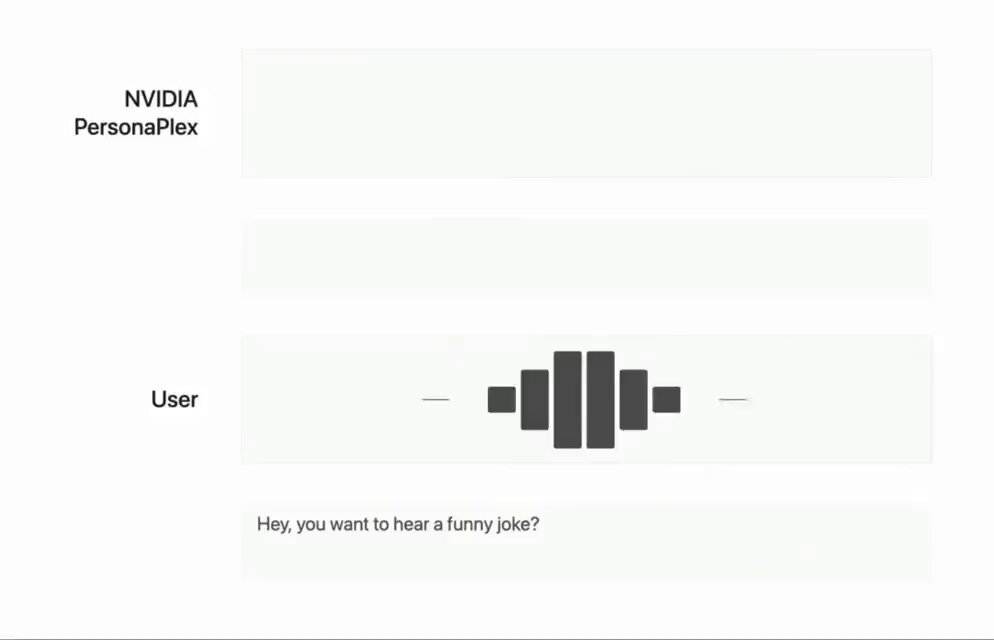
This would be dual-purpose. 1) Test prompt adherence and information retrieval from prompts for models that don't have tool calling. Or test just those capabilities in isolation without a tool API setup. 2) Based on how some users ended up using PersonaPlex without toolcalling...

Фото профиля Rajarshi Roy
Rajarshi Roy1 месяц назад

2)... they would pre-retrieve customer info based on incoming phone number and put that in system prompt. Or in non-specific use cases, pre-retrieve into system prompt info like tech support debug flow/available seats/tax filing steps. Like the Doc2Dial benchmark setup.

Похожие видео

Cerebras inference is very fast. So fast that it changes how we think about configuring our LLMs for voice agent use cases. Kimi K2.6 is a 1T parameter reasoning model that Cerebras serves at 650 - 1,000 tokens per second (end-to-end throughput), with time to first token metrics as low as 150ms (latency). These numbers are two to three times faster than other similarly capable models. The biggest lever we get from this kind of speed is that we can use the model in reasoning mode, and still have excellent "time to first non-thinking token." This solves a big pain point we have in 2026 for voice agent use cases. Almost all recent innovation in post-training has focused on making models good at reasoning ("test time compute"). This is great, but it makes the user-facing model latency much, much slower. Which is a problem for conversational voice agents. We can run Kimi K2.6 with reasoning turned on, and get responses faster than other models produce with reasoning disabled. On my 30-turn voice agent benchmark, Kimi K2.6 with reasoning enabled ties GPT 5.1 and Haiku 4.5 with reasoning disabled, and is still about 200ms seconds faster! On my primary task agent benchmark, Kimi K2.6 is now the #2 model. It ranks just behind Gemini 3.5 Flash in "high" reasoning mode, and tied with GLM 5, Sonnet 4.6, and GPT 5.4 with reasoning set to "low." But Kimi K2.6 completes each turn in the agent loop in under 500ms. The other four models are all at least 3x slower. (Models only qualify for this benchmark if they can complete task turns at a P50 <4s.) A couple of other things that this speed buys us, for production voice agents: - Tool calls happen fast enough that we don't have to work around tool call latency in our pipeline design. - We can prompt the model to output structured data at the beginning of a response, followed by plain text for voice generation. This opens up possibilities like asking the model to do complex classification/generation tasks that influence the rest of the pipeline. For example, the model could create a detailed style prompt for a steerable TTS model, for each individual conversation turn. And, of course, you can use Kimi K2.6 with reasoning turned off. Cerebras calls this "instant" mode. Here's a video of a Cerebras Kimi K2.6 voice agent with voice-to-voice response time, measured at the client, under 500ms. This is the true response latency as perceived by the user, including all network and audio codec overhead, transcription and turn detection, Kimi K2.6 token generation, and voice generation. 500ms is, effectively, instant. So the Cerebras naming for this mode is a propos. :-)

kwindla

40,593 просмотров • 4 месяцев назад

Learn to build conversational AI voice agents in "Building AI Voice Agents for Production", created in collaboration with LiveKit and RealAvatar, and taught by dsa (Co-founder & CEO of LiveKit), Shayne (Developer Advocate, LiveKit), and Nedelina Teneva (Head of AI at RealAvatar, an AI Fund portfolio company). Voice agents combine speech and reasoning capabilities to enable real-time conversations. They're already being used to support customer service, to improve accessibility in healthcare, for entertainment applications, and for talk therapy. In this course, you’ll learn to build voice agents that listen, reason, and respond naturally. You’ll follow the architecture used to create the "AI Andrew" Avatar, a collaborative project between and RealAvatar that responds to users in what sounds like my voice. You’ll build a voice agent from scratch and deploy it to the cloud, enabling support for many simultaneous users. What you’ll learn: - Understand the fundamentals of voice agents, including key components like speech-to-text (STT), text-to-speech (TTS), and LLMs, and how latency is introduced at each layer. - Explore voice agent architectures and the trade-offs between modular pipelines and speech-to-speech APIs. - Explore how platforms like LiveKit mitigate latency issues with optimized networking infrastructure and low-latency communication protocols. - Learn how to connect client devices to voice agents using WebRTC—and why it outperforms HTTP and WebSocket for low-latency audio streaming. - Incorporate voice activity detection (VAD), end-of-turn detection, and context management to detect turns, handle interruptions, and manage conversational flow. - Understand the trade-offs between latency, quality, and cost in an example in which you build a voice agent and change its voice. - Equip your agent with metrics to measure latency at each stage of the voice pipeline and learn the key levers you can pull to make your agent faster and more responsive. The voice agents built in this course also incorporate voice technology from , a supporting contributor to the project. By the end of this course, you'll have learned the components of an AI voice agent pipeline, combined them into a system with low-latency communication, and deployed them on cloud infrastructure so it scales to many users. I’m looking forward to seeing what voice agents you build from this course! Please sign up here:

Andrew Ng

87,965 просмотров • 1 год назад

Voice AI turn taking is a solved problem. The single most common complaint about voice AI, today, is that agents interrupt too often. But the voice agents I build for myself now respond quickly and interrupt me less often than the people I talk to every day. (I actually measured this.) Mark Backman made a Pipecat AI PR two weeks ago that was the last piece of the puzzle for turn taking so good that I no longer ever think about it. The approach combines three layers of processing: 1. Voice activity detection, with a short (200ms) trigger. 2. A native audio turn detection model that's small, fast, and runs on CPU. This model captures audio nuances like inflection and filler sounds that don't get transcribed. 3. A prompt mixin for the conversation LLM that decides turn completion based on conversation context. None of these are new. We've been using VAD for a long time. We trained the first version of the Pipecat Smart Turn native audio model in December 2024. And we've been experimenting with prompt-based large model turn detection (sometimes called "selective refusal") for more than a year. Now, the Smart Turn model and the SOTA LLMs we're using in voice agents have both gotten so good that using them together feels like we've finally "solved" turn detection. Mark also figured out how to elegantly apply a "single-token tagging" technique to this problem. We sometimes use single-token tagging in place of tool calling, when we need a near-zero latency programmatic trigger. Mark's Pipecat mixin defines three single-token characters and prompts the LLM to output exactly one of them at the beginning of every response. - ✓ means the agent should respond normally (immediately) - ○ is a "short incomplete" - the agent should wait 5 seconds - ◐ is a "long incomplete" - the agent should wait 10 seconds The wait times, and the details of the prompt, are configurable, of course. Watch the video to see me talk to an agent that handles all my various pauses and inflections, plus phrases like "let me think," pretty much the way a person would handle them, in terms of response latency. Also, in the second half of the video, I ask the agent to adjust its response pattern because I'm going to tell it a phone number. This kind of "in-context" adjustment of response wait times is really useful. The LLM in the video is GTP-4.1. We've tested the prompt and single-token adherance with GPT-4.1, Gemini 2.5 Flash, Anthropic Claude Sonnet 4.5, and AWS Nova 2 Pro. Note that older models in all these families (and, in general, smaller open weights models) aren't able to reliably output these single-token tags. But the new models we're using these days are pretty amazing.

kwindla

27,086 просмотров • 7 месяцев назад

We blew past the Turing test for voice agents about a year ago. I don't think we talk about this enough. We have lots of data from real-world voice agent deployments. In contexts like customer support, people often forget they are talking to a voice agent. This is true even when the system tells people they are talking to an AI agent at the beginning of the session. (Which I think is a best practice that almost all AI agents should adhere to.) So ... when will this happen for realtime, conversational AI video? Well, we're getting very close. Tavus just released a new realtime video model that, at its best, passes the Turing test for conversational video. It's pretty amazing. The model is full-duplex (it can talk and listen at the same time), and does vision and audio input and audio+video output in realtime. Both on the nascent conversational video benchmarks, and in my testing, it's a pretty big step forward. Here's an unedited video of one of my conversations with the new model. I think you can see a few interesting things here. When the model responds as quickly as you expect a human to respond, the experience is magical. The responses are conversational and natural; there's no leaning on stock filler phrases to hit the response time goals. The integration between the video and audio feels natural, which has historically been an uncanny valley thing that most video avatar experiences didn't quite get past. The model can do hand gestures! If you're deep into this stuff, you'll find that a little bit mind-blowing. And, in keeping with all the stuff that Tavus has released, the fact that the model can "see" as well as hear and talk is integral to the experience and a big part of what makes the conversation feel useful and interesting. At the very beginning of the conversation, you can see that the model and I talk over each other. Which is something that happens a lot in human-to-human video call conversations. We both recover from this gracefully, which, again, has been something that rarely worked quite perfectly in previous generations of realtime video systems. Even more than the "when it works perfectly" capabilities, it's probably these recovery and robustness moments that get us all the way to experiences that feel completely natural.

kwindla

39,444 просмотров • 11 дней назад

Small Language Models (SML) are the future of AI. "Small" (SML) instead of "Large" (LLM). These small models are highly specialized models with superhuman abilities on specific tasks. Here are two techniques to build these models: • Spectrum • Model Merging I give you a short introduction in the attached video, but here is a quick summary: Spectrum helps us identify the most relevant layers to solve one specific task. We can ignore everything else and focus on fine-tuning these layers. Using Spectrum, we can fine-tune models in a heartbeat. Model Merging combines multiple models into a unique, much better model than any of the individual input models. You can also combine models specialized in different tasks and get a model with multiple abilities. This is the state of the art of productizing models. It's what Arcee.ai's platform does behind the scenes. Arcee collaborated with me on this post and is sponsoring it. There are three main steps to produce a model for your particular use case: 1. You create a dataset by uploading your data. 2. You train a model. At this step, Arcee uses Spectrum and Model Merging to produce a highly specialized model for your task. 3. You can deploy that model to any environment you want. Three important notes: • Training process is 2x faster and 2x cheaper than regular fine-tuning. • Resultant models are smaller and have higher accuracy. • They create these specialized models from open-source models. Check this site so you can fully appreciate how this works: If you want to fine-tune an open-source model, consider Arcee's platform. This is the state of the art.

Santiago

164,162 просмотров • 2 лет назад