正在加载视频...

视频加载失败

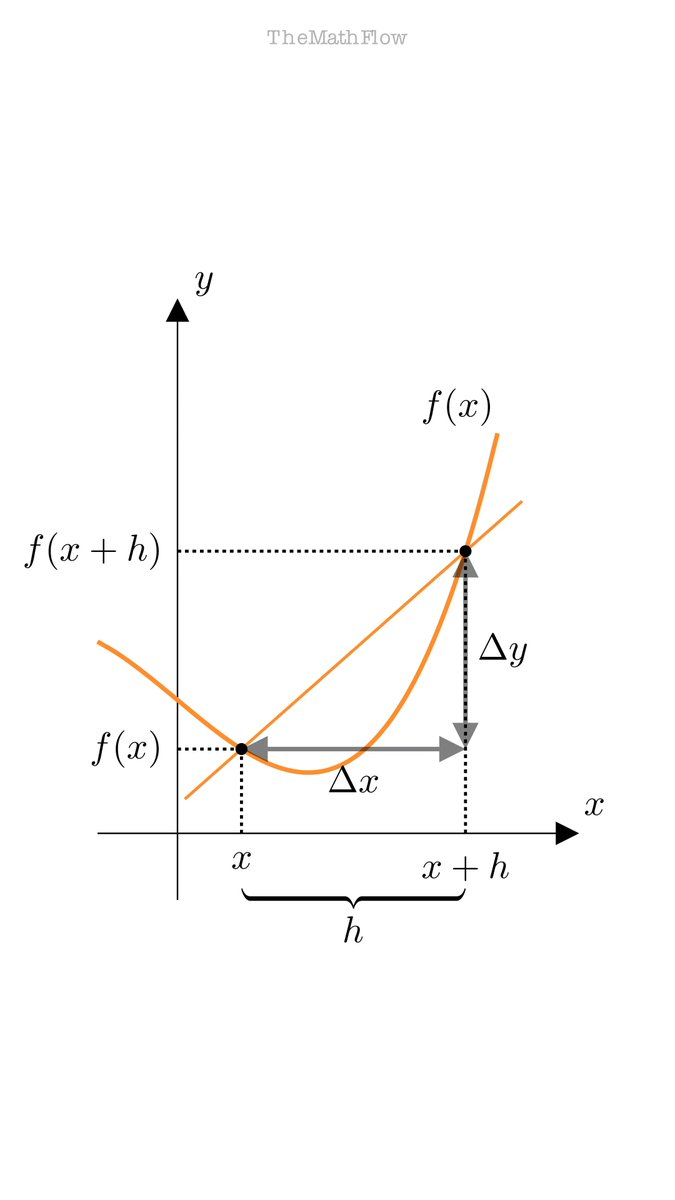
Evaluating a limit using the definition of a derivative #apcalculus #calculus #apcalcab #derivatives #mathteacher

39,900 次观看 • 2 个月前 •via TikTok

0 条评论

暂无评论

原始帖子的评论将显示在这里

相关视频

MIT FILMED A PROFESSOR WHOSE EXPLANATIONS ARE SO CLEAR AND INTUITIVE THAT THE MOST COMPLEX CALCULUS ON WALL STREET BECOMES OBVIOUS - AND IT PROVES WHY NEWTON'S VERSION GIVES THE WRONG ANSWER FOR EVERY OPTION PRICE This is an MIT lecture on Itô calculus, course 18.S096. The professor opens with one equation that breaks classical calculus - dB squared equals dt. In normal calculus, dt squared vanishes when you take limits. But the quadratic variation of Brownian motion forces the second derivative term to survive. This one fact changes every formula in calculus. Then Itô's lemma. In classical calculus, if you apply a smooth function to a path, you only need the first derivative term. In Itô calculus you need an extra term - half the second derivative times dt. He derives it in 10 lines of Taylor expansion, showing exactly which terms survive and which vanish. The correction term is not a small adjustment. It is the difference between the right answer and the wrong one. Then geometric Brownian motion. The natural guess for modeling stock prices is to take the exponential of a Brownian motion. It fails - the Itô correction introduces an unwanted drift term that makes the expected value grow over time. The fix is to subtract exactly half of sigma squared from the exponent. This is the formula that runs every Black-Scholes calculation on earth. Then adapted processes and Itô integrals. In classical integration it doesn't matter which point in each interval you use to form Riemann sums - the limit is always the same. In Itô calculus left endpoints and right endpoints give different answers. Itô's choice of left endpoints is not arbitrary - it encodes the fundamental constraint that financial decisions must be made using only past information. Watch the moment he explains the Girsanov theorem - that a Brownian motion with drift and a Brownian motion without drift are equivalent probability measures. Two processes whose paths look completely different in the long run can be converted into each other by multiplication. This is how quants transform non-martingale stock price processes into martingales for pricing. A derivatives trader I know rewatched this lecture before his first day at a quantitative hedge fund. Said it was the first time Itô's lemma felt like a theorem with a reason rather than a formula to memorize. Free on YouTube, MIT OpenCourseWare, Creative Commons license. bookmark this and watch later - after this lecture every option price you see will feel like a solution to a stochastic differential equation waiting to be written down

Zyphor

47,365 次观看 • 3 个月前

This man teaches at a community college in California. His salary: around $800,000 a year. The engineers who passed calculus because of him: $1,800,000 to start. He has more calculus students than Harvard, MIT, and Stanford combined. This is Professor Leonard's Calculus 2, Lecture 6.2. Free on YouTube. Professor Leonard has taught calculus on YouTube for over a decade. His channel has millions of subscribers across 150 countries. Every major university has students who watch him the night before their exam. Then the concept. An inverse function is a machine that undoes another machine. If a function takes 2 and gives you 8, the inverse takes 8 and gives you back 2. Finding an inverse means switching every x and y in the equation and solving for y again. The graph flips across the line y = x like a mirror. Then the problem. Sometimes it is easy to find the inverse. Sometimes it is impossible to write it explicitly. A function like 3π sin x + sin x cannot be solved for x with algebra. You have to think. What angle makes the whole thing equal to 1? You work backwards through the unit circle until the answer appears. Then the shortcut. If you want the derivative of an inverse at a point, you do not need the inverse itself. You only need the derivative of the original function. The formula: the derivative of the inverse at a point equals 1 divided by the derivative of the original function evaluated at the switched point. The inverse flips the coordinates, so you flip where you plug in. Watch the moment he shows why G prime of 8 equals 1/12 without ever writing the inverse function. Every engineering student memorizes the derivative rules. Professor Leonard's lecture is the one that shows why the inverse derivative formula is just those same rules run backwards. A software engineer at a semiconductor company in Austin said Professor Leonard's channel is the reason she passed Calculus 2 on her second attempt. She graduated, joined the company, and now makes $165,000 a year. Bookmark this and watch later - after this lecture every inverse problem on your exam will feel like a question you already answered.

Lupen

739,060 次观看 • 2 个月前