Loading video...

Video Failed to Load

Go Home

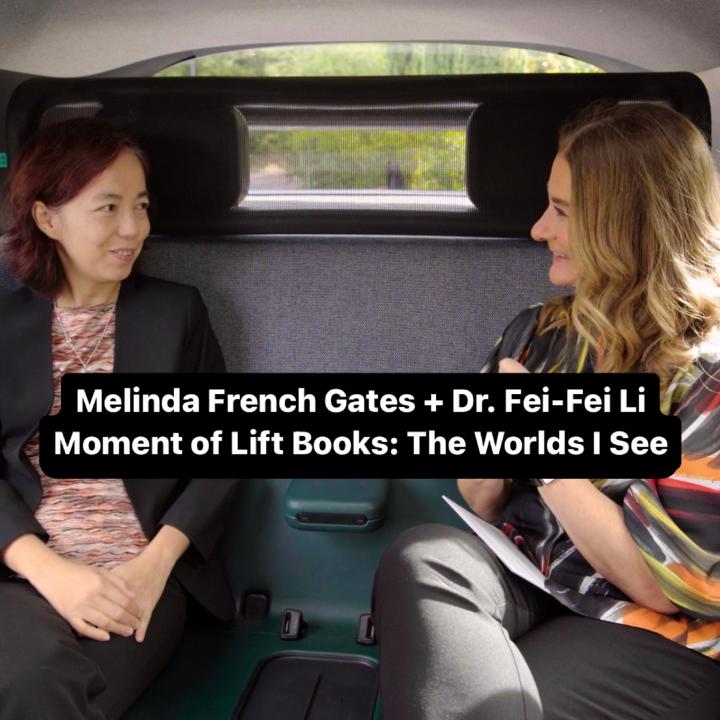
Fei-Fei Li: Open Source AI Needs To Be Protected⁣ ⁣ "I think open source should be protected. If there is efforts of open source both in public sector as like academia as well as private sector is so important. It's so important for the entrepreneurial ecosystem." — Fei-Fei Li
33,472 views • 1 year ago •via X (Twitter)

0 Comments

No comments available

Comments from the original post will appear here

Related Videos

Dr. Fei-Fei Li (Fei-Fei Li) is known as the “godmother of AI.” For the past two decades, she’s been at the center of AI’s most significant breakthroughs, including: - Spearheading ImageNet, the dataset that sparked the AI explosion we’re living through right now. - Leading work at Stanford Artificial Intelligence Laboratory (SAIL) - Serving as Chief Scientist of AI/ML at Google Cloud - Co-founding Stanford’s Institute for Human-Centered AI - Serving on the United Nations AI Scientific Advisory Board - Being named as Time's 100 most influential people in AI In this conversation, Fei-Fei shares the rarely told history of how we got to today—and what comes next. We discuss: 🔸 The backstory on ImageNet 🔸 Why robotics faces unique challenges compared with language models and what’s needed to overcome them 🔸 Why Fei-Fei believes AI won’t replace humans but will require us to take responsibility for ourselves 🔸 Why world models and spatial intelligence represent the next frontier in AI, beyond large language models 🔸 The surprising applications of Marble, from movie production to psychological research 🔸 How to participate in AI regardless of your role 🔸 Much more Listen now 👇 • YouTube: • Spotify: • Apple: Thank you to our wonderful sponsors for supporting the podcast: 🏆 Figma Make — A prompt-to-code tool for making ideas real: 🏆 Justworks — The all-in-one HR solution for managing your small business with confidence: 🏆 Sinch — Build messaging, email, and calling into your product:

Lenny Rachitsky

250,455 views • 10 months ago

Today at Stanford, Fei-Fei Li (Fei-Fei Li),Cofounder/CEO World Labs, gave one of the clearest explanations I’ve heard of what a World Model really is. She broke it down into three layers: 1️⃣ Rendering — What does the world look like? This is where most of today’s video generation models operate: generating increasingly realistic and beautiful pixels. The question is: Can AI generate what the world looks like? The primary consumer is humans. 2️⃣ Simulation — How does the world actually work? Fei-Fei gave a simple example: “How will this bottle move? If I pour the water out, how will the water flow?” This goes far beyond generating something that looks realistic. The model needs to understand physics, spatial relationships, cause and effect, and how the world changes over time. The consumers are both humans and machines. 3️⃣ Planning — What should happen next? This is where things get really interesting. AI doesn't just render the world or simulate what might happen. It uses its understanding of the world to decide: What should I do next? At this layer, the primary consumer is the machine itself. And this connects directly to two enormous opportunities: Autonomous driving and robotics. The progression is powerful: Rendering → Simulation → Planning The real promise of World Models isn't simply generating better videos. It's building AI that can understand the world, predict what happens next, and ultimately take intelligent action in the physical world.

PaulFang

11,470 views • 1 month ago