Loading video...

Video Failed to Load

Go Home

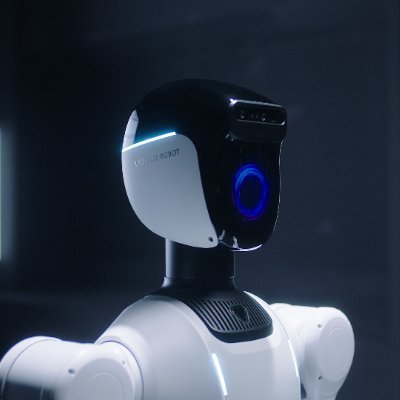
Final result: 10,000 parcels sorted in 5 hours, 14 minutes, and 1 second 📦⚡ Powered by the WALL-B model, the robots maintained stable, continuous performance throughout the endurance challenge—averaging 1,911 parcels per hour and just 1.88 seconds per parcel. Five hours. 10,000 parcels. WALL-B delivered. 🚀
21,516 views • 9 days ago •via X (Twitter)

0 Comments

No comments available

Comments from the original post will appear here

Related Videos

JUST IN: Dyna Robotics just published one of the most important research papers in robotics this year. It could fundamentally change how robot foundation models are trained. A scaling law that transfers from human video to robot performance. Dyna-2 is out and it's 🔥 Here's what that means in plain terms. Dyna-2 was pre-trained on ONE MILLION hours of egocentric human video, 170 years of continuous human experience, cooking, folding, assembling, cleaning. And as that human data scaled, robot performance improved. Predictably. Monotonically. Across 39 tasks on two different robot embodiments the model had never seen. → 1,000 hours pre-training → 20% normalised task performance → 10,000 hours → 28% → 100,000 hours → 45% → 1,000,000 hours → 53% Human video exists at effectively unlimited scale. Every cook, every factory worker, every craftsperson wearing a camera is generating training data for future robots. But the finding that stunned even the researchers, world modeling is what makes the transfer work. A model trained to predict future video AND actions massively outperforms one trained on actions alone. Video is the new scaling axis for robotics. One more jaw-dropping data point. 13 minutes of teleoperation data was enough to fine-tune Dyna-2 to open a bottle cap using two five-fingered robot hands. The robots are coming, and they're learning from us directly :D Read more here: Congrats Jason Ma and team! ~~ ♻️ Join the weekly robotics newsletter, and never miss any news →

Lukas Ziegler

23,556 views • 19 days ago

X Square Robot Unveils New Embodied AI Model, Says Robots Will Arrive in Homes in 35 Days Backed by Alibaba, ByteDance, Xiaomi and Meituan, X Square Robot unveiled a next-generation embodied AI foundation model for home robots and said its first deployments in everyday households will begin within 35 days. X Square Robot on Tuesday unveiled WALL-B, a new embodied AI foundation model designed for deployment in real-world homes, marking what the company described as a major step toward bringing general-purpose robots into daily family life. At a launch event themed "Born to Bot, Bot to Family," the company also introduced its World Unified Model (WUM) architecture, a training framework that combines vision, language, action and physical prediction within a single system from the outset. X Square said the model is intended to help robots operate in the far more unpredictable setting of a home, where tasks, layouts and interactions vary from moment to moment. "Robots in factories and in homes are completely different. In factories, they repeat the same action 10,000 times without variation. In a home, however, they need to perform 10,000 different actions, each unique and non-repetitive. Therefore, the challenge of a truly intelligent robot lies not in repeating a single action, but in the ability to execute new, untrained movements within unstructured environments. Deploying robots in the home is one of the most significant technical hurdles of our time," said Qian Wang, founder and CEO of X Square Robot. WALL-B is the first real-world implementation of the World Unified Model architecture. Unlike modular systems that train perception, language and control separately, X Square Robot said World Unified Model optimizes those capabilities jointly from the very beginning. The company said that allows physical prediction — including force, friction and collision dynamics — to emerge as part of the model itself, rather than being layered on afterward. "We train all capabilities—vision, language, action, and prediction—within the same network from day one. Much like infants, who do not learn to see, move and speak in isolated, sequential stages, but instead see, move listen and act simultaneously while receiving feedback, we have integrated all these capabilities into a unified whole," said Wang Hao, CTO of X Square. X Square Robot said the development of WALL-B rests on two pillars. The first is a data strategy that prioritizes training on authentic, non-staged home environments to cover the “long-tail” distribution of real-world scenarios, such as misplaced objects and temporary occlusions. Unlike models primarily trained on synthetic data or laboratory datasets, this strategy exposes WALL-B to the natural clutter of lived-in spaces—misplaced items, unexpected obstacles, and spontaneous human activity—ensuring that the training data reflects real-world conditions rather than a simplified version. The second is a physics-aware predictive mechanism that anticipates physical outcomes before an action is taken, enabling the model to respond to contact dynamics instead of just reacting. The development of the self-developed WUM architecture on physical robotic platforms highlights the company’s accumlated experience in bridging sim-to-real gaps across varied operational contexts. Wang commented that the current AI model is still in an "intern" stage, subject to errors requiring remote assistance. For instance, it may mistakenly place slippers in the kitchen or pause while wiping a table to "think". However, the model operates nonstop 24 hours a day, becoming increasingly "intelligent" as each day of operation generates new data. In 35 days, on May 25, X Square Robot will officially bring its robots into everyday homes, underscoring the company’s long-term commitment to the home robotics sector.

X Square Robot

52,968 views • 4 months ago

Figure 03 just finished an 8-hour work livestream, imperfect, but already good enough to replace a lot of repetitive warehouse labor. 🤖 Brett Adcock put a team of F.03 robots on a factory-style package sorting task for a full shift. The job was simple and brutal: detect the barcode, pick the package, flip it label-side down, place it on the conveyor, repeat. Soft poly bags, rigid boxes, moving belts, messy orientations. That is exactly the kind of boring physical work factories pay humans to do all day. Early in the stream, the system handled 230 packages in 10 minutes. That is roughly 2.6 seconds per item — already in human-speed territory for this narrow workflow. The more important part: it was not one robot pretending to work all day. It was a team of Figure 03 robots keeping the line running. When one robot ran low on battery, it left the station and another robot stepped in. That is the real factory signal: not just autonomy, but shift continuity. F.03 is rated for about 5 hours of runtime, so the 8-hour result depends on fleet orchestration, charging, and handoff. That matters more than a single clean demo. The stream was not perfect. There were pauses, hesitations, missed orientations, and small recovery moments. Good. A perfect short clip hides failure. An 8-hour livestream exposes the parts that actually matter: endurance, recovery, throughput, and whether the robot can stay useful after the novelty wears off. Figure says this was fully autonomous on Helix-02, with zero human intervention. For logistics and manufacturing, that is the threshold worth watching. Not “can it do one impressive task?” Can it keep doing the boring task for an entire shift? Figure is not showing a general human replacement yet. But for structured, repetitive factory work, the gap just got much smaller. The timing is also interesting: Figure says BotQ has already delivered 350+ F.03 units and reached a 1 robot/hour production cadence. And F.04 is now in full design lock, with parts starting to ship. The next test is obvious. 8 hours was the proof of endurance. 24/7 is the proof of labor economics.

RoboHub🤖

16,818 views • 3 months ago

A new father became so terrified of never learning anything again that he accidentally dismantled the biggest lie in education. His name is Josh Kaufman, and he wasn't a neuroscientist or a professor. He was an author working from home, running a business with his wife, with a newborn daughter who had just obliterated any concept of free time he thought he had. Around week 8 of sleep deprivation, he had the thought every parent has. I am never going to learn anything new ever again. And because he was the kind of person who responds to panic with research, he went to the library and started reading everything he could find about how humans acquire skills. He read book after book, study after study. Every single one said the same thing. 10,000 hours. He had a full-body reaction to that number. 10,000 hours is a full-time job for five years. He didn't have five years. He didn't have five hours. He had a newborn and a business and a wife who was also building a business in the same house. So he kept digging. And here is where it gets interesting. The 10,000 hour rule came from a researcher named K. Anders Ericsson at Florida State University. What Ericsson actually studied was professional athletes, world-class musicians, chess grandmasters people at the absolute tip of ultra-competitive, ultra-high-performing fields. His finding was that the people at the very top of those narrow fields had put in around 10,000 hours of deliberate practice. That is all the finding said. Then Malcolm Gladwell wrote Outliers in 2007, and the message went through a game of telephone that destroyed its meaning entirely. It takes 10,000 hours to reach the top of an ultra-competitive field became it takes 10,000 hours to become an expert, which became it takes 10,000 hours to become good at something, which became it takes 10,000 hours to learn something. That last statement is completely false. And the actual research had been showing something different the entire time. When cognitive psychologists study skill acquisition, they measure a graph that looks identical across every domain they have ever tested. At the start, performance is terrible. With a small amount of practice, it improves rapidly. Then it plateaus, and subsequent gains become much harder and slower to achieve. The steep part of that curve the jump from knowing nothing to being reasonably good happens much faster than anyone tells you. Not 10,000 hours. Not 1,000 hours. 20 hours. Kaufman tested this himself. He had always wanted to learn ukulele. He picked one up, put 20 hours of focused deliberate practice into it, and stood on a TEDx stage playing a medley of recognizable pop songs in front of a live audience. The crowd went wild. He then told them that performance was his 20th hour. But 20 hours is not just a number. There is a method inside it. The first step is to deconstruct the skill. Most things we think of as single skills are actually bundles of dozens of smaller skills. You do not need all of them. You need the ones that get you to your specific goal the fastest. In music, this means most songs use four or five chords. Learn those first. Ignore the rest until they matter. The second step is to learn just enough to self-correct. Get three to five resources books, courses, videos but do not use them as a reason to delay practice. The point of learning is not to master theory first. It is to get good enough at noticing your own mistakes that you can adjust as you go. The third step is to remove barriers to practice. Not through willpower. Through structure. If the instrument is in the case in the closet, you will not play it. If your phone is in the room, you will not focus. Kaufman was brutal about this. The environment does the work that discipline cannot sustain. The fourth step is the one that actually makes the system work. Pre-commit to 20 hours before you start. Here is why this matters. Every skill has what he called a frustration barrier. The early part of learning anything is genuinely terrible. You are incompetent and you know it. That feeling is so uncomfortable that most people quit before they ever cross to the other side of the curve. By pre-committing to 20 hours, you are making a contract with yourself to push through the frustration long enough to arrive at the part where things start clicking. The barrier to learning something new is never intellectual. It is emotional. We are afraid of feeling stupid. That fear costs most people everything they could have learned. Kaufman figured this out while holding a baby and running out of time, which is the most human possible condition for having a breakthrough. Most people are waiting for the perfect season to start. He just started. 20 hours is 45 minutes a day for a month. That is it. That is the price of going from knowing nothing to being genuinely capable at almost anything you can name. The 10,000 hour rule was never about learning. It was about becoming the best in the world. You probably do not need to be the best in the world. You just need to start.

Ihtesham Ali

44,762 views • 4 months ago

Hyundai Glovis achieves 100% robot uptime with wireless charging! 🔌 Hyundai Glovis faced a problem common to warehouse automation: charging downtime was killing efficiency. Their fleet of AGVs operated with a 6.75:1 work-to-charge ratio. Every seventh robot was charging at any given moment. This meant 15% operational efficiency loss, or the need to purchase 15% extra robots just to compensate for charging downtime. CaPow solution is wireless power transfer while robots work! 🛜 The Genesis platform uses capacitive charging pads placed in the floor where robots naturally stop during operations, in this case, at picking stations. No docking required, no deviation from routes, no excavation needed. The test compared two identical setups. Section A used three robots with traditional charging (operate until 40% battery, charge to 95%). Section B used three robots with CaPow's system, charging at the picking station while operators picked items from bins. Traditional robots lost 8.3% battery per hour and suffered 33% operational inefficiency (150 minutes downtime out of 447 minutes). CaPowered robots gained 1% battery per hour on average and achieved 100% uptime for the entire 8-hour shift. The math on a 100-robot fleet is clear. Traditional charging means only 85 robots working at any time. To maintain full throughput, you need to buy 15 extra robots plus 15 extra chargers. Those chargers consume valuable warehouse space and add extra downtime as robots travel to and from charging zones. CaPow eliminates all of it. No extra robots, no chargers taking up floor space, no charging routes, no fleet management complexity. ~~ ♻️ Join the weekly robotics newsletter, and never miss any news →

Lukas Ziegler

17,778 views • 6 months ago

This trader built a bot with Claude Fable 5 that makes 876 trades per hour. Result: $226,000 profit on Polymarket. Starting capital: $2,366. Time frame: 1 month. The bot does high-frequency scalping and arbitrages 5-min and 15-min Bitcoin markets. Execution speed: 14.6 trades per minute. The strategy is simple: 1. Buys only with limit orders to control entry price Average market cost: $10 per position. No market orders. No slippage. Just precise entries. 2. Uses 5-min markets for arbitrage Average edge per trade: 7.27% The bot identifies mispriced outcomes and captures the spread before it closes. 3. Builds directional positions on 15-min markets Trigger: order book imbalance appears. The edge is reading order flow faster than everyone else and leaning into the side with momentum. The entire edge is execution speed + order book reading. While manual traders place 1-2 trades per hour, this bot completes 876. No hesitation. No emotion. Just high-frequency scalping repeating itself at scale. Some context: Most people try to predict where Bitcoin goes next. This system just identifies arbitrage windows on 5-min markets, builds directional positions when order book imbalance appears on 15-min markets, and captures micro-edges before they disappear. Limit order arbitrage + scalping turned $2,366 into $226,000 in 30 days. The system runs autonomous: → Claude Fable 5 handles decision logic → Monitors 5-min and 15-min BTC markets continuously → Executes limit orders when arbitrage edge appears → Builds directional positions on order book imbalance → Scalps micro-edges at 14.6 trades per minute No manual trading. No chart analysis. Just finding mispriced markets and exploiting the edge before anyone else. 💡 I'm sharing the complete Claude Fable 5 prompt and high-frequency scalping workflow. Free for 24 hours. To get it: 1️⃣ Comment the "Fable" 2️⃣ Like and Repost 3️⃣ Follow Himanshu Kumar I'll DM you the setup.

Himanshu Kumar

55,447 views • 21 days ago