正在加载视频...

视频加载失败

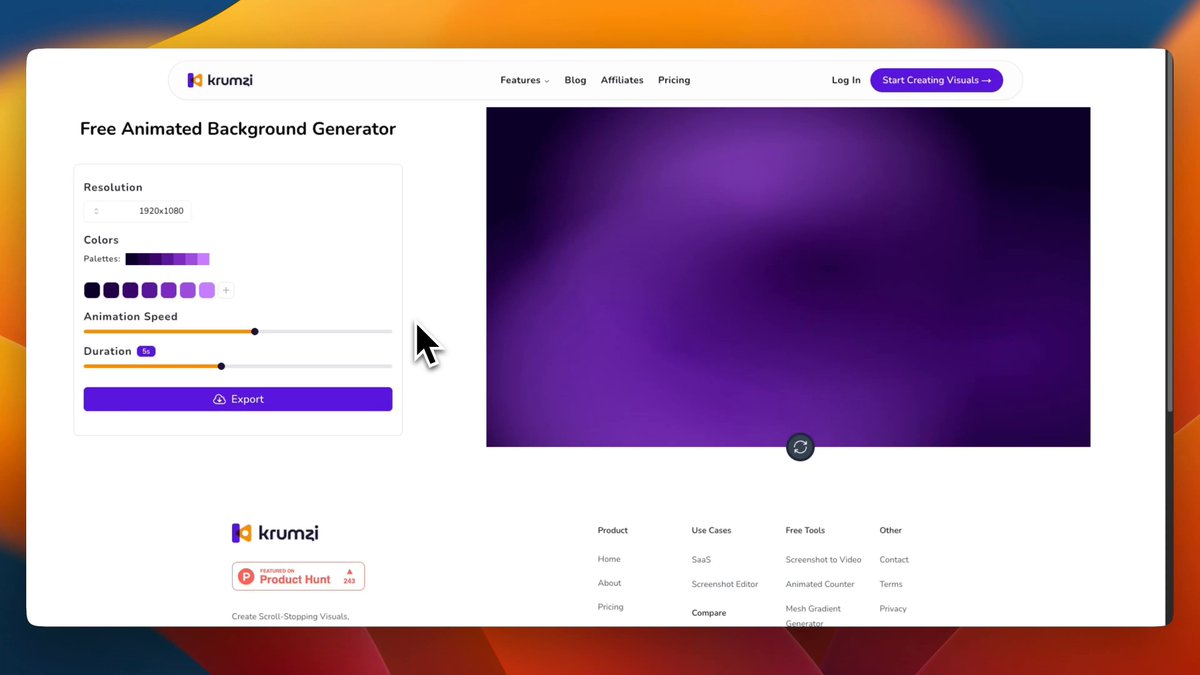
Finally after years background gradient problem solved! A powerful editor with a bunch of beautiful premade mesh gradients that can be visually 🫡 customized and exported as images or even animated videos 😭 Web: It's too good for hero section bg!!

10,509 次观看 • 18 天前 •via X (Twitter)

0 条评论

暂无评论

原始帖子的评论将显示在这里
相关视频

CSS Trick! 🤙 You can create gradient borders on translucent elements using mask-clip and mask-composite with a pseudo-element 🔥 .gradient-border::after { mask-clip: padding-box, border-box; mask-composite: intersect; mask: linear-gradient(transparent, transparent), linear-gradient(white, white); } It's the same "Transparent border trick" from before. But, now you apply it to a pseudo-element 😎 The trick is to create a pseudo-element with a gradient background and then mask it so we only see the part we want, the border ✨ mask-clip defines the area affected by a mask. Similar to how you can define background-size. Using padding-box and border-box constrains the two masks. mask-composite is the magic part ✨ It defines a compositing operation for stacked mask layers. Using intersect means that the parts that overlap get replaced. And this seems to work in all browsers 🙌 As for the rest of the styles... – Make sure you set pointer-events: none on the pseudo-element – Make sure it fills the parent element. You can use position: absolute and inset: 0 – Make sure the background fills the space including the border-width. You can use calc to achieve that: --bg-size: calc(100% + (2px * var(--border))); background: var(--gradient) center center / var(--bg-size) var(--bg-size); That's it! 🚀 Gradient borders on translucent elements. You can set all the backdrop-filter: blur() you like! 😅 CodePen.IO link below! 👇

jhey ʕ•ᴥ•ʔ

269,739 次观看 • 2 年前

Peter Thiel explains his principle of only working on problems that wouldn’t get solved without you Thiel shares that he’s “a little bit skeptical” of social entrepreneurship: “Social entrepreneurship is always ambiguous because it’s unclear what the word ‘social’ means. Social can mean that it’s ‘good for society’ or it can mean that it’s ‘good as seen by society’. In the second meaning, you often end up with something that many people are doing.” He gives education startups as an example of a social startup - it’s seen as objectively good and lots of people are working on it. Thiel contrasts this to a mission-oriented company: “A mission-oriented company is one where if you didn’t work on this problem, nobody would.” He gives the example of Elon Musk starting SpaceX with the mission of going to Mars and making humans interplanetary. If Elon wasn’t working on it, this problem might not get solved. Thiel believes this is an important principle in general: “We always want to do things where… if you weren’t working on it, it wouldn’t get solved. Always go for that sort of counterfactual meaning. You don’t want to ever be in a place where you’re just one of a hundred cogs in the machine… You want to be in a place where you’re doing something that can’t be easily replicated or replaced - either on an individual level or the level of a company.” Video source: The Wharton School (2014)

Startup Archive

39,468 次观看 • 6 个月前