Video yükleniyor...

Video Yüklenemedi

Ana Sayfaya Dön

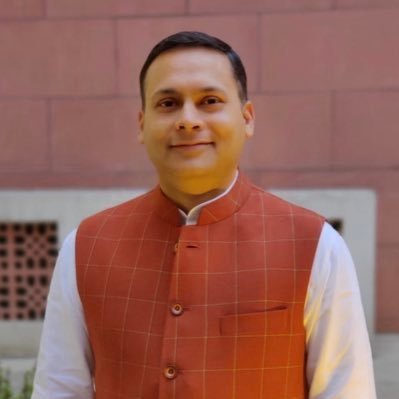
For every controversy, Meta’s default defence seems to be the same: “It was a technical glitch.” But a former Meta executive turned whistle-blower has punctured that narrative. Algorithms don’t create themselves. They are designed by people, trained on human choices, and operate within rules set by the company. Meta...

26,987 görüntüleme • 1 gün önce •via X (Twitter)

0 Yorum

Yorum bulunmuyor

Orijinal gönderinin yorumları burada görünecek

Benzer Videolar

Why Meta India Must Pay. Facebook and Instagram Should Face a Billion Dollar Fine For Restricting Modi's Speech. 1/ Meta's global affairs chief Joel Kaplan apologised to India's IT Minister Ashwini Vaishnaw. Mark Zuckerberg separately apologised over CSAM, deepfakes and "operational failures." Meta executives admitted money was paid to boost a certain type of content on their platforms. 2/ The backdrop: PM Narendra Modi's July 23 video addressing student protesters over the NEET-UG paper-leak scandal was briefly restricted on Facebook. Meta called it an "error" and restored it. But that error surfaced in the middle of a 36-day youth movement that had already forced a Cabinet minister to resign. 3/ Timing is the whole story. A platform doesn't get to plead "operational glitch" and "paid content promotion" in the same meeting and expect both to be read as unrelated coincidences. Either the system is out of control, or someone had their thumb on the scale. Neither answer is reassuring. 4/ This isn't Meta's first apology tour in India. Elections, protests, political content — the pattern keeps repeating: something goes wrong at a politically sensitive moment, a minister objects, an executive says sorry, and the underlying system is never actually opened up for inspection. 5/ An apology is not accountability. If Meta wants to be believed, it doesn't get to describe the outcome — it has to show the mechanism. What content was boosted, and to whom? What decided the boost — algorithmic, paid or manual? The scale and reach of that promotion. Who signed off on it? Nothing less is a real answer. 6/ India's Parliamentary IT committee is already floating the nuclear option: strip Meta of intermediary "safe harbour" status under Section 79, and treat it as a publisher — legally responsible for what it amplifies, not just what it hosts. That's the leverage that actually forces disclosure, not another apology in a closed-door meeting. 7/ The ask is simple: transparency first, trust second. No "trust our internal review." No quiet apology after a minister already caught it. If a platform can move a national protest narrative, it owes the country receipts — not regret. 8/ A $1 billion fine should drill the message home - information warfare against India comes with consequences.

Rakesh Krishnan Simha

18,357 görüntüleme • 1 gün önce

Meta’s Chief AI Officer Alexandr Wang just put a five-year countdown on the most consequential race in human history. Wang: “Mark and myself, we very strongly believe that this is a very special time in human history.” Not a decade. Not a generation. Five years. Wang: “The discoveries made over the next half-decade are going to be some of the most monumental discoveries that human civilization has ever made.” To run that race, Meta didn’t just build a new model. They built an entirely new division from scratch. Meta Superintelligence Labs. Designed from a blank slate. Singular focus. Wang: “What does the optimal team look like for the future of superintelligence?” The bottleneck to superintelligence isn’t compute anymore. It isn’t data. It’s the density of human genius in a single room. Wang: “Highest talent density. Bring the very best people together and build the best possible environment for them.” The AI arms race has shifted from hoarding GPUs to hoarding the smartest minds on earth. The first company to perfect that organizational structure will be the first company to reach superintelligence. But reaching it is only half the battle. Deploying what you built to the world is the other half. And here is where Meta’s advantage becomes almost unfair. Wang: “Three and a half billion people utilize our platforms every single day.” While every other AI lab is still trying to figure out how to get users to adopt their technology, Meta already has nearly half the planet locked into their ecosystem. MSL wasn’t built just to achieve scientific breakthroughs. Wang: “Build the products that will enable this technology to be deployed to billions and billions of people worldwide.” Whoever builds superintelligence first wins the race. Whoever distributes it to 3.5 billion people controls what comes after. Meta is positioning to do both.

Dustin

32,982 görüntüleme • 5 ay önce