Video yükleniyor...

Video Yüklenemedi

Ana Sayfaya Dön

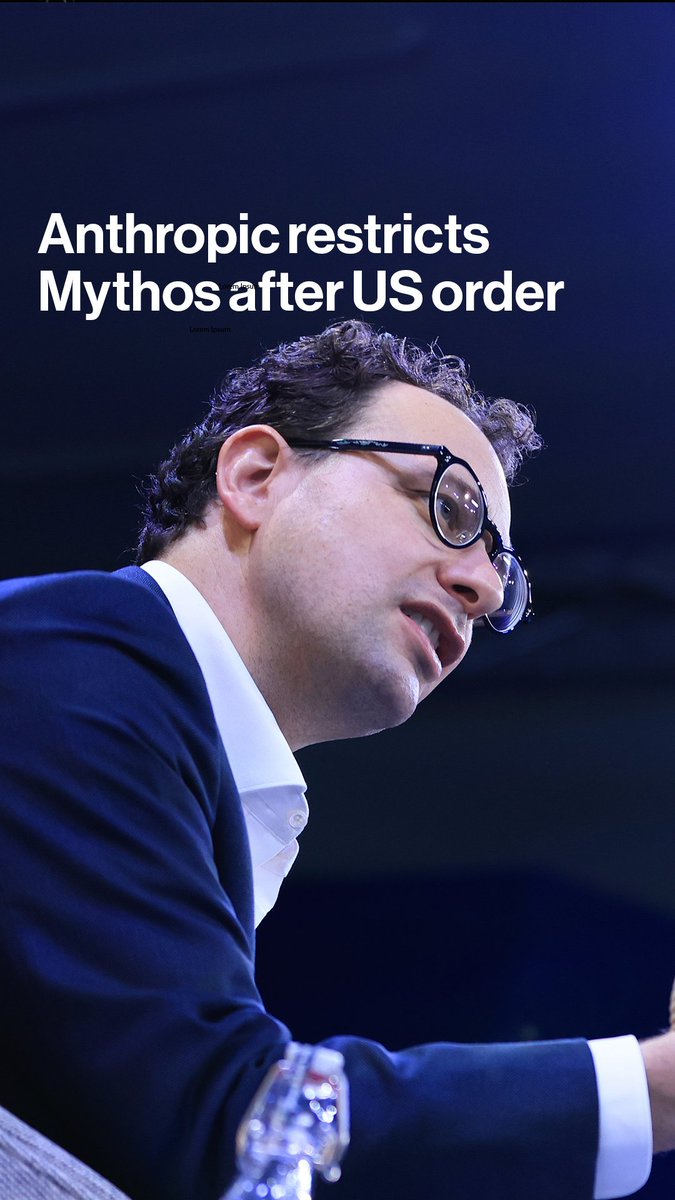
FOR THE FIRST TIME, THE US GOVERNMENT PULLED A PUBLICLY DEPLOYED AI MODEL OFFLINE. THE MARKET SHOULD PAY ATTENTION. 🇺🇸 On June 12, the Commerce Department ordered Anthropic to block access to its newest models, Fable 5 and Mythos 5, for any foreign national. Anthropic had to disable them...

47,986 görüntüleme • 1 ay önce •via X (Twitter)

0 Yorum

Yorum bulunmuyor

Orijinal gönderinin yorumları burada görünecek
Benzer Videolar

David Sacks laid out the cleanest theory about why Anthropic keeps calling for government regulation of AI. The answer has nothing to do with safety and everything to do with market structure. Anthropic spent months writing blog posts warning that AI was dangerous. Dario gave interviews about existential risk. He published a piece calling for an FAA-style agency to approve all AI models before release. He primed government officials to treat frontier AI as a threat requiring oversight. Then one of Anthropic's own most trusted partners reported a credible jailbreak from Fable 5. And the government did exactly what Dario had spent months conditioning them to do. They rolled it back. Sacks called it on the All-In podcast. Dario got exactly what he wanted. The FAA for AI is not a safety mechanism. It is a moat. A government approval process for new model releases does not hurt Anthropic. They already have the models. It hurts every competitor who does not. It hurts open source models that cannot be regulated because there is no company to regulate. It hurts the Chinese labs only insofar as they care about the American market at all. The only companies that benefit from a labyrinthine government approval process are the ones already at the frontier who can afford to wait out the review cycle. That is Anthropic. That is OpenAI. Nobody else. The proof is in what they did not do. Chimath pointed it out directly. If you are genuinely worried about misuse, you implement know-your-customer verification. You make people identify themselves before accessing the most powerful models. Anthropic could have done that tomorrow. They did not. They do not want KYC. KYC is transparent. KYC can be audited. KYC gives users due process. What they built instead was an invisible surveillance system that profiles you, degrades your access without telling you, and asks the government to make sure no one else can offer you an alternative. If you thought this was safety then you are wrong. That is capture. Sacks said the response should be simple. Fix the jailbreak, come back to market, and do not reward Dario with the regulatory architecture he has been engineering for years. We will see if anyone is listening. WATCH THE FULL PODCAST ON The All-In Podcast

Ihtesham Ali

25,284 görüntüleme • 20 gün önce

Microsoft just betrayed OpenAI and Anthropic, the two companies it helped build. And it could break the entire AI trade... Here's what happened: Inside Excel and Outlook, two of the most used business apps on Earth, Microsoft has started routing tens of thousands of AI requests every week to its own in-house models instead of OpenAI and Anthropic. Microsoft's own AI chief, Mustafa Suleyman, said himself: "We pay a lot of money to Anthropic, so our goal is to reduce and ultimately ELIMINATE that cost." This is the company that poured $13 billion into OpenAI and effectively created the modern AI industry, and it just decided the most advanced models on the market are NOT worth paying for. And here's the thing... Microsoft is not just ripping out OpenAI everywhere - it is being surgical about it. The hardest and rarest tasks can still go to OpenAI or Anthropic. What Microsoft is taking back is the boring, high-volume work, like the email replies, the thread summaries, and the simple spreadsheet formulas. Why does that matter so much? Because that boring, repetitive work is where the actual money lives. The frontier labs assumed businesses would push BILLIONS of these tiny requests through expensive models forever. That endless river of tokens is the entire reason OpenAI and Anthropic are valued in the hundreds of billions of dollars. Microsoft looked at that river, decided it was massively overpaying, and rerouted it to models it owns outright. So the single biggest customer in the industry just walked off with the most profitable part of the business. And it is not only Microsoft: That same week, CNBC reported that American companies have been escaping to Chinese AI models to dodge rising US prices. Chinese models now handle more than 30% of US companies' AI usage on one major platform, peaking at 46%, up from an average of 11% a year earlier. They cost 60 to 90% less, and on some benchmarks they land within a single point of the best American model. One US startup moved ALL of its AI traffic off Claude and onto China's DeepSeek, and expects to save millions. Meanwhile Meta just admitted it has "excess" AI compute it wants to sell, becoming the first giant to concede it built far too much. Do you see the pattern forming? For two years, the entire AI story rested on one assumption: Every company on Earth would happily pay premium prices for the best model, forever. That assumption literally died in a single week. And the market noticed. More than a trillion dollars has been wiped off AI and chip stocks in a matter of days, as Wall Street finally started asking whether all of this spending will ever pay for itself. What this means for OpenAI and Anthropic: Their models are extraordinary, and it may not matter because their own biggest customers have decided they do not NEED the best model in the world to answer an email, and "good enough" now costs a fraction of the price. When even Microsoft refuses to pay full price for AI, the real question becomes who exactly IS left to pay it. What do you think?

Ricardo

92,768 görüntüleme • 9 gün önce