Video yükleniyor...
Video Yüklenemedi
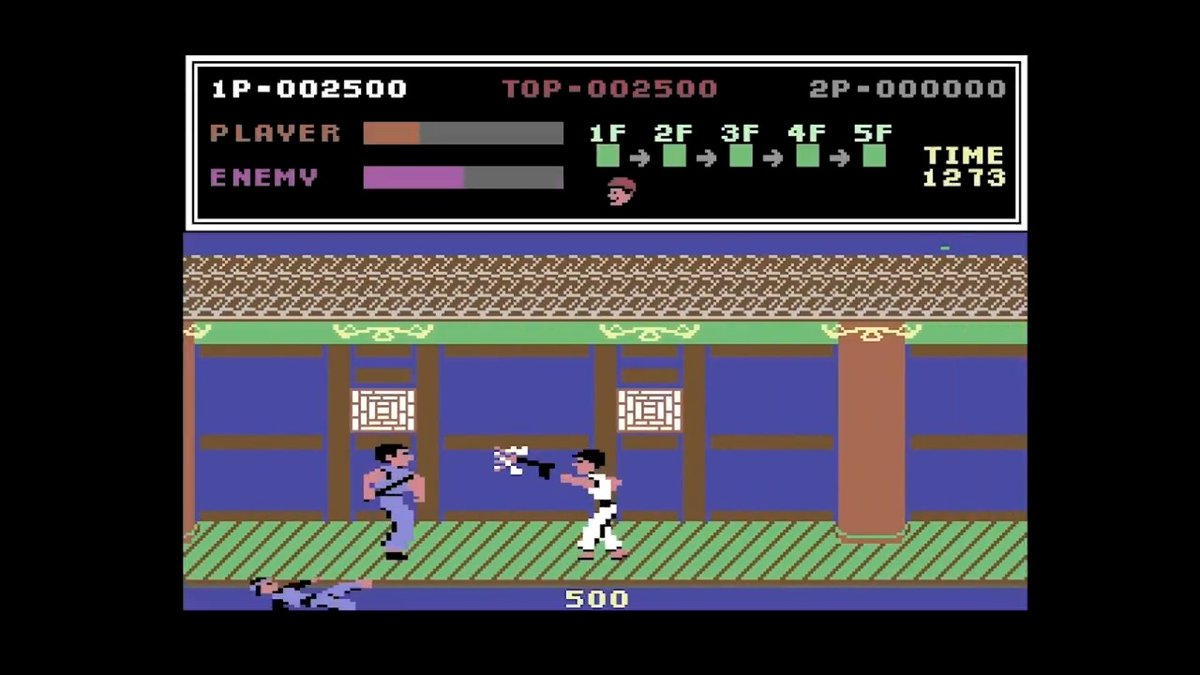
Frontier: Elite II (1993) was shipped on a single floppy disk for most versions, and the game simulated approximately 200 billion stars, all distributed in a realistic density map - meaning denser toward the galactic core. Nearly every star had its own star system with planets and moons. Each... show more

28,290 görüntüleme • 4 ay önce •via X (Twitter)
0 Yorum
Yorum bulunmuyor
Orijinal gönderinin yorumları burada görünecek
Benzer Videolar




![[Heo Seongbeom Youtube] 260305 Jin - Moon 🌕🌏 (part1) 👨🏫It’s a solo song by Jin, and BTS are also preparing for a comeback in March. I’m really looking forward to it. I’m the moon, and you are the Earth. So it becomes a kind of love triangle. Earlier the sea loved the moon, but who does the moon love? The moon loves the Earth. That idea is reflected in this song, so let’s try interpreting it. Since when have the moon and the Earth been together like this? We’ve been together for so long, but when did it start? About 4.51 to 4.53 billion years ago. Scientists figured this out through radioactive isotope analysis, which showed that the Moon is about 4.51 to 4.53 billion years old. “Shining just by existing.” This line is directed at the Earth. But does the Earth actually shine just by existing? No. Because the Earth is a planet and does not produce its own light. If the Earth appears to shine, it’s probably because of artificial lights made by humans. “Can I stay by your side and protect you?” It sounds shy, but in reality the moon can’t help staying there, because it’s bound by gravity. And here we see the main line of the song. “You are my Earth, and to you I’m just a moon. Your small star that lights up your heart.” It’s poetic, but is the moon actually a star? No. Celestial bodies are generally divided into two categories. First, there are stars (stellar bodies). These produce their own light. Second, there are planets. Planets do not produce their own light. Instead, planets usually orbit around a star. The Earth is a planet. From our perspective, the star in our system is the Sun. So when you look at the night sky and see stars, those lights are actually other suns, each producing their own light. But sometimes when you see a particularly bright “star,” it may actually be a planet like Mercury, Venus, Mars, or Jupiter. Then you might ask: if planets don’t produce their own light, why do they shine? Because they reflect sunlight. The Moon also appears bright because it reflects the Sun’s light. #JIN #방탄소년단진 방탄소년단](https://image.24vids.com/tw-2030933386580381878/amplify_video_thumb/2030932492694536192/img/D-V07hPtq_yG5-w_.jpg)

1:46
Sensitive content
Abella Danger says she got into porn after dating a porn star. “I had a boyfriend who was a porn star.” “He was always telling me, ‘Do a scene with me,’ and I was always so scared to.” She started going with him to sets and eventually became comfortable with the environment. “Then one day I was just sitting outside of a Subway, and I was like, ‘I really want to shoot a scene.’” “He sent them pictures of me, and the very next day I got tested, and the day after that I shot.” She says she wanted to explore her sexuality on her own terms, but her boyfriend wanted her to only shoot with him. “That’s what I thought to be an issue… It’s just hypocritical that you think it’s okay to have sex with any other woman that you want, and yet I should only have sex with you.” They eventually broke up, but she continued her career in the industry.
Kaelor
569,168 görüntüleme • 1 ay önce

