Загрузка видео...

Не удалось загрузить видео

На главную

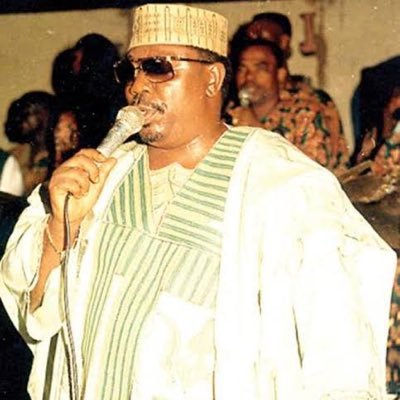
Garbage. Baggage. Cabbage. Trust Sikiru Ayinde Barrister to turn three similar sounding English words into music, and still take time to explain their different meanings and distinctions. On Fuji Garbage, Agbajelola wasn’t merely playing with words; he was showing the wit, curiosity and storytelling that made his music so...

139,847 просмотров • 16 дней назад •via X (Twitter)

Комментарии: 1

Фото профиля ONOOWU of Yoruba land.
ONOOWU of Yoruba land.16 дней назад

I too love this man wallai

Похожие видео

How Barrister Made Fuji Garbage Series 2 Many people love the Fuji music song, Fuji Garbage, by Sikiru Ayinde Barrister. Even non-Lukumi Yorubas. People are drawn to that golden oldie because of the beats. But it may surprise you to know that those beats that get you dancing are not made by synthesisers. Apart from the piano intro, which was played by Alhaji Agba himself using an inexpensive handheld piano that was popularly sold at Alaba International Market, and some synth sounds for about three seconds toward the end, after the Fuji rap (Barry Wonder pioneered rap fusion into Fuji), what you are listening to on that track is actually traditional Lukumi Yoruba musical instruments. The main beats come from the talking drums. The repeated percussion you can hear is actually made by a local Lukumi instrument called a shekere, which is similar to but much older than a tambourine. The gong sound you intermittently hear is made by a local Lukumi war/music instrument called a gangan. Thst instrument is the origin of the Lukumi slang, 'gangan', which is now commonly used in Nigerian Pidgin English. For example, 'I go beat you gangan'. Fuji Garbage is iconic because it shows the dexterity of Indigenous Lukumi Yoruba musical instruments and their ability to create pulsating beats without the aid of modern musical instruments. I daresay that no other ethnic nationality in Africa has a song that captured the attention of the masses on a large scale while using local instruments, like the Lukumi. For that, I am very grateful to Alhaji Sikiru Ayinde Balogun. The only other country where this has happened on such a large scale is Brazil, where Paulinho da Costa, a Brazilian of Lukumi descent, pulled a similar feat before relocating to America and adding Lukumi Yoruba beats to the song, Wanna Be Startin' Something, by Michael Jackson, on the Thriller album. You hear it at the end when Michael and his background vocalists sing Mamase Mamasa Mamacusa to only Da Costa's percussion. The Barrister song was made almost in anger, in response to a taunt by his once friend, and by that time, bitter rival, General Ayinla Kollington. The duo fell out over Salawa Abeni. Funny enough, Barrister survived death by the whiskers as a soldier in the Nigerian Army when he was caught in the Abagana ambush, in which the rebel Biafran Army killed almost 6000 Nigerian troops. Only a few survived, like Lt. Colonel Murtala Muhammed and Lance Corporal Ayinde Balogun. We thank Almighty God for preserving him. If he had died, it is unlikely that the Fuji music genre would have even existed. Reno Omokri Gospeller. Deep Thinker. #TableShaker. Ruffler of the Feathers of Obidents. #1 Bestselling author of Facts Versus Fiction: The True Story of the Jonathan Years. Hodophile. Hollywood Magazine Humanitarian of the Year, 2019. Business Insider Influencer of the Year 2022. 21st Most Talked About Person in Africa, 2024.

Reno Omokri

78,937 просмотров • 1 год назад