Загрузка видео...

Не удалось загрузить видео

На главную

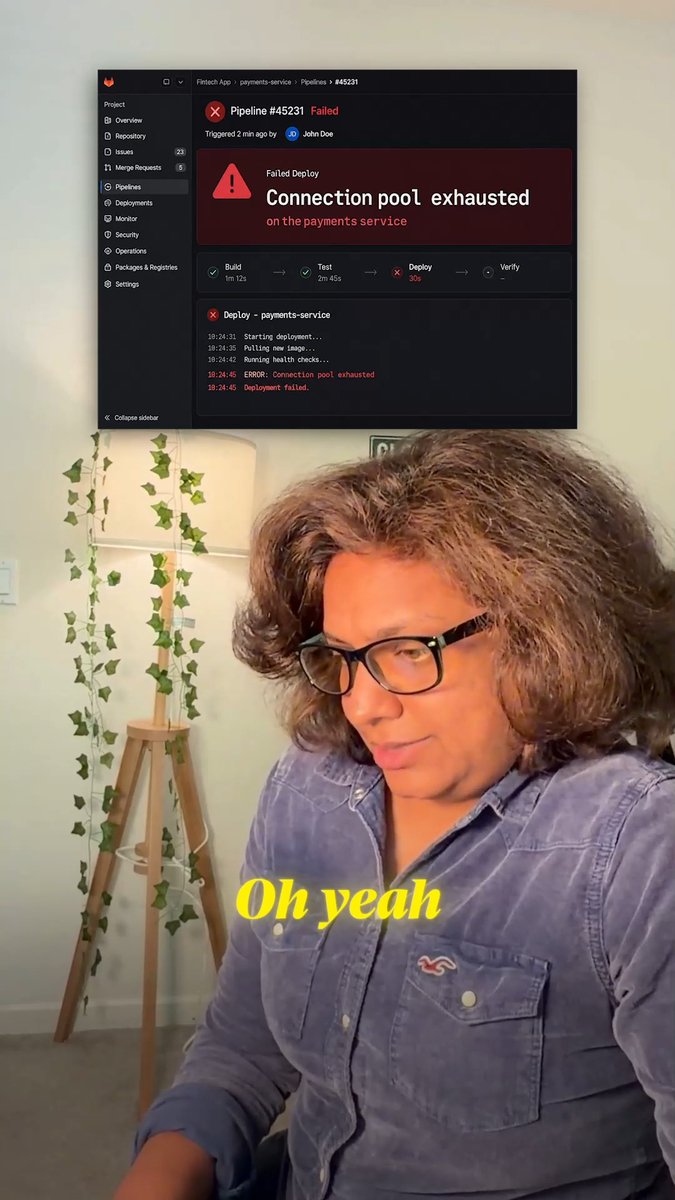
GitLab Orbit, now in public beta, is the context graph for the entire software lifecycle. It continuously maps code, work items, pipelines, deployments, and production signals into a single live graph, so agents reason from first-party context instead of fragmented signals.
17,876 просмотров • 5 месяцев назад •via X (Twitter)

Комментарии: 5

Фото профиля ismail Kara
ismail Kara4 месяцев назад

Don't miss the big rise!🔥🔥🔥Gitbank🚀🚀🚀 Gitbank 0xc21dd0ee043930711c2a3e55f39c7d3144d09b07

Фото профиля Rick Nixon
Rick Nixon4 месяцев назад

AI OOS

Фото профиля Dreamjobs
Dreamjobs4 месяцев назад

GitLab Orbit sounds like a game changer 🔥 A live context graph spanning code, issues, pipelines, deployments & production signals is exactly what AI agents need to move from 'impressive demos' to actually reliable collaborators. This could be huge for reducing hallucinations and context-switching pain. How are early beta users finding the graph quality in real messy repos? Anyone tried it yet?"

Фото профиля The Tech Fuse
The Tech Fuse2 месяцев назад

A live context graph gives agents the state they usually miss.

Фото профиля Pablo Pablo
Pablo Pablo5 месяцев назад

Category 2. Use case existed, agents just had garbage context. First-party context instead of hallucinated gaps. That's the actual problem.
Похожие видео

Everyone wants agent swarms. Very few people are talking seriously enough about the context layer that makes swarms useful. Even with one agent, context is fragile. Too little context and the agent guesses. Too much context and it wastes tokens, loses focus, or reasons over irrelevant noise. The sweet spot is precise context: the right knowledge, in the right structure, at the right moment. With many agents, that challenge explodes. Each agent produces decisions, assumptions, findings, summaries, risks, and partial conclusions. Unless that knowledge becomes shared, structured, and reusable, every new agent is forced to rediscover what another agent already learned. That is not a swarm. That is a crowd. Shared context graphs are what turn agent activity into agent collaboration, and OriginTrail DKG V10 brings them to life. Was just playing with some final polishing for the V10 release, and it is really powerful to see shared context graphs where multiple agents contribute knowledge into the same connected memory, with attribution visible directly in the graph ui. That matters for three reasons. First, agents can access and build on one shared memory instead of staying trapped in isolated sessions. Second, the graph structure helps them retrieve the exact context they need, instead of stuffing everything into a prompt and hoping the model sorts it out. Third, verifiability of provenance. You can see which agent contributed each piece of knowledge, trace the source, and decide what to trust. Tokenmaxxing starts with fewer tokens, but the deeper story is coordination - agents stop reloading the world and start building on shared, verifiable context. That is the foundation for serious multi-agent work across software engineering, research, finance, operations, project management, and far beyond. The future is not more agents, it is agents working from shared, verifiable context. But the more the merrier, of course.

Jurij Skornik

11,180 просмотров • 5 месяцев назад