Video yükleniyor...
Video Yüklenemedi
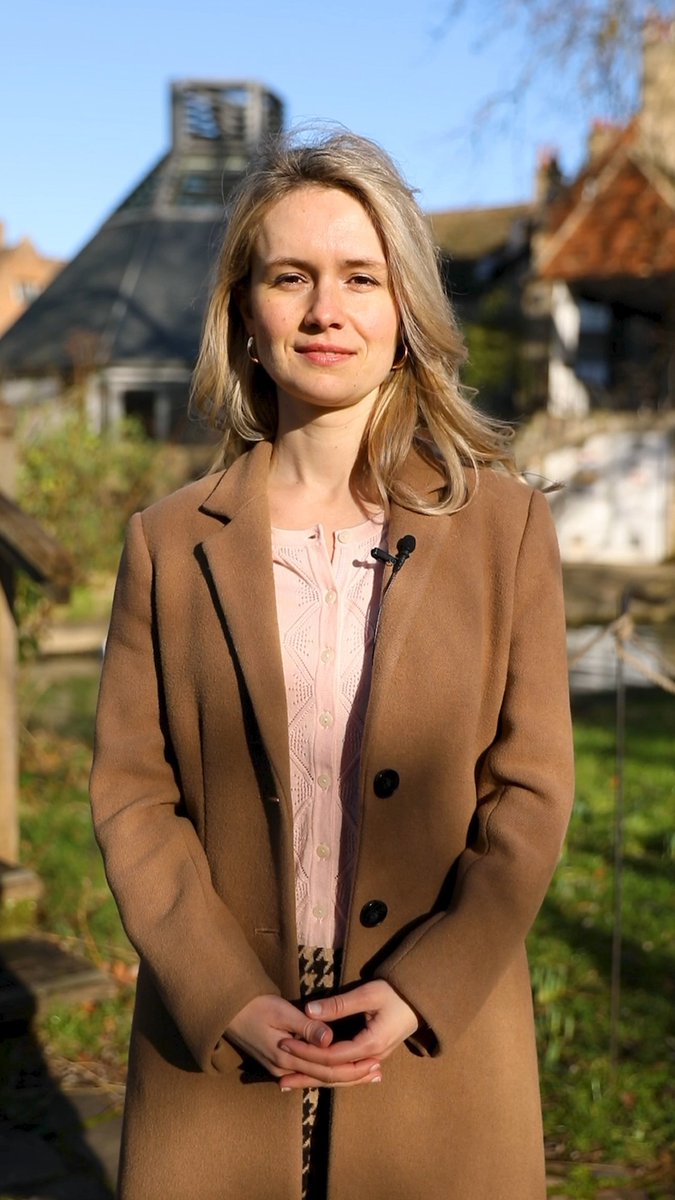
Going from "top-down" familiarity to "bottom-up" mastery. My journey as a math PhD student, the challenges faced, and how I eventually overcame them. If you're thinking of doing a math PhD or any kind of research degree, you may find it helpful. Happy to answer questions here.
79,949 görüntüleme • 10 ay önce •via X (Twitter)
12 Yorum

What did your process of niching down look like? I.e., when/how in your math journey did you identify fluid dynamics as your area of interest, and how did you identify a good research problem in that area?

Great questions. Fluid dynamics was something I kinda fell into. Towards the end of my BSc, my university was offering scholarships for its Theoretical and Applied Fluid Dynamics MSc program to those who met certain criteria. I checked out the program, and the math involved was the kind of stuff I like: waves, PDEs, numerical methods, and modeling. So, it seemed like a good fit. I took a course in fluid dynamics and perturbation methods as an undergrad, and I really enjoyed both. So I applied and was offered a place. The program itself was quite tough. A master's degree is a big step up from an undergraduate degree. I can't say I enjoyed all of it (I didn't really like turbulence modeling, for example, because I felt it was a bit ugly, mathematically speaking), but I quite liked dealing with laminar flows, especially boundary-layer theory. After that, I taught a lot. I realized that to teach the content I was interested in, I'd need a PhD, which led me to the fluid dynamics research project. I knew I was interested in perturbation methods, so I contacted a few people at UCL working in similar areas, asking whether they had any projects and whether they would be happy to have a conversation about a possible PhD. We met, discussed some possible projects, I chose one, and the rest is history.
Regarding niching down. Once you've gotten to the point where you're on some knowledge frontier for your chosen area of research, it's time to start asking lots of questions about the state of the art. Ask what the limitations of the current models are, and how they can be extended. Come up with a list of questions, and speak with people (your supervisors, other PhD students) about what questions seem the most promising to explore. Once you've gotten a shortlist, it's time to start digging into them. One mistake I made was focusing on 1-2 "big" problems. It worked out OK in the end (I managed to make solid progress on both problems), but I think it would have been useful to have 3-4 smaller problems on the back burner to work on if I got stuck on the bigger ones. You don't need to crack all of them, but having smaller problems as a backup is a useful contingency plan if the big stuff doesn't work out.
Full episode here:
with @exojason and @justinskycak
@justinskycak Wow, lots of great questions. It's late here now, but I shall endeavour to answer them tomorrow.

Hard to imagine you struggling with math. Really enjoyed listening to this.
It was less about the math itself and more about how one conducts research. It's a completely separate skill from turning up to some classes and acing the exam. Once I'd gotten my arms around exactly *how* to carry out research, things started to go much more smoothly.

What was your research interest in math PhD program
@LaoZhang1992 Aeroacoustics, which is a subfield of theoretical fluid dynamics.

Question about meta-skills: how do you determine which papers are worth reading?
Good question. Knowing what I know now, I would probably do the following: 1. Identify the papers relevant to my chosen area of research. 2. Arrange them in a hierarchical, knowledge-graph structure. In math, results from papers tend to be used in "post-requisite" papers, so building such a graph shouldn't be too difficult, even if it's only a rough approximation at first. 3. You might also want to give a rough estimate of each encompassing, i.e., a number between zero and one of how much each paper is encompassed by each of its prerequisites. 4. Identify a few papers (2-3) whose research you're looking to to extend (these will mostly likely be leaf nodes on your graph, though not necessarily). 5. For each of your chosen three, work through the prerequisite papers "bottom up", NOT top down. If the encompassing is small, you might be able to skip a paper and go straight to its post-requisite. Make sure you know the foundational papers really, really well.