Video wird geladen...
Video konnte nicht geladen werden
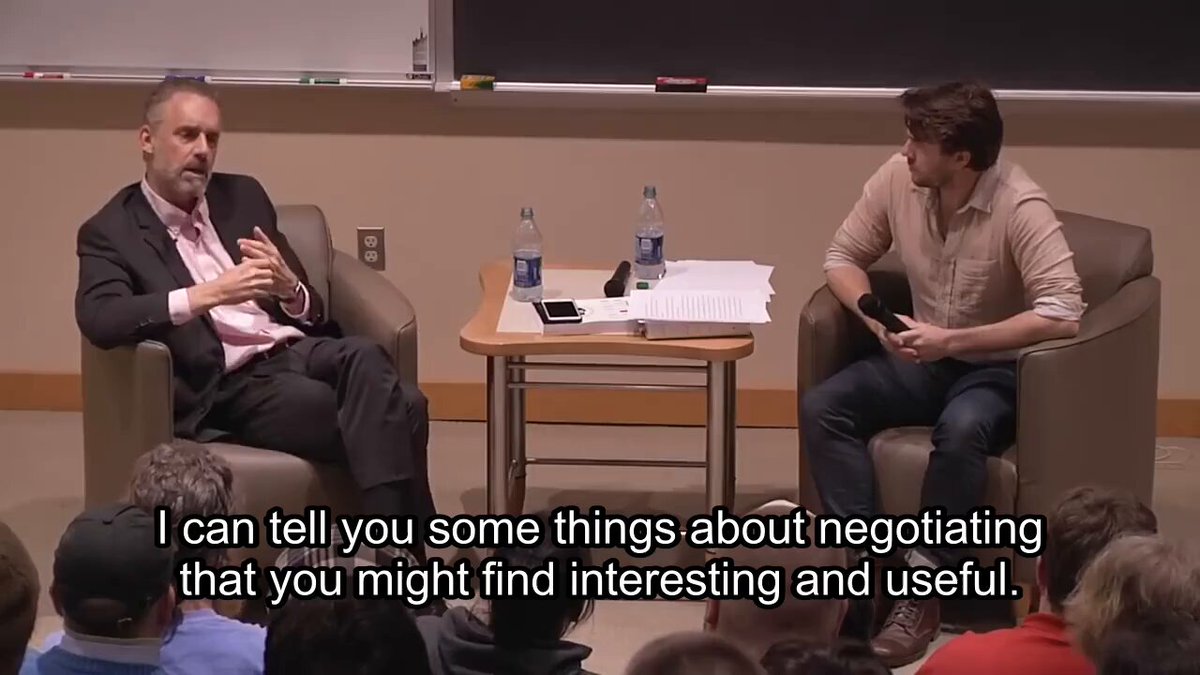
Harvard professor Arthur C. Brooks drops a raw, evolutionary truth bomb on marriage: Women crave adoration ("Baby, you're everything—I'd take a bullet for you, you're insane-level beautiful & I'd protect you forever"). Men crave admiration ("That's the biggest gazelle I've ever seen you drag in—you're so strong & capable").... show more

353,804 Aufrufe • vor 8 Monaten •via X (Twitter)
0 Kommentare
Keine Kommentare verfügbar
Kommentare vom Original-Post werden hier angezeigt
Ähnliche Videos


![Abella danger challenged everything you thought you knew about anal orgasms… and the hosts weren’t buying it.” …when you're getting fucked in the ass, but it's not like my ass has a clit, you know? Like, even if you come from anal, that's not your clit? Yes, it is, because I don't come from anal just from getting penetrated. [Laughter] I think you've got a weird clit. I've seen it. It's in a regular spot. Like, it feels really good. It feels really good, but like, in order to like come, I would have to be like stimulating my clit in some way while getting my ass— Okay, so like if someone—if you were just doing anal, no touching anywhere else, are you going to come? No. Okay. Well, don't say that like that's so crazy! There are people who come from regular anal. No! Yes! No! Are you telling me the anal orgasm's not a thing? Anal orgasms are a thing, but because your—your clit is not in your ass— You're telling me an anal orgasm without any sort of stimulation is not a thing? No, I don't think so. That's cap. Like, not that—it's going to feel so fucking good, like, but not to the point that you can actually like have an orgasm, I think.](https://image.24vids.com/tw-2095855010605040014/amplify_video_thumb/2095852895249858560/img/U2YrgtJbYChvE3E_.jpg)
0:57
Sensitive content
Abella danger challenged everything you thought you knew about anal orgasms… and the hosts weren’t buying it.” …when you're getting fucked in the ass, but it's not like my ass has a clit, you know? Like, even if you come from anal, that's not your clit? Yes, it is, because I don't come from anal just from getting penetrated. [Laughter] I think you've got a weird clit. I've seen it. It's in a regular spot. Like, it feels really good. It feels really good, but like, in order to like come, I would have to be like stimulating my clit in some way while getting my ass— Okay, so like if someone—if you were just doing anal, no touching anywhere else, are you going to come? No. Okay. Well, don't say that like that's so crazy! There are people who come from regular anal. No! Yes! No! Are you telling me the anal orgasm's not a thing? Anal orgasms are a thing, but because your—your clit is not in your ass— You're telling me an anal orgasm without any sort of stimulation is not a thing? No, I don't think so. That's cap. Like, not that—it's going to feel so fucking good, like, but not to the point that you can actually like have an orgasm, I think.
osaze
505,379 Aufrufe • vor 1 Monat




0:29
Sensitive content
🚨ANDREW TATE: MEN ARE SEXUALLY REPRESSED IN THE WEST—AND IT LEADS TO DARK PLACES LIKE EPSTEIN ISLAND "If you're a man who's stuck with a woman and you don't even get along with each other, and it's a show marriage, and you have to be together, and you argue all the time, and you're sexually repressed, and you're being promised in secret that you can go to an island and finally be pleasured and satisfied. No one's ever going to find out; that's how you end up on the island. This whole monogamy garbage that's being pushed by the West, especially amongst our elites, is the reason we have the biggest problem with pedophilia. They don't have this problem in South America, Russia, Thailand, because they all have girlfriends. But here in the West, we're saying, 'Nope, you just stick with your wife, only her, be happy with her.’” Source: PBD Podcast, Andrew Tate
Mario Nawfal
7,354,390 Aufrufe • vor 1 Jahr