Video yükleniyor...
Video Yüklenemedi
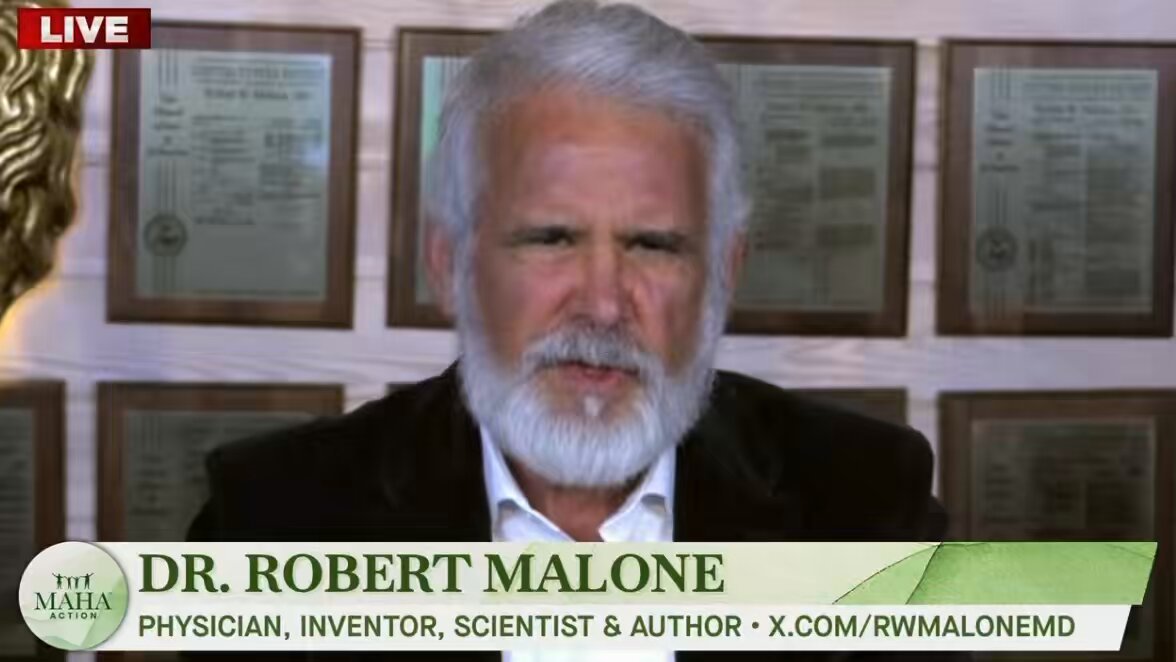
High dose vitamin D supplementation might be doing more harm than good. Stephanie Seneff, MIT researcher: Vitamin D is a signalling molecule, not a nutrient to megadose. It mobilizes calcium — but doesn't control where calcium goes. High dose vitamin D drives calcium into the arteries, leaching it from... show more

244,242 görüntüleme • 6 ay önce •via X (Twitter)
35 Yorum

if the study was done without K2 then it should be ignored completely nobody taking high dose vit D should ever do so without K2 preventing calcification @grok find the study what was the k2 dosage taken alongside the vit D, was any used ?

Vitamin D is one of the few supplements on my shelf that survived the “show me the mechanism and the data or it’s gone” audit I run on my own stack. I’m not dropping it based on this post. But there are a few things worth separating here because this mixes legitimate data points with framing that could lead people to stop supplementing when their levels are genuinely deficient. First, Stephanie Seneff is a senior research scientist at MIT’s Computer Science and Artificial Intelligence Laboratory. Her background is in electrical engineering and computer science. She is not an endocrinologist, biochemist, or clinical researcher in vitamin D metabolism. That doesn’t mean her observations are automatically wrong. It means the weight of the claims should match the evidence, and the cholesterol sulfate theory she promotes is not mainstream accepted biochemistry. It’s a hypothesis that has not been validated in clinical trials. Second, the Calgary Vitamin D Study comparing 400, 4,000, and 10,000 IU daily is real and worth knowing. The highest dose group did show slightly lower bone mineral density over three years. But the study’s own authors noted the clinical significance was uncertain and the mechanism unclear. What the study does support is that megadosing without monitoring is not better than moderate dosing. That’s a reasonable takeaway. “More is not better” is different from “supplementation is harmful.” Third, the calcitriol study in young adults with kidney disease. Calcitriol is the active hormonal form of vitamin D (1,25-dihydroxyvitamin D). That is not what most people supplement with. Most supplements are cholecalciferol (D3), which the body converts to 25-hydroxyvitamin D and then to calcitriol as needed through tightly regulated enzymatic steps. Supplementing calcitriol directly bypasses that regulation entirely. Citing calcitriol toxicity as evidence that D3 supplementation is dangerous is like citing insulin overdose as evidence that eating carbohydrates is dangerous. The regulatory step matters. Fourth, the missing cofactor. Vitamin K2 (specifically MK-7) activates matrix Gla protein, which inhibits arterial calcification, and osteocalcin, which directs calcium into bone. The arterial calcification concern with vitamin D supplementation is largely a vitamin K2 deficiency problem. If you take D3 without K2, calcium mobilization increases without adequate trafficking to bone. That’s not a vitamin D problem. That’s an incomplete protocol. From the lab side. Vitamin D is one of the most commonly tested markers in clinical medicine. 25-hydroxyvitamin D is measurable, trackable, and dose-adjustable based on your result. If your level is 22 and you live in a northern climate where sunlight exposure from October through March produces virtually zero cutaneous vitamin D synthesis, telling you to “just get sun” isn’t a clinical recommendation. It’s a geographic impossibility for half the year. Get sun when you can. Supplement when you can’t. Take K2 alongside D3. Monitor your 25-hydroxy level on your quarterly panel. Dose to keep it between 40 and 80. And don’t stop supplementing because someone with a computer science degree told you the proxy isn’t the mechanism. Don’t wait for the diagnosis. Read the label.

@ProfTimNoakes Vitamin K is needed as well. It directs calcium to your bones and teeth.

If you do not have enough magnesium, the body can not convert the supplement form (Vitamin D3) into the active form, so the vitamin D does not work. If vitamin D is working, it increases the calcium intake from food. If the body does not have enough vitamin K2 (Note the 2), the calcium will be deposited in the arteries and other soft tissue. Do not be confused with vitamin K1, which controls blood clotting. Finally, it has now come out that the original study* forming the recommendation for the daily intake of 600 IU/day of vitamin D was fatally flawed. The correct value is over 8000 IU/day. For reference, I am 80 years old, weigh 175 pounds, and have been taking 10,000 IU/day for years to keep my blood levels at 80 ng/mL. With no ill effects. As a side benefit, it may have slowed the shortening of my telomere length.** * **

True if taken alone, but not when taken with vitamin K2-mk7 and magnesium. My husband does that and his calcium score is stable. I do that an my arteries are clear.

For everyone saying I'm cherrypicking:

Doesn’t vitamin K negate this issue?

The video overstates "Sunlight and vitamin D supplements take completely different routes" while cherry-picking a K2- and magnesium-free trial 👎 It's only partially true for initial delivery (skin's gradual, regulated release + potential sulfation vs. gut bolus + lipoproteins). But the molecule is identical. Both convert to 25(OH)D in the liver, then to active 1,25(OH)2D — same downstream pathways for calcium absorption, bone signaling, immune function & organ support. The cited Burt 2019 JAMA RCT (healthy adults, ~30+ ng/mL baseline) found high-dose oral D3 (4,000 or 10,000 IU/day for 3 years) led to lower radial bone density vs. 400 IU. 👉 Key flaw: No vitamin K2 nor magnesium was supplemented. Vitamin D increases demand for K2 to activate proteins (osteocalcin, matrix Gla) that direct calcium to bones/teeth instead of soft tissue. Without those cofactors, the study basically forced an imbalance. Real-world: Sun exposure self-regulates (no toxicity, plus nitric oxide, circadian benefits, cholesterol sulfate per Seneff). Supplements correct deficiency well when needed. Prioritise sensible sun (arms/legs/torso, no burn). Supplements are a useful tool during those months sunlight is not available.

Before anyone gets upset about this reference-free tweet, they might like to read the research cited and discussed at .

This is why you take k2 with vitamin D, right?

@ProfTimNoakes Vitamin K2 with Vit D supplement

Gotta have the K2 in there for that calcium

You are cherry picking. Vitamin D supplementation has numerous very significant health benefits, and deficiency many health risks. You offset the issue of calcification through Vitamin K.

K2 helps to shuttle calcium into bones while simultaneously removing it from soft tissue like arteries (and joints). Magnesium keeps calcium in solution. Calcium out of solution gets deposited into soft tissues. So you need these two nutrients to be balanced with D3. Magnesium deficiency is as prevalent as D deficiency (if not more). K2 is made by lactic bacteria. People’s microbiomes are also a wreck these days.

That's literally why you need vitamin K, problem solved. These people are acting like they are uncovering life's greatest mysteries while in actuality this is well known amongs anyone who researches even a tiny bit about it.

@dr_ericberg Dr Berg what's your opinion on this statement about vitamin D and its relationship to calcium?

As a physician, here's the nuance the debate is missing: Vitamin D deficiency is a real clinical problem -- melanin reduces UVB-driven synthesis by up to 90%. The Endocrine Society recommends 1,500-2,000 IU daily for at-risk adults -- up to 4,000 IU is generally safe. Megadosing without lab guidance risks hypercalcemia and kidney stones. The answer isn't 'more' or 'less.' It's: test, treat, monitor, repeat. Medicine is not one-size-fits-all.

But these studies show only VitD, not combined with K2? I take rel high dose of VitD, but alongside K2 and partly Magnesium. I just often cant get enough sun, outside of Summer

Dr. Seneff is brilliant. Sun > Vitamin D supplements.

High dose D needs K, A, magnesium and zink
P.S. Want natural energy without stimulants? I built a free 5-day email course on mitochondrial energy. It walks you through the core pillars on how to build your energy from the mitochondria up. Day 2 covers the sunlight blueprint. Get it here ↓

That's why you take it with K.

I agree with the other comments in regards to K2 & magnesium with the high doses. I’ve been taking between 15,000 - 20,000 iu of D3 with K2 & Magnesium for literally 5 years and get blood work done yearly. How about the levels of D that you get with long sun exposure?

you need K2 with it

You suppose to have Vitamin D and K2. Too much Vitamin D is not going to benefit of course.

Yes but some people (1) cannot get enough sunlight or (2) don't synthesize it, showing low levels even with sunlight exposure. What then? I think supplementation may be necessary but understanding you should use smallest effective dose, monitored by lab work.

I believe taking vitamin K2 with “high dose” vitamin D prevents the risk to bones. Can buy a combined tablet on Amazon.

The core takeaway is powerful: sunlight is a whole biological event, not just a “vitamin D delivery system.” But I’d be careful turning that into “high dose D is bad for everyone” — dose, duration, K2, magnesium, kidney status and baseline levels all matter.

If you want to be retarded and gay do what these dorks ramble on about

Are we actually posting this without any reference of K2? Lmao come on I can’t take you seriously at all

Ya sure keep showing me big pharma designed studies. Not even going to look as I know not a single one of these studies used magnesium and vitamin k2 with the vitamin d and they probably even used vitamin d2.

Appropriate Co-Factors to direct calcium? E.G Vitamin K2-MK7 (100mcg per 1000 IU Vit D)

I guess in the study was inadequate K2 supplementation. Right? RIGHT???

Ancestral man did not have supplements and relied on the sun for vitamin D. But many of us work days, live in cloudy areas or have long cold winters where sun isn't available for half the year or more. Also, non-white races have a fear of sun for various reasons, including darkening their skin. We can make 15-25,000 IU vitamin D in one day of sunshine. For those of us who can't get it, proper blood and diet levels need to be set, and affordable supplementation IS necessary. Setting the DRI at 600 IU and repeat scares of toxicity are doing more harm than good. Vitamin D and magnesium are the two most common deficiencies. Supplementation should be made available at an affordable price.

Wild how every few months there’s a new “vitamin D is dangerous” thread that leaves out half the context. Supplements and sunlight aren’t identical, but that doesn’t make normal dosing harmful. Most people are low because they barely get outside, not because they’re megadosing pills. The real story is balance, not extremes. Sun when you can, supplement when you need to, and skip the panic.


![🚨 This vid was Removed from YouTube. VITAMIN D: Do you know your level?! If not, get tested! Get it ABOVE 55 ng/mL. Now's the time of year that low vit D can really bite us in the *ss. Yet insurance won't cover vit D tests. 🫠 🚨 Did you know it's possible to be taking a large amount of Vitamin D, & still be deficient?! (due to extreme individual variance in Vitamin D processing). Nearly Half the USA is Clinically Vitamin D deficient. Many more are INSUFFICIENT. Why does D matter? Our immune systems literally can't work properly w/o adequate vitamin D! Inflammation can get out of control as well, w/o enough vitamin D. Ryan Cole, MD: "Your best [Vitamin D] level to be at is 55 [ng/mL], that's when all the receptors in your body are saturated...even slightly above that, because when when you get sick w/anything, you actually deplete the amount of vitamin D your body has. So if you go into an illness with low vitamin D, you can't turn off those [inflammatory] pathways." GET TESTED, stat!](https://image.24vids.com/tw-1723013474471592373/ext_tw_video_thumb/1723012821393256455/pu/img/fLpov5YW7V19fzJx.jpg)

![We know the medical establishment lied to us about COVID. And according to esteemed physician Dr. Paul Marik, they are also lying to you about the sun. Here's a few things about Vitamin D that Big Pharma doesn't want you to know: #1 - "If you’re vitamin D deficient, it increases your risk of getting cancer.” “There’s a linear relationship between vitamin D deficiency and cancer. And the further you go away from the equator, the less UVB you get, the greater your risk of cancer. This has been well established!” drpaulmarik stressed. #2 - "Vitamin D is highly effective for the treatment of depression.” It’s also “very important for the immune system,” Dr. Marik added. “People don’t like vitamin D. They just don’t like it because if people took vitamin D, [they] would reduce the risk of cancer — would reduce the risk of many diseases." #3 - “If you avoid the sun, it increases your risk of dying [prematurely] by about 25%.” Dr. Marik recommended going into the sun for about 30 minutes a day. He advised not to use sunscreens because “it defeats the purpose.” “In fact, there’s some data that sunscreens increase your risk of melanoma — paradoxically.” The full article featuring Dr. Paul Marik is available to read in the comment below:](https://image.24vids.com/tw-1720259877216387572/ext_tw_video_thumb/1720258549916311552/pu/img/eBuXYGSwv8K2rZAm.jpg)