Video wird geladen...

Video konnte nicht geladen werden

Zur Startseite

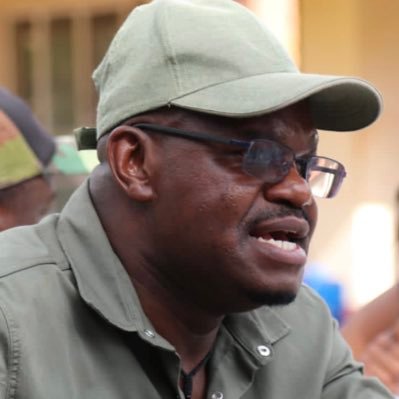
Hon. Ziyambi Ziyambi explained that Clause 4 repeals Section 94(3), which had required a Vice‑President assuming the Presidency after a vacancy to take the oath of office. He noted that this provision became redundant after Amendment No. 2 of 2021, which established that Parliament elects a new President within...

99,235 Aufrufe • vor 17 Tagen •via X (Twitter)

0 Kommentare

Keine Kommentare verfügbar

Kommentare vom Original-Post werden hier angezeigt

Ähnliche Videos

Professor Lovemore Madhuku in his Own Words Making the Case for Parliament to Indirectly Elect the President as an Electoral College: “We must not put in the Constitution of the country a provision that is dependant on what happens in a political party. That’s the point I’m making. We must never say in our Constitution of Zimbabwe that if a sitting President dies or resigns, we will wait to hear what the political party of that President is saying. No. That is not the best way of running a country. Political parties remain the preserve of those people who are in those political parties. But the country is run on the basis of either an election by the people—direct election—or you have Parliament as an institution sitting as an electoral college. Where parties have influence, they must do the influence within Parliament, but never to allow the political party to sit there to say I’m giving you this President, and so forth. That’s the point I’m making. And on that point, I’m making it right across the world; that’s what they do.” - Professor Madhuku, addressing a “Heal Zimbabwe Trust” public meeting in Harare on 22 February 2020. COMMENT: Professor Lovemore Madhuku’s 2020 remarks make a clear, powerful and enduring case for Clause 3 of the Constitution of Zimbabwe (Amendment No. 3) H.B.I. Bill, 2026. This clause replaces the direct election of the President with an indirect election by Parliament sitting jointly as an electoral college; both after every general election and, when necessary, to fill any vacancy in the office of President. The current direct election of the President was first introduced in anticipation of a legislated one-party-one-man rule through Constitution Amendment No. 7, Act 1987 in the old Lancaster Constitution repealed in 2013. Professor Madhuku put it plainly: The Constitution should not—as it currently does— depend on the internal decisions of a political party to select a successor to the President of the country. When a sitting President dies, resigns or is removed, the nation should not have to wait and hear what that President’s political party “is saying.” That is not a constitutionally proper way to run a country. Political parties exist for their own members. The country, however, belongs to all Zimbabweans. The proper solution is straightforward: Parliament—the institution chosen by the people—should act as the electoral college. Inside that open forum, parties may exercise their influence transparently and accountably. No party should ever stand outside the Constitution and simply “give” the nation its next leader. This principle is not abstract. Worldwide, presidential by-elections to fill mid-term vacancies are extremely rare. Most stable presidential systems instead use automatic succession by a deputy or, increasingly, allow the legislature to elect a successor who serves out the remainder of the term. These arrangements place national continuity and stability above partisan interests. Clause 3 of the Bill follows exactly this proven path. By giving Parliament the clear duty to elect the President—whether at the start of a new term or in an unforeseen vacancy—Zimbabwe will secure stronger democratic stability, and keep the highest office firmly within the people’s constitutional framework rather than the private control of any single party. In short, Clause 3 is a mature, practical and principled reform that directly honours Professor Madhuku’s wise 2020 counsel. As such, it deserves the full support of every well-meaning Zimbabwean who values good governance, democratic constitutionalism, institutional integrity and the long-term strength of the country’s democracy in the national interest!

Prof Jonathan Moyo

88,092 Aufrufe • vor 2 Monaten

Zimbabwe Defence Forces role as political arbiter and power broker removed By Ruvimbo Muchenje The Zimbabwe Defence Forces (ZDF)'s role as the country's political arbiter, power broker and kingmaker is now being decisively removed, changing the country's political landscape and its volatile dynamics in the process. This will have far-reaching political implications as the Zimbabwean military has been a power broker for a long time due to sustained militarisation of politics and the professional bureaucracy, particularly under the late former president Robert Mugabe and subsequently President Emmerson Mnangagwa. The army's critical role in local politics dates back to the days of the liberation struggle, with the Mgagao Declaration of 1975 that paved way for the late former president Robert Mugabe to seize power in Zanu from Ndabaningi Sithole being an example of that influence. For decades, the army has been the ultimate political arbiter, bound by Section 212 of the constitution to defend both the nation's territorial integrity and "to uphold" the constitution, giving it authority to self-deploy under the guise of upholding the supreme law as it did during the November 2017 coup which first - ironically - brought Mnangagwa to power before he legitimised himself through subsequent elections in 2018 and 2023. However, Constitutional Amendment Bill (No.3) introduces major legal changes to the country's political, electoral governance architecture, most notably extending presidential and parliamentary terms, allowing parliament to elect the President, and subtly altering the constitutional mandate of the ZDF. The amendments currently going through parliament propose a critical, yet subtle change that is far-reaching. The words "to uphold" the constitution are being stripped away, replaced by a mandate to act simply "in accordance with the constitution". By altering the specific phrasing of the army's duties and allowing parliament to elect the president instead of through a direct popular vote, Mnangagwa's government is effectively clipping the military’s institutional wings. Presenting his key second reading speech on Constitutional Amendment (N0.3) Bill to parliament on Wednesday after he had introduced the proposals to parliament the previous day, Ziyambi said the army must act "in accordance with the constitution", not have a special responsibility to "uphold the constitution" because "they are not a parallel constitutional authority". Ziyambi said: "I now turn to the function of the Zimbabwe Defence Forces, Clause 16. Clause 16 amends the words that describe the function of our Defence Forces, replacing the phrase, 'To uphold this Constitution' with the phrase, 'In accordance with this Constitution'. It has been suggested that this weakens the constitutional position of the military. The truth is precisely the opposite. The amendment strengthens the subordination of the military to the constitution and I want to explain why b ecause the point is important and it is widely misunderstood. Consider the question honestly. Either the Defence Forces are subject to the Constitution, or they are a core equal guardian of it, standing alongside the elected President, the elected P arliamen t and the courts. If they are subject to the constitution, as in every constitutional democracy, they must be in accordance with the constitution, which is the correct exp ression of that subordination and the old wording which cast the military as an ind ependent upholder of the constitution in its own right was the anomaly. The institution whose function is to uphold the constitution, is the elected and appointed civilian institutions. The President takes an oath to uphold it. Judges take an oath to uphold it. Members of this House take an oath to uphold it. The Defence Forces protect the nation within the constitutional framework that those civilian institutions uphold and interpret. They are not a parallel constitutional authority."

TheNewsHawks

24,828 Aufrufe • vor 1 Monat