Video wird geladen...

Video konnte nicht geladen werden

Zur Startseite

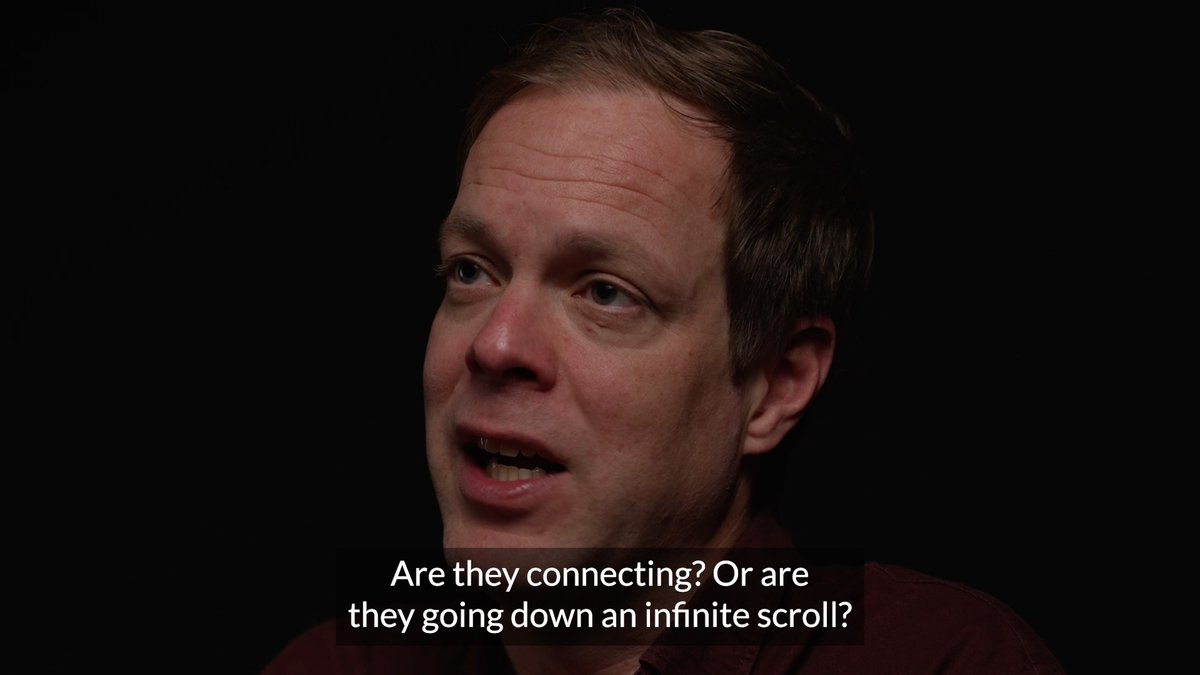
How should we protect children online without destroying digital privacy? German MEP Lukas Sieper, MdEP argues that while scanning IDs for internet access ruins privacy, parental device controls offer a balanced technical solution. He stresses that platforms must ultimately face greater responsibility for algorithmic addiction and real-world harms. Listen...

1,211,658 Aufrufe • vor 20 Tagen •via X (Twitter)

0 Kommentare

Keine Kommentare verfügbar

Kommentare vom Original-Post werden hier angezeigt

Ähnliche Videos

🚨 BREAKING: Keir Starmer threatens mandatory ID checks to use mobile phones "Protecting children online is vital, but these are outrageous plans that will fail to address the underlying causes of online harm. This will only result in population-wide ID checks for all of us to use our phones, tablets and laptops. "Put simply, the Labour Government is threatening ID checks for the internet. No one in a democracy should need to show their passport just to get online. "These plans would replace efforts for meaningful tech and parental responsibility with performative, authoritarian government control that children can easily circumvent by accessing adult-registered devices. However, for the UK's 50 million adults using the internet, this backdoor digital ID requirement would invoke the death of anonymity and internet privacy. "The Government's plan very likely means that unless you submit to intrusive identity checks when setting up your phone or computer, there will be a chokehold on your software and internet access leaving you with a child-locked device. Planned restrictions on messaging, streaming and browsing raise the potential of spyware in our pockets that will be exploited for other purposes before long. "The Government mandating that all phones in Britain require ID and surveillance software is a crossing of the Rubicon that would make the UK one of the most authoritarian internet regimes in the world. This extreme technological censorship requires rigorous public and parliamentary scrutiny that is currently totally missing" - Silkie Carlo | Silkie Carlo

Big Brother Watch

210,326 Aufrufe • vor 2 Monaten

NetChoice’s Digital Safety Shield for America 2025: Protect Families, Preserve Online Freedom Families want support to protect their kids online. Today, we launched NetChoice’s Digital Safety Shield for America, offering various policy solutions to federal and state lawmakers that want to adopt meaningful and lawful solutions for families online, covered exclusively by Ben Brody at Punchbowl News. THE PROBLEM: While parents and guardians try to adapt their families to emerging digital tools, they’ve consistently expressed to both technology services and lawmakers that they’d like help. However, some policymakers across the U.S. have responded with laws that violate the core, protected right of Americans to free expression. NetChoice has successfully halted most of these laws. OUR SOLUTION: NetChoice’s Digital Safety Shield for America provides a policy plan for lawmakers on both the state and federal level. Working together, we can stop digital criminals, protect kids and empower parents online while upholding the rights of Americans. Over the next year, we will be releasing various tools and guides for parents and policymakers to empower them to protect families and preserve core freedoms in digital spaces. “Families deserve real solutions that truly protect kids. That’s why NetChoice created the Digital Safety Shield for America—to give lawmakers constitutional tools that stop predators, empower parents and safeguard children online. Instead of unconstitutional, quick political fixes, this framework funds law enforcement, strengthens legal protections and equips parents and kids with the resources they need to thrive in the digital age,” said Amy Bos, NetChoice Director of State & Federal Affairs. Bos continued: “Americans and our families should be able to embrace digital tools with confidence while knowing our rights will be upheld in online spaces. NetChoice’s Digital Safety Shield helps lawmakers strike that appropriate balance.”

NetChoice

48,162 Aufrufe • vor 11 Monaten

HOLEE SHIZZLES‼️ 🚨 RFK JR Sounds the Alarm on the WHO IHR Amendment's — A “Trojan Horse” is Quietly being Installed to implement Digital Health ID's and a Global Health Database • he expresses concerns about the proposed amendments to the International Health Regulations (IHR) and their potential to "open the door" to "that kind of system of health IDs," suggesting a pathway to broader surveillance and control mechanisms. • He says the WHO is laying the groundwork for a CENTRALIZED Medical Database for every human being • He connects the potential for digital health IDs to broader issues of surveillance and industry influence. He Mentions Mass "surveillance" and he refers to "industry influence," implying that these IDs could be part of a larger mass surveillance framework that benefits certain industries while encroaching on individual privacy and freedoms. • Kennedy's concerns are framed within the context of the COVID-19 pandemic, where he believes critical information and criticisms were suppressed. He suggests that the amendments could perpetuate similar dynamics, potentially using digital health IDs as a tool for narrative management and censorship, as seen during the pandemic. - His overall stance is that such measures, including digital health IDs, could jeopardize civil liberties and national sovereignty. He argues that the U.S. should not sign over authority that could lead to lockdowns and other public health measures without thorough consideration, especially when these measures might invite a system that undermines individual rights. What’s next? - Proposal and Adoption Process: The amendments were proposed and negotiated through the World Health Organization (WHO) processes, in an agreement by the World Health Assembly in May 2024 [World Health Assembly, 2024]. However, the implementation of these amendments is not automatic and requires further steps. - Opt-Out Period: There is a specific window for member states to opt out of these amendments. The U.S. and other countries have until NEXT WEEK, to formally reject the amendments. This opt-out period is crucial because it allows countries to decide whether to be bound by the new regulations.

MJTruthUltra

437,422 Aufrufe • vor 1 Jahr

🎙️Decentralizing Digital Identity & Encrypted Messaging Ep. 107 with JeffG My guest today is Jeff G, privacy advocate and builder of censorship-resistant communication systems using Nostr and open cryptographic infrastructure. Jeff works on White Noise, a decentralized encrypted messaging project designed to remove single points of failure from private communication. We explore how the internet was built without native money and how that mistake created a surveillance economy where users became the product. We break down why “nothing to hide” is a psychological trap, how self-sovereign digital identity works through public-private key pairs, and why portable social graphs threaten centralized platform control. We also cover the global push for digital ID and CBDCs, the structural weakness of centralized messengers like Signal, and why real freedom now depends on rebuilding parallel, permissionless systems instead of trying to fix broken institutions. ► If you got value, please like, comment, share, follow and support my work. Thank you! 00:00 - Coming Up 01:09 - Introduction & Meet Jeff: Privacy Advocate and Tech Innovator 03:30 - Personal Responsibility, Privacy Online, and History of Internet Payments 06:20 - Misconceptions About Privacy 08:30 - The Future of Digital Identity and Decentralization 09:15 - Ad Break 12:00 - CBDCs & Digital IDs - Excessive Control 13:05 - Nostr: Revolutionizing Digital Identity 20:19 - White Noise: Revolutionizing Secure Communication 22:12 - Quick Fire Questions 27:10 - Final Thoughts & Call to Action >>

Efrat Fenigson

13,942 Aufrufe • vor 8 Monaten

At the WEF 2025, Spanish Prime Minister Pedro Sánchez presented a vision for the digital future that should send a chill down the spine of every free citizen. Framed as a solution to online harms, his proposal is, in reality, a blueprint for a panopticon of digital control, perfectly aligned with the globalist agenda of the World Economic Forum. What Sánchez Said: He called for an end to online anonymity, demanding that every social media profile in Europe be linked to a state-issued "European Digital Identity Wallet." He compared the internet to public streets, arguing that just as one cannot drive without a license plate, one should not post online without a state-verified ID. What Sánchez Is Really Saying: He is declaring that the digital public square—the last truly global space for free, unvetted discourse—must be brought under the direct supervision of the state. His rhetoric is a masterclass in misdirection: - "Fighting misinformation" is code for establishing a verifiable identity for dissent. Under this system, any opinion deemed inconvenient by the authorities can be traced directly back to the citizen who voiced it. - "Ending cyber-harassment" is the pretext for ending digital privacy. The principle that one can speak without fear of state retribution is being reclassified as "impunity." - "Pseudonymity" is a Trojan horse. It offers the illusion of a nickname while ensuring that a government database holds the key to your real identity, accessible whenever "public authorities" deem your speech a "crime." This is not pseudonymity; it is state-mandated identity registration for speech. This is the ultimate goal of the WEF's "Great Reset" and "Digital ID" agenda: not safety, but control. It creates a system where participation in modern society is contingent on accepting a government-issued digital leash. The threat of being "banned or prosecuted" for undefined crimes will inevitably lead to self-censorship, silencing legitimate criticism and neutralizing opposition. Sanchez's second proposal—to "force open the black box of algorithms"—completes the picture. It is not about transparency for users, but about regulatory capture for the state. The goal is for governments to dictate what content is amplified and what is suppressed, shaping public opinion under the guise of managing "the public conversation." This is not the path to a safer internet. It is the path to a sterile, state-managed internet where freedom is traded for the false promise of security. The globalist elite at the WEF are not solving the problems of the digital age; they are exploiting them to build the architecture of control.

Camus

182,217 Aufrufe • vor 10 Monaten

We all know the real intent of the Digital ID agenda. The United Kingdom, with laws similar to ours, has shown alarming developments. In the last two weeks, British police have visited and advised hundreds of journalists and commentators to stop criticising the Starmer government’s policies. Some have even been arrested and imprisoned merely for expressing their opinions. The Digital ID, misinformation laws and facial verification systems are all part of the control mechanism that facilitates government surveillance and tyranny. The mask has come off quickly. Only recently, Minister Gallagher reassured Australians that digital IDs would not be compulsory. Yet, without one, life will become impossible. Now, there is a proposal to introduce age verification for social media. This would require every user—not just adults, as initially told to us, but also children—to have a digital ID. Age verification has never been successfully implemented anywhere in the world. The only way it can function is through a Digital ID with facial recognition, which would require constant re-scanning of the user’s face, potentially every minute, to confirm identity. This setup would necessitate keeping the computer camera permanently on, exposing children to significant privacy risks, including hacking. One Nation firmly believes that the best person to oversee internet use is the one present in the room with the children: their parents. We oppose intrusive government and support the primacy of the family in raising and protecting their children. Note: The Question Time video has been combined with the Motion to Take Note for sharing on social media.

Malcolm Roberts 🇦🇺

84,101 Aufrufe • vor 1 Jahr

The digital ID agenda is not a standalone initiative but a key component of a larger, transnational plan for digital control. As explained by journalist Whitney Webb, this isn't the project of a single individual but a coordinated effort by powerful global entities. The goal is to manufacture consent for a system that links a government-issued digital ID to your internet access and social media accounts. This creates a formal, state-linked profile of everything you read and consume online, ostensibly to solve issues like "bot accounts" and impersonation. Who is behind this? The driving forces include multinational corporations like Microsoft and Accenture, alongside the philanthropic arms of oligarchic dynasties such as the Rockefeller Foundation. These are the same groups that have pursued a system of global financial control for decades. The sales pitch is tailored to different demographics: • To the political right, it's sold as a tool to stop illegal immigration. • To the political left, it's framed as a way to combat hate speech and protect children. The technical implementation is designed to appear decentralized, with multiple "vendor-agnostic" IDs in different countries. However, the data would be exportable in a universal format to a centralized database, creating a de facto global system. This digital ID is the necessary foundation for the parallel push for Central Bank Digital Currencies (CBDCs). The endgame is a public-private partnership that would: Mandate a digital ID for internet access. Turn social media platforms into financial service providers (as seen with X and the failed Facebook Libra project). Create an unprecedented framework for surveillance and control, all while the admitted use of state-run bot farms for "narrative management" continues.

Camus

53,421 Aufrufe • vor 10 Monaten