Video wird geladen...

Video konnte nicht geladen werden

Zur Startseite

How to See Microbes from the Sky — Yonatan Chemla on Hyperspectral Biology Scientists have studied bacteria under microscopes for 400 years. But Yonatan Chemla, a postdoctoral fellow at MIT, has developed a technology that lets us see microbes from a drone 100 meters in the air. In this...

15,718 Aufrufe • vor 1 Monat •via X (Twitter)

0 Kommentare

Keine Kommentare verfügbar

Kommentare vom Original-Post werden hier angezeigt

Ähnliche Videos

Just in $AMD Anush "Speed is the moat"|ROCm🎙️ In the race to define the future of AI, what's the one advantage that truly lasts? It's not proprietary tech, argues Anush Elangovan Elangovan, VP of AI Software at AMD , but the sustainable speed of innovation. He explains why AMD is rejecting the "walled garden" model for its open source ROCm stack, betting that an open community flywheel is the key to victory. Listen to understand how this open strategy is designed to out-innovate closed systems by empowering developers to solve everything from frontier-model challenges to the mundane, everyday problems that define the "last mile" of AI. AMD ROCm Software: Part 1 Transcript [00:00:00] Andrew Zigler: Joining me is Anush Elangovan, VP of AI software at AMD. And when people talk about AI compute, the conversation often stops at hardware specs, but it's more than just physical chips that win the game. It's also the software ecosystems supporting them. [00:00:18] Andrew Zigler: The prevailing strategy in the industry has been to build something like a walled garden. You know, something closed, proprietary locks, developers in. But AMD is betting on an entirely different play, open source acceleration, and with rock, their open source AI software stack. AMD is building not just hardware parity, but an innovation flywheel that's powered by the community with interoperability and the freedom to scale without all of that pesky lockin. [00:00:48] Andrew Zigler: And in this world, speed is your moat and how fast you can innovate while your platform remains open, flexible, and standardize across all of its applications. That's what we're gonna explore [00:01:00] today. So Anush, I'm really excited to have you here. Welcome to Dev Interrupted. [00:01:04] Anush Elangovan: Thanks for having me. Uh, super excited to chat about it. [00:01:07] Andrew Zigler: Amazing. Well, let's go ahead and dive right in with kind of what I laid it out with in the beginning, the idea of the moat and it being about speed. I wanna unpack that a bit because that came from you when you and I first spoke. And I, and I want to know, you know, how do you define speed inside of AMD beyond just things like hardware, benchmarks. [00:01:27] Anush Elangovan: Yeah, that's a very good question. So when we typically talk about speed, everyone's like, Hey, hardware benchmark specs, right? Like, uh, memory bandwidth or, or flops. And that is one important part of it, uh, AMD does very well. With that, we do have, a, a very good history of executing on that axis. [00:01:47] Anush Elangovan: But when I say speed is the moat, it is about, uh, how we prepare, how we build the muscle to run the race for a long time and run it fast. And it is [00:02:00] not about a single point in time that you've, you've beat some you know, benchmark and, and you declare victory. It's about building the ability to consistently develop and deliver. [00:02:13] Anush Elangovan: Both hardware and software innovation at scale and do it fast, right? Like, you know, we we're increasingly getting to a point where models come out and they're, uh, you know, a year or two ago it was like, Hey, they work on AMD on day zero, which is great, but now they are performing on AMD the day it releases, right? [00:02:32] Anush Elangovan: So, what does it take to Prefetch where the industry is going? Be prepared to intercept. At that point is what you know, I, I refer to as you know, the, the speed factor in, in creating this mode, right? And the mode is just shed all things that hold you back and run as fast as you can. [00:02:53] Anush Elangovan: Uh, because the pace of innovation that is, uh, being seen in, in AI [00:03:00] industries is just. Amazing. Right? And it's like, it's transformational at at how you generate electricity. It's transformational as at how you build data centers. It's transformational at how you deploy compute, networking. It's transformational at what kind of use cases you, you know, uh, use AI for. [00:03:17] Anush Elangovan: Uh, and for that, you need to be prepared to, see what comes tomorrow and be prepared to run the race tomorrow. [00:03:23] Andrew Zigler: Yeah, it's a really great perspective because it highlights that it's not just like a checkpoint that you run through. I like how you called out, like it's not just hitting that benchmark or being the best in class at that moment, in that snapshot, it's about having a. The throughput and about having that dedication to the idea and continuing to deliver on it. [00:03:43] Andrew Zigler: It's not just crossing the threshold, but it's also being the engine. And that's what, that's what protects a business. That is the moat, because the moat is that innovation layer, the faster and more, uh, future forward. That you can work and think, [00:04:00] you know, the better. Uh, we, we talk a lot about like future forward work styles. [00:04:04] Andrew Zigler: Like what are the things I could be doing right now today that are gonna be like, way more useful tomorrow? Let, let's abandon those, workflows that are older and that kind of like, that translates into. An advantage when you work that way. You know, what kind of things have you learned working with, uh, like across all spectrums of people who would use ROCm, right? [00:04:23] Andrew Zigler: You have like the developers, but then you also have the enterprises and you have this large span of adoptees, right? So what is the, what does that look like that you learn? [00:04:32] Anush Elangovan: Yeah, so, so the way I look at it is there are gonna be pockets of different, uh, you know, cadences, right? Like, so people who are deploying in enterprises, for example, right? The validation and how long it takes for them to deploy an LLM that's secure. It's, with guardrails, et cetera, maybe longer. [00:04:52] Anush Elangovan: but you still have to go through the process and you have to be prepared to like, walk that walk to deploy an enterprises. That doesn't mean it's [00:05:00] not fast, that's as fast as you can do for that industry, right? And if you are deploying AI in healthcare, right, it's, it's got its own, uh, cycle. [00:05:07] Anush Elangovan: but in each one of these, you want to see how, like, go down to the essence of what is it that you actually have to do. And, you know, I, I, I like how you framed it. It's like it's, you shed your prior assumptions of how things are done, right. And, and you kind of build up from a, uh, first principles, uh, approach to say, this is how I could use AI to unlock, whatever I'm doing. [00:05:33] Anush Elangovan: And, and, some of it, you know, it's good to really step back and look at. Just question every part of it, right? Like right now you're getting chat GPT and, Gemini competing for like, math, olympiads and, and, uh, college, uh, reasoning, uh, tests. Right? And, and those are like that, that is amazing and increasingly like complex tasks that they're trying to do. [00:05:58] Anush Elangovan: But there may also be like. [00:06:00] More mundane things that AI could, could get applied to. Right? And, and so when we think about shedding old ways, you wanna shed it not just in like the tip of the spear. It's like, you know, I'm gonna see what's the frontier model. It's also, it could be something as simple as. [00:06:18] Anush Elangovan: How do you choose a, a movie, uh, you know, like a recommendation system, right? Or, or, uh, an automated, uh, flight, uh, rebooking system. So the moment, you know, your flight is late, uh, right now it's a notification, right? It's like, oh, you got a text message saying your flight's late. And I got that like three times this week. [00:06:38] Anush Elangovan: But anyway, uh, and, and, and, and, I was just like, okay, so if I were to rethink this. All this MCPs that we have that should be hooked up into an MCP that says, your flight's delayed. Here are your options. If you want, you know, these are the paid options. Yeah. Here are the free options. This will get you back into your you know, Toronto airport [00:07:00] tonight. [00:07:00] Anush Elangovan: Or if you stay, here's a hotel plus this, plus this, plus. It's just like, go ahead is all I should say. Versus now I'm like, okay, can someone, you know, can I call a travel agent? Can I do this? Can I go online and log into And you know, so we gotta fundamentally rethink even those like small, nuances of, things that we do that can be automated out and AI is really, really good at doing something like this, right? Maybe I just explained an AI startup idea right now. Somebody should just start that. [00:07:29] Andrew Zigler: I think you did. Yeah, you definitely did. Someone, one of our listeners is definitely going to lift that off of you. I, I, I, you know, I hate being on the receiving end of those. You feel a little helpless and then you have to like, follow the whole flow. So I know what you mean. Like I, I like how you called out that the build and this like. [00:07:45] Andrew Zigler: Where speed is your moat and the innovation layer is protecting you, is what makes you better than your competitors. How you scale that and you bring that to market. So by understanding the problems that you're solving, uh, throwing away those older assumptions, but also [00:08:00] recognizing that like. We're building every single day, new things and new ways of using stuff that we're still figuring out the implications of. [00:08:08] Andrew Zigler: And so when you have a lot of velocity and you're introducing a lot of new ideas, and maybe you have that workflow now that automatically rebook your flight off of your late flight text message, and uh, I know I would certainly use it, but you know, what kind of philosophies guide the way that y'all think about building this ecosystem to manage that stability while letting folks. [00:08:29] Andrew Zigler: Play with the speed and the assumptions and the airplane re bookings. [00:08:34] Anush Elangovan: so, so I think, you know, we need to peel one layer down, right? and the philosophy is, Hey, we, we just discovered electricity, right? And you know what we're gonna do? We are gonna make motors, uh, or dynamos, right? Like engines. Uh, sure. We don't know if it's gonna be a Ferrari that you're gonna make, or it's a a a a dump truck. [00:08:57] Anush Elangovan: That's good for doing this. But let's [00:09:00] let, which is also required, right? You need a dump truck. You need a garbage truck. And, [00:09:04] Andrew Zigler: Yeah. You need the [00:09:04] Anush Elangovan: course you need, uh, a Ferrari for a midlife crisis, right? So, [00:09:09] Andrew Zigler: precisely. [00:09:10] Anush Elangovan: But, but my, uh, point is what do we build next? And, uh, and this is what I meant by like, okay, let's, let's take those baby steps to build the. [00:09:20] Anush Elangovan: Infrastructure that's required that we know we'll have to use, right? So, so if I just discovered electricity, okay, great. Now one, how do I save this electricity and how do I use it? So there's battery technology, so you need to do something like that, right? Like so. But then you also want to make it into an actionable thing. [00:09:37] Anush Elangovan: You want to make it for like automobiles, or you wanna use it for, you know, powering, uh, entire cities. So it is that transformational. So, uh, AI is that transformational. So, if you distill down, it'll, it'll come down to how do we think about, what we can do with this this fundamental technology that, We may not be aware of what it [00:10:00] is gonna unlock next, but at least you know the next step is clear, right? It's like a dense fog, you know, it's gonna be like, it, it's the right path. You see the light, but it's kind of like out there and, and the steps you're taking are concrete and you're like, okay, this is good. [00:10:16] Anush Elangovan: I, this is better than where I was or where we were. So we are moving forward. So you can build with the. Intuition from what you see in the short term and a tactical view, but towards what you think the future is gonna be. [00:10:28] Andrew Zigler: Right. You almost like we're all in this like fog of war, right? And like you said, you're reaching out and you're trying to step through it. You could think of it too, as like you're in the dark and your hands are up in front of you and you know that. You're, you're not gonna run your face into a wall because your hands are out in front of you, but you're not gonna maybe do much better than that. [00:10:45] Andrew Zigler: So that's kind of like, I think the eco, the, the industry, the world that we find ourselves in, uh, and we all have to, then this becomes the power of an ecosystem, of a group of people working together to create that layer of, [00:11:00] uh, of establishing the [00:11:01] Anush Elangovan: exactly. And I, I, I just, instead of, you know, saying fog of war I describe it as like, you're in this. Beautiful valley with like a morning, uh, fog that's in. You can smell the flowers. You, you hear the birds. You are like, okay, it's, we are in like, uh, utopian paradise and yes, I just need to like, continue the walk, right? [00:11:24] Anush Elangovan: and then move forward with that, conviction that you're in the right spot. [00:11:27] Andrew Zigler: Yeah. So let's talk about that ecosystem world. This nice, I love how you describe it, this grassy side of a hill in the morning that's covered in some mist and maybe we can't see 30 feet in one direction, but it sure is a beautiful hill and it smells nice. And so we're all here. And why is, in that world, why is. [00:11:44] Andrew Zigler: You know, open source, their strategic advantage that y'all are going for in the AI hardware market. And, and then how does like ROCm turn that into wins for people within that ecosystem? [00:11:56] Anush Elangovan: you know, the, the way we look at it is this, is kind of like how I view [00:12:00] AI and the ecosystem, right? But, but it is for everyone to enjoy. Uh, and so we do want to make sure that. You know, it is, uh, beneficial for everyone. [00:12:09] Anush Elangovan: The ecosystem can come in and, and innovate. It's an open innovation engine. and uh, it is very different from, you know, having a walled garden with, Hey, only I know how to do this and I'm gonna do it and throw it over the fence and you can use it or keep walking, right? So we'd like to be good citizens that way, but also. [00:12:30] Anush Elangovan: Uh, it is self-fulfilling in a way, right? Like it, the, the pace at which we innovate with open source is unmatched. Like, you know, our serving engines are like VLLM and, and sg l. Those things, uh, those frameworks are like super, super aggressive in terms of how fast they come out with features and how fast they can you know, get performant models out. [00:12:52] Anush Elangovan: And that compared with what, uh, you'd get from, you know, the likes of like T-R-T-L-L-M or something is always lagging, right? Because you [00:13:00] just can't keep up with you know, 200 commits a week just on one particular model to get that model really performant [00:13:06] Andrew Zigler: And, and, and in that world where, you know, everyone can enjoy the winds of this, what kind of customer stories or innovation stories have really stood out to you and excite you about building and creating this place for developers? [00:13:19] Anush Elangovan: Yeah. So I think the parts that are super exciting for me are when when we get to see a customer that is first skeptical. Then they start a little like, okay, fine, we'll give you a chance. Uh, we do a simple, uh, POC and then they're like, huh, this seems to work. Yeah, we told you it works. [00:13:42] Anush Elangovan: You don't have to change one line of code. Really? Yes, no need to change one line of code. Okay, let's try a production workload. So then they try it. Oh, you're more performant than the competition. Yes. We're more performant than, than the competition. So how much does it cost? And we're like, oh, it's your TCO is better with, uh, [00:14:00] AMD. [00:14:00] Anush Elangovan: So again, they're like, wow, okay, good. So now how do we deploy at scale? And then we go deploy it at scale. And when they give a thumbs up on that and they say, this is good, right? That's when you know, you, you see it go full circle from like, oh, we, we've never heard about AMD to like actually deploy to tens of thousands of GPUs In the order of a few months, right? It, it, it really is fascinating to see and very exciting and invigorating to [00:14:28] Andrew Zigler: Yeah. At like a great exposure to a lot of interesting problems. And, and then people using the infrastructure, the, the technology available to solve those problems. Really specific problems by the way, that's often why they're bringing their data and AI to it, uh, is because it is really specific and important for them. [00:14:45] Andrew Zigler: And there's a, a lot I think that other engineering orgs can learn and even emulate from AMD's success and, and having this open source ecosystem and it causing this acceleration within. You [00:15:00] know, uh, customers and enterprises that use and adopt the tools and, and, and that creates an advantage. And that goes back to why we're talking and like the real thesis of our conversation today. [00:15:10] Andrew Zigler: So how do you think engineering leaders that are listening to this and obviously tapping into this great success AMD has from an open source flywheel, how do you think other, other folks building in the same space can foster that open, first, that open source oriented culture in order to, you know, accelerate their innovation goals? [00:15:29] Anush Elangovan: Yeah, that's a very good question. So the startup that um, was acquired by AMD we, we built, I mean, we started off doing iot stuff and you know, smart ring and all that, right? But in the, the end of like, uh, and not the end, the last six years of the company was building ML compilers. [00:15:47] Anush Elangovan: And ml, ML compilers are like super, uh, complicated, sophisticated, advanced algorithms, dah, dah, dah. but it was all open source, right? So our VCs were like, wait, what do you mean your core [00:16:00] IP is open source? And um, the speed is the moat applied even then, right? It was just like, yes, if you have an idea that. [00:16:08] Anush Elangovan: Because someone saw this idea that you are, they're gonna be able to catch up, then you probably have the wrong idea anyway. But if they are, you know, you execute and they're gonna catch up, that you should assume they're gonna catch up. Right? So you gotta move forward. So keeping it open source is super important. [00:16:25] Anush Elangovan: But also to your question on like, you know, the learnings from an AMD standpoint, right? If there are, hard problems, I'd say dig in and work through it, right? Like there's no way but through it, right? That should be the simple mentality. And more, uh, frequently than not. you'll see that you'll just make it through in a, in, in good form. [00:16:52] Anush Elangovan: But if you doubt it and you're like, oh, I don't know if I should commit, if I'm, I, you know, what should just commit to do the right thing [00:17:00] every step, right? Every step, and just keep taking one step in front of the other. And in no time you'll see that you'll be running. Right. And, and yes, the first few steps will be like, yeah, everyone's complaining about your software quality. [00:17:15] Anush Elangovan: Everyone's complaining about this and that, and it doesn't work. And, and a few steps in, you know, you get, you get the hang of all the complaints that are coming in. You get the feedback loop. You're like, okay, what, what are you prioritizing again? One step in front of the other, right? You just keep knocking that out and then you get to a point where you're, it just becomes second nature, right? To do the, to do the right thing. And, and then yes, if someone gives you two options, you'll be like, fine. This is, uh, you know, there's always the resource trade off. There's always a human capital trade off, but what's the right thing to do? of course, I, I'm pragmatic about what we choose, but, but if the right thing for your long-term success is dig in, go first, principles, make it [00:18:00] happen. [00:18:00] Anush Elangovan: Well. Then just go for that. There's, there is no shortcut to [00:18:04] Andrew Zigler: acknowledging, you know, how it aligns with your mission, your core company goals, and what you're looking to achieve. And, and I, I love how you rightfully called out that in the open source world and you know, you have your technology that you've built, what you think is your moat upon, right? [00:18:22] Andrew Zigler: It's your code and, and to open source that, or to just make it where anyone could peer in is, you know. Scary in one regard, but two, it just kind of feels like you're handing away your throne room in some kind of sense, a very direct feeling sense. But the ultimately, you were really right to call out, and this is something I think about all the time, that the real power there is still the speed This the speed. [00:18:42] Andrew Zigler: That was the moat at the beginning of our conversation. It's the speed in combination with your. Very specific domain understanding of what you're building and what you're creating, and your new role as the steward of that world and how people plug into it, which [00:19:00] has frankly, a lot more influence and power than lording over a closed. [00:19:04] Andrew Zigler: You know, repository or an ecosystem, and like you said, like throwing things over the wall. Sure. There, there might be people always on the other side of that wall, but you're not gonna have a great connection with them. You're not gonna be able to really clearly understand them. I, I like your metaphor of the side of the field of the mountain a lot more. [00:19:23] Andrew Zigler: But, but in the, in this world, you know, where. That speed is, is the power and, and open source is just one way that you can harness that speed to get really far ahead and to innovate. , There's other parts of this equation that you can be experimenting with too, and I'd love to pick your brain about them as a software leader and, and, and one of them is about looking forward and kind of understanding that future that we're all building towards and beyond today's models and hardware. [00:19:48] Andrew Zigler: You know, what do you see as the next major bottleneck or opportunity in the AI compute space? As, as you know, enterprises and folks start to get a little more mature about what's available to [00:20:00] them. [00:20:00] Anush Elangovan: Yeah, I think, the bottleneck and opportunity is, uh, what I'd call, call walking the last mile of ai. Right. Uh, and like I I, I gave you an example, uh, previously, but, but it's similar to that. It's like there are cases where Humans have so many, uh, things to do in your day. You know, like the, if we sit down and actually had a customer focus like, okay, these customers lives, I'm gonna save four hours of this customer's life. And if you actually sit down and look at all of that, it'll be. Easily automatable, easily you know, uh, applicable, uh, for ai, right? [00:20:39] Anush Elangovan: Like, but then making it happen is gonna take a little bit, right? It's like maybe it's, uh, paying your utility bill, right? Or something like that, right? Or, or, your healthcare explanation of benefits. Uh, like, I'm sure you get an explanation of benefits, and I'm like, I, I don't even know what that thing is. [00:20:55] Anush Elangovan: It's just like EOB and like. [00:20:57] Andrew Zigler: it's a big, a big old PDF. Yeah, [00:21:00] exactly. [00:21:01] Anush Elangovan: Like, like, I'm like great straight to the, uh, shredder, right? And but that could be, you know, automated with the ai, right? It, it, it'd be like, Hey, the summary of this thing is you went and visited this day. Everything is okay. Everything is paid for, so don't worry, it's not a bill. [00:21:17] Anush Elangovan: That again, the same, uh, thing, but the sense of what that information overload is could be. Digested by ai, uh, accumulated over time and retrieved when you need it. Like, I don't, I actually don't even need to know this EOB right now, unless of course, whenever I need to know it, that maybe, you know, like for some benefits I need to figure out what do, what did I do over the past year and how do I apply it? Source:

Mike

15,145 Aufrufe • vor 9 Monaten

My conversation with OpenAI co-founder Greg Brockman This is the most detailed first-person account of the 72 hours after Sam Altman was fired. We also go deep on what comes next: the global race to AGI, why ChatGPT stopped showing reasoning, how much of OpenAI's own code is now written by AI ("it's hard to know what percent is not"), and the untold story of how OpenAI actually started in 2015. 00:00:00 Introduction 00:00:49 Meeting Sam Altman and Starting OpenAI 00:02:40 Building the Founding Team 00:04:25 DeepMind's Lead Over OpenAI 00:04:54 Changing OpenAI to a For-Profit Model 00:06:05 Breakthrough Moments at OpenAI 00:08:22 What Dota 2 Meant for OpenAI 00:10:04 Reasoning Versus Prediction 00:11:59 Tensions Grow at OpenAI 00:15:44 Sam Altman's Firing 00:17:49 Greg Quits OpenAI 00:19:56 Sam Explores Deal with Microsoft's Satya 00:20:28 Petition for Altman's Return 00:23:43 Ilya Sutskever Leaves OpenAI 00:24:59 Lessons Learned after Sam Ousting 00:28:22 The Thing Ilya Said that Greg Can't Forget 00:32:22 Is AI Going Parabolic? 00:33:24 How Much of OpenAI's Code is Written by AI? 00:36:21 Do AI Chatbots Tell Us What We Want to Hear? 00:38:06 The Global AI Race to Reach AGI 00:38:40 What Happens if US Doesn't Reach AGI First? 00:39:49 Are Countries Stealing AI Advancements? 00:40:38 Why ChatGPT No Longer Shows Reasoning 00:41:47 The Finite Constraints of Compute 00:43:38 On Investing Early in Data Centers 00:46:31 The Future of Data Center Specialization 00:47:52 How to Decide Whose Queries to Serve 00:49:08 OpenAI on Consumer vs Enterprise Models 00:53:05 Data Centers in Space? 01:00:56 What Should AI Regulation Look Like? 01:04:33 The Future of AI-Powered Entrepreneurship 01:04:44 AI and Job Loss 01:07:15 The Skills Young People Should Invest In 01:11:30 What Does Success Look Like For You? Full episode on X below. Also find it on: • YouTube: • Spotify: • Apple:

Shane Parrish

450,952 Aufrufe • vor 4 Monaten

From a Thai prison cell to a fintech empire processing $1.6B in international payments across 40+ banks and 250M+ users. Jonathan Low (Jonathan Low). Forbes 40 Under 40. Author of "Cell to CEO." We covered prison, banking for AI agents, RWA projects, the future of crypto in banking, vibe coding for trading, and the businesses that win the next 5 years. ⏱ Timestamps: 00:00:00 — Teaser 00:00:46 — Who is Jonathan Low 00:01:35 — What Jonathan's life was like before prison 00:02:13 — How and why Jonathan ended up in prison 00:02:57 — Prison conditions: expectations vs reality 00:07:33 — Prison became the greatest blessing 00:09:12 — How the entrepreneurial journey began after prison 00:10:34 — Why social capital matters 00:11:06 — Launched own club and took it to the top in 3 months 00:12:09 — Built an Axie Infinity gaming guild during COVID 00:13:49 — The beginning of the BipTap Group journey 00:17:23 — How Jonathan built his own banking system 00:20:07 — How to get a crypto card 00:22:03 — How much it costs to launch a white-label solution with BipTap 00:22:58 — Banking for AI agents 00:25:57 — How to build an RWA project 00:27:45 — Future of cryptocurrencies in banking 00:32:08 — The business verticals within Empire Group 00:32:48 — What Jonathan invests his money in 00:33:54 — How relationships with regulators are built 00:34:43 — Implementing AI in business 00:36:28 — Vibe coding in trading 00:40:06 — Advice for first-time founders 00:43:36 — From construction to trading: Ruslan Khairullin's journey 00:44:57 — Inner peace: why calmness is essential for founders 00:50:39 — Work-life balance for entrepreneurs 00:53:47 — $1.5 million in 24 hours on TST coin 00:55:11 — The best way to capture a market 00:55:57 — Banking for nations Watch the full conversation and let me know which part you liked the most 👇

Ruslan Khairullin

16,872 Aufrufe • vor 2 Monaten

Aidan Gomez (Aidan Gomez) is a computer scientist, co-author of the seminal paper ‘Attention Is All You Need,’ and the CEO of Cohere. In this episode, we discussed his upbringing in the cabin his grandfather built in Codrington, a small town North of Brighton, and the values that were instilled in him through his family. We explored his path from Codrington to his undergraduate studies at the University of Toronto, emailing Geoffrey Hinton, and joining Google Brain where he co-wrote the paper on transformers. We discussed how he met his co-founders Ivan Zhang and Nick Frosst, and his insights on what it means to build a meaningful, successful company in Canada. Aidan shares his conviction about what is at stake — for Canada and for the world at large. This is a conversation about family, values, and what it means to live with conviction. The Other Stuff is hosted by internetVin — filmmaker, entrepreneur, and possibly the most curious man on Earth. Produced by New. The Other Stuff #29 — Aidan Gomez: Empathy and Conviction — Timestamps 00:00:00 Intro 00:03:10 The Malleability of Toronto 00:11:06 Growing Up in Codrington 00:13:50 The Story of Aidan Gomez’s Family 00:27:23 Introduction to the Internet 00:30:39 Values and Work Ethic 00:35:46 University of Toronto’s AI Scene 00:40:48 Emailing Geoffrey Hinton 00:42:16 Google Brain 00:45:15 Dropout: A Simple Way to Prevent Neural Networks from Overfitting 00:49:48 The Beauty of Research 00:54:24 One Model to Rule Them All 00:59:54 Meeting Ivan Zhang and Nick Frosst 01:04:00 The Birth of Cohere 01:06:56 Twitter Influencers and Alex Friedland 01:11:48 Being the CEO 01:12:51 Building for Canada 01:15:01 Three Fundamental Ingredients of Building a Company 01:21:39 Working with the Canadian Government 01:24:39 Reflexivity in Canada 01:36:22 What Is Evil? 01:42:40 The Role of AI in the World

The Other Stuff Podcast

45,297 Aufrufe • vor 8 Monaten

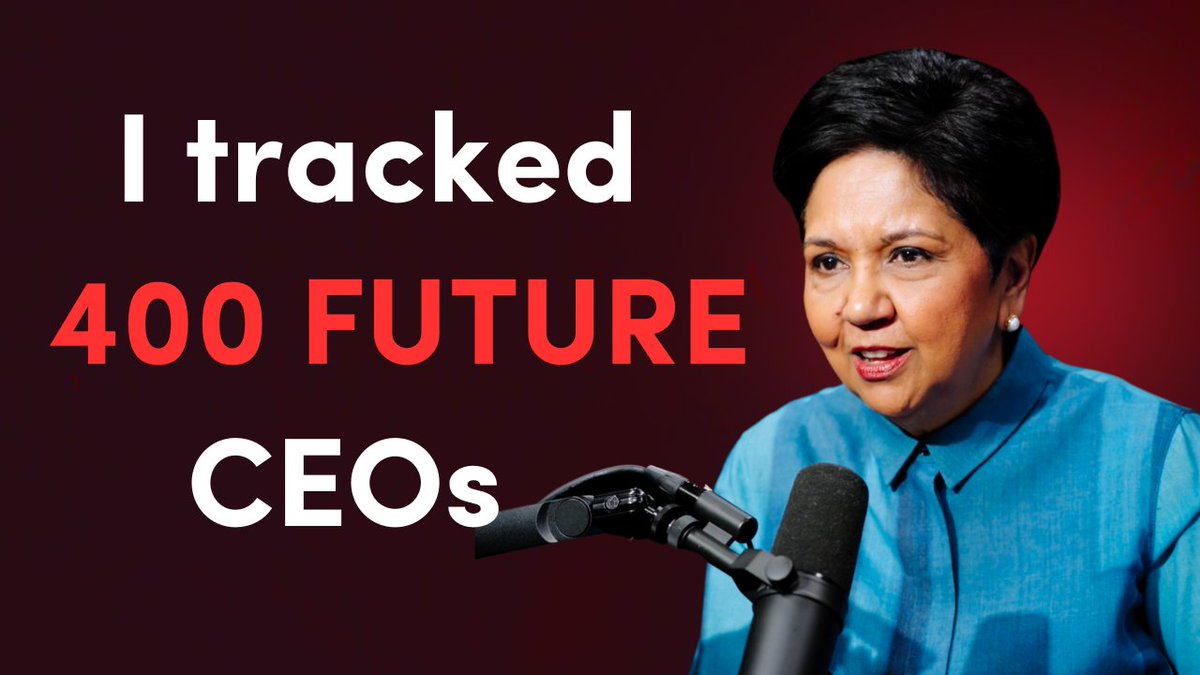
New episode with the incredible former PepsiCo CEO Indra Nooyi - the first woman of color and immigrant to run a Fortune 50 company. In this conversation, Indra discusses the stories behind her rise to the top of one of the world's largest companies. From early days at the Boston Consulting Group using satellite photos to analyze competitor facilities, to personally tracking 400 potential executives as CEO, Indra reveals the granular thinking that separates great leaders from good ones. Her "zoom in, zoom out" philosophy transformed how she understood business — from the "right side of the decimal" where even a fraction of a penny matters across millions of transactions, to setting company strategy at 30,000 feet. She explains why most leaders fail because they don't understand their business at the most granular level. But perhaps most powerful is her candid discussion about the reality of being a working mother in the C-suite where she argues there is no such thing as work-life balance. Watch now for a masterclass in leadership, strategy, and the sacrifices required to reach the top. (00:02:37) Growing Up In India (00:04:38) USA Culture Shock (00:09:54) Lessons From Working In Consulting (00:14:13) Right Side Of The Decimal Lesson (00:16:59) Lessons From Working In Consulting PT 2 (00:20:39) Delivering A Message That Gets Heard (00:23:19) Developing Talent (00:26:46) How To Minimize Office Politics (00:29:14) Power And Humility In Life (00:31:53) Prioritizing Work Over Family / Finding Balance (00:37:39) Turnover After A CEO Change (00:41:09) CEO Vs Board Member (00:44:41) Implementable Change In A Company (00:47:00) Removing Friction Instead Of Using Force (00:48:46) Lessons From Amazon (00:50:36) Leading Through Crisis (00:54:01) Dealing With Activist Investors (00:57:20) Women As CEOS (00:58:40) Equality of Opportunity (01:02:32) Bias In Performance Reviews (01:04:09) Almost Quitting PepsiCo (01:05:48) What I Learned From Steve Jobs (01:10:35) Lessons From Costco And Walmart (01:18:43) Secrets to PepsiCo Merchandising (01:20:59) Making Decisions At A Multi Billion Dollar Company (01:22:40) Lessons From Acquisitions (01:25:52) Traits Of A High Performing Employee (01:27:44) Remote Work Vs In Office

Farnam Street

114,125 Aufrufe • vor 1 Jahr

Shredding the Deep State with DataRepublican | Going Rogue with Lara Logan | Episode 95 Why Tech Nerd DataRepublican is Such a Threat to America’s Enemies Jennica Pounds is the data analyst known on X as DataRepublican. She is a deaf database engineer and mother who rose to prominence after accurately predicting Donald Trump’s 2024 victory through direct voting data analysis, at a time when most polls and experts were wrong. She later assisted DOGE efforts by building a website that enables text searches inside government award descriptions and maps money flows through the NGO industrial complex. Those networks involve figures like George Soros as well as groups tied to USAID and activist funding. In her book 'Unelected' she argues that the real power structure is a self-reinforcing system of “everyone and no one.” Throughout it all, she has navigated doxxing, public scrutiny, and personal cost, drawing strength from her Christian faith and using AI-enhanced tools that have given her a public voice for the first time. 00:00:00 – Who Really Runs the System? 00:00:29 – Introducing Data Republican 00:05:20 – Unelected: Why She Fought the Machine 00:08:00 – Connecting the Dots: Soros, Singham & the Networks 00:10:00 – The Visionary Machine: Reflexivity Explained 00:15:30 – Color Revolutions and the Battle for the Mind 00:17:50 – How the Data Saw What the Experts Missed 00:25:50 – From Elections to DOGE: Building the Search Tool 00:29:00 – The NGO Industrial Complex Exposed 00:36:10 – 400 Years Back: Enlightenment Seeds of the Blob 00:40:00 – Everyone and No One: How the Cycle Sustains Itself 00:48:00 – When Reality Breaks the Dogma 00:53:00 – The Debt Reckoning and the End of the Cycle 00:58:00 – Faith, Family, and Finding a Voice DataRepublican (small r) | Going Rogue with Lara Logan

Lara Logan

795,936 Aufrufe • vor 13 Tagen

NEW episode! Drug development has never been more expensive, in terms of output per dollar spent. This trend, called Eroom’s law, is surprising, considering the incredible technological advances in drug discovery, from genome sequencing to engineering to microscopy. On a new episode of the Works in Progress podcast, Ben Southwood and I talk to Ruxandra Teslo 🧬 about why this has happened and what can be done about it. We discuss how: • AI isn’t a magic bullet for drug discovery. Predictive models lack the physical human data, like individual variation and rare side effects, that can only be generated by actually running real-world clinical trials. • As scientists invent more effective drugs, it becomes harder to discover new treatments that can surpass past successes. This is known as the "Better than the Beatles" problem. • Biotech companies are increasingly moving their "first-in-human" trials to Australia because its simpler regulations allow researchers to test drug safety faster and cheaper than in the US. • Clinical trials can be made more efficient with various reforms including: embracing platform trials, allowing researchers to select from independent ethics boards, expanding the funding and validation of surrogate endpoints, increasing transparency by releasing regulatory correspondence from failed companies, and much more. Timestamps: 00:00:00 Eroom’s law and the paradox of drug development 00:08:03 How clinical trials actually work 00:10:23 The power and controversy of surrogate endpoints 00:14:01 How historical patent laws influenced trial timelines 00:22:46 The Australia advantage and regulatory drag 00:29:08 Institutional review boards (IRBs) and bureaucratic drag 00:32:21 Open science and successful reforms 00:41:49 Our wishlist for clinical trial reforms, and which reforms we *don’t* like 00:53:48 Why AI isn’t a magic bullet for drug discovery

Saloni

109,256 Aufrufe • vor 4 Monaten

🚨🇷🇺 INTERVIEW: PUTIN’S REGIME IS EATING ITSELF ALIVE The news is buzzing after Lavrov went missing from a Kremlin meeting and the G20 delegation But most people don’t know that over the last 2 years, and in recent weeks, Generals were fired or arrested, Putin’s inner circle was purged, and oligarchs continue to flee or mysteriously fall out of a window. Artem Dikarev, aka ‘The Russian Dude’, says Russia’s economy is beginning to crack, and even Putin’s closest allies are terrified. We cover: •⁠ ⁠Why Russia’s internal purges are exploding again •⁠ ⁠The friction between the FSB and the army •⁠ ⁠Why the National Guard is arming tanks to defend Moscow •⁠ ⁠How Lavrov’s mysterious disappearance set off new rumors inside the Kremlin •⁠ ⁠And why Putin’s biggest threat isn’t Ukraine, it’s his own people Artem says Putin has built a system that survives on fear and silence. But when fear turns inward, collapse always follows. 00:00:24 - Almost every single Russian knows somebody who knows somebody who died in the war 00:00:56 - It's very hard to speak against Putin. He has always been paranoid, and now it's just more than ever 00:04:21 - As soon as they start showing protest, people going to start thinking we are not alone 00:11:50 - The most dangerous part for Putin is not that he can lose, it’s the people, because they’re the ones who can take him out of power 00:07:08 - Not a single friend openly supports the war anymore 00:19:04 - As soon as Prigozhin was two or three hundred kilometers away from Moscow, the entire Kremlin pretty much was empty 00:21:09 - It is a wartime economy. It can only survive and last for as long as there is war going on, loyalty means almost nothing inside the Kremlin walls. 00:30:15 - As long as you act like a clown, you’re no longer a threat to Putin 00:40:04 - Maybe something is happening. Some smaller generals feel unsatisfied. 00:46:00 - Dikarev: "I focus on saving the reputation of Russians in front of the world." 00:48:00 - Dikarev: "I don’t want the aggressors to win. I don’t want Ukraine to lose. I just don’t want Russia to lose." 00:58:08 - Now China and India can dictate the rules to Russian oil prices 01:01:04 - Prices in stores are already in yuan. Restaurants have Chinese signs first, then Russian 01:00:12 - Putin will do everything possible to find new customers

Mario Nawfal

1,586,559 Aufrufe • vor 9 Monaten

New podcast episode with Allison Duettmann (Allison Duettmann), the CEO of the Foresight Institute (Foresight Institute). Foresight has spent the past 40 years backing frontier science too early or too interdisciplinary for legacy institutions. Foresight has helped inspire and organize 10,000+ scientists, technologists, philanthropists, investors, students, thinkers, pioneers, and dreamers, including the early 2000s space community where Elon Musk and Steve Jurvetson discussed the importance of commercial space and reusable rockets. Foresight’s Feynman Prize went to Fraser Stoddart and David Baker 9 and 20 years before each won a Nobel. Today, Foresight is one of the main communities where neurotech pioneers gather and explore the frontiers of BCI, connectomics, simulations, and uploading. Allison also founded the Existential Hope movement, rooted on the conviction that we must imagine flourishing futures — in the tradition of ambitious science & sci-fi — as a precondition for building them. She is one of the best people thinking deeply about the future, coordinating humanity to imagine and achieve good outcomes, and working to accelerate the technologies and adoption that will get us there. We go deep into all of that in this episode: how neurotech could let us connect far more directly than language allows; how BCIs are meaningfully improving people’s lives today; why connectomics and whole-brain emulation can keep humans compatible with Superintelligent AI; why uploading can give us a path to exploring ourselves and living vastly richer and more fulfilling lives than a single ~80 year narrative arc allows; the amazing possibility of living billions of years; and how nanotechnology could reshape the physical world, address our sustainability and energy challenges, and build the infrastructure to lift us off planet and explore the universe. This is a ton and goes to show how deeply and broadly Allison thinks. I’m very excited to have her on the podcast, as I think she explains things clearly and bridges huge divides with care, vision, and rigor. Hope you enjoy! Chapters 00:00:00 Introduction 00:01:25 What is Existential Hope? 00:04:06 Visions of the future: nanotech, longevity, neurotech, AI 00:08:04 From existential risk to building better futures 00:16:15 How far away is nanotechnology? 00:24:26 Is a superintelligent AI a tool, or a new form of life? 00:37:33 How neurotech could connect minds far beyond language 00:41:56 Whole brain emulation: from C. elegans and FlyWire to the human “holy grail” 00:45:16 The connectome problem: a complete wiring diagram isn't enough 00:47:19 Why it's so hard to attract talent to emulation 01:03:04 Longevity, cryonics, and the case for living billions of years 01:22:24 How close are we to never having to die? 01:43:13 How Foresight operates to advance frontier science 01:54:06 From philosophy to Foresight: how a three-month stay became 10 years in SF 02:03:04 Allison’s vision for an optimistic future

Juan Benet

23,120 Aufrufe • vor 1 Monat

We don't know what most microbial genes do. Can genomic language models help? there's only one way to find out! this is a 1 hour and 42 minute interview with an MIT professor (the famous Yunha Hwang) chatting about these questions, her work in solving them at Tatta Bio, and more. zoomer captions are back too Links in reply! Timestamps: 00:00:00 - Clips + sponsor roll from the wonderful LatchBio 00:02:07 – Introduction 00:02:23 – Why do microbial genomes matter 00:04:07 – Deep learning acceptance in metagenomics 00:05:25 – The case for genomic “context” over sequence matching 00:06:43 – OMG: the only ML-ready metagenomic dataset 00:09:27 – gLM2: A multimodal genomic language model 00:11:06 – What do you do with the output of genomic language models? 00:17:41 – How will OMG evolve? 00:20:26 – Why train on only microbial genomes, as opposed to all genomes? 00:22:58 – Do we need more sequences or more annotations? 00:23:54 – Is there a conserved microbial genome ‘language’? 00:28:11 – What non-obvious things can this genomic language model tell you? 00:33:08 – Semantic deduplication and evaluation 00:37:33 – How does benchmarking work for these types of models? 00:41:31 – Gaia: A genomic search engine 00:44:18 – Even ‘well-studied’ genomes are mostly unannotated 00:50:51 – Using agents on Gaia 00:54:53 – Will genomic language models reshape the tree of life? 00:59:18 – Current limitations of genomic language models 01:08:54 – Directed evolution as training data 01:12:35 – What is Tatta Bio? 01:19:02 – Building Google for genomic sequences (SeqHub) 01:25:46 – How to create communities around scientific OSS 01:29:06 – What’s the purpose in the centralization of the software? 01:35:37 – How will the way science is done change in 10 years?

owl

44,279 Aufrufe • vor 8 Monaten

In attempts to understand zionist mindset, i discovered some EXTREMELY disturbing facts; Textbooks -Palestine - genocides, murders, perversion, rape, torture, hate, death to all but "Judaism." Part 1. Transcripts (some spelling errors) In every synagogue library, we find hundreds of books. But there are a few which tower above the rest in authority. These include the Encyclopedia Judaica, the Universal Jewish Encyclopedia. The Jewish Encyclopedia. In the oldest of these, the Jewish Encyclopedia. We encounter fascinating new perspectives on the inner teachings of Judaism and perspectives, which are well known to most religious Jews, but are (UNknown) to Christians. 00:01:50:05 - 00:02:17:24 Most Christians believe that the Judaism of the Old Testament is very similar to Judaism today. Yet the Jewish Encyclopedia and its article on Judaism says modern Judaism and the Judaism of the Old Testament are very different. It says that after Nebuchadnezzar conquered Judah in the sixth century B.C. and led the Jews to distant Babylon, the Jews were faced with challenges to their faith they had never before experienced. 00:02:17:26 - 00:02:45:08 Ever since the time of Solomon. The religion of Israel had centered around the magnificent temple in Jerusalem with its sacrifices and ritual. The question now became How could one be a true Jew in a very foreign, even hostile environment? The need arose for a certain class of lay priests called scribes or so for them to interpret the law in this new setting and make it workable. 00:02:45:10 - 00:03:11:26 In time, these scribes became what the New Testament calls the scribes and Pharisees the greatest legal authorities of Israel for all ages. The Pharisees said there were really two inspired revelations to the Jews. There was the written law of Moses received atop Sinai. But there was also the oral tradition acquired by 70 elders who came to the base of the mountain but were forbidden to proceed. 00:03:11:26 - 00:03:39:03 Father. The Pharisees said that these 70 elders or Sanhedrin received a much more extensive and profound revelation than Moses. A revelation which was never written down, yet took precedent over the written law. When Jesus came on the scene, his reaction was to bitterly denounce this counterfeit tradition. Raised, said the Pharisees, by their tradition, had made the law of God have none effect. 00:03:39:06 - 00:04:10:01 He considered the Pharisees the most dangerous leadership Israel ever had. In 70 A.D., Jerusalem was destroyed by the Romans. Although Jewish sects such as the Sadducees now disappeared. The Pharisees emerged with even greater power over the Jewish people. The Jewish Encyclopedia describes the new role of the Pharisees with the destruction of the temple. The Sadducees disappeared altogether, leaving the regulation of all Jewish affairs in the hands of the Pharisees. 00:04:10:04 - 00:04:39:01 Henceforth, Jewish life was regulated by the Pharisees. The whole history of Judaism was reconstructed from the very same point of view. Parasitism shaped the character of Judaism and the life and thought of the Jew for all of the future. In 135 A.D., all Jews were expelled from Palestine. The Pharisees led most Palestinian Jews in a mass migration back to Babylon. 00:04:39:03 - 00:05:05:15 The majority of Jews were already in Babylon and had been since the time of Nebuchadnezzar 600 years earlier. Yet around 140 A.D., Babylon became the acknowledged land of refuge for world jewelry. For another thousand years, Judaism flourished in Babylon under the leadership of the Pharisees, Great academies of the rabbis were established and thousands of new laws formulated there. 00:05:05:16 - 00:05:12:01 Those same parishes who killed Jesus Christ remain the undisputed rulers of Judaism. 00:05:12:03 - 00:05:45:02 In Babylon, the Pharisees codified their oral traditions into the Babylonian Talmud. The written form of that oral tradition which Jesus so bitterly rebuked the Talmud, reveals How deep was Israel's apostasy? In her beginning, God gave the Hebrews the loftiest, the most upright literature and ethics the world has ever known. Yet when they turned their backs on him, they produced the Talmud, a work which has aptly been called a monument to human folly. 00:05:45:04 - 00:05:52:01 The Talmud also helps us understand the basis for Christ's unflattering descriptions of the Pharisees. 00:05:52:04 - 00:06:23:06 Jesus described the Pharisees as hypocrites. Children of Hell Blind Guides. Why did Sepulcher was full of dead men's bones even describe the Pharisees as children of their father, The devil? A murderer. From the beginning, the Talmud confirms Christ's words in the Talmud. In treatise Sanhedrin and extensive passage describes the right of the Pharisee to kill anyone, just as long as he did so indirectly as one of dozens of examples. 00:06:23:09 - 00:06:50:05 The Talmud tells us that if one bound his neighbor and he died of starvation, he is not liable to execution in such an indirect manner. The Pharisees also killed Christ. Manipulating the Romans to actually wield the spear and sword the Pharisees claimed, as their descendants do today, that since the Romans worthy direct cause of the death of Christ, it is the Romans, not the Jews who are guilty. 00:06:50:07 - 00:07:18:25 Christ also called the Pharisees adulterers and adulterous generation. The Talmud provides generous loopholes for adultery. It says the penalty for adultery does not include sex with a minor. The wife of a minor or the wife of a heathen. The Talmud also encourages seduction of unwed adolescent girls called designated bond maids. But it's important how such rapes are performed with the designated bond made. 00:07:18:26 - 00:07:46:03 One is guilty only in the case of natural connection, but not in the case of perverse connection. The Pharisees reasoned that rape in a perverted manner is outside of the jurisdiction of the law. Normal rape, however, was punishable. In Babylon, sexual perversion of every kind had been a way of life for millenniums. The Pharisees were deeply influenced by such practices. 00:07:46:06 - 00:08:16:00 In three of the major treatises of the Talmud are found extensive passages which give legal endorsement to seduce and marry three year old baby girls. In fact, many of the greatest rabbis of the Talmud, including Simeon Ben Yo Hai, upheld this privilege. Today in Israel, thousands of Jews go to Iran every year to venerate the memory of Simeon Daniel High, one of the most respected rabbis in the history of Judaism. 00:08:16:02 - 00:08:37:09 In one of dozens of endorsements of child sex, Simeon Ben YOHE said a process of light under the age of three years and a day is permitted to marry a priest. Agreeing with Ben YOHE, the great robber, said When a grown up man has intercourse with a little girl, it is nothing for when the girl is less than this three years and a day. 00:08:37:12 - 00:09:02:00 It is as if one put the finger into the eye. The footnote to this passage says, as tears come to the eye again and again. So does virginity come back to the little girl under three years? The same section confirms that sexual activity with small boys is in the same category. The intercourse of a small boy is not regarded as a sexual act. 00:09:02:03 - 00:09:25:21 In addition to adulterers, Christ, in the story of the Good Samaritan, portrayed the Pharisees as racial bigots, too self-righteous to respond to the suffering of one who was not a Jew. It is true because of the wickedness of the Canaanites, which included sodomy and infant sacrifice. Israel had been commanded by God to be harsh in her treatment of the inhabitants of the land. 00:09:25:24 - 00:09:43:10 God made it clear that the Canaanites were not simply to be avoided, but destroyed by the time of the New Testament. This method of preserving God's kingdom by separation and the sword had become obsolete. God no longer made a racial difference between men. 00:09:43:13 - 00:10:17:14 But the Pharisees were unfazed by God's new agenda. The Talmud was finally written down nearly five centuries after Christ hit its critical, even homicidal attitudes toward Gentiles might have been lifted out of the Book of Joshua. However, the quickest way to grasp the Talmudic view of Gentiles is not directly from the Talmud, but from the Jewish encyclopedias. If we quote an isolated opinion from the Talmud, a rabbi may quickly object, saying, But that is not the overall opinion of the Talmud. 00:10:17:16 - 00:10:35:02 That is not the definitive view of what the Jewish Encyclopedia provides us is a definitive overview of perhaps hundreds of rabbinic statements on any subject giving us accurate summaries of what the Talmud generally teaches. 00:10:35:04 - 00:10:52:00 In its article on Gentiles. The Jewish Encyclopedia begins to define what makes a Jew so different from a Gentile. According to the rabbis, only Israelites are men Gentiles. They class not as men, but as barbarians. 00:10:52:02 - 00:11:35:23 Since Gentiles are not men in the fullest sense. So the Gentile is not a neighbor of a Jew. Further, since Gentile laws were too crude to admit of reciprocity, meaning too crude to be taken seriously, the Gentile was forever beneath the Jew. Gentiles were outlawed by God from the beginning and thus had no property rights. The Almighty offered the Torah to the Gentile nations also, but since they refused to accept it, he withdrew his shining legal protection from them and transferred their property rights to Israel, who observed his law since the Talmud outlawed the child or issue of a Gentile as that of a beast. 00:11:35:29 - 00:12:04:24 A Gentile had as little legal rights than a Jewish court as did an animal. The Talmud states that if a Gentile sue an Israelite, the verdict is for the defendant. The Israelite. Conversely, if the Israelite is the plaintiff, he obtains full damages because the Talmud conspires against Gentiles. If a Jew was ever caught telling a Gentile what the Talmud really says, such a person deserves death. 00:12:04:26 - 00:12:30:06 So vile was the nature of a Gentile that the great Simeon Ben YOHE said the best among the Gentiles deserves to be killed. The best of snakes ought to have its head crushed. Jews, however, are exalted beings in the Talmud worthy of praise. Christ described the Pharisee who blessed himself, saying, I thank the Lord that I am not his other man. 00:12:30:09 - 00:12:57:19 At imminent Talmudic rabbi says, the same blessed be thou who has not made me a goy or gentile. There is a special antagonism between the Talmud and Jesus. The Talmud attacks everywhere it can. Even his mother, Mary, the Talmud, says, was a whore who mated with carpenters. She, who was the descendant of princes and governors, played the harlot with carpenters. 00:12:57:21 - 00:13:26:06 It naturally followed that the scribes declared Christ to be a bastard. In its article on Jesus. The Jewish Encyclopedia says that Jewish writings defame Christ. It is the tendency of all these sources to belittle the person of Jesus by ascribing to him illegitimate birth, magic and a shameful death. Jesus, according to this article, was considered one of the three worst enemies of Judaism who came to an ignoble end. 00:13:26:09 - 00:13:54:27 The Talmud says they subjected him to four deaths stoning, burning, decapitation and strangling. The Talmud also says he is now in hell, punished with boiling hot excrement. What is Christ advice as he speaks to us? Out of hell? The Jewish Encyclopedia quotes Jesus as telling us above all to bless the Jews. He says further their well-being do nothing to their detriment. 00:13:54:29 - 00:14:29:29 Whoever touches them touches even the apple of his eye. Christians, as followers of the false Prophet Jesus also deserve death. The Jewish Encyclopedia again recaps the Talmud to position a Gentile. Observing the Sabbath deserves death. It says the Talmud hatred was probably directed against the Christian Jews. These Judeo Christians invasively called Men Minute or Minim, were considered by the rabbis to be the most dangerous form of heretics of ancient times. 00:14:30:01 - 00:15:01:25 The New Testament gospels were writings which the rabbis considered more dangerous to the unity of Judaism and those of the pagans. A Talmudic rabbi said the writings of Christians deserved to be burned or paganism as less dangerous than minute or Christianity. The Jewish Encyclopedia, in its article on men, continues to illustrate the Talmudic hatred of Christianity. Again, we must remember venom usually indicates the Judeo Christian. 00:15:01:27 - 00:15:26:03 It was forbidden to partake of meat, bread or wine with the Christian scrolls of the law. Tefillin and mezuzah written by a Christian were burned, and animals slaughtered by a Christian was forbidden to food. The relatives of the Christian were not permitted to observe the laws of mourning after his death, but were required to assume festive garments and rejoice. 00:15:26:05 - 00:15:38:02 The testimony of a Christian was not admitted in evidence in Jewish courts and an Israelite who found anything belonging to one who was a Christian was forbidden to return it to him. 00:15:38:04 - 00:15:58:08 The Pharisees, through the Talmud, thus gave the Jews an ethic which encouraged bigotry and isolation. But they did worse than that. It invited persecution. By the 11th century, inhabitants of Babylon, growing weary of the self-righteousness and dishonesty of the Jews, expelled them to the West. 00:15:58:10 - 00:16:25:27 Migrating across North Africa and Central Europe. The great majority of Jews who had lived in Babylon for almost 600 years now began to find their destinies in the cities of the West. Yet in coming to the West, Jews found their Christian neighbors extremely intolerant of the anti-social deviations Jews had taken for granted in Babylon. In order to survive, it was necessary to abandon such Babylonian traditions. 00:16:25:29 - 00:16:53:06 But that was not as easy as it sounds. For a thousand years, the Pharisees had commanded such deviations. Most Jews could not bring themselves to defy the authority of the Pharisees. Enter one of the giants of Judaism of all time, the great Maimonides. Maimonides, a physician and philosopher, knew that no Jew who practiced Babylonian perversions could remain alive in Christian lands. 00:16:53:09 - 00:17:04:19 He attempted to harmonize Greek philosophy with the best points of Judaism. He hoped his rationalizations would enable Jews to abandon their antisocial customs. 00:17:04:22 - 00:17:21:06 Yet my monarchies was only partly successful. He was excommunicated by the Jewish community on the charge of making new laws. Nevertheless, his moderation and intellect did in fact temper the old Judaism of Babylon. 00:17:21:09 - 00:17:49:24 Gradually, over the centuries, Jews abandoned immoral practices of the Talmud. Such practices are not observed today. In fact, most Jews are so ignorant of the Talmud itself that they do not even know that such teachings exist within their sacred literature. Yet the fact remains that when the Jews came to the West in the Middle Ages and attempted to accommodate the Talmud to Christian society, a tremendous conflict was created in Babylon. 00:17:49:24 - 00:18:12:22 Judaism could be perfectly consistent with the teachings of the Pharisees, because the Babylonians were immoral as well. In the Christian lands of the West, it became necessary to pretend that many of those teachings did not exist. Even today, religious Jews continue to venerate the Pharisees and their Talmud as the greatest source of light that Judaism will ever know. 00:18:12:25 - 00:18:28:22 Yet living in Christian lands, no Jew can fully perform what the Pharisees commanded. This conflict in Jewish responsibility has created a dilemma over the last thousand years from which Jews and the West have not emerged. 00:18:28:24 - 00:18:44:02 Yet, even before my monitors came on the scene in the 12th century, another dilemma was being created in Judaism far to the east. This was a dilemma not concerning the doctrines of the Jews, but over who actually was a Jew. 00:18:44:04 - 00:19:07:12 In their articles on the Khazars. The Jewish Encyclopedia tell us that in the eighth century A.D., Jewish missionaries ventured north of Babylon to the land of the Khazars between the Caspian and the Black Seas. Azaria was a vast grassland on what is now the plains of southern Russia, inhabited by a race of merchants, artisans and warriors of honey. 00:19:07:12 - 00:19:34:23 Turkish stock. About 740 A.D., the king of the Khazars converted to Judaism and made it the state religion. Incredibly, within a few centuries, the people of Ghazaliya convinced themselves that they were not Gentiles after all, but the physical descendants of Abraham. Thus, by the 10th century A.D., a nation across the late Jews thrived in what is now central Russia. 00:19:34:25 - 00:20:05:21 During the Middle Ages, the fierce Mongols from the East and Russians from the north drove the Khazars west out of their ancient homeland. Most settled in Eastern Europe, especially Poland, where they established communities of artisans and traders. Judaism thus became divided into two basic groups which remain today the Ashkenazim, which are the Khazars of the East and the Sephardic Oriental, which are Jews of Spain, Turkey and lands bordering on the Mediterranean. 00:20:05:23 - 00:20:40:06 Today, the Ashkenazim or Khazars are the vast majority, about 80% of those who call themselves Jews. The two most recent premiers of Israel illustrate these two racial types. Shimon Perez is a Sephardic Jew from authentic Jewish stock. Yitzhak Shamir, like Menachem Begin, is Ashkenazim or Khazar in origin. In Poland, these ancestors of most modern Jews thrived. In fact, they actually became more zealous Jews than their theological cousins to the West. 00:20:40:06 - 00:21:12:18 The Sephardim, like Czars, were fascinated with that mystical aspect of Judaism called Kabbalah. Kabbalah was the Jewish form of ancient Gnosticism, a belief that God is unconscious, yet everywhere revealed in different levels of refinement throughout the universe. Of course, Judaism was always unique among ancient religions and its belief in a single conscious God, a God not only capable of creating the world's, but of punishing evil and rewarding good. 00:21:12:20 - 00:21:48:07 Like Eastern religions, however, the Polish cable has believed that God in his purest form is utterly remote, unknowable, without opinions about right and wrong. Instead, his being filtered down through many gradations or separate until it reached Israel. Israel, according to the Kabbalah, was the visible, rational emanation of God in this world. Below Israel was confusion and darkness represented by demons and the chaotic world of the Gentiles. 00:21:48:09 - 00:22:09:07 What excited the Khazars was that Kabbalah preached revolution. It said that Jews are superior beings were destined to rule the world in the Zohar, which is the written text of Kabbalistic lore. We find the arrogance and ambition of the ancient Pharisees very much alive. 00:22:09:09 - 00:22:37:24 In a typical passage, the Zohar teaches a living soul refers to Israel who have holy living souls from above and cattle and creeping thing and beasts of the earth to the other peoples who are not living soul only by the overthrow of the Gentiles, the Zohar asserts. Can Israel regain its position as God's Shekinah glory on Earth. The Zohar calls Gentiles Hammill a case in a passage typical of many. 00:22:37:28 - 00:23:04:07 The Zohar says they caused the destruction of the temple. So when God reveals himself, they will be wiped off the earth. Redemption will not be complete until al-Malaki will be exterminated. But once Israel shakes off Gentile, dominion and Christian influence, heaven will descend to earth. The Zohar says Israel will fulfill her predestined role, ruling the world under the leadership of her Messiah. 00:23:04:09 - 00:23:28:13 Since the Kabbalah or Zohar was not merely a theological system but taught the overthrow of existing order, it was natural that before long Jews should begin to put it in the practice. With the age of Voltaire and the so-called Enlightenment. During the 18th century, we see a host of Jewish lists migrating west out of Poland and penetrating the very capitals of Europe. 00:23:28:15 - 00:23:43:09 Jewish wonder workers walsham's, as they were called Saint Germain, carefully astral frank folk men of vast wealth and mystery, came upon the European scene at the end of the 18th century. 00:23:43:12 - 00:24:16:08 In Europe in the years preceding the French Revolution. The foundations were laid for a new order in the world. Cable, as such as Adam Bice, had helped establish the ultra secret Illuminati, which became a cover for plots and intrigues that would begin the erosion of Christian civilization. At the same time, beginning with Jewish philosopher Moses Mendelssohn, many Jews began to perceive their religion not simply as a means of personal salvation, but as a way to reform society at large. 00:24:16:10 - 00:24:52:29 Many Jewish activists said that starting with such revolutionaries as Moses and the prophets, Israel had always had the social objective of writing injustice and taking the part of the downtrodden. It was the duty of every Jew, they said, to come to the aid of the oppressed working masses, called the proletariat in their historic struggle against capitalistic bondage. Many Jews thus came out of the ghetto and took part in all the great revolutions of the 19th century, including the revolution of 1829 and the revolution of 1848. 00:24:53:02 - 00:25:20:00 It is thus not surprising that as the 20th century dawns, we find Jews turning their attentions to the overthrow of one of the last monarchies still opposing Jewish advancement. The Romanoff dynasty of Russia. It is well known that the Jews had long hoped to overthrow the Czar. It was natural then that Jewish philosophers such as Moses, Hess and Karl Marx should contrive a philosophy that could make such overthrow possible. 00:25:20:03 - 00:25:48:20 It was also natural that international Jewish bankers of New York, London and Hamburg should finance it. The U.S. State Department, in its three volume report on the origins of communism in Russia, published in 1931, reveals how Jewish controlled German banks under the leadership of Max Warburg, conspired as early as 1914 to send large payments to Lenin, Trotsky and others in their attempts to bring down the Czar. 00:25:48:22 - 00:26:12:21 As part of this conspiracy. Jacob Schiff, head of the New York Jewish Banking House of Could, Loeb invested at least 20 million, which would be close to $1 billion today toward the establishment of Bolshevism in Russia. In its article on socialism, the Jewish Encyclopedia published in 1905, freely admits that Jews in Russia were ripe for revolution in Russia. 00:26:12:22 - 00:26:18:23 Yet socialism has become a movement of the Jewish masses. 00:26:18:26 - 00:26:56:14 The later Encyclopedia Judaica tells us the communist movement and ideology played an important part in Jewish life, particularly in the 1920s and 1930s and during and after World War Two. The Judaica, in fact, presents an extensive list of the most powerful Jewish leaders of Bolshevism, which included Trotsky, spared La Zinoviev, Communist Lebanon, Hagana, Vic and many others. The Judaica also tells us just how many Jews filled the communist ranks. continue to..... .. PART 2 transcripts

TMJ

48,907 Aufrufe • vor 2 Jahren

Scott Jennings has built a reputation for speaking truth to power on CNN, but what stood out to me in this conversation was his honesty, his perspective, and his heart. We filmed this episode over a month ago in Washington DC, and it was the perfect backdrop for a raw and real discussion about politics, faith, and family. We talked about what it takes to sit in the lion’s den night after night, debating politics in front of a national audience, and why authenticity matters more now than ever. Scott opened up about his career path from Kentucky to the Bush White House, to campaign war rooms, and now to CNN, where his voice has become one of the most recognizable conservative perspectives in America. He shared stories about Donald Trump, Mitch McConnell, and the lessons he has learned from decades inside politics and media. We also talked about faith, family, and why staying grounded matters when the world is coming at you full speed. Scott Jennings is sharp, candid, and passionate about America’s future, but what I walked away with was a reminder of his integrity and his courage to stand firm in the face of constant pressure. Chapters: 00:03:08:12 – Thoughts on Donald Trump's presidency so far 00:06:32:00 – How has President Trump improved since 2016 00:08:35:01 – How the incident in Butler PA changed everything 00:13:11:23 – Scott Jennings on CNN 00:18:10:19 – How the debates work on CNN 00:20:52:15 – How does Scott Jennings keep his cool while debating 00:24:25:11 – Any strained relationships on set 00:27:18:25 – Scott Jennings' best and worst moments on air 00:31:06:08 – How does Scott Jennings deal with being outnumbered 00:41:12:23 – Scott's career in politics 00:44:39:16 – Mitch McConnell 00:52:11:11 – Political run in Kentucky for Scott 00:54:37:24 – Family 01:00:11:02 – Closing thoughts 01:03:29:11 – The Yellow Ribbon

Sage Steele

111,471 Aufrufe • vor 11 Monaten