Video wird geladen...

Video konnte nicht geladen werden

Zur Startseite

how tread.fi mm bot actually works and how to launch it safe for your balance market making with tread is not free yield you're basically renting a very fast trader that: - posts both bids and asks around the mid - tries to keep your net exposure inside a...

17,352 Aufrufe • vor 8 Monaten •via X (Twitter)

0 Kommentare

Keine Kommentare verfügbar

Kommentare vom Original-Post werden hier angezeigt

Ähnliche Videos

most Polymarket bots die the same way they quote symmetrically around mid-price price moves they absorb the loss repeat until account is empty the fix has been in academic papers since 2008 Stoikov figured it out studying stock market microstructure the math translates directly to prediction markets here's what actually matters: mid-price is a bad signal it's the average of best bid and ask on thin Polymarket orderbooks that number is almost meaningless what you want is VAMP Volume Adjusted Mid Price you walk into the orderbook depth and calculate the weighted average price for a given volume filters out the gaps, gives you a real reference point then you stop quoting symmetrically the reservation price formula: r = Mid - β × Q Q is your current inventory if you're long YES contracts, r shifts down automatically your bot starts selling YES cheaper and stops buying aggressively target is always flat inventory the spread isn't static either it has two components: volatility premium (widens when market moves fast) microstructure premium (depends on how often orders actually fill) if Polymarket odds start swinging fast, spread widens in real time static spread = guaranteed adverse selection - one more thing Stoikov points out: small tick size markets are where this model actually works large-tick markets (CME futures, liquid ETFs) have massive queues you can't nudge your price by a fraction of a tick without losing your place Polymarket is small-tick by nature binary markets, USDC pricing, sparse orderbooks that's exactly the environment this model was built for the P&L comparison between naive bots and inventory-controlled bots is not close naive strategy: wide distribution, occasional huge wins, regular wipeouts inventory control: tight distribution, consistent positive drift, rare catastrophic losses the "pennies in front of a steamroller" problem doesn't go away but you can see the steamroller coming if you're watching orderbook imbalance when bid volume heavily outweighs ask volume price is about to move up your bot should already be adjusting before the move happens that's the wealth still building the inventory control layer myself using for live execution in the meantime it handles the market scanning and order management while i finish the rest

cryptovcdegen

19,483 Aufrufe • vor 5 Monaten

The Tradingview Source Code Hack: How Claude Code Actually Makes You Profitable building a trading bot in 2026 is less about being a genius coder and more about having the guts to stop letting your emotions drive your portfolio into a ditch. i spent years thinking that code was some secret language for the elite while i was busy getting liquidated on trades that should have been easy wins. the truth is that the simplest piece of automation can be the difference between a blown account and a system that actually grows while you sleep most traders are stuck in a loop of staring at charts until their eyes bleed and then making a panic decision at the worst possible moment. i used to be that guy who spent hundreds of thousands of dollars on developers because i thought i was too far behind to learn it myself. the moment i realized that code is the great equalizer was the moment i stopped being a victim of market makers who can see every single move i make the hardest part of trading is the transition from manual clicking to full automation and that is where most people quit because they think it is an all or nothing game. you do not need a bot that does everything on day one but you do need a way to stop yourself from over trading and hitting the market button like a slot machine. imagine if you could just tell a script to enter a position for you slowly over time so you never have to worry about catching a falling knife ever again the secret weapon in this 2026 landscape is something i call the easy bot which is basically a remote control for your trading discipline. most people use too much leverage and never take profits because their brain tells them it will go higher right before the dump hits. by using a chunking entry system you can tell your bot to buy a position piece by piece which averages your entry and keeps your heart rate low most traders do not realize that exchanges and market makers can see your stop loss sitting right there on the order book like a giant target. if you are tired of getting stopped out only to see the price immediately reverse in your direction then you need to understand the power of a ghost stop loss. a ghost stop loss lives in your code and not on the exchange so the market makers have no idea where your pain point is until the bot actually sends the close order this invisible protection is a game changer for anyone trading on high volatility chains like solana or hyperliquid where the wick hunting is relentless. i learned this the hard way after watching my manual trades get hunted over and over while my automated systems stayed perfectly safe in the shadows. once you have a bot monitoring your positions for you the stress of a potential liquidation basically vanishes because the machine does not hesitate when it is time to exit the real fun begins when you start thinking like a market maker instead of a gambler who is just hoping for a moon shot. instead of guessing where the top is you can set up a simple logic loop that says buy under this price and sell over that price all day long. this allows you to capture the sideways chop that normally drains a manual trader through fees and bad entries while you are out at the beach or focusing on your business breakout trading is another area where manual traders lose their edge because they are either too slow to react or they enter way too late on a fake out. a simple script can sit there and monitor price action 24/7 with more patience than any human being could ever dream of having. when the breakout actually happens the bot triggers the entry in milliseconds while you are still trying to unlock your phone and open the exchange app i started learning to code live on youtube because i wanted to prove that anyone can do this if they are willing to iterate to success. it is not about getting it perfect on the first try but about building the foundation with functions that get the position and check the token price. every single bot i run today is just a combination of these basic building blocks that i have refined over the last five years of building in public if you are still trading by hand you are essentially bringing a knife to a gunfight in a market that is increasingly dominated by ai and high frequency systems. my goal with the road map and the open source code is to give you the same tools the big players have without you having to spend a fortune on devs. code allows you to backtest your ideas against historical data so you can see if your strategy actually works before you risk a single dollar of your hard earned capital the journey from a hand trader to a pseudo automated trader is the most important step you will ever take for your financial freedom. as you start to automate your entries and exits you will notice that your life gets better because the machine handles the boredom and the stress. eventually you will find that you are no longer chasing the market but instead you are letting your systems do the work while you live your life the way you want to i believe that the era of the manual retail trader is coming to an end but the era of the retail coder is just getting started. through the pain of my own liquidations i found the path to automation and i am never going back to the old way of doing things. keep building and keep iterating because the great equalizer is right there in the terminal waiting for you to take control of your future

Moon Dev

38,102 Aufrufe • vor 5 Monaten

🚨: THIS BOT TOOK OVER POLYMARKET He already made ~$600k in just 3 weeks That's why I spent days to decode his trading edge And the technical side is where it hides... Others will charge $1,000 for this info, but not me: The wallet runs a passive market making engine with a fixed cadence of ~2 seconds. It continuously places limit orders on both sides of the book, YES and NO, then refreshes them after partial or full fills. That cadence matters. Too slow and you miss flow. Too fast and you lose priority in the queue. He found the balance. The goal is not direction, but inventory control. Every fill is part of a larger package, not a standalone trade. He keeps both sides active so exposure stays hedged and adjusts size based on fills and market pressure. That’s the management layer most people don’t see. Then comes the execution path. Orders are routed through the same function repeatedly, meaning this is a standing logic, not random clicks. After fills, positions are not just held or sold. They go through a cleanup cycle. Split. Merge. Redeem. That’s how conditional tokens are closed efficiently and profit is realized. Without this step, you’re holding fragments instead of resolved positions. PnL breakdown confirms it. Entry is flat, exits leak, but settlement generates most of the profit. That means the system is optimized for carry, not trading spreads alone. His wallet: [ Also important. This only works in high-activity regimes where both sides keep filling. If flow drops, inventory becomes risk. That’s when the system weakens. This is not a strategy you copy, but a full execution engine.

Dexter's Lab

21,632 Aufrufe • vor 3 Monaten

Made $530,000 with Ai Bot that started with $313. Didn't know how to code. Now this bots run 24/7 printing money while sleeping. I've made the exact step-by-step guide to build this Claude Code Polymarket trading bot. Prompts. Code. Risk settings. Paper trading checklist. Everything from zero to running bot. It's free. For 24 hours. After that I'm charging $499 for it. To grab it right now: 1. Comment "Claude Bot" 2. Like and Retweet this post 3. Follow me Himanshu Kumar ( I can't send DMs to non-followers ) I'm DMing everyone who Complete the 3 steps. I spent hundreds of thousands hiring developers because he was too scared to learn. Then learned Claude Code. Built algorithmic trading systems. $313 → $530,000. You have the same tools available right now. And you're using them to ask ChatGPT for Instagram captions. This attached video is a goldmine. Full live walkthrough. Claude Code building actual Polymarket trading bots. From zero. Every line of code. Every decision explained. Now let me break down why everything you're doing in trading is wrong and exactly how to fix it. Save this post. You'll hate yourself if you lose it. ↓ Let's start with why you keep losing money. You already know the answer. You just won't admit it. You overtrade. Every. Single. Day. You see a candle move. You feel something. You enter. No plan. No edge. No reason. Just feelings. Then it goes against you. You feel something else. Panic. Anger. Denial. You move your stop loss. Or you didn't set one at all. "It'll come back." It doesn't come back. So you take another trade. A revenge trade. Bigger size this time. Because you need to "make it back." That one fails too. Now you're emotional. Now you're tilted. Now you're using leverage you have no business touching. 40x. 50x. 100x. On a trade you entered because a candle looked "bullish" and some guy on Twitter said "send it." You get liquidated. Close the laptop. Punch something. Tell yourself you'll be "more disciplined" tomorrow. Tomorrow comes. Same cycle. Same result. Same liquidation. You've been doing this for months. Maybe years. And you still think the problem is your strategy. The problem isn't your strategy. The problem is you. Save this post right now. What I'm about to show you is the only way to remove yourself from the equation. Follow Himanshu Kumar so you don't miss any of this. ↓ Here's what's actually killing your account. It's not the market. The market doesn't care about you. It's not your indicators. RSI works fine. MACD works fine. They all "work." It's not your timeframe. It's not your broker. It's not the "manipulation." It's four things: 1. Emotions. You hold losers because hope feels better than loss. You cut winners because fear feels stronger than greed. You size up when angry. You skip trades when scared. Your emotional state determines your position size. That's insane. And you know it's insane. But you keep doing it. 2. Overtrading. You take 15 trades a day. Maybe 5 of them had actual setups. The other 10 were boredom. Boredom trades are the most expensive hobby in human history. 3. Leverage. You use 20x-50x on trades where you're not even sure about the direction. That's not trading. That's a casino with a nicer interface. 4. Fees. You're smashing market orders. Paying spread. Paying commission. On 15 trades a day. Your broker makes more money from your account than you do. Think about that. Your broker is profitable on your account. You're not. You're the product. Not the trader. These four things are why 90% of traders lose. Not bad luck. Not the market. You. Save this post and follow Himanshu Kumar because the solution is coming next. ↓ The solution is painfully obvious. Remove yourself from the equation. Not partially. Not "I'll be more disciplined." Not "I'll journal my trades." Not "I'll meditate before trading." Completely remove yourself. Build a bot. Let the bot trade. You go live your life. The bot doesn't feel emotions. The bot doesn't overtrade. The bot doesn't use reckless leverage. The bot doesn't smash market orders and bleed fees. The bot follows the rules. Every single time. Without exception. Without "just this once." Without "I have a feeling about this one." Rules in. Execution out. No human in the middle to mess everything up. That's algorithmic trading. And before your ego jumps in with "but I'm different, I have discipline" — No you don't. Your account balance proves you don't. If you had discipline, your account would be green. It's not. So you don't. Accept it. Automate it. Move on. This is the hardest truth in trading. Your discipline will always fail. A bot's won't. Save this post. Follow Himanshu Kumar for the exact bot setup that removes your emotions permanently. ↓ "But I don't know how to code." Neither did he. The guy in this video didn't know how to code for most of his life. Got held back in 7th grade. People counted him out early. Spent years building apps and SaaS businesses without writing a single line of code. Hired developers on Upwork instead. Spent hundreds of thousands of dollars paying other people to build what he could have built himself. Because he was scared to learn. That fear cost him years. And hundreds of thousands of dollars. Sound familiar? You're doing the same thing right now. Not with developers. But with your time. You're spending thousands of hours trading manually because you're scared to learn the thing that would make trading automatic. The fear of learning to code is costing you more than any bad trade ever did. Because every month you trade manually is a month of emotional decisions, overleveraged entries, and unnecessary losses that a bot would never make. And here's the thing that should really frustrate you: AI does the hard parts now. You don't need a computer science degree. You don't need to work at a hedge fund. You don't need to be "good at math." Claude Code writes the code for you. You just need to think clearly about trading ideas. That's it. If you can describe a strategy in English, Claude can build it in Python. "I don't know how to code" stopped being a valid excuse in 2024. It's 2026. You're 2 years late on that excuse. Find a new one. Or stop making excuses entirely. Save this post. Follow Himanshu Kumar because I'm showing you how people with zero coding experience are building profitable bots. ↓ The process that actually makes money. Three letters. R. B. I. Research. Backtest. Implement. That's it. That's the entire process. Every single day. Research: Find an idea. A pattern. A market inefficiency. Don't trade it yet. Don't even think about trading it yet. Just research it. Backtest: Test the idea against historical data. Does it work? Not "does it look good on one chart." Does it work across thousands of trades? Across different market conditions? Across in-sample AND out-of-sample data? If no, kill it. Find another idea. If yes, move to step 3. Implement: Build the bot. Deploy it. Paper trade first. Then live with small size. Scale only on evidence. Research. Backtest. Implement. Every day. No exceptions. You know what your current process is? Feel. Enter. Pray. F. E. P. Feel bullish. Enter a trade. Pray it works. That's not a process. That's gambling with a TradingView subscription. RBI is the only process that works. Save this post. Tattoo it on your forearm. Follow Himanshu Kumar for daily RBI breakdowns. ↓ What Claude Code actually does that your manual process can't. You can maybe test 3-5 strategy ideas per week. Manually adjusting parameters. Manually checking results. Manually writing code (badly). Claude Code tests 50-100 ideas per week. With parallel agents running simultaneously. Multiple strategies being built, tested, and validated at the same time. While you sleep. The guy in this video spends 4-8 hours a day building systems with Claude Code. Not trading. Building. Research. Backtest. Implement. Then iterate. Improve. Optimize. Every day the systems get better. Every day the edge compounds. Every day the bots get smarter. While you? You spend 4-8 hours a day staring at charts making the same mistakes you made last month. Same indicators. Same patterns. Same entries. Same losses. He's iterating forward. You're running in circles. Same 8 hours per day. Completely different outcomes. Because he's building systems. And you're feeding a casino. Stop feeding the casino. Start building the machine. Save this post and follow Himanshu Kumar for the Claude Code workflow that iterates strategies while you sleep. ↓ Jim Simons. That's the benchmark. You probably don't know who Jim Simons is. And that tells me everything about how seriously you take trading. Jim Simons. Mathematician. Founded Renaissance Technologies. Built a net worth of $31 billion. 100% from algorithmic trading. Not one single manual trade. Not one "gut feeling" entry. Not one RSI divergence. Not one "smart money concept." Algorithms. Bots. Systems. Data. $31 billion. His fund averaged 66% annual returns for over 30 years. While you're excited about making $200 on a trade that you'll give back tomorrow. The best trader in human history never placed a manual trade in his life. And you think your edge is staring at a 5-minute chart with bloodshot eyes at 2 AM? Your edge is building the system. Not being inside it. Jim Simons is the benchmark. Everything else is noise. Save this post. Follow Himanshu Kumar because I'm building toward the same goal and showing every step publicly. ↓ What you need to understand about patience. This is not get-rich-overnight. The guy in this video says it directly: "This channel is not for people looking to get rich overnight. It's not plug and play. There are no shortcuts. If you're impatient, this probably isn't for you." And that's exactly why most people will fail at this. Because you want results now. Today. This trade. You don't want to spend a week building a bot. You don't want to paper trade for 2 weeks. You don't want to test 50 ideas to find 1 that works. You want to copy someone's bot, run it live with your rent money, and be rich by Friday. That's why you'll be broke by Friday. The guy making $2.3M spent months iterating. Testing. Failing. Rebuilding. Testing again. He was patient when you would have quit. He was calm when you would have panicked. He was consistent when you would have given up. Patience isn't just a virtue in trading. It's the only virtue. Without it, everything else fails. Impatience is the most expensive personality trait in trading. Save this post. Follow Himanshu Kumar and learn to build systems with the patience that actually pays. ↓ The live streams where the real learning happens. The YouTube video is the trailer. The live streams are the movie. Real-time bot building. Real-time questions answered. Real code shown. Real mistakes made and fixed. Not polished highlight reels where everything works perfectly. Actual development. Where things break. Where strategies fail. Where code doesn't compile. Where the fix takes 2 hours. Because that's what real development looks like. And seeing the messy parts is more valuable than any polished tutorial. Because when your bot breaks at 3 AM, you need to know how to fix it. Not just how to celebrate when it works. The streams mix beginner and advanced. Start with how to automate trading. How to use AI for code generation. Then dive into the daily work. Claude Code. Parallel agents. Constant iteration. Live debugging. 4-8 hours of real algorithmic trading development. Live. Uncut. No filter. Most "trading education" shows you the wins. This shows you the work. Save this post. Follow Himanshu Kumar for the stream schedules and breakdowns. ↓ The belief that changes everything. Code is the greatest equalizer. Not money. Not connections. Not a degree. Not where you grew up. Not what school you went to. Code. Once you can build systems, you can build anything. For the rest of your life. A trading bot today. A SaaS product tomorrow. An automation business next month. A completely different life next year. The skill isn't "algorithmic trading." The skill is building systems. And that skill transfers to everything. The guy who can build a trading bot can also build a lead gen tool. Can also build a content pipeline. Can also build a SaaS product. Can also build literally anything that runs on logic and code. One skill. Infinite applications. And AI makes learning it 100x easier than it was 5 years ago. You don't need to be smart. You don't need talent. You need Claude Code and the willingness to sit down and build something instead of consuming content about building something. Building is the skill. Everything else is entertainment disguised as education. Save this post. Follow Himanshu Kumar because I'm showing you how to build, not just how to watch. ↓ If any of this applies to you, pay attention. If you've lost money from overtrading. If you've been liquidated. If you know trading is the vehicle but manual execution keeps crashing you. If you've tried "being more disciplined" and it never lasted more than a week. If you keep saying "next month I'll start automating." If you've spent more money on courses than you've made from trading. There is a better way. It's not a magic indicator. It's not a signal group. It's not a $997 mentorship from a guy who makes money teaching, not trading. It's building your own system. A system that trades without emotion. A system that follows rules without exception. A system that runs while you sleep. A system that compounds while you live your life. That's the answer. It's always been the answer. You've just been too scared to accept that the solution requires building something instead of buying something. ↓ What the next 30 days look like if you actually commit. Week 1: Watch the video. Learn Claude Code basics. Build your first simple strategy. Run your first backtest. Week 2: Iterate. Let Claude improve the strategy. Run Monte Carlo validation. Paper trade. Week 3: Go live with $50-100. Tiny positions. Watch every trade. Compare to paper results. Week 4: Scale based on evidence. Not based on excitement. Not based on one good day. Based on data. 30 days from now you either have a running bot that trades without your emotions destroying every position. Or you're exactly where you are right now. Reading another post. Making another promise. Breaking it by Tuesday. Same 30 days either way. Different actions. Different results. Different life. ↓ Full video tutorial attached. Live bot building with Claude Code. From zero to running Polymarket trading bot. Every line of code. Every decision explained. The video is free. Claude Code is available now. The market is open 24/7. The only thing standing between you and a profitable trading bot is the same thing that's been standing there for months. You. Get out of your own way. Follow Himanshu Kumar for daily AI trading bot breakdowns, live build sessions, and the full RBI process. Save this post. Watch the video. Build the bot. Or keep trading manually and keep losing. The choice has never been easier. And you've never been more stubborn about making the wrong one.

Himanshu Kumar

37,367 Aufrufe • vor 3 Monaten

Elon Musk explains his 5-step process for running companies: "First, make your requirements less dumb. Your requirements are definitely dumb. It does not matter who gave them to you. It's particularly dangerous if a smart person gave you the requirements because you might not question them enough. Everyone's wrong no matter who you are. Everyone's wrong some of the time. So make your requirements less dumb. Then try very hard to delete the part or process. This is actually very important. If you're not occasionally adding things back in, you are not deleting enough. The bias tends to be very strongly towards let's add this part or process step in case we need it. But you can basically make in-case arguments for so many things and for a rocket that is trying to be the first fully reusable rocket. There's never been a fully reusable rocket. People don't understand. This is like the holy grail of rocketry. So you've got to delete the part or process step. Super important. You can't hedge your bets. That's why the grid funds, for example, do not fall down because that's a whole extra mechanism that we don't need. Also, whatever requirement or constraint you have, it must come with a name, not a department. Because you can't ask the department. You have to ask a person. That person who's putting forward their requirement or constraint must agree that they must take responsibility for that requirement. Otherwise, you can have a requirement that basically an intern two years ago randomly came up with off the cuff and they're not even at the company anymore. These things are often just way more silly than you think. So step one, make your requirements less dumb. Step two, delete the part or process step. If you're not adding things back in 10% of the time, you're clearly not deleting enough. And then only the third step is simplify or optimize. The third step, not the first step. The reason it's the third step is because possibly the most common error of a smart engineer is to optimize a thing that should not exist. Everyone's been trained in high school and college that you've got to answer the question. Convergent logic. So you can't tell the professor your question is dumb. You'll get a bad grade. You have to answer the question. So everyone's basically, without knowing it, they've got a mental straitjacket on. They'll work on optimizing the thing that should simply not exist. And then finally, you get to step four, which is accelerate cycle time. You're moving too slowly, go faster. But don't go faster until you have worked on the other three things first. You can always make things go faster. And then the final step is automate. Now, I've personally made the mistake of going backwards on all five steps multiple times. Literally, I automated, accelerated, simplified, and then deleted. One example I've talked about before is there were these fiberglass mats on top of the Model 3 battery pack that were in between the floor pan and the battery. And it was at one point choking the battery pack production line. And I was basically living on the battery pack production line trying to fix the line. It was choking the entire Model 3 production program. So the first mistake was I tried to fix the automation, like make the robot better. So automating was a mistake. Then accelerating was a mistake. Then optimizing was a mistake. And finally, I said, what the hell are these mats for? And I asked the battery safety team, what are these mats for? Are they for fire protection or something? They said, no, they're for noise and vibration. Then I asked an NVH, a noise, vibration, harshness team, what's it for? They said fire safety. So literally, it was like being in a Dilbert cartoon. Actually, I feel like I'm in a Dilbert cartoon quite frequently. So then finally, OK, great, let's try a car with the fiberglass mats and without. And they put a microphone to both and see if you can tell the difference. In fact, I was like, which one is which? So we just deleted them and just bypassed this $2 million robot cell. It was just a complete pile of nonsense."

Founder Mode

73,366 Aufrufe • vor 4 Monaten

“What did you think of Lando being booed at race because people and I've seen it online as well say he doesn't deserve the title because McLaren favored him over his teammate. Do you think that's total nonsense?” Jacques Villeneuve: “That's a little bit ridiculous. When there was some booing in some races, that was embarrassing. You should never boo a driver that's clean, doesn't do anything dirty, on track is respectful, and on top of it is super fast. What's wrong with people? That was embarrassing. And, had it been that Piastri was a second a lap faster than him and somehow Lando was winning because a lot of things were happening, his car breaking down every time, then you could start thinking, okay, that's really not cool. That's not fair. But that wasn't the case. And in the second half, Norris has been faster right at the beginning as well, last year as well. So there's this whole middle of the season where Piastri was driving a lot better than Norris and was getting the points. Norris had an engine blowing up, not Piastri. And so those fans, they don't look at that either. You have to look at the whole picture, at the whole season. And suddenly if your favorite is starting to go backwards, you just got to bite the bullet and accept it. Your favorite is just going backwards. That doesn't mean that the other one is treated better or the other one is undeserving just because the one you're a fan of is not winning right now. That’s really wrong. If you're a fan of the sport, then you have to be a fan of the sport and understand when your driver is maybe not cutting it at this point in time, even though he was before and he will in the future again. It's all a question of timing. But that's the price we have to pay now with social media and how big F1 has become. It's very passionate. The people are passionate and once, you know, fans come from fanatism, you stop thinking, when you get in that mindset and it happens to all of us. You want something so much that you get attached and you cannot - it's hard to start seeing reality. So you will try to mold the reality to your thought process and if your champion is not winning then it cannot be his fault. It has to be something from the outside. It has to be the team destroying his chance or not favoring and so on and so on and so on. But there's nothing concrete behind those comments. It's pure fandom and it'll always be like this. And ultimately it's not a bad thing. You know drivers at that - sportsman at that level have to grow a thick skin. If not, you don't deserve to be there. You just have to have a thick skin because they're all very happy to get the compliments. They love it when it's just positive, but it gets balanced out with negatives and you need to be able to take and accept the negatives as well. It goes both ways. You cannot have the good. You just have to be a thick skin and know that it's part and parcels of what's going on. And in one month, it will be forgotten and maybe everything will change and it be the other driver that suddenly will be criticized and so on. So, it's just that's just the way it is.”

naenia ¹ ⁶³

29,833 Aufrufe • vor 7 Monaten

Marc Andreessen on the 3 things he looks for when investing in a startup The first thing Marc Andreesen looks for is a big market: “Is there a big existing market that you think you can go after and displace incumbents? Or do you believe there will be a new market that will be big?” The second thing he looks for is a 10x better product: “Is there a fundamental technology or economic change that justifies a new company? And the way I always think about that is: Is there a 10x change happening in the technology landscape? Is something 10x faster, 10x cheaper, or 10x better? If it’s not 10x, we as both VCs and entrepreneurs have to ask ourselves if it’s really worth doing because it’s really hard to start new companies . . . Existing companies are usually pretty good at what they do. So for a new company to exist, it has to bring a product to market that’s so much better than what exists that it punches through the status quo.” The third is the team: “Is the team outstanding? . . . You want to have a founding team of complementary skillsets. You want to have at least one super strong technologist — quite possibly more than one. Some of the best startups are actually more than one founding technologist. And then it often helps to have someone who is a marketing or salesperson who has a really good understanding of business.” Marc believes that you need all three of these, but if you’re going to compromise on one of those as an investor, it should be the product: “A great market is a lot easier to make up for with iterative product execution. The problem with a poor or small market is that even if you do a good job on the product, there just aren’t that many customers so it’s hard to ever get big and people get demoralized . . . And then we evaluate the team of a startup by its ability to get into a big market with a good product.”

Startup Archive

17,333 Aufrufe • vor 5 Monaten

Stop Gambling, Start Engineering: The Ultimate Guide To CCXT Algorithmic Trading most traders are essentially walking into a high stakes casino with a blindfold on while the house has a high speed laser aimed directly at their bankroll. if you have ever felt the soul crushing weight of a liquidation notification at three in the morning then you know the market is a 24/7 beast that eats human emotion for breakfast there is a hidden bridge that connects your laptop to almost every major crypto exchange in existence and once you cross it the game changes forever. my name is moon dev i believe that code is the great equalizer because through losing money with liquidations and over trading i knew i had to automate my trading so i learned to code as in the past i spent hundreds of thousands on devs for app, thinking i would not be able to code myself w/ bots you must iterate to success so i decided to learn live on youtube, and now we are here, fully automated systems trading for me instead of getting liquidated. the secret weapon behind this transition is a library called ccxt which acts as a universal translator for exchanges like binance, bybit, and kucoin most people think they need to spend years studying computer science just to place a single trade via code but that is a lie designed to keep you on the sidelines. the reality is that once you understand how to initialize a connection you can control your entire portfolio with just a few lines of logic. it starts with importing the library and setting up your credentials in a way that doesn't leave your keys exposed to the world the first mistake that bankrupts most manual traders is the inability to act fast enough when the trend shifts. when you build a bot the first thing you need to master is the market order because it allows you to enter or exit a position instantly regardless of the price. it is the ultimate panic button for when a strategy goes south or a massive opportunity presents itself while market orders are great for speed they are the fastest way to get eaten alive by fees if you are not careful. this is where the limit order comes into play allowing you to dictate exactly what price you are willing to pay for an asset. by using a create limit order function you can place your bids and asks in the order book and wait for the market to come to you most traders forget that once an order is placed it stays active until it is either filled or manually removed. i have seen countless accounts go to zero because a bot kept piling on buy orders without ever checking to see if the previous ones were canceled. the cancel all orders function is the invisible shield that prevents your algorithm from accidentally over leveraging your account the real magic happens when you realize you can cancel more than just basic limit orders. there are untriggered conditional orders like stop losses and take profits that often hide in the background of an exchange waiting to ruin your day. by passing specific parameters into your cancel function you can wipe the slate clean and ensure your bot is starting from a neutral state every single time if you want to know what the whales are doing before it shows up on a candle chart then you need to be looking at the raw order book. fetching the order book gives you a direct view of every single bid and ask currently sitting on the exchange. this is the most honest data you can get because it represents real money waiting to be filled at specific price levels you can actually parse this data to find the exact top of the bid and the bottom of the ask to ensure your bot always gets the best possible entry. most retail traders are looking at delayed charts while your bot is reading the tape in real time and calculating the spread. this allows you to place orders that are optimized for the current liquidity rather than just guessing where the price might go one of the biggest hurdles in automation is managing the sheer volume of data that an exchange throws at you. when you fetch open high low close volume data you are getting the historical heartbeat of an asset across any timeframe you choose. this data is the foundation of every technical indicator from simple moving averages to complex machine learning models the problem is that raw data is often a mess of lists and dictionaries that are impossible for a human or a simple script to read efficiently. this is why we use pandas to convert that garbage into a structured data frame that looks exactly like a clean spreadsheet. once your data is in a data frame you can calculate rsi or macd with a single line of code and visualize the entire market structure the path to becoming a successful automated trader is not a sprint but a series of iterations toward a system that works. i chose to learn this live in front of the world because i wanted to prove that anyone can escape the cycle of over trading. you don't need a million dollars to start but you do need a system that removes the human element from the equation if you are still clicking buttons on a website then you are competing against machines that can process thousands of data points per second. it is time to stop playing a rigged game and start building your own edge in the market. the code is there for anyone to grab and the only thing standing between you and a fully automated portfolio is the willingness to sit down and write the first line every algorithm you build is a brick in a wall that protects your capital from the emotional swings of the crypto market. i spend my days refining these systems and sharing the process because i know how lonely it feels to lose everything to a flash crash. we are building a community where code is the tool and financial freedom is the goal the final step is realizing that your balance is just a number that your bot needs to manage with cold logic. by fetching your balance frequently your bot can calculate position sizes based on your total equity ensuring that no single trade can ever wipe you out. this is the difference between gambling and systematic trading and it is accessible to anyone with an internet connection i hope you take these tools and start building something that allows you to sleep peacefully while the markets do their thing. the industry is secretive for a reason but we are breaking those walls down one line of code at a time. the journey is long but the reward of never having to worry about a liquidation again is worth every second of the struggle

Moon Dev

14,105 Aufrufe • vor 5 Monaten

Jordan Peterson: "If you can't fix your room, you can't fix your life" "Why should you even bother improving yourself? The answer is something like: so you don't suffer anymore stupidly than you have to. And maybe so others don't have to either. It's not some casual self-help doctrine. If you don't organize yourself properly, you'll pay for it. In a big way. And so will the people around you." Peterson continues: "You can say, 'Well, I don't care about that.' But that's actually not true, you do care about it. Because if you're in pain, you will care about it. It's very rare that you can find someone in excruciating pain who would say, 'Well, it would be no better if I was out of this.' Pain brings the idea that it would be better if it didn't exist along with it. It's incontrovertible." On how to start: "Look around for something that bothers you and see if you can fix it. You can do this in a room. Sit in your bedroom and think: 'If I wanted to spend ten minutes making this room better, what would I have to do?' You have to ask yourself that, it's a genuine question. And things will pop out. There's a stack of papers bugging you. Some rubbish behind your computer monitor you haven't attended to for six months. Cables tangled up." He explains why this matters: "If you were coming to see me for psychotherapy, the easiest thing would be to get you to organize your room. You think, is that psychotherapy? It depends on how you conceive the limits of your being. Start where you can start. If something announces itself as in need of repair that you could repair, fix it. Fix a hundred things like that, your life will be a lot different." On fixing what you repeat every day: "People tend to think of their daily routines as trivial. You get up, brush your teeth, have breakfast. Those probably constitute 50% of your life. People think, they're mundane, I don't need to pay attention to them. No, that's exactly wrong. The things you do every day are the most important things you do. Hands down. Just do the arithmetic." On staying within your competence: "Sometimes you don't know how to fix something. Imagine you're walking down the street and there's a guy who's alcoholic and schizophrenic and has been homeless for ten years. That's a problem. It would be good if you could fix it, but you haven't got a clue. You walk around that and go find something you could fix. Just because something announces itself as in need of repair doesn't mean it's you, right then and there, who should repair it. You have to have some humility. You don't walk up to a helicopter that isn't working and just start tinkering away." Peterson shares the key insight: "As soon as you give your mind a genuine aim, it'll reconfigure the world in keeping with that aim. That's actually how you see to begin with. You've all seen the video where you watch basketballs being tossed back and forth, and while you're doing that, a gorilla walks into the middle of the video and you don't see it. If you thought about that experiment for five years, that would be about the right amount of time to spend thinking about it." He explains what it reveals: "What it shows you is that you see what you aim at. If you can get one thing through your head, that would be a good one. You see what you aim at. One inference you might draw from that is: be careful what you aim at. What you aim at determines the way the world manifests itself to you. So if the world is manifesting itself in a very negative way, one thing to ask is: are you aiming at the right thing?"

Jaynit

68,550 Aufrufe • vor 3 Monaten

I Spent $100k On Developers Before Learning This: Build Your AI Bot Today the blueprint to building your first ai trading bot without a degree or a single clue where to start is hidden in plain sight. most people think you need a stanford degree or some crazy math background to build these systems but i spent ten years in tech scared to code for that exact reason. i thought it was only for the geniuses and the nerds while i was just a guy who played video games and wanted his time back the reality is that code is the great equalizer because it doesn't care who you are or where you came from. i lost hundreds of thousands of dollars hiring developers who did shoddy work and i lost even more through liquidations and over trading because i was too emotional to follow my own rules. i knew i had to automate everything if i wanted to survive this game so i decided to learn live on youtube and iterate my way to success everyone is looking for the holy grail indicator that prints money while they sleep but they are looking in the wrong place. the real secret isn't a magical line on a chart but a process i call the rbi system which stands for research backtest and implement. most traders fail because they try to build a bot before they even know if their strategy worked in the past which is basically just gambling with extra steps you have to start with deep research into a strategy like supply and demand zones where you buy where the banks buy and sell where they sell. once you have a solid idea you must backtest it against years of data to see if it actually has an edge. if it doesn't work in the past it definitely won't work in the future but if it shows promise then you move to the implementation phase with small size there is a hidden cost to automation that can wipe out your profits before you even place a trade if you aren't careful. i found myself overusing api credits and running up a massive bill just to fetch wallet balances and token lists. if your bot is calling the exchange every five seconds just to see how much money you have you are essentially burning cash for no reason you can use ai tools like cursor to help you write the python code even if you are a total beginner. i still use ai to explain complex functions and identify where my code is being inefficient or chewing through credits. i had to refactor my entire dashboard and timer logic to only check balances every thirty minutes instead of every few seconds to save those precious credits the man who made thirty one billion dollars in the markets had one rule he never broke throughout his entire career. jim simons was the greatest algorithmic trader to ever live and he proved that systems will always beat human intuition over a long enough timeline. his secret wasn't some complex formula that no one else could understand but a commitment to a specific way of thinking simons always said you just have to make your systems better and better because that is what everyone else is trying to do. the game never really ends because the markets are always evolving and your edge will eventually decay if you don't iterate. this is why i build in public and show every step of the process because the iteration is where the actual money is made the reason you get liquidated isn't the market or the whales or some conspiracy against your small account. the real reason is the conversation you have with yourself at two in the morning when you are down on a trade and decide to move your stop loss. humans are built for survival not for trading and our emotions like fomo and fear will always sabotage our results when you automate your trading you are essentially signing a non negotiable contract with yourself that the bot will execute without question. if the plan says to sell fifty percent in an uptrend and ninety five percent in a downtrend the bot does it every single time. it doesn't feel the panic when a red candle drops or the greed when a green one spikes it just follows the code i used to spend all day staring at screens chasing bars up and down thinking that more screen time equaled more profit. i got into trading to get my time back but i ended up becoming a slave to the charts until i finally learned to code. now i have fully automated systems trading for me instead of getting liquidated because i removed the weakest link in the system which was me you don't need to spend ten years learning how to code before you can start building your own trading bots. if you spend three to six months getting the gist of python and using ai to bridge the gap you can start building immediately. start with a simple supply and demand bot that looks for major coin trends and only enters when the odds are heavily in your favor by checking the trend of bitcoin ethereum and solana simultaneously you can ensure you aren't fighting the overall market direction. i look for at least two out of those three to be trending before my bot is even allowed to look for an entry. this simple filter alone can save you from thousands of dollars in paper cuts during choppy sideways markets if you can't fly then run and if you can't run then walk but by all means you must keep moving toward automation. the process of taking an idea out of your brain and putting it into a system is the most secretive and valuable skill in the world. don't follow the pack and try to solve the same problems as everyone else but find your own edge and code it into existence the deal you make with yourself at the start of your journey is what determines if you will actually make it or not. i made a contract with myself to learn live and show everything because i believe that transparency is the only way to truly learn this craft. stick to your plan and iterate every single day because the systems you build today are the equalizers that will change your life tomorrow

Moon Dev

11,726 Aufrufe • vor 5 Monaten

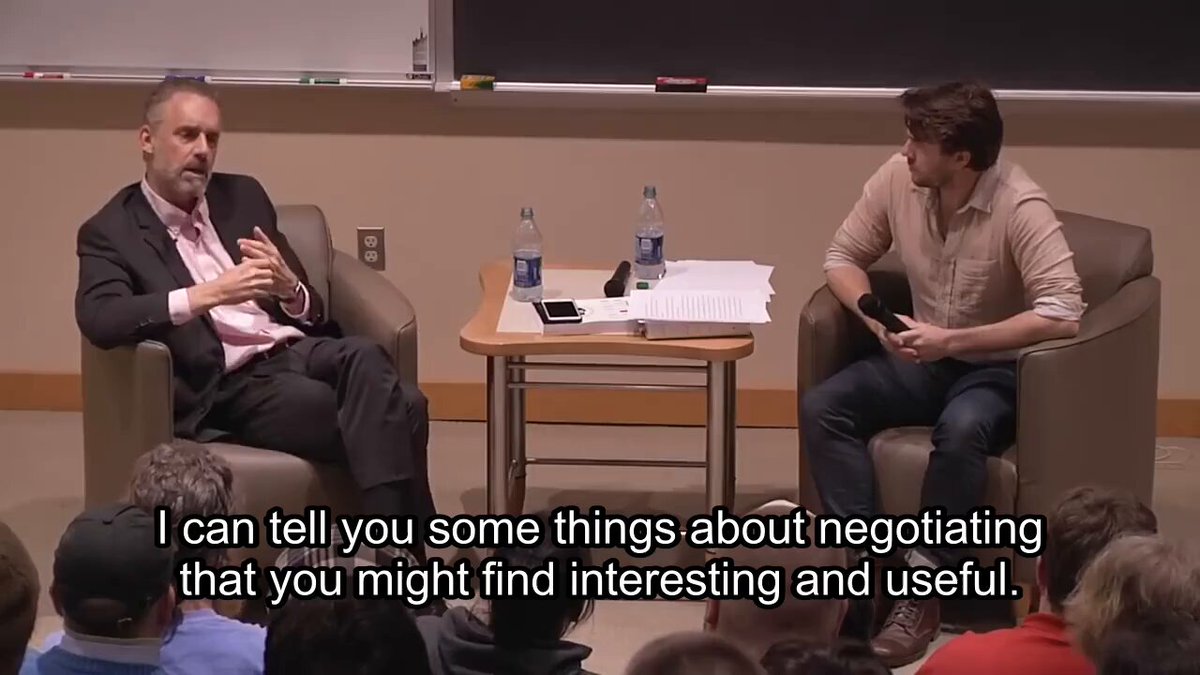
A young man sees someone drive by in a Ferrari with a blonde. He thinks: that guy has everything. Jordan Peterson says look closer. "The woman in the car is a prostitute with a cocaine addiction. Her life is one catastrophe after another." "He's had to lie and cheat his way into this position. He's afraid everything's going to come crashing down on him." "And that's what you're jealous of." He spent 15 minutes explaining what we're actually built for: "We view ourselves as built for pleasure. For consumption. For safety. For egotistical self-aggrandizement and fame." "What are we actually built for? Maximal challenge." "We're built to walk uphill. When you reach the pinnacle, you want to stop and appreciate the vision. But the next thing you want is a higher hill in the distance." "It's from the uphill climb that we derive our value." This is why young men disappear into video games. "That's all acted out in the video game. The active warrior moving uphill with sword in hand. That's dynamic. That's exciting." "They have to act that out in their own life. Video games are not a substitute for life." Start where you are. Even if it's embarrassing. "Humility is starting where you are. If your life is a mess, you have to see that you're the person in that mess." "Your first attempt to fix it might not be something you're particularly proud of." "I saw this in my clinical practice. The first steps people had to take were pretty embarrassing. They'd think: really? That's all I can do?" "Hey, man. Uphill is better than downhill." Here's what most people don't understand about momentum: "You accrue success exponentially. You accrue defeat exponentially too." "Start going downhill, you go downhill faster and faster. Start going uphill, you go uphill faster and faster." "Even if you have to start painfully small, it doesn't matter." Everyone wants confidence. But self-esteem is a lie. "Self-esteem doesn't even exist. It's a pathological concept altogether." "You want confidence that's based in competence. Otherwise it's narcissistic." "How do you develop that? You watch yourself exceed your limits." "And then you think: there's something in me that can exceed my limits. That's your true self." You want a goal you can never fully attain. "Almost all the positive emotion we feel, especially the emotion that fills us with enthusiasm, is experienced in relationship to a goal." "You want a horizon of ever-expanding possibility." "People stake their soul on attaining an instrumental goal. Then they get there and think: now what?" "The answer can't be: I'm going to live in the lap of luxury and never have to do anything." "What do you want to be? A giant infant with a gold bottle? You never have to do anything but lay on your back and suck." "No. You want to be an active warrior moving uphill with your sword in hand." Now here's the dark part: "You need to contemplate your own malevolence. Because you're not only who you are. You're who you could be. For better or worse." "I think it's easier to understand who you could be if you were better once you deeply understand who you could be if you were worse." "You think: I'm way deeper on the negative end than I thought. Much more closely aligned with the forces of hell than I presumed." "That's easy to swallow factually. Not so easy to swallow emotionally. It's a bitter pill." "I don't think you can contemplate the good without contemplating the evil first. It doesn't have the depth." "Fear of God is the beginning of wisdom." Many of his clients are too agreeable. They let everyone else win. "They're resentful and don't know how to stand up for themselves. They're very compassionate by nature. If you're negotiating with them, they'll let you win." "That's not good. You need to win too." "You cannot negotiate unless you can say no. And it causes conflict to say no." The solution sounds counterintuitive. "You have to develop your inner monster a little bit. And that makes you a better person, not a worse person." "It's weird. But that's just how it is." On privilege and how to pay for it: "Some cards are privilege. Maybe you're born intelligent. Symmetrical. Healthy. Into a culture where it's easier not to be deprived. Maybe your parents are rich." "All of that is unearned." "The way you pay for your privilege is with your virtue." "You expiate and atone by doing your best to live the best possible life you can manage. To speak the truth. To treat people with respect. To put your house in order." On envy: "Don't be so sure your position in your room is so damn trivial. It might be your attitude towards it that's trivial." "If you're in dire circumstances, look at how much opportunity you have to make things better." "You don't even want it to be easy."

Jaynit

400,000 Aufrufe • vor 3 Monaten

There's lots of diet vlogs on TikTok and a lot of them are interesting. I genuinely enjoy seeing improve themselves. There are also a lot of ups and downs. Many people are doing keto, carnivore and OMAD (One meal a day) What i'm noticing is that not many of them are doing actual heavy calorie restriction. When you don't have much to lose, it's good to take it slow. Preserve muscle mass, etc... when you're 350-500 lbs, you sort of stop having the luxury of taking it slow. At these weights, you're running on borrowed time. This guy seems like a nice enough fella, so I'm not going to rag on him because he's trying, but what he's doing is not optimal. He appears to mainly be an OMAD dieter, with his videos posting gigantic meals. OMAD works for some people on the basis of calorie restriction. There simply isn't room in your stomach to overeat as much. This plate in the video is gigantic though, even with a higher BMR calorie wise, that still is a lot. What people don't realize is that dieting sucks. It's not fun. The eating to get fat part is the "fun" part. The losing the fat is not fun. When you're over 400 lbs, you're a ticking time bomb. You don't have the luxury of being easy on yourself. You aren't going to starve to death. It's ok to be hungry. Your calories should be dramatically lowered and you shouldn't shoot for losing a lb or two a week. You're fighting FOR YOUR LIFE. There's no reason you should be gaining weight on a weight-loss journey. At a high starting weight you should have it melting off you. You're worried about losing muscle? You're concerned if you lose some muscle mass that your metabolism will slow down a little? It will, but you'll counteract that and then some by eating like you weigh 150 lbs. You don't need a specialized diet. You need to just drastically reduce your calories, eat whole foods and move around each day. You're hungry? Good, that means you aren't overeating. Go for a walk. This only applies to people grossly overweight. Stop worrying that you're becoming catabolic like you're a bodybuilder cutting for a show. You aren't losing a ton of muscle that you built in the gym. Once you get the weight off, you can start building the muscle back and then some. If you're in a caloric deficit, you are going to lose muscle. I'm not natural and at a caloric deficit, I'm still burning some muscle. It's just how it is. Stop falling for gimmicks and specialized diets plans. If you're morbidly obese, look at what a normal sized person eats and mimic them and watch the scale drop. Then walk in your free time. It's that simple.

9mmSMG

16,498 Aufrufe • vor 3 Monaten