Loading video...

Video Failed to Load

Go Home

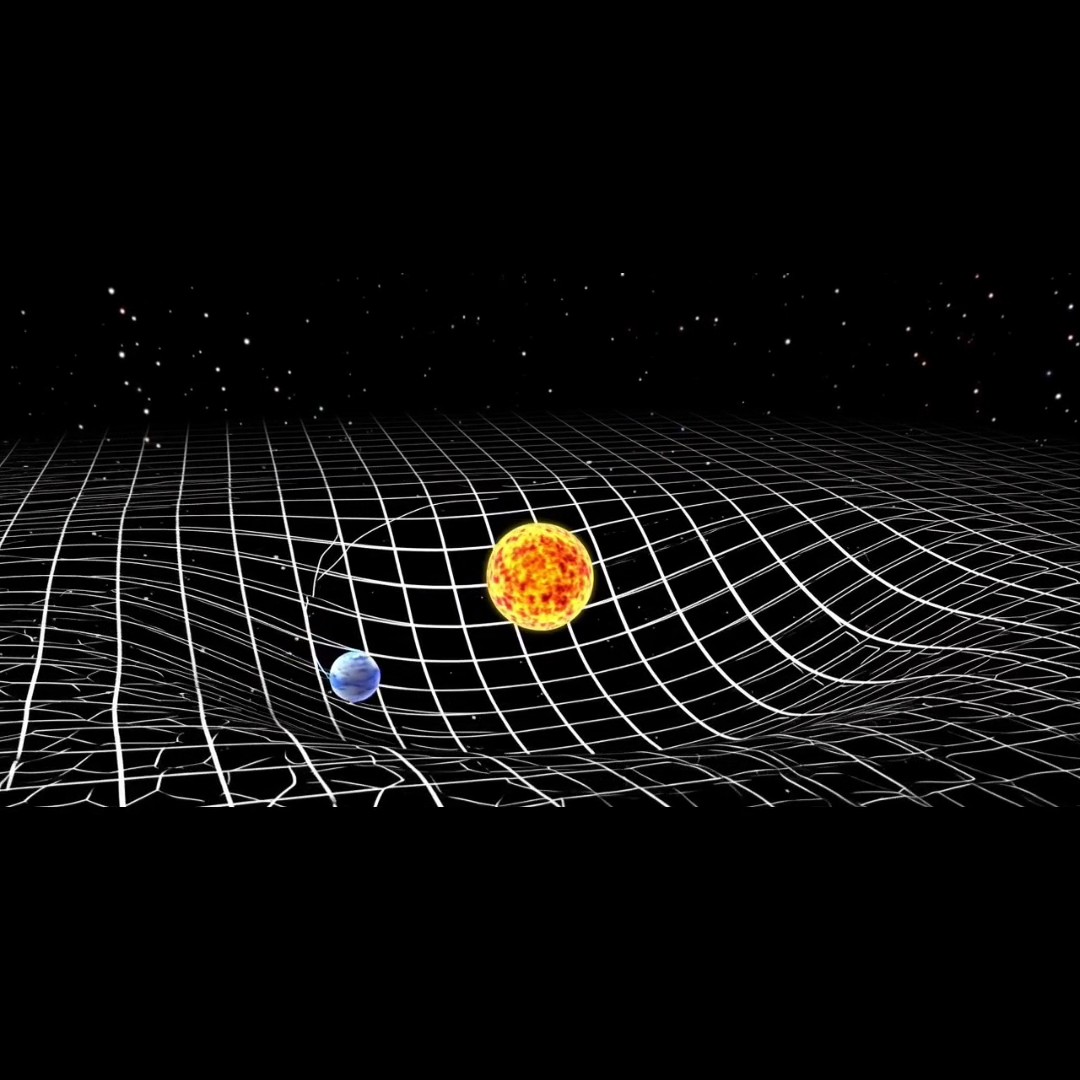
I actually think there’s other reason why people should learn higher math, is that it’s very beautiful | From the Egyptians measuring the land along the Nile to NASA calculating trajectories across millions of miles of empty space, mathematics has followed humanity wherever we have dared to go. It...

593,100 views • 1 month ago •via TikTok

0 Comments

No comments available

Comments from the original post will appear here

Related Videos

We’re probably living in the galactic boondocks — and even if aliens have already built a “galactic internet,” we almost certainly can’t join it. Japanese astrophysicist Koji Tsumura from Tohoku University decided to test one of the boldest ideas out there: what if other civilizations in the Milky Way don’t just exist, but have already been searching for each other and built a shared communication network? How realistic is it for our civilization to connect to that network? The answer is pretty grim: almost impossible. Why almost no one can hear us There are billions of Sun-like stars in the Galaxy, and millions of them should have planets in the habitable zone. The classic Drake equation suggests there ought to be a lot of intelligent civilizations. But then we run into the famous Fermi paradox: “So where is everybody?” Tsumura started from the most optimistic scenario — civilizations exist, they’re active, and they’ve already built a galaxy-wide network. Even then, everything depends on location. The galactic habitable zone isn’t the entire Galaxy; it’s a relatively narrow band where three things line up: - enough heavy elements to form planets, - stars that live long enough, - and not too many nearby supernovae sterilizing everything around them. Modeling showed that the most densely populated part of the Galaxy is probably about 3,000 light-years closer to the center than the Solar System. We’re sitting roughly 26,000 light-years from the center — on the rather distant periphery. Out in these “suburbs,” the chances of plugging into a shared network are essentially zero. Either there are simply too few civilizations for a network to exist at all. Can we at least detect anyone? Detecting even one extraterrestrial civilization is theoretically possible, but only if it: - exists at the same time as we do, - is deliberately beaming a signal toward the Sun, - and is doing so in a way we can actually notice. According to Tsumura’s calculations, the fact that we still haven’t heard anyone means there’s a 35–38% chance that there really is nobody within about 6,000 light-years of us. But there’s a 61–65% chance that civilizations do exist — we just can’t detect them for some reason. In other words: our cosmic loneliness is not yet proof that the Milky Way is empty. We might simply be sitting in a quiet neighborhood where signals either don’t reach us or arrive too weakly to notice. The study is available on arXiv (arxiv org/abs/2610.20475).

Black Hole

109,493 views • 5 days ago

This is an EEG cap. EEG stands for electroencephalogram. It is a soft cap with sensors placed across the scalp to help doctors and researchers measure and record brain activity. It does not put electricity into the body. It does not shock you. It is used to help doctors and researchers better understand how the brain is functioning. EEGs can be used in hospitals, neurology offices, sleep studies, and research settings to learn more about things like seizures, sleep, attention, development, and other patterns of brain activity. When my family first saw this, they panicked. And honestly, I understand why. A lot of Black families do not come from a history of automatically trusting the medical system, research, or anything that looks unfamiliar, technical, or experimental. That fear did not come out of nowhere. Black people in this country have a real history of being experimented on, mistreated, ignored, misdiagnosed, undertreated, and left out of ethical care. So when some people see a child in a cap like this, they are not just reacting to the cap. They are reacting to generations of fear, mistrust, pain, and survival. And that history matters. It should be acknowledged honestly. There were times in this country when African Americans were used for medical advancement without full consent, without dignity, and without proper protection. There were times when Black bodies were treated as if they were available for use instead of worthy of care. That history should never be brushed aside, laughed off, or treated like Black people are “doing too much” for asking questions. We have every right to ask questions. We have every right to understand what is being done, why it is being done, and how it is supposed to help. But there is another side to this too. Today, there are also voluntary research studies where people choose whether or not to participate. They are told what the study is about, what it involves, what the risks are, and whether they want to say yes. That is very different from being used against your will. Voluntary research is one of the ways doctors and scientists learn how to better understand the body, the brain, diseases, development, treatments, and outcomes. It is one of the ways medicine moves forward. And the truth is, if Black people and other underrepresented groups never participate in research, then we risk being left out of the very knowledge that is supposed to help all of us. If studies only reflect one kind of person, one kind of background, or one kind of body, that leaves gaps. Different ethnic backgrounds, family histories, environments, and lived experiences all matter. Representation in research matters for the same reason representation matters everywhere else: because human beings are not all exactly the same, and good science should reflect the people it is meant to serve. That does not mean people should blindly trust everything. It does not mean people should stop asking questions. And it definitely does not mean history should be forgotten. What it does mean is that we have to learn how to tell the difference between unethical harm and ethical participation. We have to know when something is truly dangerous, and when something just looks unfamiliar. We have to be informed, not just reactive. For my family, this was a moment of learning. What looked scary at first was actually a tool used to help researchers understand brain activity. No pain. No electricity going into the body. Just information being gathered in a way that can help doctors and researchers learn more. So yes, I understand the hesitation. I understand the history. I understand the fear. But I also understand that staying absent from every conversation, every study, and every opportunity to be represented does not necessarily protect us. Sometimes it just leaves us out. That is why I wanted people to hear the researchers for themselves and see a little more of the human side of what was happening here. #inclusionmatters #fyp

Victory for Victor and Family

39,300 views • 7 months ago

I think a big mistake is believing that if something is here, we should be able to see it. Right? The lights in the sky and the pilots or the gods or whatever they are? I think we assume out of arrogance and ego. An insect can crawl across your hand and never understand that you are a whole entire being. It only experiences pressure, heat, vibration, and movement. A fingertip appears. A shadow passes. The insect never sees the body attached to it. The insect does not have access to the full image. Ever. I think our situation may be exactly the same. Whatever people call the phenomenon, nonhuman intelligence, gods, or something else entirely, may be present in full while we only register a portion of it. We notice effects, not the actual being. Changes in perception. Anomalies. We expect a face when all we are capable of sensing is the fingertip. Let me explain. Reports are always partial and strange. Lights, shapes, impressions, symbols, missing time, pressure, fear, calm. None of it ever shows us a full being, or the real craft; because our senses are not built to assemble it. Just like the ant cannot assemble a human from a few sensations. Now that doesn't mean what we are seeing is fake. It means the insect’s world is smaller than the thing interacting with it. I get sick of people saying there is no there there, I think they are making the same mistake the insect would make. Our reality is likely a thin slice of what actually exists. We move through a world full of forces and intelligences that exceed our resolution. We are not seeing nothing. We are seeing effects. And effects are often the only honest proof a limited observer ever gets.

Jason Wilde

12,125 views • 9 months ago