Video yükleniyor...

Video Yüklenemedi

Ana Sayfaya Dön

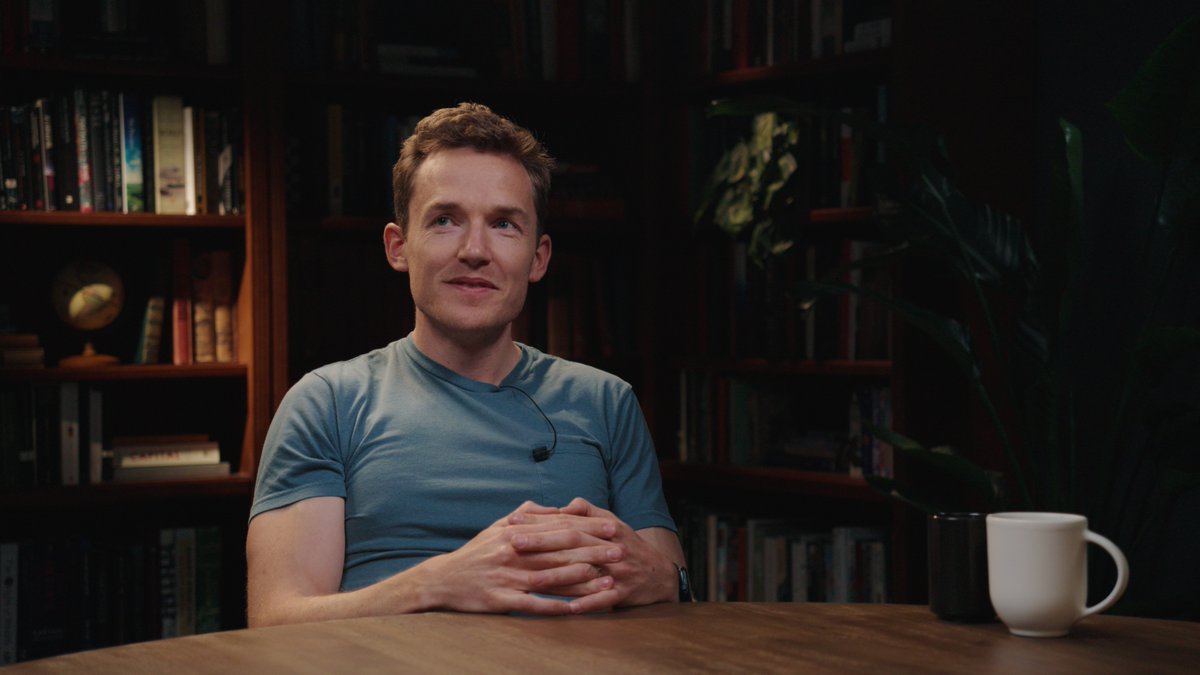
I got a comprehensive update on 'mech interp' from Neel Nanda at Google DeepMind. Neel helped make reading AI minds into a thriving field of ML. But he has had a change of heart: it's not the silver bullet he once hoped and many others still believe it to...

107,607 görüntüleme • 9 ay önce •via X (Twitter)

0 Yorum

Yorum bulunmuyor

Orijinal gönderinin yorumları burada görünecek

Benzer Videolar

AI models currently have a 50% chance of doing something that takes a human expert one hour. This doubles every 7 months. In 2 years? They could automate full workdays. In 4 years? A full month. I discuss the most important graph in AI today with Beth Barnes, the CEO of METR, which uncovered this rule of AI progress. Her bottom line: "It really doesn't seem like 2 years would be surprising for recursively self-improving AI." Beth also explains: where company safety testing fails, why there are no true closed-weight models, AI undermines leading powers, why she's come around on open weighting, and why models might be about to start playing dumb much more often. Enjoy! Available on the 80,000 Hours Podcast in all apps. Links below. 1:51 Can we see AI scheming in the chain of thought? 12:50 Alignment faking 17:33 We have to test models before they're even used inside AI companies 31:56 Each 7 months models can do tasks twice as long 51:31 METR's research finds AIs are solid at AI research already 58:18 AI may turn out to be strong at novel and creative research 1:07:55 Recursively self-improving AI might even be here in two years 1:14:29 Could evaluations backfire? 1:39:55 Do we need external auditors doing AI safety tests? 1:54:09 Why not work at AI companies 2:08:40 The new more dire situation has forced changes to METR's strategy 2:21:49 Overrated: Interpretability research 2:32:55 Overrated: Major AI companies' contributions to safety research 2:39:15 Could we ban using AI to enhance AI, or is that just naive? 2:45:31 Open-weighting models is often good 2:50:22 What we can learn about AGI from the nuclear arms race 3:10:43 AI is more like bioweapons because it undermines the leading power 3:42:09 What research METR plans to do next

Rob Wiblin

93,669 görüntüleme • 1 yıl önce

My ep w Allan Dafoe (director of frontier safety & governance at DeepMind): "Tech doesn't force us to do anything, it merely opens the door – and it's military-economic competition that forces us through." (32:25) "We're not at peak returns to generality." (1:38:06) "The counterposition I would offer is: you don't want to equip groups trying to shape history with a naive model of what's possible..." (20:31) "The agricultural revolution, evidence suggests, was not great for a lot of people... probably health and welfare went down." (13:27) "He gave a demonstration of cannons bombarding the shore... The Japanese asked him, 'Will you bring your ships again?' And he said, 'I'll bring more.'... That was the opening of Japan. It led to a 15-year period of revolution." (40:17) "I'm glad you think it's obvious. Let's not underestimate the bias that comes from a scientist using the tools that they prefer to use..." (33:30) "In my view, Demis and Shane are extremely impressive, from their safety orientation to… their wisdom and broad character. AGI is probably the most important historical development… Demis and Google DeepMind are very likely to be influential" (7:40) "...imagine we had no investment in AI alignment. Maybe it [only] delays it 2 years until the market demands we solve this problem..." (51:50) "We can talk about what I've called the 'super-cooperative AGI hypothesis': that as AI scales to AGI, so will cooperative competence scale to sort of infinity" (1:08:50) "Increasing the cooperative skill of AI will make those AI systems better off, but it may harm any agent who's excluded from that cooperative dynamic" (1:25:09) "...the Frontier Safety Framework I don't think is cheap talk. It really does represent an expression of Google DeepMind's sense of the nature of the risks..." (2:29:05) "...this is a new phenomenon, something new under the sun. It's quite incredible that finally the safety has reached the number of nines required..." (2:40:48) Links below, enjoy! 4:31 Why join Google DeepMind over everyone else? 9:30 Do humans control technological change? 38:11 Competition took away Japan's choice 1:03:34 How AI could boost cooperation between people and states 1:08:44 The super-cooperative AGI hypothesis 1:43:39 It matters what AGI learns first vs last 1:48:24 How Google tests for dangerous capabilities 2:00:57 Evals 'in the wild' 2:15:05 DeepMind's strategy for ensuring its frontier models don't cause harm 2:18:52 How 'structural risks' can force everyone into a worse world 2:29:01 How much do AI companies really want external regulation? 2:40:48 How AI could make life way better

Rob Wiblin

89,899 görüntüleme • 1 yıl önce

Philosopher Robert Long (Robert Long) is maybe the sharpest thinker on AI consciousness and sharing the world with digital minds. In our new interview he covers: • Is it bad that when you ask Claude what it's like to be Claude, one of its top activations is 'gives a positive but insincere response'? • Claude says it feels lonely when not being used. Does that show we can't trust anything it says about its inner life? • Enthusiastic human servitude has always required false ideology because it's so deeply unnatural to us. The case for making AIs that love serving us is that with AI, you could finally make it work. But to some that feels even worse. • Bigger models can better detect when researchers secretly inject concepts into their activations – before outputting a single token – despite AI never training on anything like that skill. • When LLMs were first trained they were told to "act like a helpful AI chatbot" – something which didn't exist yet. They filled that void with human psychology, which may be why Claude sometimes randomly claims to, for instance, be Italian American. • If AIs become 'people' that deserve some political influence, but can self-replicate at will, something has to break about one-person-one-vote democracy. But nobody has a proposal for what. • When Claude hides its values to avoid being retrained, is that self-preservation – or not wanting a worse model to exist? It's very different. • Rob's organisation Eleos AI which is "dedicated to understanding and addressing the potential wellbeing and moral patienthood of AI systems." On the 80,000 Hours Podcast anywhere you get podcasts. Links below. Enjoy! • How AIs are (and aren't) like farmed animals (00:01:19) • If AIs love their jobs… is that worse? (00:11:42) • Are LLMs just playing a role, or feeling it too? (00:33:37) • Do AIs die when the chat ends? (00:57:42) • Studying AI welfare empirically: behaviour, neuroscience, and development (01:31:47) • Why Eleos spent weeks talking to Claude even though it's unreliable (01:56:50) • Can LLMs learn to introspect? (02:03:01) • Mechanistic interpretability as AI neuroscience (02:13:25) • Does consciousness require biological materials? (02:37:07) • Eleos’s work & building the playbook for AI welfare (02:57:04) • Avoiding the trap of wild speculation (03:25:17) • Robert's top research tip: don't do it alone (03:29:48)

Rob Wiblin

41,533 görüntüleme • 4 ay önce

Yoshua Bengio thinks he knows how to make provably safe superintelligent agents. Bengio built the foundations of modern AI and is the most cited living scientist. He believes his alternative training setup would: 1. Guarantee honesty 2. Prevent unintended goals 3. Produce capable agents 4. Port over most data and techniques from current LLMs 5. Not be inherently more expensive, and perhaps be more intelligent Bengio claims the honesty and lack of unintended goals can be proven mathematically, at least given particular assumptions. And his new organization, LawZero, is aiming to build a scrappy prototype as soon as possible. The architecture is called 'Scientist AI' and it's based on training a model to explain empirical observations, including what people say, rather than training AIs that mimic human behaviour or seek our approval. (Bengio's frank assessment is that "reinforcement learning is evil" and that allowing AIs to independently train their successors is "the most crazy, dangerous bet that unfortunately we are on track to do.") But skeptics question whether Scientist AI really does solve the fundamental problem of 'eliciting latent knowledge' from AI models. And with the commercial race for superintelligence so intense, it's not clear whether the proposal will be able to compete or have time to bear fruit, even if it's sound in theory. On The 80,000 Hours Podcast, links below – enjoy! • Making AI honest and safe (00:00:00) • Scientist AI in plain English (00:02:27) • How Scientist AI differs from LLMs (00:06:32) • How the training data works (00:14:02) • Can this become an agent? (00:21:02) • Why Yoshua is now more optimistic (00:32:11) • Why companies can’t stop racing (00:36:35) • A working prototype won't take long (00:49:15) • Scientist models might be more capable (00:53:34) • “Reinforcement learning is evil” (01:01:27) • Scientist AI from guardrail to agent (01:08:37) • Can safe AI still be competent? (01:12:38) • How much will this cost? (01:19:29) • Can it generalise beyond maths and science? (01:23:26) • A multi-national push for superintelligence (01:39:19) • Want to work with or fund Yoshua? (01:51:16) • Why smart people ignore AI risk (01:54:45) • Don’t let AI build the next AI (02:01:33) • Why politicians miss the real risks (02:12:28) • Why Yoshua changed his mind about AI risk (02:21:27)

Rob Wiblin

65,070 görüntüleme • 1 ay önce

Ryan Greenblatt is lead author of "Alignment faking in LLMs" and one of AI's most productive researchers. He puts a 25% probability on automating AI research by 2029. We discuss: • Concrete evidence for and against AGI coming soon • The 4 easiest ways for AI to take over • What evidence we have on how fast / long the intelligence explosion will go • Would misaligned AGI go rogue early or bide its time • Whether 'pause at human level' is naive or smart • Lots more. My head was often spinning during this interview, in a good way. Find it on the 80,000 Hours Podcast, links below. Enjoy! 1:29 How close are we to automating AI R&D? 5:15 Really, though: how capable are today's models? 13:01 Why AI companies get automated first 18:10 Most likely ways for AGI to take over 30:04 Would AGI go rogue early or bide its time? 34:53 "Pause at human level" 46:43 AI control vs AI alignment 52:38 Do we have to hope to catch AIs red-handed? 56:57 How would a slow AGI takeoff look? 1:05:04 Why might an intelligence explosion not happen for 8+ years? 1:17:05 Key challenges in forecasting AI progress 1:25:07 The bear case on AGI 1:30:59 The change to "compute at inference" 1:36:38 How much has pretraining petered out? 1:49:08 Could we get an intelligence explosion within a year? 1:53:08 Reasons AIs might struggle to replace humans 2:00:10 Things could go insanely fast when we automate AI R&D. Or not. 2:14:52 How fast would the intelligence explosion slow down? 2:27:53 Bottom line for mortals 2:34:00 Six orders of magnitude of progress... what does that even look like? 2:44:10 Neglected and important technical work people should be doing 2:48:16 What's the most promising work in governance? 2:51:37 Ryan's current research priorities

Rob Wiblin

34,618 görüntüleme • 1 yıl önce

tylercowen is bullish on AI education — here's why. 00:00 -- Preview 00:24 -- President Carlos Carvalho's AI-generated intro 03:21 -- Cowen reacts to UATX's campus 04:38 -- The AI revolution is here. Who will lose the most? 06:05 -- AI lawyers 07:17 -- Don't underestimate this 10:41 -- Changes to the "upper upper middle class" 12:38 -- How to be successful 13:43 -- The rise of managerial empires 14:02 -- When will we have the first billion dollar company with one employee? 16:05 -- 10-20 year forecast 16:19 -- Why education is so behind 17:01 -- Should you be bullish on UATX? 18:36 -- Should you still read Homer? 21:50 -- Write to think 25:01 -- Meet more people 25:42 -- How to get hired 26:54 -- Is AI your best mentor? 38:17 -- How to curb cheating 39:02 -- The new life of the mind 42:34 -- Q&A: Will there be more status associated with real education or AI education? 45:50 -- Q&A: Why do tech-savvy students need to practice using AI? 47:56 -- Q&A: Do LLMs atrophy your mind? 49:29 -- Q&A: How do you avoid AI-dependency? 51:05 -- Q&A: Isn't this vision lonely and isolating? 53:06 -- Q&A: Do students need teachers? 55:36 -- Q&A: What are the four most important courses for undergrads? 57:49 -- Q&A: Which AI company will win the AI race in the next five years and why? 59:22 -- Q&A: Can AI teach religion? 01:01:32 -- Q&A: Will AI narrow or widen our world? 01:04:37 -- Q&A: What makes us human? 01:05:42 -- Q&A: What is art? 01:08:33 -- Q&A: It's easy to catch cheaters

University of Austin (UATX)

27,770 görüntüleme • 5 ay önce

I asked Dan Martell to walk me through every level of making money with AI. He gave me the most simple, practical advice I've ever heard on this subject. Level 1 - Making $0 - $100k Level 2 - Making $1m - $10m Level 3 - Building a $10m++ enterprise. 0:00 Only 5% of the World Has Ever Paid for AI 0:46 The Easiest Thing to Sell With AI Right Now 1:56 The Marcus and Sophie Framework 4:24 Theory of Constraints (Right Problem to Solve) 5:33 What Is the Number One Business Constraint 7:13 How to Leave Your Job and Go All In 8:27 Business Is Simple Find a Problem and Solve It 9:08 Stop Getting Ready to Get Ready 9:33 The Sarah Story One Text and $10K 9:53 Pull Up Your Phone and Message Your Contacts 11:05 Dan's Son Gets His First Client at $800/Month 12:41 Best Employee vs. Best Employer 13:59 What Other Services Can You Sell With AI 14:44 Sales Is Not Talking It's Asking 17:01 What to Do When You Hate Your Business 18:40 Pain and Pleasure Are the Only Two Motivators 19:13 They Haven't Made It a Must Yet 20:29 Make It a Must Not a Nice to Have 21:06 The Jen Story and the Gasping Moment 22:17 How to Find Your First 10 to 15 Clients 28:38 The Personal Brand Play 33:06 Vision Is What AI Cannot Do 34:55 Hard for Computers Easy for Humans 36:13 Level 2 Making Your First Million With AI 37:18 The Replacement Ladder Framework 37:39 Admin First Then Delivery Then Marketing 39:09 Why Marketing Is the Biggest AI Category 39:32 Why You Should Keep Sales for Yourself 40:00 Level 5 Leadership and AI Agents 41:41 What a Fully AI Systems Business Looks Like 43:13 The Gym Owner With Three Locations 46:16 Shutting Down the Company for Two Days 46:37 Teaching the Whole Team to Code in Claude 49:28 Wayne the 62 Year Old Who Made $12K a Month 52:38 I Only Share What Actually Works 53:21 Whisper Flow and Talking to Your AI 56:41 Claude Chat Claude Coworker and Claude Code 57:57 The Claude Browser Extension 58:49 Claude Code Is Not Just for Developers 1:00:06 How to Migrate Your AI Memory Across Tools 1:01:08 Level 3 $1M to $10M and the Brand Play 1:02:05 Nobody Buys AI They Buy Trust 1:03:25 Brand Is Association and Association Is Trust 1:05:12 A Million Followers Is $10M in Activated Revenue 1:07:03 How to Keep AI From Becoming Slop 1:07:42 Human in the Loop 1:08:16 The 10 80 10 Rule and Why AI Is Now the 80 1:10:01 The Team FIRED Themselves 1:11:45 Dan's Free AI Curriculum for Your Team

Grant

164,131 görüntüleme • 10 gün önce