Loading video...

Video Failed to Load

Go Home

I JUST BROKE DOWN THE REAL NUMBERS ON TRUMP'S TARIFFS Everyone expected tariffs to reduce the current account deficit and restore US jobs. But the numbers tell a different story. China just posted a $1.2 trillion trade surplus in 2025. The biggest in history. Up 20% from 2024. And...

90,615 views • 6 months ago •via X (Twitter)

0 Comments

No comments available

Comments from the original post will appear here

Related Videos

Trump just pulled off one of the smartest dealmaking moves in tech history. And Nvidia + China are both getting played. Let me explain... December 2025: Trump announces Nvidia can sell H200 chips to China. BUT the US government takes 25% of every sale. Not a 25% tariff. 25% OF THE REVENUE goes to US Treasury. Jensen Huang celebrates. Stock rallies. January 14, 2026: Commerce Department publishes the REAL terms. Chips manufactured in Taiwan have to TRANSIT through the US for "third-party verification." When they enter US soil? 25% tariff gets applied. So Nvidia pays 25% tariff to import their own chips. THEN Trump takes 25% of the sale price when they ship to China. Nvidia's getting hit TWICE. The math is crazy: H200 costs $30k to make. Nvidia sells for $50k. 25% tariff entering US = $10k to government 25% of sale to China = $12.5k to government Total to US: $22.5k per chip Nvidia's margin: Drops from 70%+ to maybe 15% Chinese companies ordered 2 MILLION H200 chips for 2026. But Nvidia only has 700,000 in inventory. $22,500 × 700,000 chips = $15.75 BILLION to US Treasury. From ONE deal. With ONE company. Now here's where it gets insane... China isn't actually approving these imports. Chinese state media called H200 chips "unsafe." Cyberspace Administration is blocking purchases except for "exceptional circumstances." So Trump negotiated a deal where: - Nvidia thinks they're getting China market access - China's government is quietly blocking the imports anyway - US Treasury collects billions on the few that do get through - Trump gets to claim he's "tough on China" AND "supporting American business" This move kinda makes sense if you think about it. Supreme Court is about to rule Trump's IEEPA tariffs are illegal. That's the $130 billion refund bomb. Trump needs NEW revenue sources to replace tariff income when that ruling drops. So he invents a completely new structure: Not a tariff (court can't overturn). A "licensing fee" (executive authority). On chips that are "national security sensitive" (unchallengeable). This is the blueprint for Tariffs 2.0. When Supreme Court kills IEEPA authority Trump just pivots to "licensing fees" on every strategic export. Can't challenge it as a tariff because it's not a tariff. It's a "condition of export approval." The semiconductor industry just became Trump's test case. And Nvidia walked right into it because Jensen spent 6 months lobbying for "market access." Meanwhile China's playing the long game: They're not approving H200 imports. They're forcing their companies to use domestic chips (inferior but improving). Accelerating DeepSeek-style efficiency research. Building AI models that work on weaker hardware. In 2-3 years, when Chinese chips catch up, they won't need Nvidia at all. And Trump's "$15.75 billion windfall" becomes $0. But by then he'll have established the legal framework to extract licensing fees from every other strategic export. Everyone thinks Trump's negotiating strategy is "chaos." But look at what he actually accomplished: Created legal precedent for non-tariff trade fees that survive Supreme Court challenges. That's not chaos. That's calculated. What happens next: Supreme Court rules (next 2 weeks). Trump loses on IEEPA tariffs. $130B refund chaos begins. Trump immediately announces "licensing fee" structure for 10 other export categories. Uses Nvidia deal as proof it "works." Markets freak out as every exporter realizes their margins are about to get crushed. China continues blocking H200 imports while building domestic alternatives. Nvidia's stock craters when 2026 guidance shows China revenue never materialized. And Trump goes into 2027 with a completely new trade policy framework that's legally unchallengeable. Everybody's focused on the tariffs. Nobody's watching the licensing fees. This is actually genius.

Ricardo

44,349 views • 6 months ago

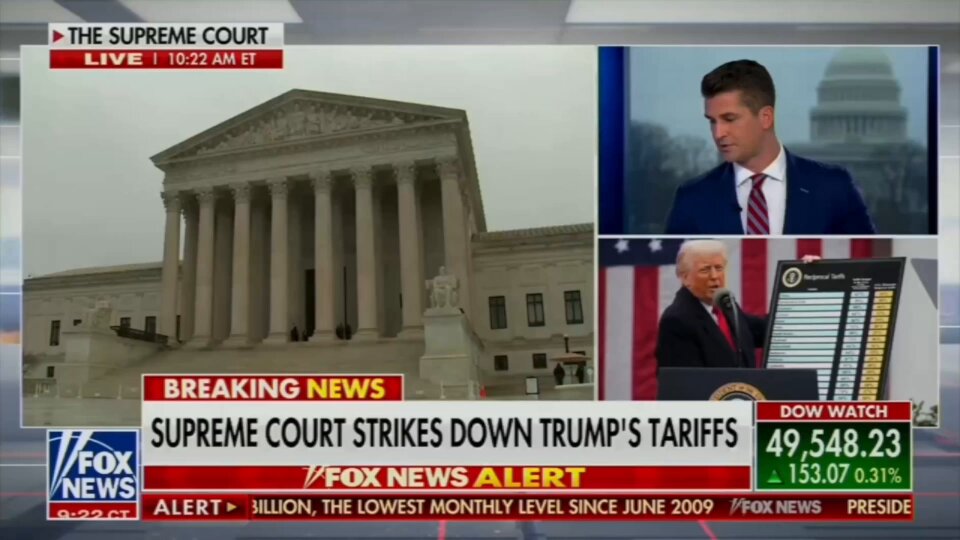
Businesses in America have moved quickly and are now demanding refunds for the tariffs they paid after the pronouncement by the United States Supreme Court that Donald Trump’s tariffs were illegal. So this is how the tariffs worked. If you imported goods from South Africa and there was an illegal 30 percent tariff on them, the company importing the goods from South Africa would have had to pay that 30 percent tariff to the American government and then pass that cost on to the consumer. For instance, if an American company ordered a bottle of wine from South Africa and there was a 30 percent tariff on it, which the Supreme Court has now pronounced illegal, and that bottle cost US$1 to import, once it reached America the importer would have to add the 30 percent tariff, taking the cost to US$1.30. The importing company would then add its own margin, say another US$0.30 as profit. Ordinarily, without the tariff, that bottle might have retailed at around US$1.30, but because of the additional 30 percent tariff, it would end up costing the consumer about US$1.60. In effect, the 30 percent tariff was passed directly on to the consumer through higher retail prices. What American businesses are now saying is that they want that 30 percent tariff refunded. So the company that imported the bottle of wine from South Africa and sold it for US$1.60, comprising 30 percent tariff and 30 percent profit, now wants the tariff component returned to them. How consumers themselves will be reimbursed, if at all, remains unclear, and that is likely to become the next area of legal and commercial contestation. Meanwhile, American media is reporting that Donald Trump has gone into meltdown after the Supreme Court delivered this important ruling, which many had already predicted because it was clear to numerous legal experts that the tariffs were unlawful. Only his most loyal supporters insisted that the court would uphold them. The decision has triggered not only political shockwaves in Washington but also significant financial and legal consequences, as businesses begin positioning themselves to recover the money improperly collected by Trump’s government.

Hopewell Chin’ono

42,592 views • 5 months ago

Trump claims tariffs will make America rich again, but that’s not how it works. Tariffs aren’t paid by other countries—they’re paid by Americans. It’s not a tax on countries like China; it’s a tax on the stuff we buy. Here’s how it works: when the government puts a tariff on something, it raises the price of that product. The idea is to make imported goods more expensive so people buy American-made products instead. Sounds good, right? The problem is, most things we use in the U.S. are made overseas, and it would take years—or even decades—to make them here. And in some cases, it might never happen because it costs too much to produce those goods locally. For example, if something costs $50 and a tariff adds $5, the new price is $55. That extra cost comes out of your pocket. This can cause inflation, making everything more expensive, and people either stop buying or have to spend more because there are no cheaper options. So, who gets the money from tariffs? The U.S. government collects it, but it’s not paid by China or any other country. It’s paid by you—the American consumer. The U.S. can’t tax other countries directly, so the burden falls on taxpayers here. Tariffs can work if the product being taxed is already made in the U.S. For example, if China floods the market with super-cheap goods that hurt local manufacturers, tariffs can make those imports more expensive, giving American businesses a chance to compete. But slapping tariffs on goods we don’t make here—or won’t make for years—just makes things more expensive for everyone. That’s why no president has wanted to be known as a "tariff president." They knew tariffs are really just taxes on Americans and can backfire politically. If tariffs drive up prices and hurt voters’ wallets, it could mean big trouble in the next election. Republicans might certainly lose in 2026.

Simon Ateba

50,084 views • 1 year ago

Well, you were the mindless fool who started the trade war with China. First by the lie that they charged US 67% in tariffs, when in fact China was charging US, on average, only 18% in tariffs. US already chorded them more, the 25%, than what they charged us, after your first administration. And then you pushed another mother of all lies, that US is collecting a lot of money from China in tariffs, when in fact, China does not pay a single Dollar for any US tariffs at all, not even a single Dollar. US consumer pays all 100% of it. When any import shipment comes into US, a US broker gives a separate bill to a US receiver for all the duties and tariffs. The export Nation, or a company does not even handle the transaction, let alone actually paying anything. How do I know this ? Because I import myself for my business. I always pay 100% of the bill. And then I pass all 100% of it to my US customers. Any economist knows this very well. Only the President of the Untied States deceives all the American people that China, or any other foreign Nation, for that matter, pay for some tariffs. You are a lying bozo. None of them pay anything. All of us DO ! Tariffs effect only the volume of their business, as higher consumer prices result in reduced sales. But as far as actual payment, US consumer pays 100% of any import tariffs, with no exceptions. In any case, you better not be complaining now. You started this idiotic war, and you will have to eat it. And unfortunately, all of us will have to also. But China will get through this with, or without US. It will be US that will return to the stone age without China. On videos : 1. Walking through Guangzhou 2. Wuhan incredible metro station complex 3. A quick check of Ningbo City 4. Driving though downtown of Shenzhen

US_did_ 911

57,221 views • 9 months ago

Bessent: Don’t Need Trade Deal with China, We Make Revenues Off Tariffs, ‘It’s Not Broke’ | Ian Hanchett, Breitbart News On Tuesday’s broadcast of the Fox News Channel’s “Ingraham Angle,” Treasury Secretary Scott Bessent responded to a question on whether or not a trade deal with China is needed by stating that “China is, right now, the biggest revenue line in the tariff income” and remarking, “if it’s not broke, don’t fix it.” But Bessent also said there have been “very good talks with China” and he thinks there will be further discussions with them. Host Laura Ingraham asked, [relevant exchange begins around 8:30] “When do you expect that we will see movement on the China talks, and do we need a trade agreement with China, given how well the tariffs are working out?” Bessent answered, “Look, we’re very happy is — we had 20% — about 20, 25% tariffs in President Trump’s first term. We’ve added 20% fentanyl tariffs, 10% baseline tariffs. So, we’re at 50 or 55%. China is, right now, the biggest revenue line in the tariff income. So, if it’s not broke, don’t fix it. We have had very good talks with China. I imagine we’ll be seeing them again before November. They have a 10% tariff on us. They have started shipping the rare earth magnets, which we agreed to. We had put some countermeasures on them that we’ve taken off. So, I think, right now, the status quo’s working pretty well.”

Owen Gregorian

52,754 views • 11 months ago

Trump, the Dollar and China: What to watch for in 2025 Trump wants to boost exports, bring back American jobs from overseas and reduce the trade deficit. To achieve this he needs a weaker dollar. Trump also wants a strong dollar and will not brook any challenges to its near monopoly of international payments. Can he possibly have both? Trump’s Problem No.1: His announced tariffs will most likely boost the dollar as a result of increased uncertainty globally. Even if he slaps large tariffs on imports, the increase in the dollar’s value will eliminate the downward pressures on imports and the US trade deficit. Trump’s Problem No.2: His announced large tax cuts for the rich will boost the influx of foreign capital into the US, further boosting the dollar and the gap between domestic savings & investment, which is the root cause of the US trade deficit. Trump’s Problem No. 3: The near monopoly of the US dollar over international transactions is what ensures the paradox that, whenever things go bad in the US economy, the dollar rises. If Trump were serious about the US trade deficit, and his stated objective of wanting to push the dollar down to make US exports more attractive, he should want to end the dollar’s global dominance. But that would spell the end of the United States as a global hegemon – something Trump does not want to see happen on his watch. Perhaps what might work for Trump would be something similar to what Ronald Reagan did to Japan in the so-called 1985 Plaza Accords: he gave them the ultimatumn “appreciate your currency massively or face massive tariffs on your exports”. Can Trump do the same to China? China is no Japan – it will not roll over that easily. Talking of China, Beijing also faces a great dilemma in 2025 and beyond: · To stay put and play for time until the US internal contradictions play out? · Or to turn the BRICS into a Bretton-Woods-like system, with the yuan at its heart? Beijing has not made up its mind. In the next year, or years, we shall know the answers. Till then, be well.

Yanis Varoufakis

269,151 views • 1 year ago