Загрузка видео...

Не удалось загрузить видео

На главную

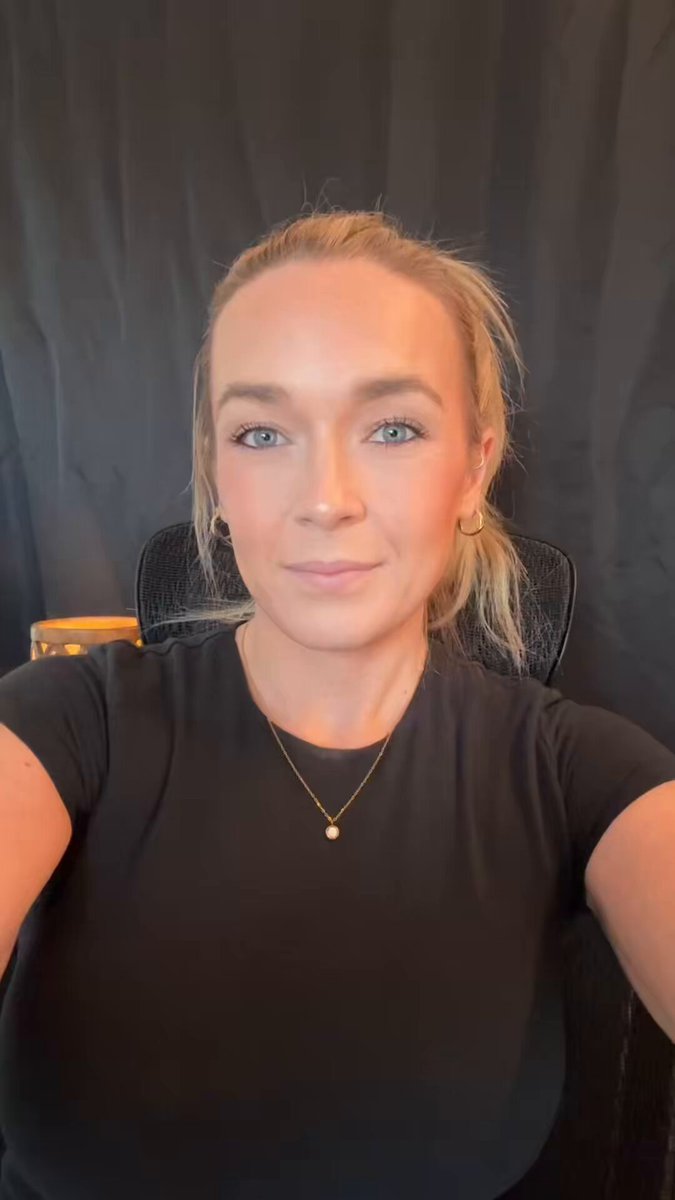
I KNOW how overwhelming this feels⤵️⤵️ .. especially when you look at everything you’re supposed to know for the NCLEX. 😩📚 But here’s what helped me…stop trying to memorize EVERYTHING about every disorder. Start with the ONE big thing happening inside the body. Once you understand that, the symptoms,...

Комментарии: 0

Нет доступных комментариев

Здесь появятся комментарии из оригинального поста

Похожие видео

How to study for the NCLEX in ONE WEEK and maximize your chances of passing! 🧠 If you only have 7 days left before your NCLEX exam, you need to be EXTREMELY intentional with how you study. I passed my NCLEX on my second attempt in 85 questions, and as an NCLEX tutor, this is the approach I would recommend if I only had one week to prepare. First, understand that one week is NOT the ideal amount of time for everyone. But if that’s all you have, here’s how I would use it. STEP 1: Identify your weaknesses. Grab an NCLEX QBank like UWorld, Archer, or Bootcamp and take a 40 question mixed quiz in test mode. After finishing, review your results and identify your SPECIFIC weakest subjects. Don’t just say pharmacology. Narrow it down to something like cardiovascular medications or insulin. STEP 2: Build your content knowledge. Find a comprehensive lecture covering that weak subject. While watching, create a handwritten study packet in your own words. Your goal is to understand the information, not just memorize random facts. STEP 3: Practice what you just learned. Return to your NCLEX QBank and complete 20 question quizzes focused ONLY on that weak subject. My personal study target is scoring at least 14 out of 20 questions, or 70%, three times in a row. This isn’t an official NCLEX passing benchmark. It’s a way to monitor improvement before moving to another subject. The biggest mistake you can make with limited NCLEX study time is trying to relearn EVERYTHING instead of targeting what you actually struggle with. And remember, passing in 85 questions isn’t the goal. PASSING the NCLEX is the goal, regardless of how many questions it takes. SHARE this with a nursing student preparing for the NCLEX! FOLLOW me for more NCLEX study tips, NCLEX test strategies, and nursing content to help you prepare for exam day!#nclex #nclexrn #nclexstudying #nclexprep #nclextips

BigDawgRN

36,000 просмотров • 1 месяц назад

Most people think once the spiral starts, you’re just along for the ride. But the spiral is not in charge of you. You are in charge of the spiral. I’ve spent three decades watching what actually changes a brain under pressure, and I’ve had to stop my own spirals more times than I can count. Here are the top four things I've learned that help when my thoughts start spiraling: 1. This thought is not me. The moment you say that out loud, you create distance. Your brain can’t keep running the same loop at full speed once you refuse to fuse with it. 2. Most of what I’m thinking right now is not true. Neuroscience is clear: the large majority of automatic thoughts in a spiral are distortions. You don’t have to debate every one. You just have to stop treating them as facts. 3. I can choose a different command. Your mind decides. Your brain follows. One spoken sentence is enough to start redirecting the circuitry. 4. One true sentence is enough to start. Don’t try to fix the whole spiral. Just pick one true sentence, scripture, a fact, or a simple command, and say it out loud. That’s the incision. Everything else follows from there. This isn’t positive thinking. It’s taking the thought captive and giving your brain a different command. Romans 12:2 has been saying this longer than neuroscience has. Hit that follow button, and together we will build brains that know how to stop the spiral. Save this for the next time it happens to you, and share with a friend who needs help. Click the link in my bio to learn more about self-brain surgery.

Dr. Lee Warren

24,950 просмотров • 14 дней назад

$ABCL CEO Carl Hansen explains the net negative overall value creation in biotech and how AbCellera plans to beat it: “I really think it can be beat because there’s a lot of mistakes that get made in where you allocate capital.” “If you’re a biotech and you start a company on a drug, and you go public and have a drug, and now the data is looking not that great, you just keep running that drug. … Because if you quit that drug, the company is done.” “So, because you’re so concentrated on one thing, you end up having blinders. It’s like a cult of a molecule. And even a real, practical, capital access problem that makes you continue to move things forward” ______________________________________ “Another problem is that many of the drugs that get started, get started by people who don’t understand the competitive or commercial landscape and have no intent of ever actually manufacturing it. … Because they know someone else is going to buy it. So then their framework is not ‘Am I making a drug that’s going to make a difference for people?’ The framework is ‘Can I make something that I think someone will take off my hands?’ And that happens a lot.” “There are many acquisitions where a big pharma company spends $10B, $20B, and it’s a complete bust. So really no value is generated for patients but someone was able to get a good exit on that because they anticipated what someone would want. And a lot of decision making gets done like that”. _______________________________________ “I’m not saying that we have this all solved. But what we’re trying to do is create a framework where we are able to take many bets so that we don’t fall in love with anything, or we don’t have to fall in love with anything. … And then always hold up very explicitly what we know and what we don’t know along the dimensions that matter. The dimensions that matter are - Will it work? That’s a science. - When it gets where will people care? - Is it differentiated? - Does it solve a big problem? In order to get it there, is there a path with our resources and expertise that would allow us to see it through?” “When you start to hold things up like that, you start to see where the mistakes are, where the uncertainties are, and you can be more rational in deciding ‘We’re going to run it to here because we get to flip the card and if the card goes the wrong way we’re going to kill it because we’ve got something else behind it.’” “I do think that if done right, and if you can pick the right opportunities, the success rate can be well higher than an order of magnitude better. … And there are examples of this… companies I’ve mentioned, you know, Regeneron, their success rate is at least 10x the industry in bringing programs forward and getting them approved. … So it’s… you can do it better that way”

Jack Prescott

31,665 просмотров • 3 месяцев назад

Overwhelming thoughts You feel panic or uncertainty when faced with an overwhelming thought, a painful emotion, or a trigger from your past. Doubts flood your mind: I don’t know how to handle this. What if I mess it up? What if it’s already too late to change this part of my life? This is just who I am. Why should I try to change now? Maybe I’m not strong enough. But here’s the truth: You’re ready. You are well trained, equipped with everything you need, and mentally prepared for what’s going to happen when you start operating. Equally important is what will happen if you don’t operate: Things will stay the same or get worse because the default process is also a type of self–brain surgery. The sad truth is that default leads to decline and that choosing not to change is choosing to stay the same. You see, neuroplasticity works all the time in your brain, and response to every thought you have, whether you take charge of the process or not. So when those automatic and negative thoughts pop into your head, and you accept them without critically, examining them or challenging them to replace them with something more true, your brain wires them in as if they are true. The bottom line? You're either getting better at staying the same/getting worse, or you're getting better at getting better. Self-brain surgeons get better at getting better. The ninth Commandment of self-brain surgery is this: I must believe that I'm getting better at what I'm doing. II Timothy 1:7 says God did not give you a spirit of fear, but of power, of love, and of a sound mind. II Peter 1:3 sad that his divine power has given you everything you need for your life. So what's going to have the final say for you? Your automatic thoughts that research suggests are almost always wrong? Or scripture, which never changes and reflects the timeless truth of God's plan for you and is being validated every day by 21st-century neuroscience findings. Let's get better at getting better together. Hit that follow button, save this for later when you need to remember something true, and share it with a friend who needs to believe that they really can get better. And click the link in my bio to learn more about my New York Times best seller, The Life-Changing Art of Self-Brain Surgery. #neuroscience #selfbrainsurgery #neurosurgeon #mentalhealth

Dr. Lee Warren

17,590 просмотров • 2 месяцев назад

Belly fat is the most dangerous fat on your body. ⚠️ I’m not talking about how it looks. I’m talking about visceral fat, the fat packed around your internal organs. Cardiologist Dr. Pradip Jamnadas explains how he can often recognize insulin resistance before he ever sees the bloodwork simply by looking at where a patient is carrying their fat. Big belly. Growing waistline. Most of the fat concentrated around the abdomen. That tells him to start looking at INSULIN. Because insulin is a storage hormone. In fact, insulin is the most famous peptide of all. When insulin stays elevated, your body keeps getting the message: STORE. STORE. STORE. And this is why I keep telling people that stubborn belly fat is not always about eating too many calories. You have to ask WHY the body is holding onto that fat in the first place. This is also why fasting is NOT the same thing as fewer calories or calorie deficit. Dr. Jamnadas explains that when you stop eating, insulin begins coming down and your body can shift away from constantly storing energy and start accessing the fuel it already has stored. 🔥 Insulin comes down 🔥 Stored fat becomes available for fuel 🔥 The body begins accessing visceral fat 🔥 Your digestive system finally gets a break 🔥 Your metabolism gets a completely different signal This is why I’ve been teaching fasting for decades. Because when you give the body a break from constantly eating, something powerful happens: The body finally gets a chance to work on itself. That is what we teach inside our Water Fasting Breakthrough course. 👇 Here’s the link to learn how to prepare for a fast, what happens inside your body while fasting, and how to approach fasting more safely and intentionally. Your body already knows how to burn stored fuel. Sometimes you just need to stop feeding it long enough to let it do what God designed it to do. Blessings and ❤️, Dr. Edward Group, DC #fasting #fastingforhealth #fastingforweightloss #insulinresistance #bellyfat

Dr. Edward Group, DC

51,838 просмотров • 1 месяц назад

Nothing Changes If you feel stuck and unable to make progress, here's the truth I have discovered after decades of studying brain science, and surviving multiple traumas in my own life, including the loss of my son: Nothing changes until you change something. I lost a lot of time waiting to feel better, thinking I could only change after my emotions did. But what I discovered was that you never feel better enough to change your actions, but as soon as you change your actions, you start to feel better. Change doesn't require perfection, it requires interruption. And that type of change, that type of initiative, doesn't calm until you begin to change things that you think about and the ways that you think about the situation you've been in. That's why Romans 12:2 tells us not to be conformed to the pattern of the world, which is a constant focus on our circumstances and feelings, but to be transformed by of our minds. Once you understand that your mind is in charge of your brain and know what you think about can change how your brain works, you can be truly set free the partner with God in going after the life he's calling you to. And if you feel like you can't hold it all together, I have good news: you were never supposed to. Colossians -20 says that in him everything is held together. Nothing changes until you change something. As soon as you're ready to change your mind, you can change your life. Your creator is ready to help you, your brain is designed to heal, grow, and change, and we're counting on you. Save this for the next time you feel stock, and share it with a friend who needs to know that nothing changes until we change something. Click the link in my bio to learn more about my New York Times best seller, The Life-Changing Art of Self-Brain Surgery, and to find my weekly newsletter, podcast, and more. #neuroscience #anxiety #mentalhealth #selfbrainsurgery

Dr. Lee Warren

16,707 просмотров • 1 месяц назад