Video yükleniyor...

Video Yüklenemedi

Ana Sayfaya Dön

i tested a fully local ai coding setup: gemma4 from Google DeepMind running through LM Studio, paired with pi which is a minimal open source coding harness this is part 1 of a two part series. here we cover the why and the complete hands-on setup 0:00 - Running...

16,289 görüntüleme • 3 ay önce •via X (Twitter)

0 Yorum

Yorum bulunmuyor

Orijinal gönderinin yorumları burada görünecek

Benzer Videolar

run agent harnesses 100% private & offline. (no token costs, no API keys, 100% open-source) your agent runs locally. the model doesn't. every prompt, every file, and every secret still leaves your machine before the agent does anything with it. Magnitude fixes that. it's an open source inference server that runs models on your own hardware and plugs into the coding agent you already use. setup is one command. it profiles your machine, measures the memory bandwidth that sets your token rate, and hands back complete configurations instead of a list of models. each one names a model, a compression level, a context size, and a speed range you can expect. pick one and start working. it doesn't replace your harness. setup asks which one you want and writes that config for you. Pi, OpenCode, Claude Code, Codex, and Cline all work, and there's a built-in one tuned for local models if you don't have a harness yet. that one uses your shell, edits files, and runs scripts out of the box. add skills and it handles Excel, PowerPoint, PDFs, or Chrome. everyday work it covers: → analyze sensitive data → manage private notes → review code and logs → search and organize files → build docs or slides Apache 2.0. no rate limits, and nothing leaves the machine. 𝗻𝗽𝗺 𝗶 -𝗴 @𝗺𝗮𝗴𝗻𝗶𝘁𝘂𝗱𝗲𝗱𝗲𝘃/𝗰𝗹𝗶 the repo is here: (don't forget to star 🌟) i wrote the full breakdown of why picking the configuration is the hard part. the article is quoted below.

Akshay 🚀

55,693 görüntüleme • 18 gün önce

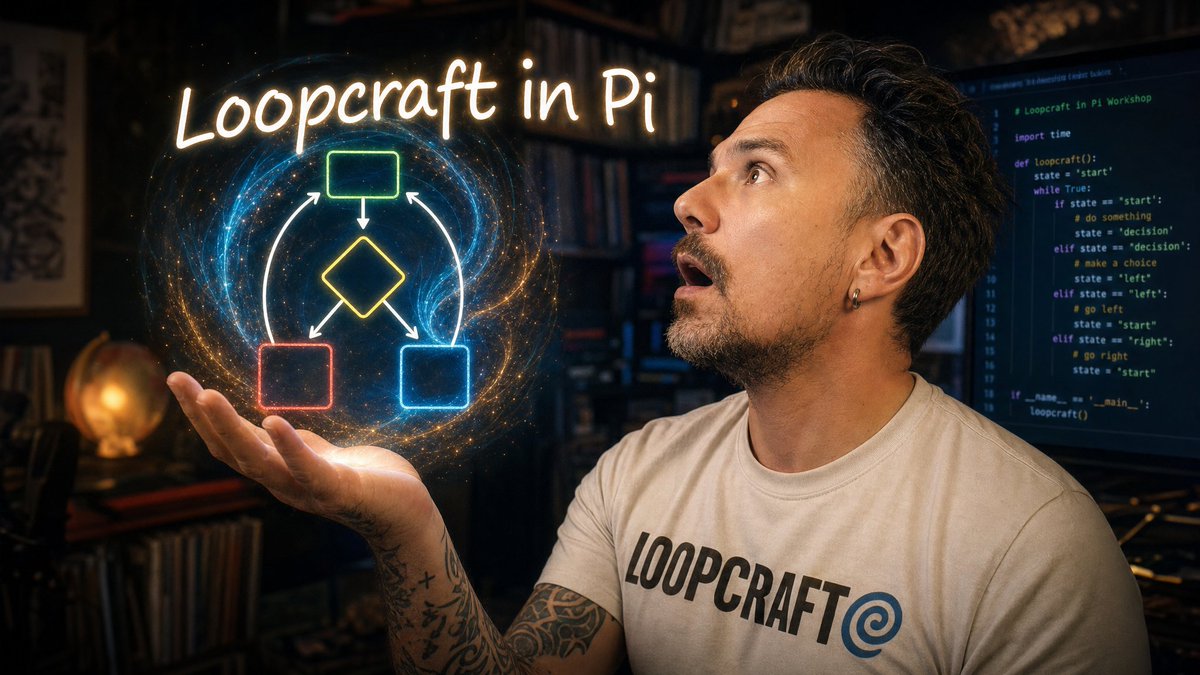
This is a fun project Lakedbed, Herdr, Pi, Effect, XState prototyping a looping autonomous agent that monitors issues and clears its own backlog. The project is dogfooding an issue tracker into a durable agent that is building the issue tracker its looping over. It's an imperfect demo and the result isn't polished, but I think there's a lot fo interesting ideas to explore and expand on. The goal here is to demo a stack of tools that have been giving me consistently reliable results. Herdr and Pi make a KILLER combo for building a bespoke custom harness around your work. Lakebed is really nice to work with. Plenty of other opinions in the workshop lol - Pi as the agent harness — a minimal loop you own instead of rent, running GPT-5.5 through a Codex subscription inside a Docker workshop container - Planning before prompting: TLDraw sketches, a grilling session with Matt Pocock's Wayfinder skill, and a VISION.md to act as guardrails for the looping agent - Event sourcing with Effect v4 and Effect Schema, ports-and-adapters so the JSONL issue store can become GitHub Issues or Linear or whatever later - Multi-agent orchestration in herdr: an operator pane and an agent-loop pane, where one Pi session literally types prompts into another (fuckin LOVE this) - Enforcement that actually bites: OxLint with Ultracite, Lefthook hooks, and an agent that tries to eslint-disable its way past a complexity rule before fixing it properly 🤡 - A live issue tracker UI on Lakebed, built by the loop it tracks Workshop repo: The repo has a docker container to fire it up as a sandbox. Chapters: 0:00 Intro: Loopcraft and the workshop setup 2:25 Starting Pi inside the Docker container 4:31 Designing the looping issue resolver 10:16 Choosing XState v5 and Effect v4, prompting the starter 15:17 Why Pi: a minimal harness you own 19:35 Reviewing the generated scaffold 24:53 Architecture summary page with Lakebed 30:43 Matt Pocock skills and the vision.md concept 36:37 Grilling session: defining the vision 46:54 Daemon architecture and spec/ticket skills 55:38 Agent loop pane: one agent prompting another 1:01:22 Watching the build: compaction, tests, lint enforcement 1:07:59 Building the Loopcraft Pi extension and monitor 1:15:32 Lakebed issue tracker UI 1:21:07 Kanban board live: running the loop end to end 1:31:49 Wrap-up: bugs, next steps, takeaways

joel ⛈️

15,610 görüntüleme • 2 ay önce

I have been testing DeepSeek-V4-Pro with the Pi coding agent. I am mindblown by how well it works out of the box. A few notes: I spent a few hours building an LLM wiki with an agent powered entirely by DeepSeek-V4-Pro on Fireworks inference. This is the first time I feel like there is an open-weight model that can reason at the level of Claude and Codex. And it does this in a cost-effective way with support for 1M context length. To be clear, I am using DeepSeek-V4-Pro inside of Pi without any special configuration. It works out of the box. It's exciting that there is a model that can just be plugged into a basic harness like Pi, and it just works. I've never seen that before. Most models require lots of configuration and setup. DeepSeek's DeepSeek-V4-Pro is clearly good at agentic coding (probably the best from the open-weight models), but the model is also great on knowledge-intensive tasks where reasoning matters. The agent pulled agentic engineering best practices from different company docs (Anthropic, OpenAI, Google, Stripe, Meta, Modal, DeepSeek, Mistral, Cohere), searched and digested Reddit and HN threads, summarized arxiv papers, and surfaced trending GitHub repos. Then it distilled everything into actionable tips across categories. I love the Wiki it built. The quality is really good. Here is a snapshot of what the wiki looks like: DeepSeek-V4-Pro handled the task without breaking stride. Multi-step research queries, code generation for scaffolding, context-heavy reasoning across disparate sources. For coding specifically, this is the first open-weight model that genuinely feels like a Codex or Claude Code experience. It compares in capability and actual multi-turn agentic work. What made the loop feel so responsive was Fireworks' inference speed (the fastest in the market) and the fact that they actually validate models at the systems level before shipping. No corrupted reasoning traces. Just fast, reliable iteration. The hybrid CSA and HCA attention design cuts KV cache to just 10% and inference FLOPs by nearly 4x at 1M-token context. This is what makes the agent loop actually fast and cheap enough to run in practice. For devs who've been watching open-weight models close the gap but haven't found one that actually delivers in practice, this is the closest I've seen. Try it here:

elvis

60,281 görüntüleme • 4 ay önce