Video yükleniyor...

Video Yüklenemedi

Ana Sayfaya Dön

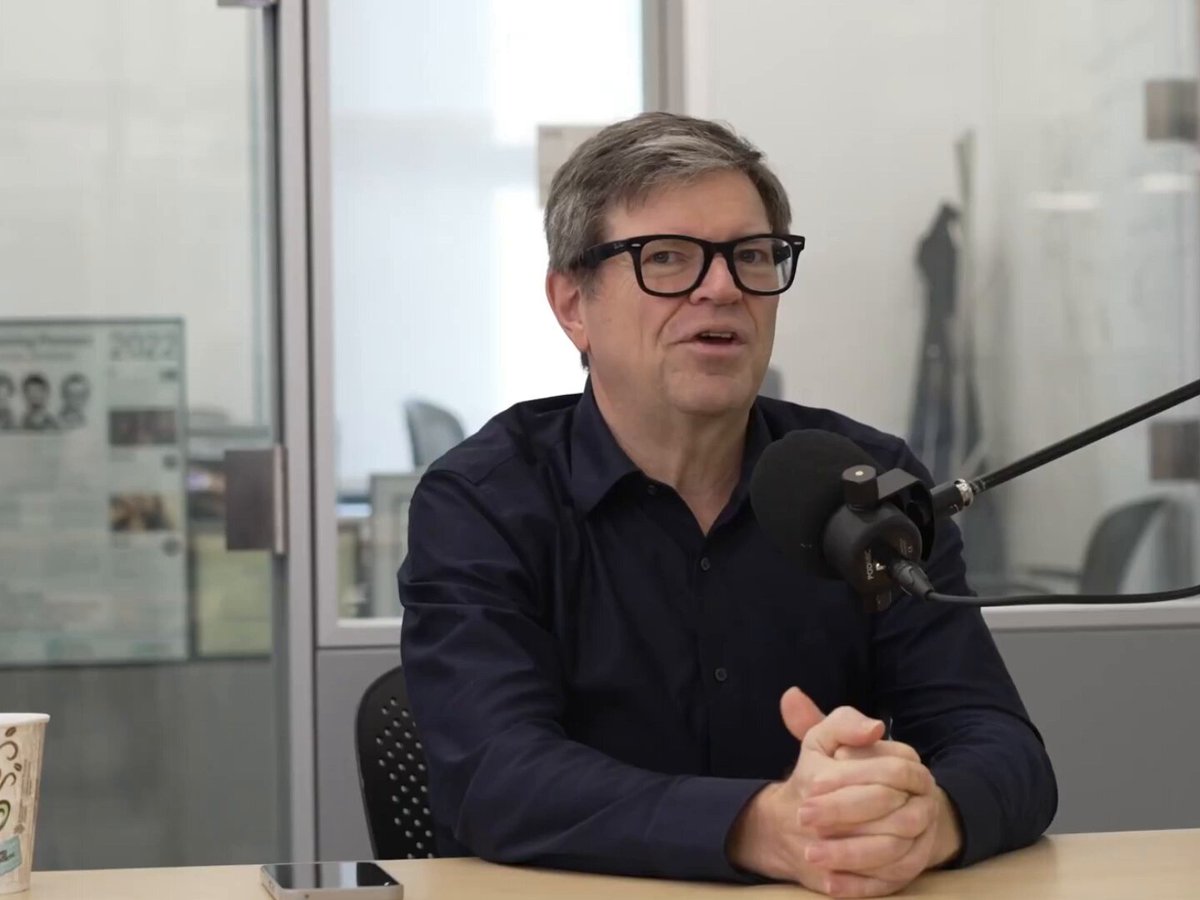
Ilya on LLMs understanding the world: "predicting the next token well, means that you understand the underlying reality that let to the creation of that token" Seem like the opposite view of Yann.

1,222,086 görüntüleme • 2 yıl önce •via X (Twitter)

10 Yorum

Marcus D. R. Klarqvist profil fotoğrafı
Marcus D. R. Klarqvist2 yıl önce

view is correct. @ilyasut is not. Predicting the next token well is simply a matter of learning statistical correlations of latent representations of text. The consequences of compressing this universe into something smaller is the literal definition for why it is stochastic and the literal definition for why models "dream" or "hallucinate". Existing architectures have no way of exerting intelligence by deviating from these relationships through logic and reason. Hence Yann keep repeating that children with almost no training data are superior learning machines compared to extant ML models that require as training data the entirety of all human text ever written as input.

takeoff profil fotoğrafı
takeoff2 yıl önce

@AlphaSignalAI Yann's argument is more about efficiency. Humans could generate an "internal model" of a new person they met with a short conversation with a person. LLMs would need 1000x more data and even then their "internal model" would have some flaws as compared to the human model.

Dwarkesh Patel profil fotoğrafı
Dwarkesh Patel2 yıl önce

@AlphaSignalAI Thanks for highlighting the clip! Here are the links to the full episode: YouTube: Apple Podcasts: Spotify: Transcript:

AlphaSignal AI profil fotoğrafı
AlphaSignal AI2 yıl önce

@AlphaSignalAI Source:

Nyan Cat Money profil fotoğrafı
Nyan Cat Money2 yıl önce

@AlphaSignalAI Ilya is right about this. They taught the LLMs to learn by predicting the next token. When you learn how to do a job, there's explicit things you learn and lots of implicit things you learn. You are only trying to predict the explicit things, but you learn the implicit naturally

Max Rovensky profil fotoğrafı
Max Rovensky2 yıl önce

@AlphaSignalAI So T9 understands the underlying reality of what led to the creation of the next character?

Cebes profil fotoğrafı
Cebes2 yıl önce

@AlphaSignalAI No you don’t “understand” that underlying reality, you merely “simulate” that underlying reality. Quite an important difference.

Giancarlo Niccolai profil fotoğrafı
Giancarlo Niccolai2 yıl önce

@AlphaSignalAI True. But that reality is nothing but a bunch of numbers. That doesn't mean that our brain doesn't do that. There are many processes in our brain that are just like that, but the road to real "understanding" is still long.

Christian @homoveritas profil fotoğrafı
Christian @homoveritas2 yıl önce

@AlphaSignalAI Just means that the probability was calculated correctly not a holistic understanding then again what is the brain but a fancy probability engine

Yanco profil fotoğrafı
Yanco2 yıl önce

@AlphaSignalAI But but but.. it is just a stochastic parrot!!!

Benzer Videolar

Yann LeCun (Yann LeCun ) beautifully explains how the architecture and principles used to train LLMs can not be extended to teach AI the real-world intelligence. In 1 line: LLMs excel where intelligence equals sequence prediction over symbols. Real-world intelligence requires learned world models, abstraction, causality, and action planning under uncertainty, which current next-token training does not provide. He says current LLMs learn by predicting the next token. That objective works very well when the task itself can be reduced to manipulating discrete symbols and sequences. Math, physics problem solving on paper, and coding fit this pattern because success largely comes from searching and composing the right sequences of symbols, equations, or program tokens. With enough data and scale, these models get very good at that kind of structured sequence prediction. Real-world intelligence is different. The physical world is continuous, noisy, uncertain, and high dimensional. To act in it, a system needs internal models that capture objects, dynamics, causality, constraints from the body, and the outcomes of actions over time. Humans and animals build abstract representations from rich sensory streams, then make predictions in that abstract space, not at the raw pixel level. That is why a child can learn intuitive physics, plan multi-step actions, and adapt quickly in new situations with little data. His claim about saturation follows from this gap. Scaling token prediction keeps improving symbol manipulation tasks like math and code, but it hits limits on embodied reasoning and common sense because text alone does not provide the right learning signals for world models. Predicting the next word cannot efficiently teach contact forces, affordances, occlusion, friction, or how actions change the state of the environment. For that, he argues we need architectures that learn abstractions from sensory data and predict futures in abstract latent spaces, then use those predictions to plan actions toward goals with built-in guardrails. --- From 'Pioneer Works' YT Channel (link in comment)

Rohan Paul

104,460 görüntüleme • 7 ay önce