Loading video...

Video Failed to Load

Go Home

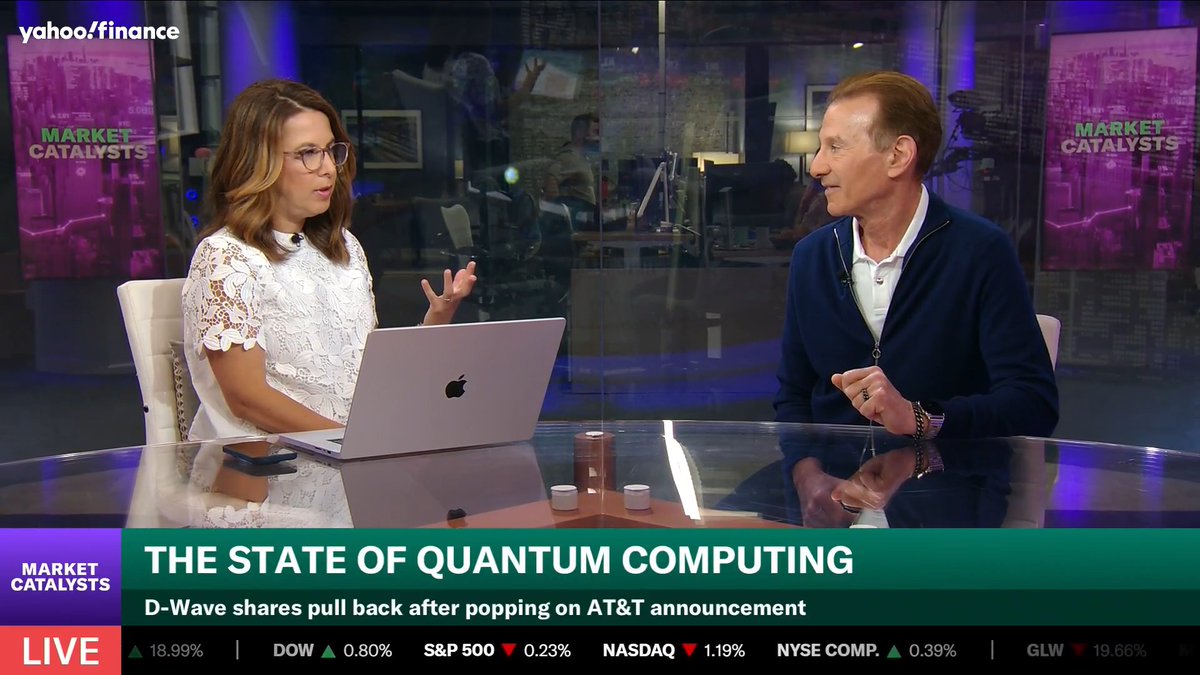
Infleqtion CTO says quantum computing could one day help make $AAPL iPhone batteries last years instead of hours but future is QPUs working alongside $NVDA GPUs and CPUs rather than replacing them.

36,027 views • 26 days ago •via X (Twitter)

4 Comments

Sam Badawi's profile picture
Sam Badawi26 days ago

A phenomenal interview with them!

rugger's profile picture
rugger26 days ago

lol...hopes n dreams. there is nothing there

Macro Bombastic's profile picture
Macro Bombastic26 days ago

10 years is wild but yeah quantum plus gpus is the realistic path

iFone's profile picture
iFone26 days ago

batteries lasting years when mine can barely make it to dinner, i'll believe it when i see it lol
Related Videos

QUANTUM COMPUTING COULD UNLEASH THE MOST POWERFUL AI EVER BUILT. BUT WHO REALLY CONTROLS IT? The Pentagon has invested more than $150 million in quantum computing, a technology most Americans have never used, but one that could reshape artificial intelligence, drug discovery, encryption, national security, and surveillance. Quantum computers use qubits instead of ordinary binary bits. Unlike traditional bits, which are either a one or a zero, qubits can represent multiple possibilities at once. That gives quantum systems the potential to solve certain complex calculations beyond the reach of today’s computers. President Trump signed two executive orders this year to accelerate quantum development and prepare U.S. systems for quantum-era cyber threats. IBM is also working toward a machine with at least 1,000 programmable qubits, a major step toward more powerful quantum systems. The potential is enormous. Paired with AI, quantum computing could help researchers model disease, study pollution, test new materials, and examine massive problems faster than ever. But the risks are enormous too. The same technology could expand surveillance, undermine encryption, and give those who control it unprecedented power to predict and influence human behavior. The question is not just what quantum-powered AI can do. It is who controls it, and whether the public will have any protection from it. Austin Steinbart (Austin Steinbart) joins me to break down quantum computing, AI, surveillance, and what this technology could mean for society.

Ben Swann

11,746 views • 1 month ago