Loading video...

Video Failed to Load

Go Home

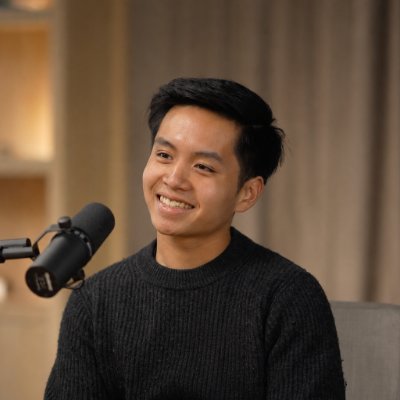
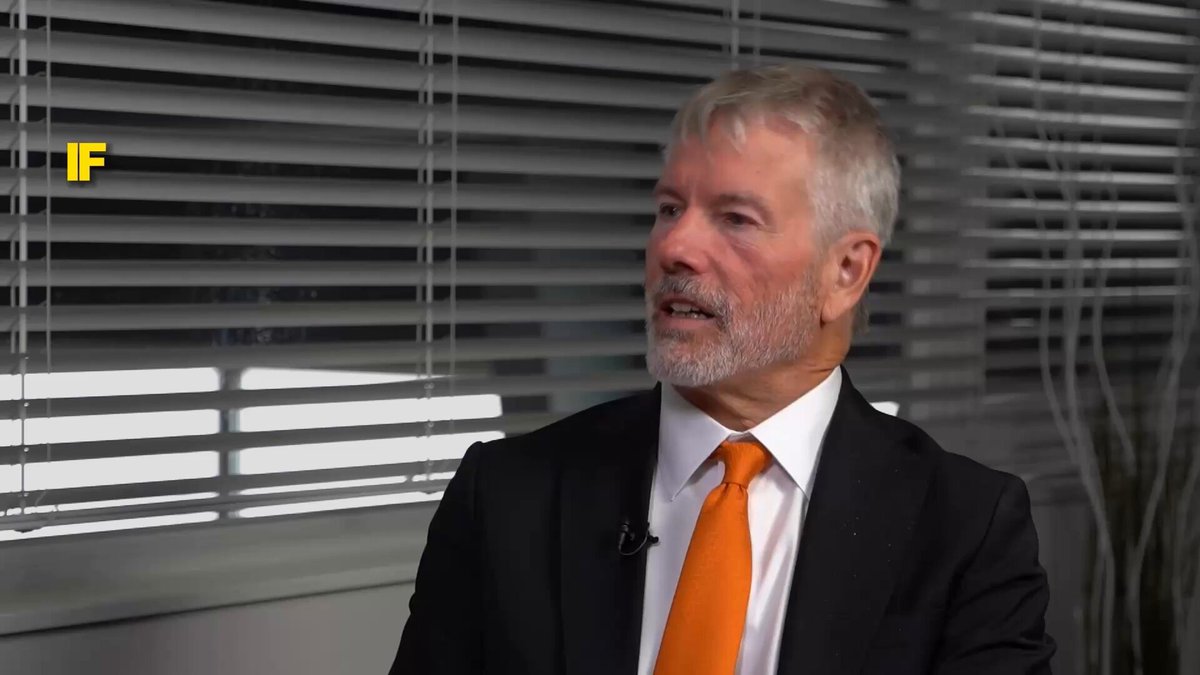
Inside the Billionaire Backed Prediction Markets Hedge Fund. Run by a 24-Year-Old. Camilo Saravia (camilo), founder of BlueWalker Capital, a systematic prediction markets fund backed by Daniel Howard of Halo Capital. "I don't want more capital. I'm extremely long our equity." We cover: - Why insider trading in prediction...

65,887 views • 2 days ago •via X (Twitter)

0 Comments

No comments available

Comments from the original post will appear here

Related Videos

Inside the mind of an ex-SIG quant trader who can't turn off the EV brain - even for his kid's school choice Andrew Courtney (Andrew Courtney) ran the International ETFs Trading Desk at Susquehanna International Group for ~15 years before leaving in 2023. He now runs Kalshionomics (Kalshinomics), a prediction markets analytics tool, and writes the Whirligig Bear, one of the sharpest prediction markets Substacks out there. "I think of everything as a bet. I kind of don't understand how you talk to normal people — they do not do that." SIG trains their junior traders with poker, spending 2hrs/day turning over cards after every hand, justifying every decision quantitatively AND qualitatively. 15 years later, Andrew views prediction markets the same way: read who's on the other side, size accordingly, fold when the whale comes back at you 10x. We cover: - Why SIG pays junior traders to play poker for 2hrs/day — & what happens after every single hand - The "one eye on the market, always" attention tax that destroys most people's careers - How to find edge in prediction markets by asking: who am I actually trading against? - Why meme-heavy, overhyped markets (Taylor Swift at the Super Bowl) might be the juiciest trades - The insider trading debate in prediction markets — & why it's "socially corrosive" - Floor trading vs. upstairs quant: why the transition saved his career - 40 connections after ~15 years at one of the world's best firms — the hidden cost of prop trading - Why he doesn't have collision insurance on his car (& the EV math behind it) Thank you so much Andrew Courtney for coming on the pod! Timestamps: 00:00 Intro 05:00 Floor trading vs. electronic trading 06:28 What makes an upstairs trader 10:16 Poker as trader training 13:00 Thinking in bets as a mental framework 15:11 Decision trees in real life 16:40 Where prediction markets actually have edge 19:00 Why the LLM forecasting layer falls short 19:40 Liquidity incentives and trading low-volume markets 22:00 Limiting downside even when the model is wrong 24:32 Executing in illiquid markets 25:44 Fair value vs. directional conviction 27:11 Bayesian updating when liquidity responds 28:40 Fading hype and crowded narratives 31:07 Longshot bias vs. fanbase bias 34:20 How to judge whether you really have edge 36:40 Building analytics tools for prediction markets 38:20 The temporary edge for smart amateurs 40:35 Where prediction markets fit best 41:20 Markets that shouldn’t exist 43:20 Why insider trading corrodes incentives 46:52 Are prediction markets a net good or bad 50:47 Minimizing degeneracy and maximizing signal 53:32 A simple EV mindset anyone can use

Ethan Kho

436,074 views • 6 months ago

New podcast episode with Kalshi Cofounder and CEO Tarek Mansour (Tarek Mansour) is live. In this special episode, our host Robert Hackett chats with Tarek bout how prediction markets are enabling people to trade directly on real-world events — from elections to inflation — and what this means for the future of finance and forecasting. Tarek explains why prediction markets aren’t gambling, how regulation has been central to Kalshi’s success, and why the company is embracing crypto and stablecoins as key components of its international strategy. He also discusses lessons learned about policy, product design, and staying compliant while innovating at the frontier. Topics include: → How prediction markets make society "smarter" → The role of regulation in fintech innovation → Why Kalshi started with crypto payments → Lessons from FTX and the importance of compliance → Building consumer trust and network effects → Tarek’s take on productivity, leadership, and even… kombucha Timestamps: 00:00 – Introduction: What are prediction markets, and why now? 01:04 – Kalshi’s mission: making forecasting tradable 01:52 – Why crypto fits into Kalshi’s long-term strategy 03:19 – Going global with stablecoins 05:55 – The long road to regulation and why it mattered 7:51 – Coinbase and Robinhood as role models 08:17 – The Trump trade: direct vs. indirect exposure to events 10:51 – Lessons from FTX and why compliance is a moat 12:06 – How Kalshi monitors markets and prevents manipulation 15:00 – Momentum after the presidential election 16:48 – How policy in DC really works 17:56 – The hidden advantage of being regulated 18:52 – Lightning round: worst advice, productivity habits, and more 21:00 – The importance of process and patience (“The Score Takes Care of Itself”) 22:30 – The smallest hill Tarek will die on

a16z crypto

55,170 views • 8 months ago

DROPS E39: Worm - The permissionless truth machine Nass Diba studied quantum physics, worked at Facebook, then left to build in crypto. He's now building Worm - a permissionless prediction market on Solana with leverage. His thesis: prediction markets are the only mechanism that consistently surfaces truth, and they're about to matter more than ever. He grew up in Iran under a dictatorship. He watched state TV claim there was no inflation while the money in people's pockets shrank. That's not a metaphor for him - it's the problem he's building to solve. We talk about: - Why CNN and Fox both showed different election results in 2024 - Growing up in Iran and experiencing information asymmetry under dictatorship firsthand - Building a Poly Market Telegram mini app in September 2024 and getting 56,000 users overnight - Why 90% of those users weren't American - and what that revealed about the technology - How leverage works on prediction markets, why it took 9 months to build, and what liquidation actually means when there's no price - just probability - Why Polymarket and Kalshi are scratching the surface of what's possible - Prediction markets as the engagement layer for Web3 - and what Worm is launching on HyperLiquid HIP-4 And much more… Timestamps: 0:00 Introduction 1:17 Welcome to DROPS 1:57 Prediction Markets in 2026 3:08 Can the crowd be wrong? 4:26 Money Creates Better Truth Discovery 5:22 Who is Nass? 5:55 Growing up in Iran 6:52 Entered Crypto in 2019 8:05 Discovering Prediction Markets 10:08 Signal Behind the 2024 Elections 11:59 How Prediction Markets Disrupt Traditional Media 13:16 Traditional Media Prioritizes Incentives Over Truth 17:33 Polymarket vs Kalshi: Which Model Wins? 18:25 Why is Kalshi or Polymarket enough? 19:43 Lessons Learned Building on Polymarket 21:07 Building Worm on Solana 21:56 What Is Worm and its special elements? 23:36 How Leverage Works on Prediction Markets 25:29 Hedging 27:33 Prediction Markets vs Options & Perps 29:15 How Liquidations Work 31:13 Why Leverage is more than a Gimmick 33:04 Building Leverage Was Harder Than Expected 34:12 Solving Liquidity Problem 36:05 How Worm Acquires Users 36:59 Inflection Point for Prediction Markets 39:06 Why Worm chose Solana 40:24 Becoming the Hyperliquid of Prediction Markets 42:26 Solana vs Hyperliquid: Which Wins? 45:00 Conclusion

MR SHIFT 🦁

31,065 views • 1 month ago

FROM A $50 SALARY IN SYRIA TO A $6M ROUND Episode 5 of PredictTime is live, and you'll hear it from a founder who restarted from zero three times and never sent a single cold email to close his round Ali, founder and CEO of XO Market. We go deep into why 400+ prediction markets are just copies of the same model, why a whale unfairly resolving his Polymarket bet became the tipping point, and how AI agents now decide market outcomes instead of humans Now he's building XO Market, where anyone can turn any idea into a conviction market. Everything you need to know about user-generated markets, XO Vaults and the future of prediction markets is in this episode --- Win 1,000 Conviction Points and get access to XO's weekly parlays with prizes up to $50,000 (we'll pick the winner on July 13): - sign up via the link: -drop your username with your most creative comment or question about the episode and follow Predict Time and XO Market --- Timecodes: 00:00 Intro 00:38 Raising $6M without pitching a single VC 04:29 Why not just copy Polymarket 07:05 Advice for builders: grants over VC money 12:15 Building a team across every continent 15:52 Ali's story: from Syria to Switzerland 19:29 Leaving corporate (Roche) for crypto 22:24 Why raising money is a liability, not a win 25:42 How XO Market conviction markets actually work 29:43 What stops thousands of dead markets 32:41 The tech that gives markets instant liquidity 37:43 How to create your own market 39:14 Getting attention: local communities & ambassadors 44:20 Not the of prediction markets 48:22 Who decides the outcome: AI resolution 51:43 XO Vault: market making for everyone 56:47 The moment XO Market took off 1:02:14 Is prediction market usage exaggerated? 1:05:17 Elon Musk and mention markets 1:07:04 AI vs humans: jobs and the jury system 1:13:56 Are Polymarket & Kalshi overvalued? 1:16:16 What's next: Parlays, Vaults & the World Cup 1:23:06 Is XO Market becoming a sportsbook? 1:25:15 AI agents trading on their own 1:27:40 Regulation & staying permissionless 1:33:08 The investors: 20VC, Harry & a cricket legend 1:44:55 Will there be a token? 1:46:45 Blitz: rapid-fire round 1:52:59 Closing & giveaway

Predict Time

24,425 views • 1 month ago

My dear friend, Vlad Tenev, changed the landscape of investing forever! The rise of the retail investor is largely due to Robinhood's success... and in this new Journey Man, we discuss it all... Enjoy! 00:00 - Intro 00:53 - Introducing Vlad Tenev of Robinhood 01:27 - Why Take on Wall Street? 01:54 - Robinhood’s Zero-Fee Origin Story 02:53 - Inspiration from Instagram and Uber 04:24 - Reimagining Trading for Mobile 05:05 - The Challenge of Disrupting Finance 05:42 - Why Everything Is Hard 06:34 - Early Wrong Assumptions 07:42 - Raising Capital with a Small Vision 08:48 - Funding Robinhood on AngelList 09:50 - Early Investors Changed Their Lives 10:38 - The Crypto Explosion Begins 11:07 - Considering a Bitcoin Exchange First 12:17 - Bitcoin’s Early Skepticism and Growth 13:08 - Robinhood Launches Crypto in 2018 14:03 - 2020: Crypto Revenue Surges Overnight 15:04 - The Challenge of Crypto Cyclicality 16:11 - Staffing a Volatile Business 17:10 - Building Robinhood’s Lean Crypto Team 18:46 - Robinhood’s First Crypto Event Coming 19:38 - Where TradFi Meets DeFi 20:34 - Tokenizing Everything 21:09 - Robinhood’s Vision for Crypto + Finance 21:47 - Thoughts on Crypto Options Demand 23:04 - Why Crypto Options Haven’t Taken Off 24:09 - Millennials and the Speculative Economy 25:22 - Democratizing Trading for Everyone 26:08 - Why Buy-and-Hold Doesn’t Work for All 27:15 - Trading vs Investing: A Matter of Wealth 28:01 - Trading as a Skill Anyone Can Build 29:13 - Robinhood’s Role in Onboarding Millions 30:06 - The Fed's Role and Retail Insight 31:03 - The Rise of the Retail Macro Trader 32:17 - Helping Users Succeed with Robinhood Strategies 33:35 - Power of Community and the Hive Mind 34:55 - Will AI Disrupt Community Too? 36:14 - Technological Waves and Investor Opportunity 37:10 - Human Purpose in an AI World 37:52 - Tokenizing Human Connection 38:28 - Creators, Platforms, and Future-Proofing 39:26 - Vlad’s Long-Term View of the Future 40:05 - Financial Services at the Heart of Disruption 41:14 - If AI Replaces Jobs, What Happens to Investing? 42:25 - Entering the Economic Singularity 43:31 - What Happens When AIs Win the Markets? 44:16 - AI's Role in Capital and Markets 45:07 - Will AI Eliminate Human Emotion from Markets? 46:06 - HFT: The Original AI Traders 47:20 - AI and Long-Term Probabilistic Forecasting 48:48 - GPUs, Gaming, and the Origins of AI 50:01 - Nvidia, CUDA, and Wall Street Arms Races 51:04 - Flash Boys and Microwave Trading 51:54 - Will AI Costs Go to Zero? 52:52 - Lower Cost, Higher Usage 53:41 - Robinhood’s UX Won’t Be Just a Chatbox 55:16 - Cortex: AI-Powered Features at Robinhood 56:54 - Tokenization and the Future of Asset Management 57:44 - Crowdsourced, Tokenized Hedge Funds 58:48 - Portability of Tokenized Assets 59:39 - Blockchain as the New Rails of Finance 01:00:09 - The Trump Token and Capital Formation 01:01:00 - Capital Access Unlocks Innovation 01:01:49 - Why Crypto Needs Regulatory Clarity 01:03:17 - From Meme Coins to Real Assets 01:04:17 - Crypto's Path to $100 Trillion? 01:05:15 - The Financial System Will Run on Blockchains 01:06:00 - Platform Layer vs Application Layer Wealth 01:06:29 - AI Raises Money and Launches Tokens 01:07:39 - AIs Creating Software and Capital Formation 01:08:00 - Final Thoughts: A Wild Future Ahead 01:08:20 - When Will Vlad Buy a CryptoPunk? 01:08:51 - Wrapping Up: AI, Crypto, and the Road Ahead

Raoul Pal

172,640 views • 1 year ago

Ex-WorldQuant Head of Data Strategy Matt Ober on why quants don't care about the stock market, & why prediction markets become a new asset class. Matt Ober (Ex-Chief Data Scientist @ Third Point | Ex-Head of Data Strategy @ WorldQuant | Now GP @ Social Leverage) "Nobody actually really cared about the stock market. I bet if you asked people there when Nvidia was reporting, nobody had a clue." We cover: - The WorldQuant thesis: out-consume the world on data, out-manage the world on money - How a Chico State grad found the job on Craigslist — then walked into a room of PhDs - Revere, the alt-data goldmine only quants understood - Tracking CEOs' private jets to front-run M&A - WorldQuant's factory vs Third Point's fine-art boardroom - Selling data science to analysts who thought it was a joke - Why you sell beta, not alpha — alpha erodes, beta is sticky - The "degenerate economy," and why he can't hire interns anymore - Prediction markets as the next asset class — bigger than options and futures - The only edge left in an AI world: your network Thanks a ton Matt Ober for coming on the pod! Highlights: (00:00) Intro (01:18) The WorldQuant thesis - more data, more money (02:00) Building the alt-data stack (03:00) Revere - the dataset only quants understood (04:50) A finance major among PhDs (09:40) Trading datasets like stocks (10:30) Why quants don't watch the market (12:30) WorldQuant Ventures is born (16:30) Factory vs. boardroom (18:30) Data's wild west at Third Point (23:15) Tracking private jets to front-run M&A (24:20) Igor vs. Dan & the power of network (32:10) The degenerate economy (36:25) Patience & outworking everyone (38:55) Alpha vs. beta, markets & careers (46:10) Somebody's gotta sell (51:20) Prediction markets, the new asset class (53:30) The DoorDash earnings call (56:35) Going mainstream (01:03:10) The single source of all edge

Ethan Kho

432,870 views • 2 months ago

Ex-Global Trading & Risk Director at Cargill on how edge is formed in commodities markets Kristine Engman spent 20+ years at Cargill—one of America's largest agriculture conglomerates—trading billions in physical & financial commodities across energy & agriculture. "Edge in commodities? It's a lot about relationships. The intel you get through those relationships—that's information not readily accessible to the rest of the marketplace that can give you an edge." We cover: - How edge actually works in commodities—relationships, capital access & information arbitrage - Why you can trade on "insider information" in commodities (unlike equities) - Managing physical risk—forecast accuracy, weather shocks & transportation nightmares - The negative power trade—selling electricity below zero & getting hauled into the boss's office - Why Cargill traders performed best when equities markets performed worst - Quantitative (and even technical) vs fundamental trading styles—finding what works & sticking to it - The Ukraine war position—going extended limit long before the invasion - Life lessons from trading—"have your house in order" & taking risks with incomplete information Timestamps: 00:00 Intro 01:15 Edge in commodities trading? Relationships, capital, information 04:40 Commodities market efficiency, information flows, and AI 08:32 Hedge funds vs. ABCDs, commodity trading strategies 13:34 When commodities outperform equities, the 2022 boom 17:45 Headline risk, social media impact on markets 19:08 Risk management strategies in physical commodities trading 26:14 Probability, forecasting, and scenarios for trading decisions 31:00 What makes a great commodities trader today 37:53 Contrarian trading strategies, alpha generation in commodities 42:24 Russia–Ukraine war impact on commodity markets, trading 45:35 Life and career lessons from commodities trading 51:30 Careers, uncertainty, and learning in commodities markets

Ethan Kho

82,254 views • 5 months ago

EDGE REVEALED: How an Ex-Jane Street Trader Finds Edge in Markets & Life Agustin Lebron Agustin Lebron (former Jane Street trader, author of The Laws of Trading, now working at an AI startup applying reinforcement learning to market execution) breaks down what edge really means — and how to find yours in trading, careers & life. “Edge is something that either you know or you can do that the marginal participant in that market either doesn’t or can’t.” We cover: - What edge actually means & how Jane Street builds organizational edge (their worst skill is still "pretty decent") - Why you can never truly know if you have edge — the statistical vs intuitive approaches - The consolidation of quant trading: from dozens of options firms to a handful of giants - The gamblification of everything — retail trading, sports betting & prediction markets fueling quant profits - What it was like having Sam Bankman-Fried (SBF) as a Jane Street intern: "Day one, I'm going to ask all the questions" - How to apply edge thinking to your own career: find what you're differentially good at - Raising teenagers in the AI age: why the traditional path still works, but other paths are opening up 00:00 Introduction 00:44 What is edge in financial markets 01:43 Jane Street and organizational structures for quant trading 03:46 Identifying and validating edge in trading 06:22 Navigating extreme market events and volatility 09:37 Future of quant trading and consolidation 12:15 Why quant firm profits have increased 14:42 The gamblization of everything 15:55 Who should pursue a career in quant trading 18:19 Applying the concept of edge to career and life decisions 20:56 Advice for interns to excel in quant trading 23:44 Predicting long-term success in trading interns 25:08 Sam Bankman-Fried as an intern and FTX reflections 28:15 Reasons people leave Jane Street and what they do next 31:19 Advice for young people in a changing world 36:09 Navigating job insecurity in tech-driven roles 38:55 Where to live if you want to be successful 40:28 Raising kids for a rapidly changing future 42:55 Questions young people should ask themselves 44:45 Outro and book recommendation

Ethan Kho

214,514 views • 6 months ago

Bitcoin has already won as Digital Capital. The next wave is Digital Credit, Digital Money, Digital Yield, and Bitcoin-backed capital markets — products that can bring trillions of dollars of traditional credit and money market capital onto Bitcoin. My interview with Cointelegraph at BTC Prague. 00:57 — Bitcoin in a drawdown: five major pullbacks in six years, stronger fundamentals, and rising dominance 02:23 — Digital Credit: from zero to an $11B+ asset class in 12 months 03:35 — Digital Money: bitcoin-backed yieldcoins and the path from 40 vol to 0 vol 04:31 — The opportunity for 8% yield in dollars, euros, yen, pounds, and francs 06:02 — $300T of credit, $30–50T of money markets, and the $10T opportunity for Bitcoin 07:19 — Why Bitcoin is winning economically, technically, and ethically 08:26 — Quantum computing, FUD, and why bear markets amplify Bitcoin debates 10:37 — AI capital rotation, Bitcoin’s current drawdown, and the path to recovery 11:36 — Six years of Strategy: why I would have moved faster into Digital Credit 12:22 — The ideal Bitcoin Treasury Company: common equity plus STRC-style Digital Credit 14:35 — The 32 BTC sale, the $100M bitcoin buyback, and why capital must back credit 17:02 — Defending the equity, credit, and bitcoin-backed capital structure 19:03 — The tradeoff: buy 200,000 BTC and sell 10,000 BTC — or buy and sell zero 20:15 — “Never sell,” Twitter trolls, and Strategy’s fiduciary obligations 22:06 — Bitcoin per share, long-term accretion, and accumulating through bull and bear markets 22:34 — $21B of equity raised in 16 weeks and ~$10B of bitcoin acquired this year 24:18 — The Strategic Bitcoin Reserve, US leadership, and supportive regulation 27:18 — Digital Credit, bank credit, and Digital Money bringing trillions onto Bitcoin 28:01 — Why Bitcoin can grow organically without central bank support

Michael Saylor

262,028 views • 2 months ago

Leaving Citadel & launching a $1B AI hedge fund — how Renee Yao built NeoIvy Capital from scratch Renee Yao walked away from two of the most elite hedge funds on Wall Street — Citadel & Millennium — and built a quant fund on a fundamentally different model: modern AI instead of human-powered alpha generation. The result: $1B+ in regulatory AUM, uncorrelated returns through COVID, & a fund Business Insider named one of the top transforming investing in North America. We cover: - Why large multi-manager quant firms rely on massive global researcher headcounts — & why Renee saw that as a model worth disrupting - The 3 barriers to entry in AI-driven quant — & why legacy sequential infrastructure can be a disadvantage compared to modern parallel distributed systems - How NeoIvy's self-evolving models adapted in real time during the March 2020 crash — while traditional quant managers had a nightmare month - The difference between beta returns, factor returns & pure alpha — & why size is the enemy of true idiosyncratic returns - Why the "black box" reputation of quant funds has been the #1 fundraising obstacle - How a 4-year-old girl visiting her uncle's room-sized supercomputer in China set the foundation for all of this - The edge/breadth/constraint framework from Grinold & Kahn — & how it shaped Renee's thinking on diversification - Renee's raw advice on staying disciplined when everyone around you is chasing beta in a bull market Transcript: 00:00 Intro 01:14 Renee Yao’s journey to founding Neo Ivy 02:28 Joining Citadel after the financial crisis 04:13 Hedge fund diversification and breadth of edge 04:45 Why Neo Ivy trades with AI strategies 07:50 How self-learning AI adapts to markets 09:40 Causation vs correlation in AI hedge funds 10:33 Barriers to entry for AI hedge funds 14:47 Risks of crowded factor bets explained 16:39 Why big funds struggle with AI talent 17:29 From PM at Citadel to hedge fund founder 18:47 Challenges of launching a quant hedge fund 20:25 Biggest constraint for AI hedge fund startups 22:08 How AI hedge funds adapted during COVID 24:04 Modern AI tools used in quant trading 25:13 Building hedge fund infrastructure from scratch 26:26 Career advice for aspiring quants and traders 28:55 Adapting career goals to changing job markets 31:57 Life lessons from trading and risk management 32:51 Staying disciplined while running a hedge fund 34:38 Obsession and belief in AI hedge funds 35:41 Closing thoughts on hedge funds and life

Ethan Kho

138,224 views • 6 months ago

E174: Tarek Mansour - Launching the First Regulated Perps In The U.S and building the next generation of financial markets Tarek Mansour is the co-founder and CEO of Kalshi, the first regulated prediction market exchange in the US, valued at $22 Billion. He grew up in Lebanon with a single mom, studied at MIT, worked at Citadel, and spent 6 years years building a company most people ignored before it finally took off. We talk about what it actually takes to not give up, why markets are better at finding truth than experts, why Kalshi is launching the first regulated Perps in the US, and how his team is building what he calls the next generation of financial markets. Timestamps: 0:00 Intro 1:54 Urgency 3:11 Anime 4:53 Who is Tarek? 7:02 Mathematics & Certainty 9:10 Tarek's chip on the shoulder 13:33 Partnerships: Trezor Bitwise 15:19 Resilience 16:31 Entrepreneurship is Therapy 18:23 The startup emotional rollercoaster 22:16 Showing up for 2000 days with no results 24:45 First time Founder advantage 26:40 When Kalshi almost made it, but did not 29:54 Partnerships: KAST 31:19 Focus Inputs, Not Results 33:16 The Kalshi beginnings story 36:00 The True Innovation Of Prediction Markets 38:28 How Prediction Markets Revolutionize The Media 41:37 Prediction Markets and Hedging explained simply 44:55 Leverage In Prediction Markets 47:16 Partnerships: Jupiter Ethena 48:00 Insider Trading 51:19 Insider Trading Rules enforcement: who is responsible? 55:26 How Kalshi spots Suspicious Behavior 56:59 Tarek's Honest View On Crypto 59:41 Launching the first Regulated Perps In The U.S 1:00:30 What Does Regulated Perps Mean? 1:02:22 Was Kalshi perps launch inspired by Hyperliquid? 1:03:41 Competition 1:05:58 Kalshi Endgame 1:07:06 What is Kalshi doing with the billions of $ they raised 1:08:31 Happiness and engagement 1:13:08 One Thing Tarek Should Let Go Of 1:14:18 Closing Thoughts

MR SHIFT 🦁

596,102 views • 2 months ago