Loading video...

Video Failed to Load

Go Home

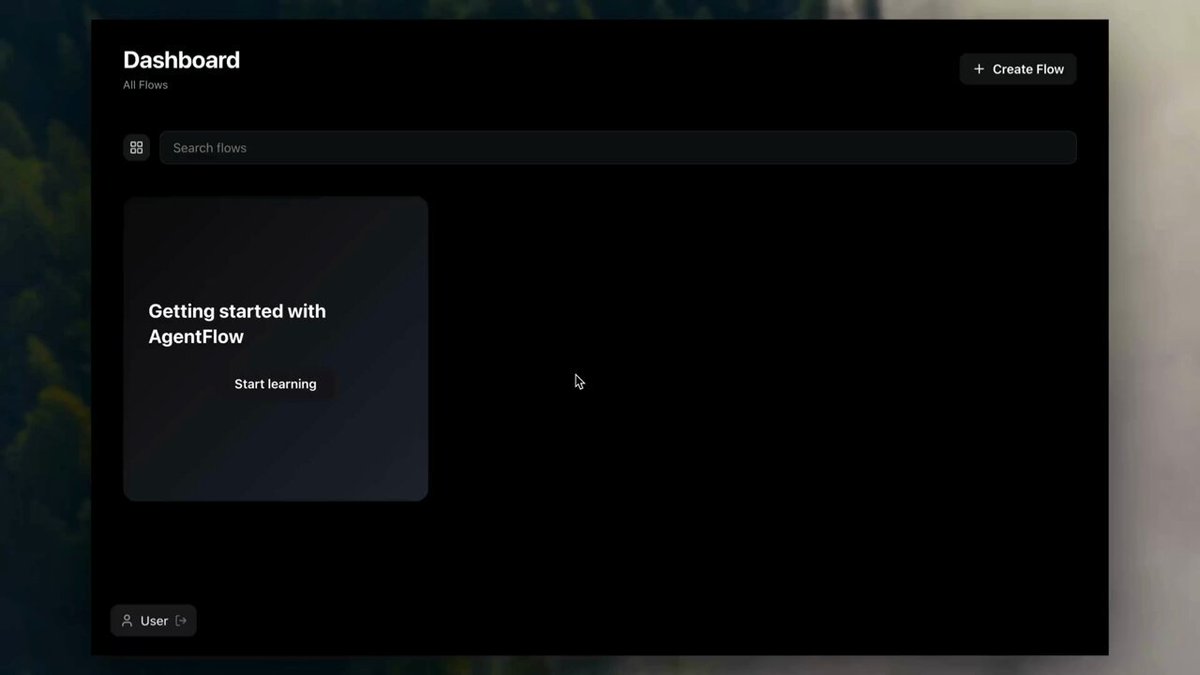
Internally at NVIDIA, we use cuOpt based agentic workflows with agent skills to optimize our supply chains. Since it’s open source, you can too. With optimizations ready in minutes instead of weeks, the workflow uses multi-agent LangChain Deep agent orchestration and GPU-accelerated solvers to turn natural language into optimized...

22,918 views • 3 months ago •via X (Twitter)

0 Comments

No comments available

Comments from the original post will appear here

Related Videos

New Course: ACP: Agent Communication Protocol Learn to build agents that communicate and collaborate across different frameworks using ACP in this short course built with IBM Research's BeeAI, and taught by Sandi Besen, AI Research Engineer & Ecosystem Lead at IBM, and Nicholas Renotte, Head of AI Developer Advocacy at IBM. Building a multi-agent system with agents built or used by different teams and organizations can become challenging. You may need to write custom integrations each time a team updates their agent design or changes their choice of agentic orchestration framework. The Agent Communication Protocol (ACP) is an open protocol that addresses this challenge by standardizing how agents communicate, using a unified RESTful interface that works across frameworks. In this protocol, you host an agent inside an ACP server, which handles requests from an ACP client and passes them to the appropriate agent. Using a standardized client-server interface allows multiple teams to reuse agents across projects. It also makes it easier to switch between frameworks, replace an agent with a new version, or update a multi-agent system without refactoring the entire system. In this course, you’ll learn to connect agents through ACP. You’ll understand the lifecycle of an ACP Agent and how it compares to other protocols, such as MCP (Model Context Protocol) and A2A (Agent-to-Agent). You’ll build ACP-compliant agents and implement both sequential and hierarchical workflows of multiple agents collaborating using ACP. Through hands-on exercises, you’ll build: - A RAG agent with CrewAI and wrap it inside an ACP server. - An ACP Client to make calls to the ACP server you created. - A sequential workflow that chains an ACP server, created with Smolagents, to the RAG agent. - A hierarchical workflow using a router agent that transforms user queries into tasks, delegated to agents available through ACP servers. - An agent that uses MCP to access tools and ACP to communicate with other agents. You’ll finish up by importing your ACP agents into the BeeAI platform, an open-source registry for discovering and sharing agents. ACP enables collaboration between agents across teams and organizations. By the end of this course, you’ll be able to build ACP agents and workflows that communicate and collaborate regardless of framework. Please sign up here:

Andrew Ng

105,343 views • 1 year ago

New short course: Practical Multi AI Agents and Advanced Use Cases with crewAI. Learn to build and deploy advanced agent-based systems in real applications in this course, created with CrewAI and taught by its founder, João Moura! (Disclosure: I've made a small seed investment in CrewAI.) In this course, you’ll learn how to create advanced agent-based apps that use external tools, do performance testing, can be trained with human feedback, and perform multiple tasks with different large language models. You will build several practical agentic apps that provide real business value, such as an automated project planning system, lead scoring and engagement pipeline, customer support data analysis, and a robust content creation system. In detail, you will learn how to: - Create these multi-agent systems with the building blocks of tasks, agents, and crews, along with the different things that make them work, such as caching, memory, and guardrails. - Integrate your multi-agent application with internal and external systems. - Connect multiple agents in complex setups, including parallel, sequential, and hybrid configurations, and create flows involving multiple agentic applications working together. - Test your agentic workflow and train it using human feedback to optimize its performance for better and more consistent results. - Work with multiple LLMs in your multi-agent system, using the appropriate model sizes and providers to fit each agent’s specific task. - Start a project from scratch in your environment and prepare it for deployment. You’ll also learn from an interview between João and Jacob Wilson, the Commercial GenAI Principal at PwC , in which they discuss deploying agentic workflows in real industry use cases. By the end of this course, you will be equipped to start building custom multi-agentic systems for your work. Please sign up here!

Andrew Ng

341,204 views • 1 year ago