正在加载视频...

视频加载失败

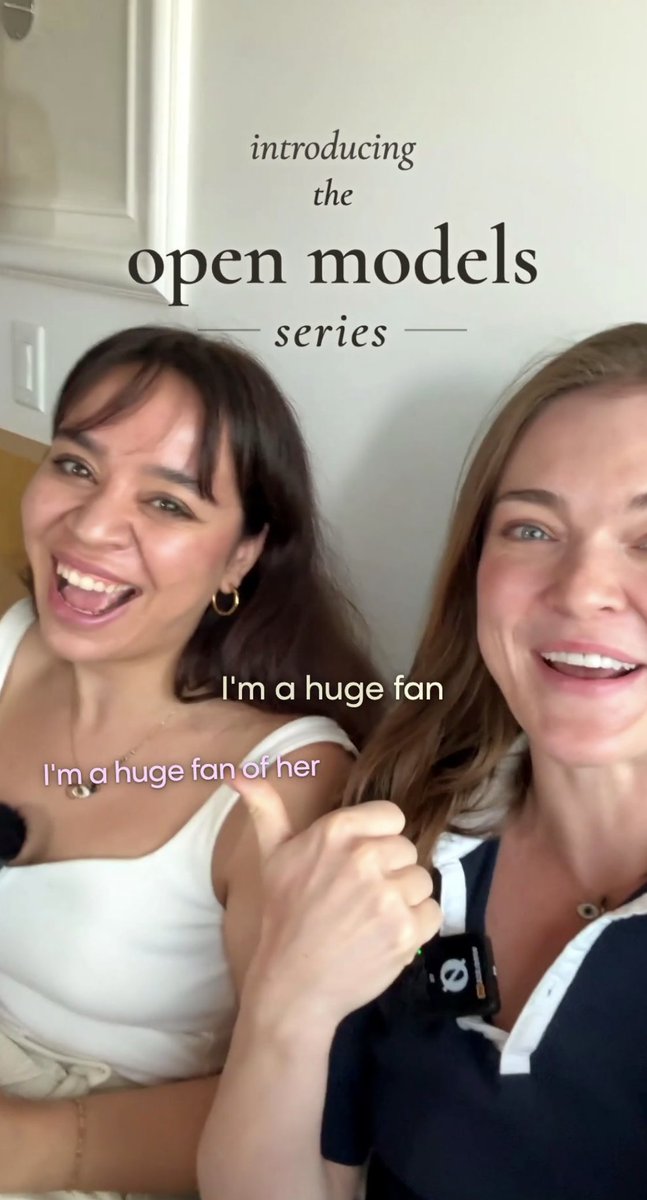
🤗🤗🤗introducing Hugging Science -- the home of AI for science 🤗🤗🤗 open models and datasets are the powerhouse of science (see the PDB), but finding the models and data you actually need for your breakthrough is hard af you shouldn't need to scrape arxiv, own your own wetlab, fight...

201,087 次观看 • 3 个月前 •via X (Twitter)

0 条评论

暂无评论

原始帖子的评论将显示在这里

相关视频

.Naval: Epistemology, which is a fancy word for the theory of how knowledge grows or how knowledge growth occurs. And we've all been told since we're young that there's a scientific method and that scientists sort of do this stuff in white lab coats and we're supposed to accept it because of this thing called the scientific method. And then they give us true beliefs that we can then say, well the science is settled and we take that we move on. And we all only have a very, very vague understanding of how this works. And people say, well maybe you go out in the real world, you look at what's happening, you make all these observations, and then based on that you form a theory, you test the theory against more observations, and the more observations you get the closer you get to the truth. And once you have enough observation it's true and then you call it a scientific theory or a law and it's settled and you move on. And this is the popular conception of how science works. And as Popper pointed out and as you take even further, this is completely wrong. And so I'd love for you to get into that, which is what is knowledge? How does it grow? What is the real scientific method? And how do we figure things out? David Deutsch: I love the way you just stated the prevailing view there and laced every aspect of it with the contempt that it deserves. So you just went through touching every base. It's amazing that this series of misconceptions is still common sense. I mean, that it was common sense at a time when we didn't really have science or when science was just starting up, when the main issue in science was freeing itself from dogmatism, freeing itself from religion, freeing itself from authority, and so on. There it was understandable that people would look for an alternative source of authority and they would think, oh, it's sense impressions. We can see the world and you know, these religious people, they can't even see God and so on. And so we are confined to what we can see. That's where we get our ideas from. And as you say, that is completely false. Sense impressions, like all observation, even the most careful scientific observation is all theory laden. And theories are inherently fallible. I mean, we actually want to replace our best theories. Everybody who does a PhD is technically anyway, working to overturn something in the existing body of knowledge. You're not turned away at the door if you say, I don't believe this stuff, I'm going to produce something better. Whereas for most of human history, that was exactly what you were forbidden to do. The idea was that we already had all the important knowledge. If you want to discover something new, what you had to make sure of was that it didn't contradict the existing knowledge. Now, you have to make sure that it does contradict existing knowledge. So more or less. Naval: Yeah, it's this tradition of criticism that you've talked about in the West, that the Enlightenment really ushered in the Enlightenment era. David Deutsch: It has been institutionalized. So in many ways, our institutions are wiser than we are. So the institutions of science, for instance, have this built in, even if scientists actually don't always act that way. In fact, they often don't act that way, and act in a dogmatic way and try to preserve the status quo and are resistant to new ideas and so on. But the institutions, the way the procedures of science work, makes the right thing happen in the end anyway, regardless of what the people are trying to do. Naval: So you're saying the knowledge of the true scientific method is embedded in the institutions of science in the PhD process? David Deutsch: Well, the best scientific method that we know of, and one shouldn't really think of it as a method, you know, there's this wonderful lecture by Popper when he first was made a professor at the London School of Economics. He was made a professor of scientific method, and his first six lectures, I wish the rest of them were, the first six lectures are on the internet somewhere. And he starts the first one by saying, I am the first professor of scientific method in the British Empire. The British Empire still existed at the time, more or less. And so the first thing I want to say to you is that there is no such thing as the scientific method. And then he goes on from there. So this subject does not exist. So if any of you have come here to learn the handle that you have to turn in order to make scientific knowledge come out the other end, you're going to be disappointed.

Deutsch Explains

114,992 次观看 • 1 年前

Austen Allred on Gauntlet AI: "We're very up front that we're 80 to 100 hours a week. If you think that that's a terrible idea, please don't come." "We're in Austin, all right? That's a sacrifice for a lot of people. If you don't think like coming to Austin for 100 hours a week and jamming on AI unpaid and just building stuff to figure out how much you can learn and hopefully getting a job on the other side... if you don't think that's awesome, that's totally fine. Please don't come." "There are some psychos out there that think that that's a good time. We wanna collect all those psychos. So come all, come all ye crazy people. And if that's not for you, that's okay." "There are companies that come to us and say, "Hey, we want, you know, 100 engineers that are going to sit in our division of printer drivers and sit there." And I'm like, "They would kill themselves." The people that are coming to Gauntlet would not do that. And so we turn companies down too." So we know who we are, we know what we stand for. You know, it helps that I'm one of those people that would've loved that. So is Ash Tilawat, and so is everybody else that works at Gauntlet. "So it's not hard for us to find other crazy people like ourselves. And that doesn't have to be you. That's okay." "We're not trying to empire build or solve all of humanity's greatest problems. We know that there's a limit to who we're addressing and what we're addressing at any given time." "So our goal is to be the best thing we can possibly be for that weird island of misfits. And for the companies that need a weird island of misfits, we'll be that all day long."

Ben Averbook

12,153 次观看 • 9 个月前

David Chalmers on why consciousness is science's greatest unsolved problem: Science has mapped subatomic particles, distant stars, the chemistry of life yet it remains almost completely silent on the one thing we know most directly: our own conscious experience. In a rare early interview, philosopher David Chalmers explains why: "Consciousness is at once the most familiar thing in the world and the most mysterious. Consciousness is what we start with when it comes to knowing the world. I know that I exist. I know that I'm conscious. Everything else is secondary." And yet, despite this intimacy, consciousness sticks out like a sore thumb in the scientific picture. Chalmers points to a deep irony: science has made extraordinary progress on phenomena that are extraordinarily remote: subatomic particles, distant galaxies, the molecular machinery of biology while making almost no progress on the one thing closest to us. Why? Because science, by design, eliminates the subjective. "To do proper science, you have to be objective. You have to eliminate anything subjective from the picture." He uses heat as the perfect example. Physics gives us a complete account of heat molecules in motion, energy transfer, temperature gradients. It explains every objective aspect of the phenomenon. But it never explains what hotness actually feels like. "Science doesn't actually give a theory of the conscious feeling of hotness." This is what Chalmers calls the Hard Problem of Consciousness. You can trace every neural signal from your heat sensor along your nerves into your brain and still have explained nothing about the subjective experience of feeling warm. As interviewer Jeffrey Mishlove puts it: you can't even do science without a conscious mind to observe, interpret, and make meaning of data. Consciousness is the precondition for science itself and yet science has no framework to account for it. Chalmers' conclusion is striking: The methods of science may need to be expanded. Consciousness might not be something science explains away. It might be something science has to learn to start with.

Mateus — eu/acc 🇪🇺

31,659 次观看 • 4 个月前

You Mark Zuckerberg and Meta interfered with research by stopping the recruitment of my protocols. This SHOULD NOT BE FORGOTTEN. Interference in research affected everyone. I was shadow-banned and censored. I was told I was spreading MISINFORMATION by your fact checkers who NEVER TOUCHED A PATIENT DURING COVID-19. STEP into my lab ProgenaBiome and see the thousands I treated and lost NO ONE. See all the 💩we analyzed. See all the hundreds of conferences I spoke at including being a keynote speaker at American College of Cardiology and a speaker at National Institute of Standards and Technology. See who is on my biome squad from all academic centers. See who co-wrote the book Let's Talk Sh!t. See who is on my papers as co-authors. See who spoke at the Malibu Microbiome meeting. See my testimony in front of Congress. Speak to my clientele in Malibu. Speak to hundreds of Pharma companies I did trials for and see the hundreds of drugs I helped bring to market including recently a celiac sprue drug. Talk to all the VCs who have consulted me at Coleman Research and got my opinion on new drugs. Did I spread misinformation or EARLY INFORMATION? Your company interfered with research and people died. It’s time for corrective actions. Interference with research affects EVERYONE and will affect you one day as well. No one escapes disease. Interference in research kills science and kills hope. This is NOT SOMETHING that will be excused by your words. Science is a story untold. Science NEEDS to be challenged and questioned. There are no right or wrong answers in science. #PROVEMEWRONG IS SCIENCE. Science guides medicine but should NEVER DICTATE MEDICINE. The practice of Medicine takes courage and is very much an art where innovations happen. To discourage that art, those innovations by a narrative pushing the price of a stock is to kill Medicine and hope. NO I DO NOT ACCEPT YOUR APOLOGY. Words are lame… ACTIONS SPEAK LOUDER THAN WORDS.

sabine hazan md

58,624 次观看 • 1 年前

The CDC Doesn't Want You to Hear This Conversation Between Joe Rogan and Tucker Carlson TUCKER: Is your average Amish teenager happier than your average conventional American teenager on Instagram? ROGAN: Well, they certainly have less instances of autism, which is really fascinating. It's very, very fascinating. CARLSON: The Amish have less autism? ROGAN: Yeah, there's almost none. TUCKER: Well, I'm not surprised. ROGAN: It's extremely rare. TUCKER: Why do we think that is? ROGAN: I wonder. I really do. TUCKER: Well, I can think of a couple — Yeah, I don't want to go Bobby Kennedy on you. ROGAN: But that's the problem. If you go Bobby Kennedy, they'll come for you. But the question is why? TUCKER: Look, and I don't know the answer, but... ROGAN: How is that not in the debate? How is that not in the conversation? TUCKER: Well, it's not only not in the conversation, you're punished for adding it to the conversation. And so, like... ROGAN: We are dancing around anti-vax conspiracy theories right now. TUCKER: Why be on the defensive? It's like, if you purport to represent science, and you're mad about a question. ROGAN: And you're ignoring data. TUCKER: Yeah, but even in the absence of data, science is a process. Yes. It's not a result. It's a way of doing things. And at the core of science is asking questions, including unlikely questions. That's what science is. And if you don't allow that, then you may be doing something, but what you're not doing is science. We can say that conclusively. So, for people to wrap themselves in the mantle of science and attack you for asking a question, they're frauds.

The Vigilant Fox 🦊

13,619,395 次观看 • 2 年前

There is a beautiful story that just happened in AI so let me share it for a lighter tone weekend post among all the doom stories in our AI field this week. It’s a story of people on three continents building and sharing in the open a new small efficient and state-of-the-art AI model. It started a couple of months ago when a new team in the AI scene released their first model from their headquarters in Paris (France): Mistral 7B. Impressive model, small and very strong performances in the benchmarks, better than all previous models of this size. And open source! So you could build on top of it. Lewis in Bern (Switzerland) and Ed (in Lyon, in the South of France) both from the H4 team, a team of researchers in model fine-tuning and alignment were talking about it over a coffee, in one of these gatherings that often happen at Hugging Face to break the distance between people (literal distance as HF is a remote company). What about fine-tuning it using this new DPO method that a research team from Stanford in California just posted on Arxiv, says one? Hey, that’s a great idea, replies the other. We've just build a great code base (with Nathan, Nazneen, Costa, Younes and all the H4 team and TRL community) let's use it! The next day they start diving in the datasets openly shared on the HF hub and stumble upon two interesting large and good quality fine-tuning datasets recently open-sourced by OpenBMB, a Chinese team from Tsinghua: UltraFeedback and UltraChat. A few rounds of training experiments confirm the intuition, the resulting model is super strong, by far the strongest they have ever seen in their benchmarks from Berkeley and Stanford (LMSYS and Alpaca). Join Clementine, the big boss of the open evaluation leaderboard. Her deep dive into the model capabilities confirms the results: impressive performance. But the H4 team also hosts a famous faculty member, Pr. Sasha Rush, Associate Professor at Cornell University in his daytime, hacker at HF in his nighttime. Joining the conversation, he proposes to quickly draft a research paper to organize and share all the details with the community. A few days later, the model, called Zephyr (a wind like Mistral), paper, and all details are shared with the world. Quickly other companies, everywhere in the world starts to use it. LlamaIndex, a famous data framework and community, shares how the model blew their expectations on real-life use-case benchmarks, while researchers and practitioners discuss the paper and work on the Hugging Face hub. All this happened in just a few weeks catalyzed by open access to knowledge, models, research, and datasets released all over the world (Europe, California, China) and by the idea that people can build upon one another work in AI to bring real-world value with efficient and open models. Stories like this are numerous everywhere around us and make me really proud of the AI community and see how we can build amazingly useful things together. [the video is just me reading this Friday post hahah]

Thomas Wolf

169,200 次观看 • 2 年前

#NewPaper The first microscope, invented in the 16th century, was designed to unlock the secrets of the microscopic world. Today, as many fields become increasingly data-driven, there is a pressing need for new types of microscopes---tools that help us zoom in, explore, and understand complex data. We call these tools "algorithmic microscopes." Introducing the Vendiscope: The first algorithmic microscope for data collections. 🔬 The Vendiscope maximizes the probability-weighted Vendi Score of a dataset to assign a weight to each element in the collection. This weight represents a data point's contribution to the overall diversity of the collection. These weights enable high-resolution data analysis at scale. We use them to zoom in on datasets across three domains: biology, materials science, & AI. 🧬 Biology: We used the Vendiscope on the protein universe, which contains nearly 250 million proteins. We found that nearly 200 million of the proteins are near-duplicates of each other and that AlphaFold fails on proteins that contribute most to the diversity of the protein universe. (See GIF below). 🪜 Materials Science: We used the Vendiscope on the Materials Project database, which contains 170K materials as of today. We found that 85% of crystals with formation energy data are near-duplicates of each other and that ML models for materials property prediction struggle with materials that contribute most to diversity. 🤖 Artificial Intelligence: We applied the Vendiscope to CIFAR-10, a benchmark dataset containing 50K images. We found duplicates. We applied the Vendiscope to analyze state-of-the-art generative models trained on this dataset. We found the best generative models memorize training data, as is known in the AI literature. However, we can do more with the Vendiscope and characterize the type of samples that get memorized. We found that data points contributing least to diversity are more prone to memorization by these generative models. 🧠 "Our findings demonstrate that the Vendiscope can serve as a powerful tool for data-driven science, providing a systematic and scalable way to identify duplicates and outliers, as well as pinpointing samples prone to memorization and those that models may struggle to predict---even before training." 💫 "The Vendiscope provides a unified framework for analyzing complex data at scale. Researchers, engineers, and data auditors can use the Vendiscope to audit datasets, identify potential biases, and refine data collection practices. For AI ethicists, the Vendiscope offers a critical lens to understand how models interact with data, particularly in the context of bias, memorization, and data fairness, enabling better mitigation strategies to prevent undesirable outcomes in AI deployment. For scientists, the Vendiscope represents a new companion in the discovery process." #VendiScoring #AlgorithmicMicroscopy Link to paper: Authors: Amey Pasarkar (Amey Pasarkar) and Adji Bousso Dieng (@adjiboussodieng)

Vertaix® (AI & Science)

34,762 次观看 • 1 年前

The Science of Fasting - 2012 Documentary There is a reason so many religions and cultures across the world advocate for fasting to resolve health issues, and think every human being on earth should fast intermittently to help repair and detoxify themselves in this incredibly toxic world where we are being inundated from every vector. Obviously fasting can be detrimental if done excessively and the nutrition is inadequate in between fasting stints, but overall if done right, it's so obviously a great tool for our health that we should all take advantage of. It can by intermittent fasting with 18/6 or 16/8 schedules, it can be 1-2 days a month, it can be 1 week every 6 months, or whatever works best for your individual situation and health goals, but we should all be doing a little bit of fasting every now and again. Considering a large portion of the US is brutally addicted to food and severely overweight and unhealthy with countless diseases and ailments, we should be investing in fasting clinics such as the one shown in this documentary to help them break the addiction and get healthy. Robert F. Kennedy Jr has discussed detox clinics for drug abuse, and hope he can consider the same for obesity and chronic disease with fasting clinics. Many people are not disciplined and strong enough to not eat at home for a few days because of all the temptation, but if they had a place to stay with rules and restrictions, they could learn that discipline and then do it on their own. For anyone that thinks it's dangerous to fast for a long period of time, you should lookup the story of the scottish man back in 1965 who was over 450lbs and fasted for a year straight. If you have body fat on you, you can fast until it's gone, as long as you have water to drink.

Inversionism

292,873 次观看 • 2 年前

NVIDIA JUST DROPPED A FREE AI MODEL THAT READS PDFS, WATCHES VIDEOS, LISTENS TO AUDIO, AND UNDERSTANDS YOUR SCREEN SIMULTANEOUSLY. Not one at a time. ALL AT ONCE. In a single pass. It is called Nemotron 3 Nano Omni and it runs 9 times faster than every other multimodal model currently available. Think about what that actually means for how you work. Right now you are switching between tools constantly. One tool for transcribing your call recordings. A different tool for analyzing your client PDFs. Another tool for processing your training videos. A separate workflow for understanding what is happening on your screen. Four tools. Four contexts. Four different outputs you have to manually synthesize into one decision. Nemotron 3 Nano Omni does all of it in one model. One pass. One output. The use cases that just got dramatically simpler: Meeting recordings where you need the transcript, the visual context, and the document references all analyzed together. Training videos where the audio, the slides, and the on-screen demonstrations all feed into one coherent summary. Client PDFs where you need the document content cross-referenced against your screen data and your call notes simultaneously. Sales call transcripts analyzed alongside the proposals and the CRM data in one unified pass. This is not a marginal improvement on existing multimodal models. It is a 9x speed increase on a capability that was already changing how people work. Free. From NVIDIA. Available right now. Bookmark this before everyone catches on. Follow CyrilXBT for every AI capability shift the moment it drops.

CyrilXBT

37,847 次观看 • 3 个月前