Video yükleniyor...

Video Yüklenemedi

Ana Sayfaya Dön

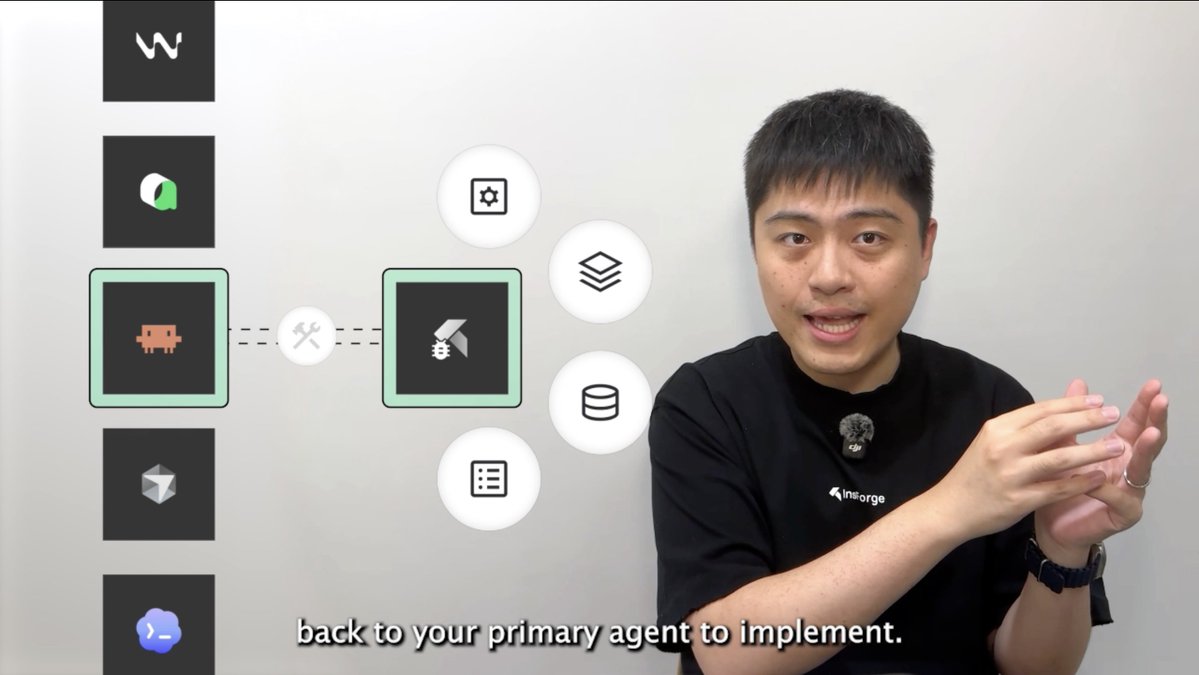
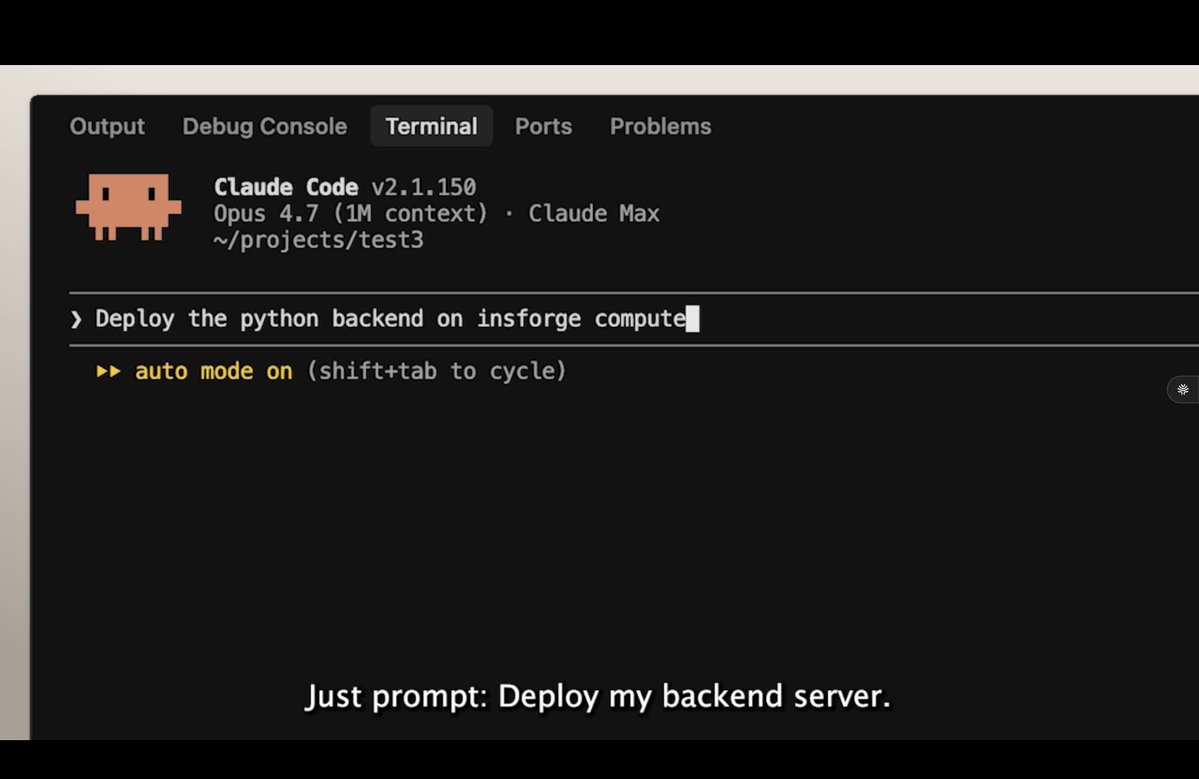
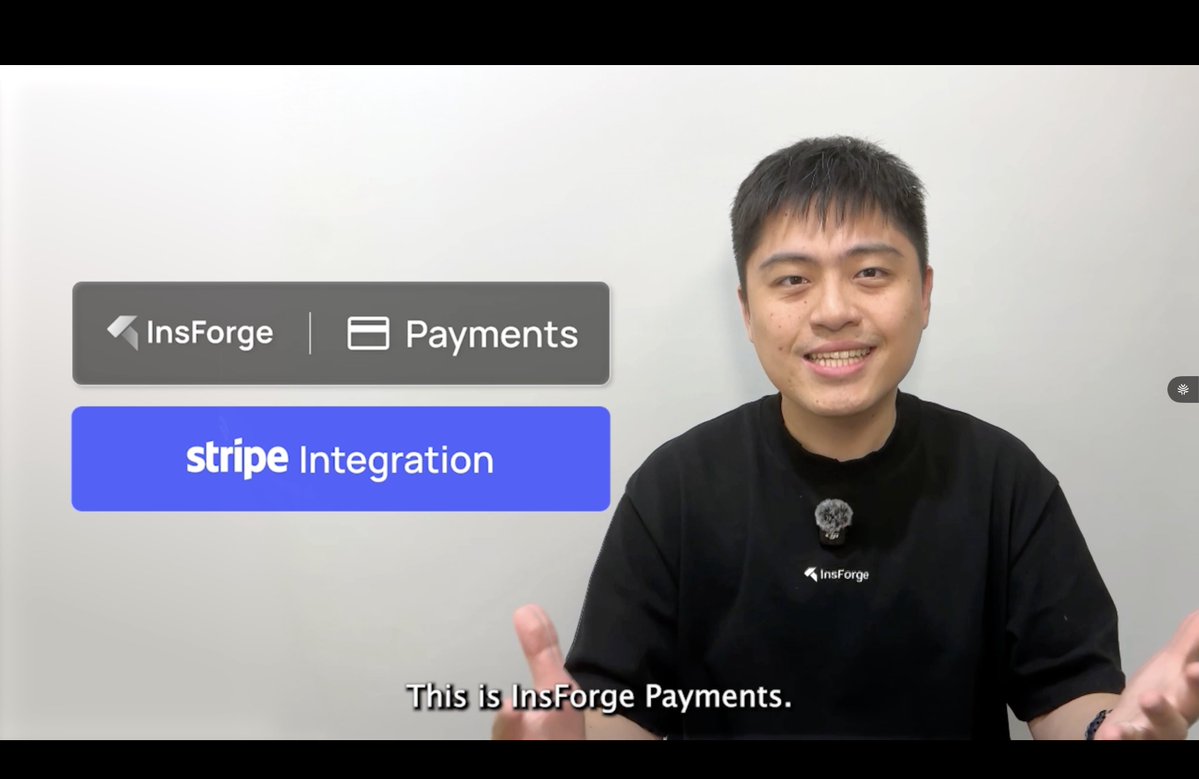
Introducing InsForge 2.0: The Backend for Agentic Development Our OSS backend provides databases, auth, storage, model gateway, and edge functions accessible through a context-optimized layer that agents can better understand and operate end-to-end. GitHub: Key Benchmarks (vs. Supabase MCP): - 14% higher accuracy - 1.3x faster per task -...

1,592,049 görüntüleme • 4 ay önce •via X (Twitter)

0 Yorum

Yorum bulunmuyor

Orijinal gönderinin yorumları burada görünecek

Benzer Videolar

I cut Fable 5 token usage 2.5x with just one change! - Before: 5.5 M tokens · 7 errors · $8.94 - After: 2.3 M tokens · 0 errors · $4.17 The final build was the same for both, but the path the agent took wildly differed. In both runs, the agent started with the same thing, i.e., it understood the backend before building anything, like: - Permission policies - Available storage buckets - Auth providers configured - How edge functions are deployed The first run used Firebase, which was built for a human dev using a dashboard. While the dev can read the above state by clicking through tabs, an agent has no dashboard. So it gathered the same info through API calls. And there's no single Firebase call that returned this info. The agent required to query multiple times, and each query over-returned. For instance, when the agent asked how sign-in is configured, Firebase also returned the entire auth surface and every method it supported. This was far more context than what it needed. And it repeated across every part of the backend it inspected. Some states (like which auth providers are active) weren't queryable at all. I provided it myself. Otherwise, the agent would have guessed. Errors further compounded the token usage. When a dev sees "permission denied," they can look at the console and figure out whether it's a rule, a path, or an unauthenticated request. Firebase returned the same string to the agent as well, and it had none of that surrounding context to debug. So it guessed again, picked the most likely cause, and rewrote code, utilizing more tokens. This Firebase setup cost me 5.5M tokens and 7 manual interventions during errors on a full-stack RAG app. But I brought that down to 2.3M tokens and 0 manual interventions by using InsForge as the backend context engineering layer (open-source and self-hostable via Docker). It provides the same primitives as Supabase/Firebase, but structures the entire information layer for agents, instead of dashboards. In one CLI call that consumed ~500 tokens, the agent saw the full backend topology before writing a single line of code. This included auth, database, storage, edge functions, model gateway, micro VMs, and deployment. Also, instead of loading the entire product surface into context on every task, four narrowly scoped skills activated only when relevant to keep cognitive load minimal. And to ensure efficient retries if needed, every CLI operation returned structured JSON with meaningful exit codes, so the agent never guessed what to do next. Here's the InsForge GitHub Repo: (don't forget to star it ⭐) The video below depicts the final build, comparing Firebase and InsForge. To dive deeper, I recently published a full walkthrough building the same RAG app on both backends and inspected them end-to-end. Read it below.

Avi Chawla

112,879 görüntüleme • 1 ay önce

i just built a 4-agent software team. everything runs from Telegram and gets managed on a kanban board. a project manager who plans the work, a backend developer, a frontend developer, and a tester. the PM reads a goal, breaks it into linked tasks, and assigns each to the right agent. the thing that makes them a team instead of four strangers is a shared kanban board. every task is a row that survives crashes, and when an agent finishes, it writes a summary of what it built and what the next agent needs to know. the next agent reads that summary before it starts. so the frontend developer never has to guess the API shape, and the tester knows exactly what to verify. the hardest part was not the coordination. it was building an agent that could actually act like a backend engineer. a backend engineer stands up a database, wires auth, manages storage, deploys functions, and keeps all of it consistent while the rest of the team builds on top. an agent doing this from scratch drowns. it burns its context window remembering which tables exist and which endpoint it created three steps ago, and the work degrades fast. so the backend agent needs a backend built for agents, not for humans clicking through a dashboard. that is where InsForge came in. it is an open-source, agent-native backend, and i added it to my backend developer agent as a skill. a skill is a step-by-step guide that teaches the agent how to do a specific kind of work. with InsForge installed, the agent stopped improvising infrastructure and followed a reliable path: create the project, define the database, set up auth, deploy functions. to test the whole team, i had them build a working Google Docs clone, AI features included. the backend agent spun up the full service on its own. database tables, user auth, document handling, and edge functions running real TypeScript, all in one dashboard. the frontend agent read that summary and built the UI on top of it, and the tester closed the loop. the result was a backend an agent could reason about end to end, instead of one it kept getting lost inside. if you are building an AI backend engineer, InsForge is worth a look, it's 100% open-source. InsForge GitHub: (don't forget to star 🌟) the full article on Hermes Kanban: Mission Control for your Agents is quoted below.

Akshay 🚀

118,124 görüntüleme • 1 ay önce

Google open-sourced MCP Toolbox for Databases. I gave it access to everything else. For context, Google's MCP Toolbox for Databases is an open-source server that lets AI agents securely query structured databases like PostgreSQL and MySQL through the MCP protocol However, most enterprise knowledge doesn't actually live in databases. It's scattered across emails, Slack threads, GitHub repos, Salesforce records, customer reviews, and internal docs. So Agents can't see any of it, which means they're working with a fraction of the context they need. I fixed that using MindsDB. It acts as a universal SQL layer that sits on top of all your data sources: structured, semi-structured, and unstructured. This means you can query Salesforce, Gmail, GitHub, S3 files, Jira, and 200+ more sources using SQL syntax. The clever part is how it connects to the MCP Toolbox. MindsDB exposes everything through MySQL, so from the Agent's perspective, it's just running SQL and getting context back. It doesn't know or care that the data came from five different sources behind the scenes. This setup unlocks some powerful capabilities: → One SQL interface for dozens of enterprise sources → Cross-datasource joins (combine GitHub and CRM data in a single query) → Built-in ML capabilities for working with unstructured data → Simple MCP tools that now have massively expanded reach In the video below, the Agent queries GitHub data and a customer review database in one SQL query. So what used to require ETL pipelines and weeks of engineering effort now happens instantly. At the end of the day, AI agents are only as useful as the data they can access. This gives them a lot more to work with. I have shared the GitHub repo in the replies, where you can find more details about this.

Akshay 🚀

39,331 görüntüleme • 5 ay önce

New course to bring you up to state-of-the-art at using AI to help you code: Build Apps with Windsurf's AI Coding Agents, built in partnership with WIndsurf (Codeium) and taught by Anshul Ramachandran! AI-assisted IDEs (Integrated Development Environments) make developers’ workflows faster, more efficient, and much more fun. Agentic tools like Windsurf are more than just code autocomplete—they are collaborative coding agents that help you break down complex applications, iterate efficiently, and generate code that spans multiple files. Although a lot of coding assistants share the same underlying large language models for planning and reasoning, a major point of distinction is how they handle tools, keep track of context, and stay aligned with your intent as a developer. For instance, if you make modifications to a class definition in your code and make the same modifications to other classes in the same directory, you might tell the AI agent "Do the same thing in similar places in this directory." Here, tracking your intent means understanding that “the same thing" refers to that recent edit you just made, which must be followed by appropriate search and tool-calling to implement the changes. In this course, you'll learn the inner workings of coding agents, their strengths and limitations, and how to use Windsurf to quickly build several applications. In detail, you'll: - Build a mental model of how agents work by combining human-action tracking, tool integration, and context awareness to carry out an agentic coding workflow. - Learn the challenges of code search and discovery and how a multi-step retrieval approach helps coding agents address them. - Use Windsurf to analyze and understand a large, old codebase and update it to the latest versions of the frameworks and packages it uses. - Build a Wikipedia data analysis app that retrieves, parses, and analyzes word frequencies. - Enhance the performance of your Wikipedia analysis app by adding caching, and through this, also learn how to course-correct when the AI agent produces unexpected results. - Learn tips and tricks such as keyboard shortcuts, autocomplete, and @ mentions to quickly call on agentic capabilities. - Use image/multimodal capabilities of the AI agent to increase your development velocity; you'll see an example of uploading a mockup with sketched-out UI features, and ask the agent to use that to build new functionality to an app. By the end of this course, you’ll understand agentic coding in-depth and know how to use it to make your development process much faster, more efficient, and enjoyable. Please sign up here!

Andrew Ng

139,826 görüntüleme • 1 yıl önce