Loading video...

Video Failed to Load

Go Home

Introducing ✨Posed DROID✨, results of our efforts at automatic post-hoc calibration of a large-scale robotics manipulation dataset. We provide: 🤖 ~36k calibrated episodes with good quality extrinsic calibration 🦾 ~24k calibrated multi-view episodes with good-quality multi-view camera calibration ✅ Quality assessment metrics for all provided camera poses To achieve...

13,501 views • 1 year ago •via X (Twitter)

8 Comments

Zubair Irshad's profile picture
Zubair Irshad1 year ago

Below we show the Camera-to-Camera transformations, post-calibration improves the alignment of obtained pointclouds! 2/n

Zubair Irshad's profile picture
Zubair Irshad1 year ago

Automatically calibrating a large-scale dataset is challenging. We provide quality assessment metrics with all three stages with the flexibility to narrow out bounds for downstream tasks as needed. 1️⃣ and 2️⃣ quality assessment metrics shows distribution of IOUs and Reprojection-error post-calibraton. 3/n

Zubair Irshad's profile picture
Zubair Irshad1 year ago

Similarly, we plot the distribution of number of matched points and cumulative curve after 3️⃣, helping to identify the top quantile of well-calibrated camera pairs within each lab. 4/n

Zubair Irshad's profile picture
Zubair Irshad1 year ago

Automatic calibration robotics at large-scale is challenging and while successful, our pipeline has some limitations: • CtRNet-X was trained on the Franka Panda robot. Its performance i.e. zero-shot generalizability on other robot types remains to be seen. • DUSt3R, while powerful, still struggles in scenes with heavy clutter or minimal overlap between views. • False positives are inevitably observed for Steps 2️⃣ and 3️⃣, especially in challenging lighting or geometry. There’s room for improvement. Future work could include: • Extending it to in-the-wild scenes i.e. by leveraging foundation models to perform general-purpose robot segmentation and keypoint detection. • Ensembling predictions across time to improve temporal consistency. • Fine-tuning pointmap prediction models on real robot data to better handle cluttered tabletop environments. 5/n

Zubair Irshad's profile picture
Zubair Irshad1 year ago

We have released our improved extrinsics. Try it out now at and read more details about it in the updated DROID paper at This was a fun collaboration with @vitorguizilini @SashaKhazatsky and @KarlPertsch!

Zubair Irshad's profile picture
Zubair Irshad1 year ago

@SashaKhazatsky @KarlPertsch Shoutout to the authors of the wonderful papers i.e. CtRNet-X, DUSt3R, Segment Anything, CLIP and Pytorch3D and for open-sourcing their codebase to advance science and make this effort happen! Please check these works out if you haven’t already!

Saketh Saketh's profile picture
Saketh Saketh1 year ago

Great work

Rainmaker's profile picture
Rainmaker2 years ago

In this free Substack post I share code for several machine learning models and engage in hyperparameter tuning that yields a model that delivers superior returns in the Gold market.

Related Videos

Wow. Recreating the Shawshank Redemption prison in 3D from a single video, in real time (!) Just read the MASt3R-SLAM paper and it's pretty neat. These folks basically built a real-time dense SLAM system on top of MASt3R, which is a transformer-based neural network that can do 3d reconstruction and localization from uncalibrated image pairs. The cool part is they don't need a fixed camera model -- it just works with arbitrary cameras -- think different focal lengths, sensor sizes, even handling zooming in video (FMV drone video anyone?!). If you've done photogrammetry or played with NeRFs you know that is a HUGE deal. They've solved some tricky problems like efficient point matching and tracking, plus they've figured out how to fuse point clouds and handle loop closures in real-time. Their system runs at about 15 FPS on a 4090 and produces both camera poses and dense geometry. When they know the camera calibration, they get SOTA results across several benchmarks, but even without calibration, they still perform well. What's interesting is the approach -- most recent SLAM work has built on DROID-SLAM's architecture, but these folks went a different direction by leveraging a strong 3D reconstruction prior. Seems to give them more coherent geometry, which makes sense since that's what MASt3R was designed for. For anyone who cares about monocular SLAM and 3D reconstruction, this feels like a significant step toward plug-and-play dense SLAM without calibration headaches -- perfect for drones, robots, AR/VR -- the works!

Bilawal Sidhu

703,816 views • 1 year ago

[SIGGRAPH 2025] Photoreal Scene Reconstruction from an Egocentric Device Contributions: 1. We address the importance of employing visual-inertial bundle adjustment (VIBA) that accounts for the rolling-shutter behavior of the RGB camera. This provides a continuous camera trajectory to model pixel movement in neural reconstruction. Our experiments demonstrate that using VIBA consistently improves the novel view quality in Gaussian Splatting by +1 dB in PSNR. 2. We introduce a rasterization-based image formulation pipeline that addresses common artifacts in physical image formation, including rolling shutter, lens shading, exposure, and gain compensation. Our approach is distinct in that we represent image poses as posed pixel arrays sampled from a continuous trajectory, rather than assigning a single camera pose per image, and preserve the merit of Gaussian rasterization. Unlike existing methods that require ray-tracing Gaussians, e.g., [Moenne-Loccoz et al. 2024], our formulation is applicable to general-purpose rasterization-based Gaussian splatting. When applied to 3D Gaussian Splatting (3DGS) [Kerbl et al. 2023], our approach can further enhance reconstruction quality by +1 dB. We outperform existing baselines and demonstrate a substantial quality improvement in handling complex scenes observed by egocentric devices. 3. To reduce the effect of blur from rapid head motion in darker indoor scenes, we propose a strategy of deliberately underexposing input videos during capture, inspired by HDR+ [Hasinoff et al. 2016]. We demonstrate that we can reconstruct high-quality, noise-free scene radiance from noisy, dim input videos, and further render sharp, blur-free videos at a higher dynamic range.

MrNeRF

15,244 views • 1 year ago

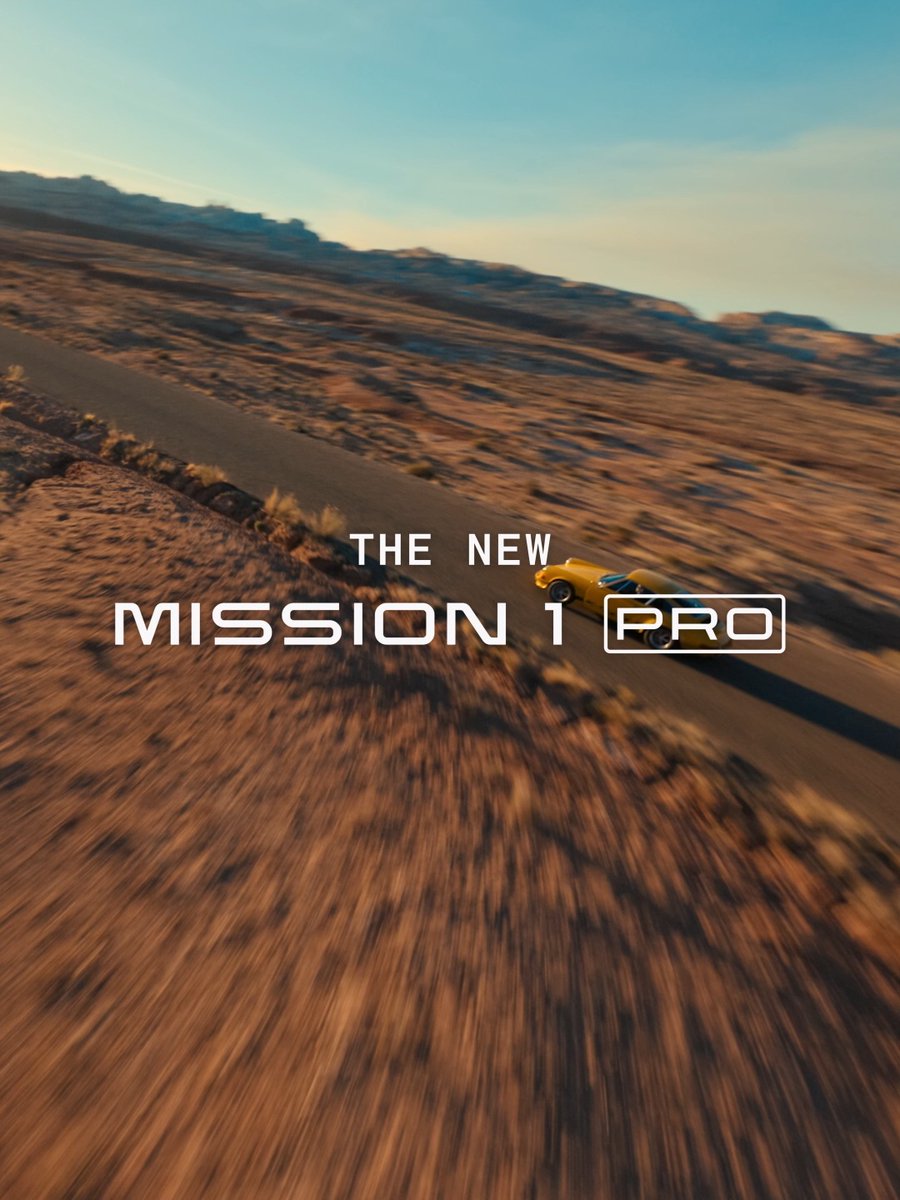
This is #GoProMISSION1 PRO 🎥 The only 8K60 camera with a 1-inch sensor. Our compact, cinema-grade camera features a proprietary GP3 processor and 50MP sensor that enable intelligent low-light capture, industry-leading frame rates and resolutions, and groundbreaking thermal performance. ✔️ 1-inch Quad-Bayer sensor with up to 14-stops of dynamic range at the sensor for low-light capture ✔️ Longest continuous runtimes + most dependable thermal performance of any GoPro ever—over 5 hours in 1080p + over 3 hours in 4K at 100°F ✔️ Industry-leading 8K60—300% more pixels than 4K ✔️ 4K240 + 1080p960 ultra slo-mo with real frames—not AI-interpolated ✔️ 8K30 + 4K120 Open Gate capture ✔️ Gallery-ready 50MP photos + 44MP frame grabs ✔️ Up to 240 Mbps bit rate out of the box + 300 Mbps with GoPro Labs ✔️ 10-Bit color + GP-Log2 with LUTs for Rec.709 + Rec.2020 outputs ✔️ HLG HDR with Simultaneous Dual-Gain Readout—the industry standard for pros ✔️ New intelligent capture modes: Dive, Vlog, Low-Light, Sport POV, + Subject Tracking ✔️ 13% higher capacity Enduro 2 battery in the same form factor with new fast charging ✔️ Rugged + waterproof, now to 66ft (20m) without a housing ✔️ Emmy® Award Winning #HyperSmooth in-camera video stabilization ✔️ New 4-microphone array, 32-bit float audio, multi-track recording, + manual audio controls ✔️ Timecode Sync to streamline multi-camera editing + GPS with telemetry data ✔️ New Point-and-Shoot Grip compatibility for elite handheld control ✔️ Removable Lens Hood included to reduce glare + flares ✔️ Bluetooth® 5.3 Super Wideband connectivity + USB-C port for external audio capture ✔️ A cinema-grade camera that anybody can use Enhanced by a GoPro Subscription: ✔️ Unlimited cloud backup at 100% quality ✔️ Camera replacement guarantee ✔️ Up to 50% off select accessories Order your MISSION 1 Series camera now to get a free Point-and-Shoot Grip ($100 value) + free shipping at Pro-tip: Existing GoPro Subscribers save $100 with the annual camera discount.

GoPro

19,682 views • 1 month ago

Wim Wenders on the "camera movement and blocking" in Wings of Desire (1987): Filmmaker Magazine: "What was your philosophy about camera movement and blocking in Wings of Desire?" Wenders: "As we very often had to “translate” the angels’ point of view, so to speak, we were extremely keen on moving the camera as much as possible. In the absence of Steadicam equipment we worked a lot on tracks, with dollies, cranes, jib-arms etc. But we also built ourselves devices so we could move through the air from one house to the next, for instance, and we shot the opening sequence on a helicopter, which was highly difficult in West Berlin at the time, as there were no private companies flying, just the Allies with their respective army pilots. We ended up shooting with a British pilot in an army helicopter without a proper camera mount. Today, you would do these things with gyroscopes and such. Blocking has always been my department. Henri [Alekan] kept out of it completely, and I did it with his operator, Agnès Godard. I have done shot lists for complicated sets, but usually I decide on location in the morning how we design the shots. I prefer to see the actors rehearse it, before I commit to any blocking. Camera moves weren’t the real challenge, though, for finding the angels’ points of view. It dawned on me early on that our camera had to do a more complex job. I told it to Henri. “Those angels have a very loving look at us humans. We have to find a way to teach our camera to look more lovingly.” Henri just stared at me as if I was out of my mind. “How do we do that?” Well, I didn’t know of course. But I figured we had to invest more care and love ourselves into every shot that represented what the angels saw. And that’s it, in the end. A camera can reflect on what you invest into its act of seeing. That sounds pretty lofty, I guess. But it does rub off, I tell you, if you try to imagine how angels would look at us. After all, they were some sort of metaphor for me for the better persons we carry inside ourselves, or for the children we somehow preserved in ourselves." — "“Imagine How Angels Would Look at Us”: Wim Wenders on Restoring Wings of Desire" by Jim Hemphill (Filmmaker Magazine, 2018)

RadiantFilm

18,101 views • 5 months ago

Colmap 4.0 was very recently released, so it inspired me to do some work to better understand it and its new capabilities with Rerun. I want to really understand how Colmap, and in particular, pycolmap, works outside of just calling it via the CLI. So my goal is to use the low-level pycolmap API to log every part of the pipeline. The explicit goal is to have an alternative to the SQLite database that I can utilize. Instead of SQLite, I want to try logging everything directly to rerun and use RRD. This means I can have deep inspectability and still save the features/matches/2D view geometry, but be able to view it directly in rerun. I think this is one of the superpowers that rerun provides; data and visualizations are deeply integrated. As I'm often working with sequential data (videos), I'm going to specifically focus on four things: 1. Monocular Video Simple: Calls high-level APIs such as pycolmap.extract_features, pycolmap.match_sequential, pycolmap.incremental_mapping. These are basically identical to the CLI options and provide a good baseline. 2. Monocular Video Streamed: Take the above high-level APIs and break them down to their iterator version, logging each component in a streamed manner. This way, I can stream the intermediate features to rerun while the extraction/matching/mapping is happening. 3. Rig with unknown calibration: <- WHAT THE VIDEO SHOWS This is probably the most interesting version and the first one I've been working on. It allows one to set a rig between known sensors, such as in VR/AR devices, leading to much better reconstructions with multiple cameras. This is the case where we don't know the calibration a priori, so we have to run a reconstruction twice: once as a normal Colmap reconstruction with no rig constraints, use this to generate the constraints, and then do it again with the newly found rig. 4. Rig with known calibration: This is the RoboCap example, where we have a pre-calibrated set of sensors, so we don't need to run the two reconstructions and also gain better matching between cameras, both spatially and temporally. Again, this leads to a much better reconstruction! Along with all this, GLOMAP has become a first-class global mapper, making it super easy to use directly within pycolmap! I'm excited to do more with this and compare it to things like pycuvslam, vipe, and other alternatives.

Pablo Vela

30,070 views • 3 months ago

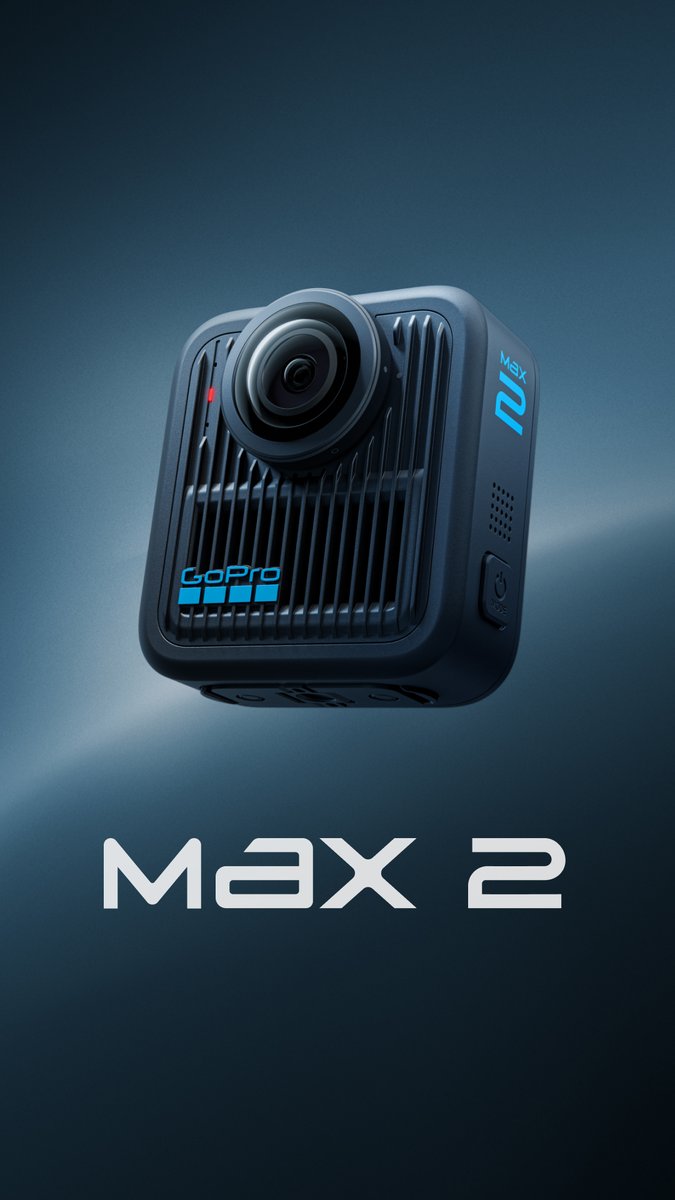
#GoProMAX2 is here 🚨 Industry-leading, true 8K 360 video delivers 21% more resolution than the competition, resulting in unmatched image quality that you only get from #GoPro. ✔️ Emmy® Award-Winning 360 technology ✔️ The only true 8K 360 camera. No misleading upscaling, no unusable black pixels, no AI-generated content ✔️ Twist + go replaceable lenses made from water-repelling optical glass. No tools or calibration required to swap ✔️ 5.6K60 + 4K100 for up to 4x slo-mo in 360 ✔️ 10-Bit color, GP-Log encoding, + with GoPro Labs, category-leading 300mbps bitrate ✔️ Seamless, invisible pole shots thanks to a new, back-to-back lens design + built-in 1/4-20 mount ✔️ Easy AI-powered editing tools with intuitive Reframe modes that anyone can use ✔️ Automatic POV + Selfie modes for minimal editing, while retaining full 360 flexibility ✔️ Most-in-class 6 microphones that unlock true-to-life spatial audio with innovative Audio Field of View ✔️ 23% larger, 1960mAh cold-weather Enduro battery ✔️ 360 Night Effects for creative capture in the dark ✔️ Sleek form factor for noninvasive mounting in action sports ✔️ Unbreakable Max #HyperSmooth with 360° Horizon Lock ✔️ Rugged + waterproof to 16ft (5m) ✔️ Quick-release magnetic mounting + compatibility with GoPro's entire accessory ecosystem ✔️ Single lens 4K60 video in Max HyperView at 180° FOV ✔️ 29MP 360 photos for cropping + zooming without quality loss ✔️ Bluetooth® audio connectivity for wireless microphones ✔️ Lightning-fast transfer speeds to the GoPro Quik App with Wifi 6 + BLE 5.3 🇺🇸 Designed in the USA Enhanced by a GoPro Subscription: ✔️ AI-edited highlight videos automatically sent to your phone ✔️ Unlimited cloud storage at 100% quality ✔️ No-questions-asked camera replacement 📦 Pre-order today, with free shipping and a free 1-year GoPro Subscription at Orders will ship on or before September 30th. *MAX2 delivers up to 21% more video resolution compared to competitive 360 cameras’ native maximum video resolution before they up-scale.

GoPro

139,118 views • 9 months ago

I’m thrilled to announce that we just released GraspGen, a multi-year project we have been cooking at NVIDIA Robotics 🚀 GraspGen: A Diffusion-Based Framework for 6-DOF Grasping Grasping is a foundational challenge in robotics 🤖 — whether for industrial picking or general-purpose humanoids. VLA + real data collection is all the rage now but is expensive and scales poorly for this task. For every new gripper and/or scene, you’ll have to recollect the dataset in this paradigm for the best perf. 💡Key Idea: Since grasping is such a well-defined task in simulation - why can’t we just scale synthetic data generation and train a generative model for grasping? By embracing modularity and standardized grasp formats, we can make this a turnkey technology that works zero-shot for multiple settings. GraspGen is a modular framework for diffusion-based 6-DOF grasp generation that scales across embodiment types, observability conditions, clutter, task complexity. Key Features: ✅ Multi-embodiment support: suction, parallel-jaw, and multi-fingered grippers ✅ Generalization to partial + complete 3D point clouds ✅ Generalization to single-objects + cluttered scenes ✅ Modular design uses other robotics modules and foundation models (SAM2, cuRobo, FoundationStereo, FoundationPose). This allows GraspGen to focus on only one thing - grasp generation ✅ Training recipe: grasp discriminator is trained with On-Generator data from the diffusion model - so that it learns to correct the mistakes (if any) of the diffusion generator ✅ Real-time performance (~20 Hz) before any GPU acceleration; low memory footprint 📊 Results: • SOTA on the FetchBench [Han et al. CoRL 2024] benchmark • Zero-shot sim-to-real transfer on unknown objects and cluttered scenes • Dataset of 53M simulated grasps across 8K objects from Objaverse 📄 arXiv: 🌐 Website: 💻 Code: A huge thank you to everyone involved in this journey — excited to see what the community builds on top of it! Joint work with Clemens Eppner , Balakumar Sundaralingam , Yu-Wei, Jun Yamada Wentao Yuan and other collaborators #robotics #diffusionmodels #physicalAI #simtoreal

Adithya Murali

23,841 views • 11 months ago

GFL2 CN News: Beilan Island Broadcast Ep. 20 - New Releases: - New Doll Nikketa (VSK-94) - Sentinel class (Hydro) - Doll with Summon (Guard dog named 'Kulich' [Localization to be confirmed]) - Skill 1(?) - Summons Kulich, dealing AoE damage to all enemy targets within 2 tiles and inflict [Guilt's Grip]. - Skill 2(?) - When Nikketa uses [Righteous Judgment] to enemy targets with [Guilt's Grip], increases out-of-turn damage and deal an additional attack(?) - Ultimate(?) - When Nikketa uses [Cold Judgment] against enemy targets, gain [Extra Command] and inflict [Guilt's Grip]. - Can apply debuffs to enemy targets to amplify her own elemental damage New Character Event: - Nikketa's character event [Ex Umbra] released New Outfits: - Nikketa's outfit GFL1 legacy outfit [Blazing Sun Dance] released... with a twist - Vector's outfit [Combat Bunny's Shadow] will be available for exchange in the [Achievement Shop] New Oaths: - Added Oath for Centaureissi and Nikketa New Systems: - Auto Mode Movie Mode added. You'll be able to watch your Dolls in a 3rd person view while they auto the stage for you - Added training dummy for DPS / team composition testing, with 6P62 as the training dummy. - Added [Achievement Shop], gain [Medals] to exchange for various items, such as Weapon Skins, Attachment Skins, and Trophies. - New system [Memory Showcase] will be enabled, it is basically your trophy showcase section. Note that this shelf was showcased in the Big Dorm system. - Added [Fire Control Calibration Chip] to the Attachment Calibration pipeline - The use of [Fire Control Calibration Chips] can either: - Increase the upgrade stat of your attachment by 10% per chip - Increase the min. stat of your attachment by "1 tick" per chip. - Requires 1 [Fire Control Calibration Chip] per upgrade as mentioned above. - Requires the target attachment to have >=100% all stat enhanced - Requires a large amount of Sardis Gold - Note that attachments that had gone through this procedure cannot be calibrated again via the usual means, for now. Mini-Games: - [Soccer Field Training], a soccer mini-game - [Frontline Survivors] Season 5, introducing Cheeta as a playable character System Optimizations: - Removed run limit per day on the Sardis Gold farming stage [Standardizing Sync] - The [Monthly Incremental Contract] will have a part of its clause changed: from increasing daily [Sync Permissions] to "number of times the Sardis Gold income will be doubled" - Removed all enemy units' "start of battle" animations - Added [Skip all story] button in story stages. - But Yuzhong would still recommend player to read the story! - Gift boxes will be automatically opened once exchanged, instead of staying in a box. - Added [Favorite] system in the [Refitting Room] Comments by Yuzhong and Sixi - Will introduce Dolls that use other elements (other than fire and hydro i guess) in future patches - The team hears that the Physical team is quite "limited" after Yoohee's release, and will be releasing new team members of the Physical team soon. - The next Doll will be "similar to Nikketa", she was announced in a preview, was seen before in some animations, was seen before in some art CGs, is very well liked by the community, and is "very familiar" to the players. - Will be implementing the illustrations of the outfits in-game soon!

Ceia

106,232 views • 1 year ago

🔵 based morning to all based builders, as we turn the page on the quarter, I want to share a lookback on our Q2 and a lookahead to our Q3. Base Build had an exciting 12 weeks. we hit 86% of our weekly active apps growth goal and shipped some big things for the community: - at the chain level, we achieved Stage 1 decentralization, a company-wide milestone and multi-quarter effort. we increased maximum blockspace throughput to 75 Mgas/s and adjusted the burst:sustained ratio to 3x to better support burst traffic. and we are on the homestretch to enabling 200ms flashblocks on mainnet in collab with flashbots. - we announced our onchain commerce protocol, a groundbreaking smart contract-based auth+capture escrow protocol, built in close partnership Base x Shopify x Coinbase Business. the future of commerce is onchain, and we’re just getting started. - our dev team cooked on powerful new tools to help you build, grow, and earn onchain – we shipped 4 more mainnet appchains, major improvements to OnchainKit, a new Docs site powered by Mintlify with AI-powered search and chat, and continued to streamline MiniKit for better mini app DevX. - we ran Base Batches 001, our incubator program, with 800+ teams and 70+ finalists. we distributed 25+ ETH in weekly builder rewards, not to mention more in grants and prizes. we ran multiple onchain buildathons, including with Vercel. we also hired 7 new base country leads and had fun meeting many of y’all IRL at Farcon and EthCC. but it’s still just the beginning. one of our core values is to build in public, and in that spirit here is the Q3 2025 product roadmap for Base Builder org: Overall - Grow Base WAAs from [X] to [Y] Chain (DRI: Anika Raghuvanshi) - Scale maximum blockspace throughput from [75] to [90] Mgas/s - Stand up a 2nd proving system on testnet - Launch shhhhhh 🤫 Markets (DRI: Shoomp) - Grow >$1M weekly DEX volume tokens from [X] to [Y] Account (DRI: wilson.base.eth) - Grow smart wallet WAAs from [X] to [Y] - Drive [$X] in onchain commerce volume - ​​Make smart wallet the best onchain account to build on Privacy (DRI: Elena Nadolinski) - Meet proof-of-person needs for [1+] established apps Dev (DRI: nick.base.eth 🛡) - Grow TBA mini app WAAs from [X] to [Y] per usual, we want to hear from you. let us know what we are doing well, and what we can do better to help you build, grow, and earn more onchain. together we can make Base the place where the best apps are built, where we meet real needs for real people, where we increase innovation, creativity, and freedom in the new global economy. and stay tuned for more from Drew Coffman at next week’s A New Day One event 👀 this product roadmap represents our current direction and is not a binding commitment; features and timelines may evolve based on market feedback, technical learnings, and strategic shifts.

tom.base.eth

41,164 views • 1 year ago

This will get a lot faster - shortening the hold time, deleting the “return to home position”, speeding up the robots… but it’s an exciting early glimpse of what we’re building. This is a sub-scale but otherwise accurate piece of a ship hull made with 3/8” steel plate and extruded angle. At full-scale the plate will be up to 40’ long. Our software generates the sequence of operations and calculates optimal trajectories based on the 3D model of our design. We won’t need to retool for different plate thickness, stiffener spacing, or even to add transverse members, brackets, etc. Our next version of this setup will include more extensive robot calibration and computer vision to allow us to precisely pick up arbitrarily-shaped structural members and place them accurately. Our software will also extend all the way through the process, picking plate & profiles from storage, running it through material prep operations, and even generating nesting layouts for the cutting table, removing scrap and directing the cut parts towards the correct assembly area to be picked and placed by robots. And there will be opportunities to deploy no-bullshit, useful AI agents to monitor the process, reflow production if there’s an issue somewhere on the line, generate work instructions for humans where needed and generally reduce the amount of human labor needed for oversight. If we succeed at all of this it will be hands down the most advanced shipbuilding process in the world. Early days still, but we won’t stop until we make it happen.

Dustin Walper

32,497 views • 7 months ago