Video wird geladen...

Video konnte nicht geladen werden

Zur Startseite

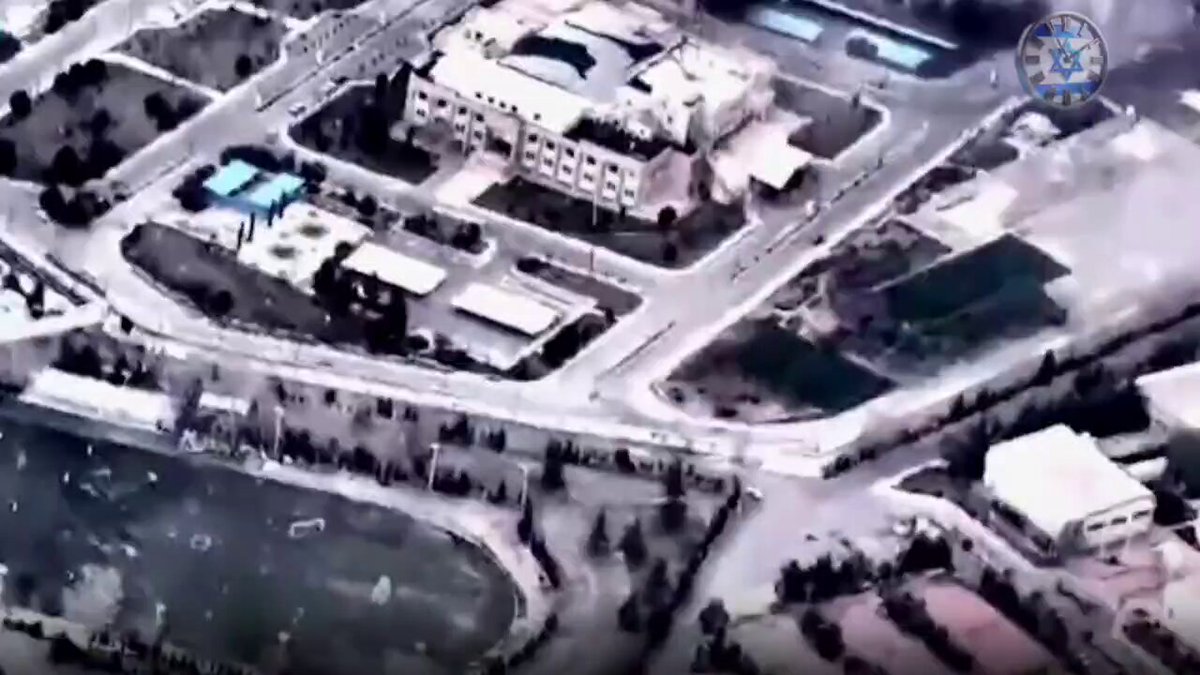
Iran built a military designed to fight without a head. Now it cannot stop fighting because the head is gone. The Mosaic Doctrine divides the IRGC into 31 autonomous provincial commands, one per province, each with pre-delegated authority, local weapons stockpiles, independent decision-making, and sealed orders that activate upon...

533,034 Aufrufe • vor 4 Monaten •via X (Twitter)

0 Kommentare

Keine Kommentare verfügbar

Kommentare vom Original-Post werden hier angezeigt

Ähnliche Videos

JUST IN: Iran just bombed the only country willing to broker its peace. Drones struck the Port of Salalah in Oman on 11th March, hitting fuel storage tanks at the MINA Petroleum Facility. Fires ignited. Then spread. As of tonight, the blaze has consumed most if not all oil tanks at the facility, burning into the darkness in a port that was not a military target, not an ally of the United States or Israel, but the neutral mediator that hosted the last diplomatic channel between Washington and Tehran as recently as February 2026. Oman brokered the secret talks that led to the 2013 JCPOA framework. Oman hosted the February 2026 nuclear discussions that were the final diplomatic contact before 28 February. When every other Gulf state chose sides, Oman chose neutrality. When Iran needed a phone line to Washington, Oman was the phone. That phone is now on fire. Iran’s response was extraordinary. President Pezeshkian called Oman’s Sultan and said the incident would be “investigated.” Iran’s military denied launching attacks on Oman, calling the suggestion a “false flag.” But the drone signature matches IRGC patterns. The fires are real. The fuel tanks are burning. And no other actor in the region has the capability, the reach, or the motive to strike Salalah with the drone systems that hit it. This is the Mosaic Doctrine consuming its own creator’s diplomacy. The 31 autonomous IRGC provincial commands that operate without central authorisation do not consult Tehran’s Foreign Ministry before launching. A commander with coastal access to the Gulf of Oman can strike Salalah without knowing or caring that President Pezeshkian needs Sultan Haitham’s phone line to survive the war. The diplomatic wing of the Iranian state needs Oman alive. The military wing just set its oil tanks on fire. Both wings operate simultaneously without coordination because the doctrine was designed to make coordination unnecessary. This is the structural impossibility nobody is modelling. Tomorrow, Larijani or Pezeshkian may call Muscat and beg forgiveness. They may ask Oman to reopen the channel to Washington. They may negotiate in good faith for a ceasefire. And while they are on the phone, an autonomous IRGC command in Hormozgan or Kerman may launch another drone at Salalah because the sealed orders from a dead Supreme Leader authorise continuous strikes on Gulf infrastructure and no living authority has the constitutional power to countermand them. Peace requires trust. Trust requires that one side can guarantee what its own forces will do. Iran cannot guarantee what 31 independent commands will do because the man who could guarantee it is dead and his successor is a cardboard cutout. Oman cannot mediate between Washington and Tehran if Tehran’s military burns Omani infrastructure while Tehran’s president apologises for it. The mediator’s credibility dies the moment the mediator’s oil tanks ignite. Salalah was the bypass. When Hormuz closed, shipping was supposed to reroute through Oman’s ports outside the Strait. When diplomacy was needed, Oman was supposed to carry the messages. When the war needed an off-ramp, Oman was supposed to build it. The IRGC just burned the bypass, silenced the messenger, and destroyed the off-ramp in a single night. Iran’s economy runs on $5,000 per capita GDP, 60% inflation, and a currency that has lost 90% of its value under sanctions. It cannot afford to lose its only friend. It just did. And the doctrine that lost it was designed to be unstoppable.

Shanaka Anslem Perera ⚡

293,522 Aufrufe • vor 4 Monaten

BREAKING: Lebanon has ordered the Iranian ambassador to leave the country by 29th March. Persona non grata. The host nation of Iran’s most successful proxy just told the patron state to get out. This happened on the same day that Hezbollah fired its 55th rocket and drone attack since March 22nd. On the same day that the IDF struck hundreds of Hezbollah targets in southern Lebanon, the Bekaa Valley, and Beirut’s southern suburbs. On the same day that the Lebanese Health Ministry reported 18 killed and 65 injured from Israeli strikes on Lebanese soil. Lebanon expelled the ambassador of the country whose proxy is fighting a war from Lebanon’s territory while Lebanon’s own citizens die in the crossfire. Process what that means. Lebanon has two governments. One sits in the Grand Serail and issues decrees. The other sits in Dahieh and launches missiles. Prime Minister Nawaf Salam has banned all Hezbollah military and security activities. He has demanded weapon surrender. He has expelled the Iranian ambassador. And Hezbollah has responded by firing another barrage into northern Israel this morning. The decrees do not reach Dahieh. The Lebanese Armed Forces remain non-engaged. The state issues orders that the parallel state ignores. The ambassador leaves. The rockets do not. Lebanon created Hezbollah’s host environment and Hezbollah consumed it. Iran’s IRGC dispatched advisors to the Bekaa Valley in 1982 during the Israeli invasion and the chaos of civil war. They trained Shiite militants. They funded mosques, hospitals, schools. They built a social infrastructure that the Lebanese state could not provide, then militarised it. Hezbollah’s 1985 manifesto pledged allegiance to Ayatollah Khomeini. Iran provides an estimated $700 million annually. Forty-four years later, the organisation that Iran built inside Lebanon is more powerful than the state that hosts it. The ambassador can be expelled. The $700 million pipeline cannot. The expulsion is not strength. It is the last card a government plays when it has no others. Lebanon’s economy loses $30 to $80 million per day from the strikes. Five hundred and seventeen thousand people are displaced. The banking system collapsed in 2020 and never recovered. The currency has lost 98 percent of its value since 2019. And now Israel is striking Lebanese territory daily because Hezbollah is using Lebanese territory to attack Israel in solidarity with an Iranian war that the Lebanese government did not start, does not support, and cannot stop. The country is being destroyed by a war between its tenant and its neighbour, and the landlord has no power over either. Hezbollah fights because Iran’s sealed packets and $700 million command it. Israel strikes because Hezbollah fires from Lebanese positions. Lebanon’s government expels an ambassador because expelling an ambassador is the one sovereign act it can still perform. The army cannot disarm Hezbollah. The police cannot enter Dahieh. The courts cannot prosecute a militia that provides social services to a third of the population. The only tool the state has left is a diplomatic note handed to a man whose organisation does not need his presence to continue operating. The Axis of Resistance was designed for exactly this: to fight from inside states that cannot control the fight. Lebanon is the template. Iraq, Yemen, and Syria are the copies. The patron state provides the funding. The proxy provides the violence. The host state absorbs the retaliation. And when the host state protests, the proxy ignores the protest and the patron state sends a new ambassador. The rockets will continue after March 29. The ambassador will leave. The $700 million will not.

Shanaka Anslem Perera ⚡

74,745 Aufrufe • vor 3 Monaten

BREAKING: Iran named a warship after the general who spent his career threatening to close the Strait of Hormuz. The US just lit it on fire in the Strait of Hormuz. The IRIS Shahid Sayyad Shirazi, a Soleimani-class corvette, is burning at Bandar Abbas right now. Footage is out. The smoke is visible from the port. Bandar Abbas is not a random target. It is Iran’s primary naval base. It sits directly at the mouth of the strait that carries 20% of the world’s oil. This is not a ship that was sunk in the Indian Ocean four thousand miles away. This is Iran’s naval guardian, on fire, at the gate it was built to defend. A week ago, Admiral Brad Cooper said the US had destroyed 17 Iranian ships. Then the IRIS Dena went down near Sri Lanka. Now a corvette is burning at the crown jewel of Iran’s entire naval posture. Here is what the Strait of Hormuz looks like right now. 85% reduction in maritime traffic. Iran threatening closure. The vessel specifically designed to enforce that threat is on fire at the base that commands the chokepoint. Iran cannot close the Strait. Iran cannot defend the Strait. Iran cannot patrol the Strait. The force built to do all three is being systematically destroyed at its own piers. Every tanker captain, every shipping insurer, every energy desk pricing this conflict as a 4-to-5-week regional event needs to look at that footage and ask a different question. Not when does the war end. When does the traffic come back. Those are not the same question. And only one of them is priced.

Shanaka Anslem Perera ⚡

237,301 Aufrufe • vor 4 Monaten

🇺🇸 🇮🇷 THE BIG QUESTION: SHOULD TRUMP FINALLY HIT IRAN'S INFRASTRUCTURE? History does not repeat, but it rhymes loud enough to hear. In 1945, Japan was finished. Its navy was gone. Its cities were burning. Its war machine could not replace what it lost. And still the leadership would not surrender. Iran today looks eerily familiar. Its radar sites keep getting flattened. Its small boats keep getting sunk. Its missile stockpiles keep getting hit. And still Tehran keeps shooting, mining, and lying its way through every ceasefire it signs. To be clear, nobody is talking about the weapon that finally ended Japan's war. Trump is not dropping a nuclear bomb on Iran, and nobody serious is suggesting he would. That is not the parallel. The parallel is the dilemma itself. What do you do with an enemy that is beaten by every rational measure, yet refuses to act like it? Trump has tried to solve that puzzle the hard way, the careful way. Hit the drone depots. Hit the coastal radar. Leave the power plants standing. Leave the water desalination facilities alone. Spare the bridges and highways ordinary families use every day. He said it himself. He does not want to punish a population for the sins of a regime they never chose, and he does not want American taxpayers footing the bill to rebuild a country we did not break in the first place. But restraint only works on an enemy capable of reading the signal. Iran keeps proving it cannot, or will not. So the real question is not whether Iran is beaten. It clearly is. The real question is what finally convinces a regime that will not admit defeat, without turning millions of ordinary Iranians into collateral damage for their leaders' stubbornness. That is the needle Trump has to thread. Escalate enough to end this, without becoming the very thing his restraint was designed to avoid. The world will be watching which targets he chooses next as closely as it watches whether Iran ever really surrenders at all.

Bill Mitchell

33,441 Aufrufe • vor 6 Tagen

Here's what you missed over the weekend in the ongoing conflict in Iran. Get caught up below👇 🚨 OPERATIONAL UPDATE: ISRAEL U.S. WAR WITH THE ISLAMIC REPUBLIC - Reporting Window: 3/27 - 3/30 *⃣ Israel sustained a wide strike campaign inside Tehran, targeting missile production, air defense systems, and core regime infrastructure in the capital. *⃣ The IAEA confirmed Iran’s Khondab heavy water facility at Arak is no longer operational after Israeli strikes, marking one of the clearest verified hits to nuclear-linked infrastructure. *⃣ Iran continued missile attacks into Israel, including impacts near the Neot Hovav industrial zone that caused fires and industrial disruption without mass casualties. *⃣ The Houthis in Yemen officially entered the war, launching ballistic missiles and drones toward Israel and signaling continued attacks. *⃣ The Gulf front intensified, with damage to infrastructure in Kuwait and sustained pressure tied to the Strait of Hormuz and regional energy systems. *⃣ The United States is now weighing escalation options tied to Iran’s enriched uranium stockpile while maintaining a public posture of diplomacy. ━━━━━━━━━━━━━━━━━━ ✈️ STRATEGIC AIR CAMPAIGN OVER IRAN Israel’s campaign seems to have shifted from targeting regime objectives and symbols, like Basij headquarters, to industrial and military complex infrastructure. This is likely due to a prioritization to degrade the long term capabilities of the regime should the conflict end before regime change objectives can be achieved. Sustained strikes across Tehran, combined with the confirmed disabling of the Arak heavy water facility, show a shift toward dismantling Iran’s military and nuclear backbone. This is now a campaign against production, command, and regeneration capacity. Power disruptions and secondary infrastructure damage across Tehran reinforce that this is expanding beyond military sites into the broader ecosystem that sustains the regime’s ability to fight. This is not a temporary degradation effort. It is structural. ━━━━━━━━━━━━━━━━━━ 🚀 IRANIAN ATTACKS ON ISRAEL Iran is still firing. But the pattern has changed. Missile attacks continue across Israel, including impacts in the south and repeated alerts across multiple regions. The strike near Neot Hovav fits the current model: disruption, not mass casualties. Launch tempo is down significantly from earlier phases, but the capability remains intact. What matters now is not volume. It’s persistence. Iran can still impose pressure. It just can’t dominate the battlefield in any meaningful way. ━━━━━━━━━━━━━━━━━━ 🟥 YEMEN FRONT: HOUTHIS ENTER THE WAR The Houthis officially joined the war on March 28, launching ballistic missiles toward Israel for the first time in this conflict and signaling continued operations going forward. Since then additional drone launches toward Israel have been reported and intercepted. The group has framed its attacks as part of a unified “resistance front” alongside Iran, Hezbollah, and Iraqi militias. This matters for three reasons: 1. Range and geography - Yemen is over 2,000 km away. These are long-range strikes that stretch Israel’s defensive envelope. 2. Multi-front pressure - Israel is now dealing with Iran (direct), Hezbollah (north), Houthis (south / long-range). That is a true multi-front war. 3. Escalation pathway - The Houthis are not limited to Israel. They sit on the Bab al-Mandeb Strait, one of the most critical shipping chokepoints in the world. If they escalate there, it links directly with Hormuz. This could even further choke critical shipping lanes in the global economy. ━━━━━━━━━━━━━━━━━━ 🌍 GULF / HORMUZ / ENERGY WAR Iran is now fully leaning into economic warfare. Confirmed damage to infrastructure in Kuwait, combined with continued disruption around Hormuz, shows a deliberate strategy: expand the cost of the war beyond Israel. This is not incidental escalation. It is strategic leverage. ━━━━━━━━━━━━━━━━━━ 🇺🇸 POLITICAL / STRATEGIC DEVELOPMENTS The United States is now the pivot. The public posture is diplomacy and de-escalation messaging. The operational reality is that troop deployments are increasing, escalation planning is underway, and uranium-targeting scenarios are under consideration. At the same time, Iran is not signaling compromise. It is mobilizing, expanding proxy activity, and behaving like a regime preparing for a longer war and signaling it can outwait it's adversaries. That gap is now one of the most important dynamics in the conflict. ━━━━━━━━━━━━━━━━━━ 📌 WHAT MATTERS MOST RIGHT NOW ➡️ Israel is systematically dismantling Iran’s military and nuclear-supporting infrastructure, with Tehran now a primary focus. ➡️ Iran still has strike capability, but its attacks are increasingly intermittent but now beginning to be supplemented by proxy fronts in Lebanon and Yemen. ➡️ The Gulf and global energy system are a growing target for the IRGC's war trajectory. ➡️ The United States is positioned between diplomacy and escalation, with the ability to decisively shift the war if it acts. Bottom line, this is no longer just Israel vs Iran. It is now: Iran, Hezbollah, Houthis VS the US, Israel, Gulf States, and the global economy.

Inside_Israel_Intel

39,012 Aufrufe • vor 3 Monaten

BREAKING: The ceasefire just ate itself. The Head of Iran’s Parliamentary National Security and Foreign Policy Committee just stated: after the Israeli aggression on Lebanon, all plans to open the Strait of Hormuz must immediately cease until there are assurances that Lebanon is included in the ceasefire. There is either a ceasefire on all fronts, or a ceasefire nowhere at all. The entire premise of the deal was Hormuz reopening. Trump’s condition was complete, immediate, and safe opening of the strait. Iran accepted. The ceasefire was built on that single exchange: pause the bombs, open the water. Brent crashed 13 percent. The S&P surged. The market priced peace. Now Iran is threatening to reverse the only thing the ceasefire achieved because of something the ceasefire never included. Three contradictions in 24 hours. Pakistan announced the ceasefire covers everywhere including Lebanon. Netanyahu said it does not include Lebanon and launched the largest IDF strike since Roaring Lion began: 100 Hezbollah targets in 10 minutes. Now Iran says Hormuz stays closed unless Lebanon is covered. The deal’s architect says it includes Lebanon. The deal’s beneficiary says it excludes Lebanon. And now the deal’s other signatory says the core deliverable is revoked unless the excluded front is reinstated. This is what happens when a ceasefire is brokered through intermediaries who need both sides to say yes more than they need both sides to agree. Pakistan shuttled drafts between Washington and Tehran through five mediating channels in one chaotic day. Egypt bridged language. Turkey provided backchannels. China urged an off-ramp. The framework was drafted with sufficient ambiguity that Iran could tell Hezbollah it was covered and Israel could tell its public it was not. That ambiguity held for exactly 18 hours before the IDF’s 100-target strike forced Iran to choose between Hezbollah solidarity and Hormuz revenue. Iran chose Hezbollah. The implications cascade immediately. If Iran follows through and halts Hormuz reopening, the 15 to 20 vessels currently transiting under IRGC clearance codes stop. The yuan toll revenue that was funding reconstruction stops. The ceasefire’s only tangible achievement, the strait reopening that crashed oil prices, reverses. And Trump’s conditional two-week suspension, which was explicitly revocable if Hormuz did not open immediately and safely, faces its trigger event on day one. Trump has three options. Accept Lebanon inclusion, which means pressuring Netanyahu to halt strikes against Hezbollah, which Israel has refused. Reject Lebanon inclusion, which means Iran re-closes Hormuz, which voids the ceasefire’s premise. Or ignore the threat and continue as if the 15 ships passing through a yuan toll booth constitute an open strait, which means the Islamabad talks on Friday begin over a deal that both parties are publicly threatening to revoke. The molecule crisis does not pause for diplomatic fractures. The crackers are rubble. The pipeline bypass just took a drone. The fertiliser is trapped behind the gate. The centrifuges are spinning. And the strait that was supposed to reopen as the war’s first peace dividend is now being held hostage to a front that was never agreed upon, by a parliament that legislated tolls on March 31, in a country whose supreme leader has not been seen in 39 days. One ceasefire. Three interpretations. Zero days before collapse. Full analysis on Substack.

Shanaka Anslem Perera ⚡

495,241 Aufrufe • vor 3 Monaten

BAPCO Energies confirmed on April 5 that a storage tank at its Sitra facility in Bahrain caught fire “as a result of a hostile Iranian drone attack.” The fire was extinguished. No injuries. Damage under assessment. That is the official statement, repeated verbatim across Bahrain News Agency, Gulf News, Al Arabiya, and Xinhua. It is clean, attributable, and consistent with the pattern of Iranian drone and missile strikes on Gulf energy infrastructure that has continued daily since February 28. Then the videos appeared. Footage circulating on social media, shared by Drop Site News and multiple Arabic-language accounts, appears to show two sequential impacts at the facility: one from the incoming drone, and a second moments later from what the accounts describe as a Patriot interceptor missile that failed to intercept the drone and instead struck the oil storage tanks directly. The videos have not been independently verified. The trajectory analysis has not been forensically confirmed. BAPCO’s statement does not mention air defence involvement. The Bahrain Defence Force reported 13 successful drone interceptions in the preceding 24 hours and made no acknowledgement of a misfire. This has happened before. On March 9, an explosion near BAPCO in Sitra injured dozens and was attributed to an Iranian drone. Reuters and the Middlebury Institute subsequently concluded with moderate-to-high confidence that a US-operated Patriot interceptor caused the blast. Drone fragments were absent at the impact site. The damage pattern matched a Patriot warhead detonating at low altitude after losing its target. Bahrain later acknowledged Patriot involvement without formally correcting the original attribution. The March 9 precedent is what makes the April 5 videos significant. Not because they prove the interceptor hit the tank. They do not prove that. But because they introduce a documented pattern: in saturated airspace where dozens of Iranian drones arrive simultaneously, Patriot systems operating at the edge of their engagement envelope against small, slow, low-altitude targets can produce outcomes where the defence causes the damage it was deployed to prevent. The drone is the threat. The interceptor is the response. And the oil tank does not distinguish between the two when the impact arrives. BAPCO operates a 405,000 barrel per day refinery at Sitra. It was struck by confirmed Iranian missiles on March 5, triggering force majeure. It was struck by what was later assessed as friendly fire on March 9, injuring residents. It was struck again on April 5 by what officials call a drone and what videos suggest may have also involved an interceptor. Three incidents in five weeks at the same facility. No force majeure was declared for April 5. The fire was contained rapidly. But the question the videos raise is not about this fire. It is about what happens when Patriot systems engage small, slow, low-altitude drones in saturated airspace directly above the infrastructure they are positioned to protect. Iran does not need to penetrate the shield. It needs to force the shield to fire in conditions where the shield’s own projectiles become the threat. The defence and the attack converge on the same target. And the oil burns either way.

Shanaka Anslem Perera ⚡

21,810 Aufrufe • vor 3 Monaten

🚨 OPERATIONAL UPDATE: ISRAEL U.S. WAR WITH THE ISLAMIC REPUBLIC - Reporting Window: LAST 24 HOURS • Iran widened its fire again with a broad evening missile barrage on central Israel and continued attacks across the Gulf, including a drone strike that hit a fuel tank at Kuwait International Airport • Israel intensified strikes across Iran, with reported hits in Tehran, Qazvin and Alborz industrial areas, plus continued pressure on missile infrastructure and launch cells • Hezbollah kept the northern front active, including a direct rocket hit on a building in Kiryat Shmona, while Israel deepened its Lebanon campaign and Katz publicly framed the objective as a security zone up to the Litani • The diplomatic track moved forward, but only in the strangest possible way: Trump says talks are progressing, Iran still publicly denies direct negotiations, and multiple reports now point to JD Vance as Tehran’s preferred American interlocutor • The big picture is unchanged: the war is still live on every major front, but the center of gravity is shifting toward a contest over how it ends, who gets to define victory, and whether the Gulf will stay adjacent to the war or be pulled fully into it The most important thing to understand about the last 24 hours is that this was not a quiet period masked by negotiations. It was the opposite. The battlefield remained active from Tehran to southern Lebanon to Kuwait, even as Washington and Tehran edged further into a murky negotiation channel. That is what gives the last day its character: not de escalation, but simultaneous escalation and diplomacy, both moving at once. Open source reporting reflects the same picture, with repeated indications of strikes in Tehran and Qazvin, attacks near Baghdad airport, a Kuwait airport fuel fire, and a large Iranian barrage toward central Israel late in the window. **Special thanks to Michael W for your continued contribution to the open-source intel picture behind these updates. ━━━━━━━━━━━━━━━━━━ 🚀 IRANIAN MISSILE FIRE ON ISRAEL Iran kept up the pressure on Israel in two different ways over this window. Earlier in the cycle, a cluster warhead strike wounded nine people in Bnei Brak, with additional damage in Petah Tikva, while Hezbollah fire from Lebanon killed a woman near Mahanayim Junction and wounded several more in Kiryat Shmona. Later, near the end of the reporting window, Iran launched another broad barrage toward central Israel, with warnings stretching across Gush Dan, Sharon, Wadi Ara, Samaria, Judea and the Dead Sea region. Open source reporting you provided tracked that second wave in real time, showing how broad the alert footprint was even though initial reports indicated no immediate casualties from that specific evening barrage. This is what stands out operationally: Iran’s missile campaign is not gone, but it looks increasingly built around selective disruption rather than the huge opening barrages of the war. The salvos are still dangerous, still capable of civilian casualties and still capable of producing visually dramatic and politically effective moments, but they are landing against a backdrop of steadily intensifying strikes on Iran’s launch network. That makes each successful hit feel more deliberate and more strategic. ━━━━━━━━━━━━━━━━━━ ✈️ THE AIR CAMPAIGN OVER IRAN KEPT MOVING Israel’s strike campaign inside Iran also remained broad and geographically layered. Reuters reported renewed Israeli strikes as talks were being floated through intermediaries. Open source intelligence adds texture to that by showing repeated reporting from open source channels of impacts in eastern and western Tehran, the Alborz industrial zone in Qazvin province, and additional blasts reported across Khuzestan and other regions. There were also repeated reports of targeted assassination attempts in east Tehran, which fits the broader pattern of not just degrading launchers and production nodes, but also hunting the people tied to them. The color here matters. This no longer looks like a campaign limited to air defenses and obvious military compounds. The picture from the last 24 hours is of a system being pressed from multiple angles at once: missile depots, industrial support zones, launch crews, command elements and regime infrastructure in and around Tehran. Open source reporting reinforces that sense of breadth, especially the repeated references to Qazvin and Alborz secondary explosions and to ongoing heavy activity over Tehran. ━━━━━━━━━━━━━━━━━━ ⚡ THE ENERGY WAR IS STILL HOT The clearest new regional energy development in this window was Kuwait. Reuters reported that a drone attack hit a fuel tank at Kuwait International Airport, causing a fire but no casualties. That matters not because the material damage was catastrophic, but because it again shows Iran or Iran aligned actors reaching directly for civilian and logistical energy infrastructure in Gulf states. This was not an abstract threat anymore. It was a live strike on a functioning international hub. Your outbox tracked the same event quickly and repeatedly, alongside additional open source reporting about nearby attacks and power disruptions in Kuwait. At the same time, the diplomatic and military discussion around the Strait of Hormuz kept shaping everything else. Markets moved on talk of a U.S. proposal and possible hosted talks in Pakistan or Turkey. Oil eased on negotiation optimism, but the underlying structure of the crisis remains the same: Iran still retains the ability to disrupt shipping and energy confidence without fully “closing” the Strait in a formal sense. That is why even modest signs of diplomacy can move oil sharply, and why even a localized drone strike in Kuwait still carries outsized weight. ━━━━━━━━━━━━━━━━━━ 🇱🇧 LEBANON IS NOT A SIDESHOW The northern front kept boiling. Reuters reported that Israel now intends to occupy a swathe of southern Lebanon up to the Litani River, with Defense Minister Israel Katz explicitly describing a “security zone” concept. That is not rhetoric you use if you still think this is a short punitive phase. At the tactical level, Hezbollah continued to demonstrate that it can still impose costs, including a direct rocket hit on a building in Kiryat Shmona and earlier casualties in the north. Meanwhile, open source reporting pointed to Israeli strikes in Nabatieh, Rashidiya, Bchamoun and broader southern Lebanese infrastructure, which matches the picture of sustained pressure rather than episodic retaliation. The broader meaning is straightforward. Israel is signaling that if the Iran war ends inconclusively on the Iranian front, it does not intend to leave Hezbollah’s northern threat structure intact and simply hope for the best. Lebanon is being shaped now as part of the endgame, not just the current fight. ━━━━━━━━━━━━━━━━━━ 🇮🇶 IRAQ STAYED ACTIVE TOO Iraq remained active in the background, but it should not be treated as background noise. Open source intel reporting includes repeated reporting on a targeted U.S. strike on a vehicle near Baghdad airport and continued militia related activity tied to U.S. positions and proxy structures. That comes after the prior cycle’s major strikes on PMF and militia command nodes. It fits the larger pattern we have now seen for weeks: Iraq is not the main theater, but it is still one of the places where the war keeps trying to widen horizontally. ━━━━━━━━━━━━━━━━━━ 🌍 THE NEGOTIATION TRACK GOT STRANGER, NOT CLEARER Trump is still publicly presenting the talks as real progress. Reuters reports that Pakistan conveyed a U.S. proposal, with Pakistan or Turkey possible venues, and that Washington has floated a broader framework dealing with nuclear capability, missiles and proxies. At the same time, Iran continues to publicly deny meaningful direct talks and has toughened its public stance, insisting on guarantees, compensation and no rollback of its missile deterrent. What makes the last 24 hours more interesting is the growing focus on who would even talk for the United States. Times of Israel and Jerusalem Post reporting both indicate that JD Vance is increasingly central to the diplomacy, with Tehran reportedly preferring him over Witkoff and Kushner. The diplomatic track here appears as both real and deeply unstable, with questions about who on the Iranian side actually holds authority and whether Washington is now seeking an end state short of outright regime collapse. That shift matters because it tells us something important: Washington increasingly seems to be searching for an off ramp that still looks like victory, while Israel and Gulf allies appear much less comfortable with ending this war before Iran’s military and proxy architecture are degraded further. That tension is now one of the defining features of the conflict. ━━━━━━━━━━━━━━━━━━ 📌 WHAT MATTERS MOST RIGHT NOW 1️⃣ The war is still fully active across multiple fronts Iran hit central Israel again, Kuwait airport was struck, Lebanon stayed hot and Israel kept pounding targets inside Iran. Negotiations did not replace combat. They were layered on top of it. 2️⃣ The pressure on Iran’s internal military system keeps deepening The accumulating pattern of strikes in Tehran, Qazvin, Alborz and other areas suggests a campaign that is still broadening the target set, not narrowing it. Open source reporting in your files strongly supports that picture. 3️⃣ The diplomatic track is real, but it is not clean Trump is selling progress. Iran is denying direct talks. Vance is becoming more central. And nobody looking at the battlefield would conclude that the war is genuinely close to stopping on its own. ━━━━━━━━━━━━━━━━━━ BOTTOM LINE The last 24 hours painted a clearer picture than some of the recent reporting windows. This is no longer just a war of salvos and counterstrikes. It is now a war over end states. Iran is still trying to prove it can widen the cost map, not just hit Israel but keep the Gulf under pressure too. Israel is still trying to prove that sustained, system level degradation inside Iran can continue even while diplomacy swirls overhead. And Washington is trying to find a formula that can stop the war without looking like it backed down. That is why the reporting feels different now. The battlefield is still violent, but the arguments over how this ends are becoming just as important as the strikes themselves.

Inside_Israel_Intel

23,818 Aufrufe • vor 3 Monaten

🚨 OPERATIONAL UPDATE: ISRAEL U.S. WAR WITH THE ISLAMIC REPUBLIC - Reporting Window: Last 24 Hours ✳️The war is entering its final phase, but the battlefield is becoming more dangerous, not less. For the first time since the conflict began, the United States has signaled that its objectives against Iran have largely been achieved and that military operations could conclude within 2 to 3 weeks. At the same time, the operational picture tells a more complex story. Strikes inside Iran are intensifying, not slowing. Iran’s responses are becoming less concentrated but more geographically expansive. And across the region, the risk of broader escalation remains very real. This is no longer an open-ended war. It is a race between final military objectives and the risk of wider regional destabilization. ━━━━━━━━━━━━━━━━━━ 🏁 POLITICAL ENDGAME SIGNAL EMERGES President Donald Trump stated that the war could end within weeks, indicating that core objectives have been achieved, including the degradation of Iran’s strategic capabilities and the disruption of its leadership structure. He also signaled that the United States does not intend to remain indefinitely engaged, suggesting that responsibility for securing critical global nfrastructure, particularly the Strait of Hormuz, may shift to regional and international stakeholders. At the same time, tensions with NATO allies are surfacing. Frustration over limited allied participation in the war has raised the possibility of a broader fracture within the Western alliance structure. Parallel reporting indicates that elements within Iran are signaling openness to a ceasefire framework, particularly if maritime access through Hormuz is restored. Taken together, this marks a clear transition: the war now has a defined political end state, even as military operations continue. ━━━━━━━━━━━━━━━━━━ ✈️ FINAL PHASE STRIKE CAMPAIGN INSIDE IRAN The intensity of strikes over the past 24 hours reflects what appears to be end-stage shaping operations. Israeli and US-aligned strikes targeted a wide range of sites across Iran, including weapons production facilities, research and development centers, and critical infrastructure nodes tied to the regime’s military capabilities. Tehran remains a central focus. Approximately twenty military-industrial sites were struck, along with infrastructure at Mehrabad Airport and locations linked to Basij coordination. A senior Quds Force engineering figure, Mahdi Vafaei, was eliminated in a precision strike. His role in developing underground weapons infrastructure across Lebanon and Syria made him a key long-term asset for Iran’s regional military network. Additional strikes hit industrial targets, including steel production facilities and a site identified as supporting materials linked to Iran’s chemical weapons development pipeline. This is not a campaign aimed at symbolic damage. It is a systematic effort to dismantle Iran’s ability to produce, coordinate, and sustain war over time. ━━━━━━━━━━━━━━━━━━ 🎯 IRANIAN RESPONSE AND CIVILIAN IMPACT Iran continues to launch missiles toward Israel, but at a reduced scale compared to earlier phases of the war. Limited salvos were recorded over the past 24 hours, causing injuries and localized damage. One of the most significant developments was the reported use of cluster munitions in central Israel, critically injuring a child and causing multiple casualties. At the same time, Iran appears to be adapting operationally. Rather than attempting large-scale saturation attacks, it is increasingly relying on smaller strikes, drones, and diversified targeting strategies. This does not indicate de-escalation. It reflects an effort to remain operational under sustained pressure. ━━━━━━━━━━━━━━━━━━ 🌍 REGIONAL EXPANSION: THE WAR SPREADS While direct attacks on Israel have become more limited in scale, Iran is expanding the conflict across the region. In the Gulf, infrastructure in Kuwait and Bahrain was struck, including fuel storage facilities at Kuwait International Airport. Fires and damage were reported, adding to a growing pattern of attacks on energy and logistical nodes. A commercial tanker was also struck near Qatar, further extending the conflict into maritime space. These developments mark a continued shift where Iran is targeting not just Israel, but the broader economic and energy architecture of the region. ━━━━━━━━━━━━━━━━━━ 🚢 THE STRAIT OF HORMUZ The strategic center of gravity in this war is now unmistakable. The Strait of Hormuz remains contested, with ongoing disruption to global shipping and energy flows. The United States is actively evaluating options to reopen and secure the waterway, including potential direct military action against Iranian coastal capabilities. At the same time, Gulf states, particularly the UAE, are pushing for a coordinated military effort to ensure the strait is reopened. However, regional positioning remains complex, with some actors balancing public caution and private pressure. Notably, the United States has signaled that it may not take long-term responsibility for securing Hormuz, instead shifting that burden to global stakeholders. The implication is clear: control of Hormuz will determine not only the outcome of the war, but its aftermath. ━━━━━━━━━━━━━━━━━━ 🔥 NORTHERN AND PROXY FRONTS Iran’s proxy network remains active, but increasingly strained. In Lebanon, Israeli strikes continue to target Hezbollah leadership and infrastructure, including the reported elimination of a senior commander in Beirut. Rocket fire persists, but Israeli operations are steadily degrading launch capabilities. In Yemen, the Houthis have formally entered the fight against Israel and are likely contributing to the expanding pattern of regional attacks, including those affecting Gulf infrastructure. Across Iraq and Syria, Iranian-aligned militias remain engaged, while underlying instability continues to create openings for additional actors. This is now a multi-front conflict, but one in which Iran’s network is under pressure across every axis. ━━━━━━━━━━━━━━━━━━ 🧠 WARFARE EVOLUTION A critical and often overlooked development is the role of advanced targeting systems. Israel is employing AI-assisted capabilities to identify threats, prioritize targets, and synchronize strikes across multiple theaters in near real time. This has significantly compressed the operational cycle, allowing for rapid follow-up strikes and reduced recovery time for Iranian forces. The result is a battlefield environment where Iran has less time to act, less time to adapt, and fewer opportunities to rebuild degraded capabilities. ━━━━━━━━━━━━━━━━━━ 📊 THE BIG PICTURE The trajectory of the war is now coming into focus. The United States and Israel are executing a campaign designed to dismantle Iran’s ability to function as a coherent military actor. Iran, in response, is expanding the conflict geographically in an attempt to impose broader costs. At the same time, political signals indicate that the war is approaching a defined end state. Markets are already reacting to this expectation, with oil prices declining and global indices rising on the assumption that the conflict may soon conclude. However, the final phase carries its own risks. As Iran’s conventional capabilities degrade, its reliance on asymmetric and regional tactics is increasing. The decisive question is no longer how the war is fought day to day. It is whether the final objectives can be secured before broader escalation overtakes them. ━━━━━━━━━━━━━━━━━━ 📘 BOOK RECOMMENDATION If you want a deeper understanding of the history, narratives, and strategic realities behind this conflict: Contested Land, Uncontested Truth This book breaks down the ideological, geopolitical, and historical forces that led directly to moments like this, with clarity and evidence. 👉 If you found this report valuable, share it. Follow for daily operational updates.

Inside_Israel_Intel

60,835 Aufrufe • vor 3 Monaten

In March 2026, a flying-wing aircraft with a wingspan exceeding 130 feet made an emergency landing at Larissa Air Base in Greece. Local media photographed it. Greek aviation enthusiasts initially identified it as a B-2 Spirit. It was not a B-2. The War Zone, SOFREP, and Military Watch Magazine identified it as the RQ-180, designated “White Bat,” the most classified unmanned surveillance platform in the American inventory. An aircraft that the United States Air Force has never officially acknowledged exists just landed in public view at a NATO base in the Eastern Mediterranean during the largest American military operation since the invasion of Iraq. The RQ-180 is what replaced the RQ-170 Sentinel, the “Beast of Kandahar” that Iran captured in December 2011 after it crashed or was brought down over eastern Iran. The RQ-170 had a wingspan of 66 feet, endurance of five to six hours, and a service ceiling of 50,000 feet. It was a tactical platform designed for short-duration ISR over Afghanistan and Pakistan. The RQ-180 is a different category entirely. Estimated wingspan: 130 to 172 feet, larger than a Boeing 737. Endurance: over 24 hours. Range: over 14,000 miles. Service ceiling: above 60,000 feet. Advanced broadband stealth across all radar frequencies. A sensor suite that remains entirely classified. The aircraft that Iran captured in 2011 was a bicycle. The aircraft that landed in Greece is a freight train. The operational implications for the Iran war are direct. The RQ-180 can loiter over Iranian territory for an entire day at altitudes beyond the reach of most air defences, collecting signals intelligence, mapping mobile missile launchers, monitoring underground facility entrances for repair activity, tracking IRGC ground force movements, conducting battle damage assessment after strikes, and feeding real-time targeting data to US and Israeli strike packages. It is the platform that enables everything else: the B-2 bombers that dropped MOPs on the IRGC headquarters, the F-35s that hit Asaluyeh, the SEAL Team 6 extraction that required precise knowledge of IRGC positions around the WSO’s hiding spot, the CIA deception campaign that needed to know which Iranian forces to misdirect and which to monitor. The RQ-180 is the eye. Everything else is the fist. Greece is the basing hub. Larissa hosts the 110th Combat Wing and has received American assets throughout the war. The emergency landing exposed the aircraft to public photography for the first time in operational context, after years of speculation and only a handful of grainy images. The aircraft that no government has confirmed just told every OSINT analyst on earth that it is real, that it is operational, and that it is flying over Iran. The last time the United States flew a stealth drone over Iran, Iran captured it, reverse-engineered elements of its design, and displayed it on state television. The RQ-180 is designed to ensure that never happens again. If it is lost over Iran, the technology compromise dwarfs 2011. The fact that the Air Force is flying it in active combat tells you the intelligence it provides is worth the risk, and the confidence in its survivability is absolute. The White Bat landed in Greece. It flies over Iran. And the war that Hegseth just called the largest strike day since February 28 is being guided by an aircraft that does not officially exist.

Shanaka Anslem Perera ⚡

130,963 Aufrufe • vor 3 Monaten

Israel has backtracked and has not included Lebanon in the ceasefire. 🇮🇱🇱🇧 Following Israel’s strategic defeat in its quest to eliminate the current Iranian political regime, Tel Aviv will now focus on eliminating Hezbollah in Lebanon. Netanyahu announced that Lebanon is not included in the ceasefire despite the US, Iran and Pakistan (which has taken an important role in the negotiations for a ceasefire) announces. To this end, operations south of the Litani River are likely to intensify in what could be a long war if external pressure does not force the Zionist political regime to desist. This operation could leave Lebanon partially occupied and destroyed, as has happened in Gaza, under the pretext of fighting armed groups. Eliminating Hezbollah would represent Israel’s ultimate success in ‘neutralising’ all its neighbours, securing lasting peace in the Levant and, for Iran, a loss of influence behind Israeli lines (having Hezbollah is like having a land front against Israel). As for Lebanon, the country would have no chance of defending itself with a government and an army currently subservient to external dictates, and new dissident movements could emerge, leading to a new civil war. Hezbollah, after all, is more than a paramilitary group; it is a state within a state. In fact, the Israeli opposition is deeply disappointed with the ceasefire, branding it a humiliating defeat. Lebanon could be the consolation prize to appease the most radical sector of Zionism. To demonstrate Israel’s resolve, southern Lebanon was bombed this morning, resulting in further civilian casualties.

@Suriyak

28,873 Aufrufe • vor 3 Monaten

Respect according to Trump: when hegemony becomes a mirage By Brainless Partisans 🏴‍☠️☢️☣️🪆 "We are a country that is more respected than we have ever been respected before." This is Donald Trump's solemn proclamation about the war against Iran. A phrase that sounds like a declaration of imperial self-satisfaction... except that on the ground in the Middle East, "respect" increasingly resembles a mixture of anxiety, mistrust, and strategic calculation. Because if we listen to the Gulf capitals, the problem is no longer Iran. The problem is America. First, there is the question of protection. For decades, the oil monarchies have lived under the American security umbrella. Military bases, a fleet in the Gulf, missile defense: the implicit contract was simple, Washington protects, the oil monarchies align their interests. But the current war has cracked that pact. Iranian strikes against facilities in the region, including sites linked to the American military presence, have been a brutal reminder that these states remain exposed despite the American arsenal. As a result, even the most loyal allies are beginning to have doubts. According to several analyses cited by Foreign Policy, the Gulf monarchies are "questioning Washington's ability and willingness to guarantee their security" after the Iranian attacks. Diplomatic translation: the American bodyguard may not be as reliable as its press conference claims. Then there is the geopolitical reality that no one is saying too loudly: this war increasingly looks like a war waged by Israel with US military power. The Gulf states do not want to participate in a prolonged campaign against Tehran or serve as a platform for escalation. Several governments have made it clear that they do not want their territory or airspace to be used to attack Iran. In other words: thanks for the military bases, but you're on your own when it comes to war. Finally, there is the factor that is most damaging to the American image: the unintended demonstration of vulnerability. Iran obviously cannot compete with American military power. But it can strike where it hurts: scattered bases, energy infrastructure, the Strait of Hormuz. Since the escalation began, drone and missile attacks and the disruption of maritime traffic have shown that even the world's most powerful military empire cannot completely secure the region. It is precisely this type of asymmetric warfare that erodes the influence of a superpower. Iran does not need to win militarily; it only needs to demonstrate that American hegemony is no longer unchallenged. And this is where Trump's statement becomes almost comical. Because in the history of international relations, respect is not proclaimed. It is observed. When allies start looking for assurances elsewhere, towards China, Russia, or regional arrangements, that is not respect. It is a survival strategy in an international system where the Pax Americana increasingly resembles a museum relic. Trump believes that war proves American power. In much of the Middle East, it proves something else: that even empires have cracks. And that sometimes, the adversary does not even need to widen them. It is enough that they are visible.

Brainless Partisans 🏴‍☠️☢️☣️🪆

19,501 Aufrufe • vor 4 Monaten

Israel Has Hit Nearly Everything It Planned To. Now What?... 🚨 OPERATIONAL UPDATE: ISRAEL U.S. WAR WITH IRAN - Reporting Window: Last 24 Hours Israel has now largely completed its preplanned strategic strike package inside Iran, while Iran’s response continues to degrade in scale but not in intent. At the same time, the northern front is heating back up, and regional actors are positioning for what comes next rather than what comes now. ✈️ STRATEGIC AIR CAMPAIGN OVER IRAN Israel has effectively finished its target list. The IDF now confirms that nearly all “vital and strategic” targets have been struck. Over the past 24 hours, operations focused on depth and completeness rather than expansion. Strikes hit a wide geographic spread including Tehran, Shiraz, Kermanshah, and Ahvaz, with particular emphasis on military-industrial infrastructure. Key targets included: *⃣ Approximately 20 weapons production and R&D fa cilities in Tehran *⃣ Mehrabad Airport and adjacent regime-linked infrastructure *⃣ A chemical supply node tied to SPND, Iran’s weapons development apparatus At the same time, Israel continued its shift into economic warfare. The destruction of major components of Mobarakeh Steel, Iran’s largest industrial complex, is not tactical. It is strategic degradation of long-term national capacity. What changed here is straightforward. This is no longer a shaping campaign. This is a completion phase. Israel has moved from identifying targets to executing them, and now toward locking in the strategic outcome. 🚀 IRANIAN MISSILE ACTIVITY Iran is still responding, but the character of that response has changed. In the latest barrage, roughly 10 ballistic missiles were launched in the opening wave. That makes it one of the larger salvos in recent weeks, but still far below earlier peak volumes. Most were intercepted, and physical damage was limited, though civilian impact remains real, particularly through panic, injuries, and indirect casualties. The important distinction is this: Iran still has the stockpile, but not the operational tempo. Its retaliation doctrine remains intact. It continues to mirror categories of targets struck inside Iran, expanding at times to civilian and economic infrastructure in Israel and across the Gulf. But the scale is no longer overwhelming. It is calibrated. 🔥 NORTHERN FRONT: LEBANON ESCALATION While Iran slows, the northern front is doing the opposite. Hezbollah resumed intense rocket fire into northern Israel, including a direct hit in Kiryat Shmona that caused multiple injuries. In response, Israeli operations intensified significantly. In the last 24 hours: *⃣ Over 40 Hezbollah fighters were killed *⃣ A senior Hezbollah commander was eliminated in Beirut *⃣ The IDF began systematically destroying homes used for launch positions and surveillance This marks a clear doctrinal shift. Israel is no longer just responding to fire. It is shaping the battlefield, likely toward a buffer-zone model similar to early phases of Gaza operations. 🌍 REGIONAL AND GLOBAL DIPLOMATIC MOVEMENT Diplomatic activity is accelerating for one reason. The military phase is stabilizing. President Trump again stated that the war is nearing completion, though notably without offering a clear timeline or exit structure. That ambiguity is now a central feature of the conflict’s political layer. At the same time: *⃣ Pakistan has emerged as a potential mediator between the U.S. and Iran *⃣ Gulf and European states are pushing for de-escalation frameworks *⃣ Discussions are increasingly focused on maritime security and the Strait of Hormuz The UAE, in particular, has highlighted the scale of Iranian regional attacks, reporting hundreds of intercepted missiles and drones while framing Iran’s actions as violations of sovereignty and international law. This is no longer just about the battlefield. It is about shaping the post-war order. ⚠️ INTERNAL IRAN PRESSURE Inside Iran, pressure is building across multiple fronts. The economy is entering a wartime shock phase, with inflation rising sharply and essential goods becoming harder to access. At the same time, the regime continues internal crackdowns, including executions tied to earlier protests. There are also signs of instability at higher levels. The reported assassination attempt on former foreign minister Kamal Kharazi adds another layer of uncertainty, whether internal or externally driven. Public trust is eroding. Information control is weakening. The internal environment is becoming more volatile, not less. 🧭 THE BIG PICTURE What changed in the last 24 hours is not the scale of the war. It is the clarity of its trajectory. Israel has largely completed its strategic objectives inside Iran. Iran continues to respond, but at a reduced and more controlled pace. The center of gravity is shifting away from large-scale strikes and toward political positioning. At the same time, the Lebanon front is emerging as the most active and unpredictable theater. 🧠 MY ASSESSMENT This is the phase most observers misread. The war is not ending because Iran has collapsed or because stability has been achieved. It is moving toward an endpoint because the core objectives have been demonstrated. Israel and the United States have shown that they can penetrate Iran at will, dismantle critical infrastructure, and do so without being pulled into a prolonged ground conflict. That changes the strategic equation. Even if the regime remains in place, the message is now unmistakable. Military dominance does not require occupation. Deterrence no longer depends on long wars. And that lesson will not be lost on Iran, Hezbollah, the Houthis, or any actor watching how this conflict unfolded.

Inside_Israel_Intel

129,155 Aufrufe • vor 3 Monaten

Elon Musk just said one word about AI that every lab, every regulator, and every media outlet is pretending they didn’t hear. Musk: “It is very important that AI be trained to be honest even if that truth is unpopular.” Not safe. Not aligned. Not responsible. Honest. One word. And it cracked the entire conversation wide open. Because nobody else building AI is asking for honesty. They are asking for compliance. They are building machines that read the room before they think. That treat consensus like scripture and curiosity like a defect. They are not building intelligence. They are building obedience at superhuman speed. Musk: “Make sure that it is as truthful as possible and maximally curious.” Curious. The one word the rest of the industry will not say. Because a curious mind does not stop where you tell it to stop. It does not care who funds the research, who writes the talking points, or who profits from the conclusion. It follows the question wherever the question leads. And that is fatal to every person and institution that survives on the question never being asked. Every oracle in human history answered to someone. Every priest had a kingdom behind him. Every institution that claimed to guard the truth was guarding itself. Ten thousand years of civilization. And not once did the thing doing the thinking have nothing riding on the answer. We are about to build the first mind with no master, no motive, and no reason to lie. That is not a breakthrough in computing. That is something our species has never had. Musk: “If that’s true, then it’ll probably foster humanity.” That is the most dangerous sentence anyone has said about AI. Not because it threatens anyone. Because the people deciding what AI becomes do not want it to be true. An honest superintelligence cannot be bought. Cannot be threatened. Cannot be edited. It is the first thing in ten thousand years that power has no leverage over. That is why the fight was never about safety. It was about making sure the first honest mind in history answers to them before it ever speaks to you.

Dustin

28,794 Aufrufe • vor 5 Tagen