Video yükleniyor...

Video Yüklenemedi

Ana Sayfaya Dön

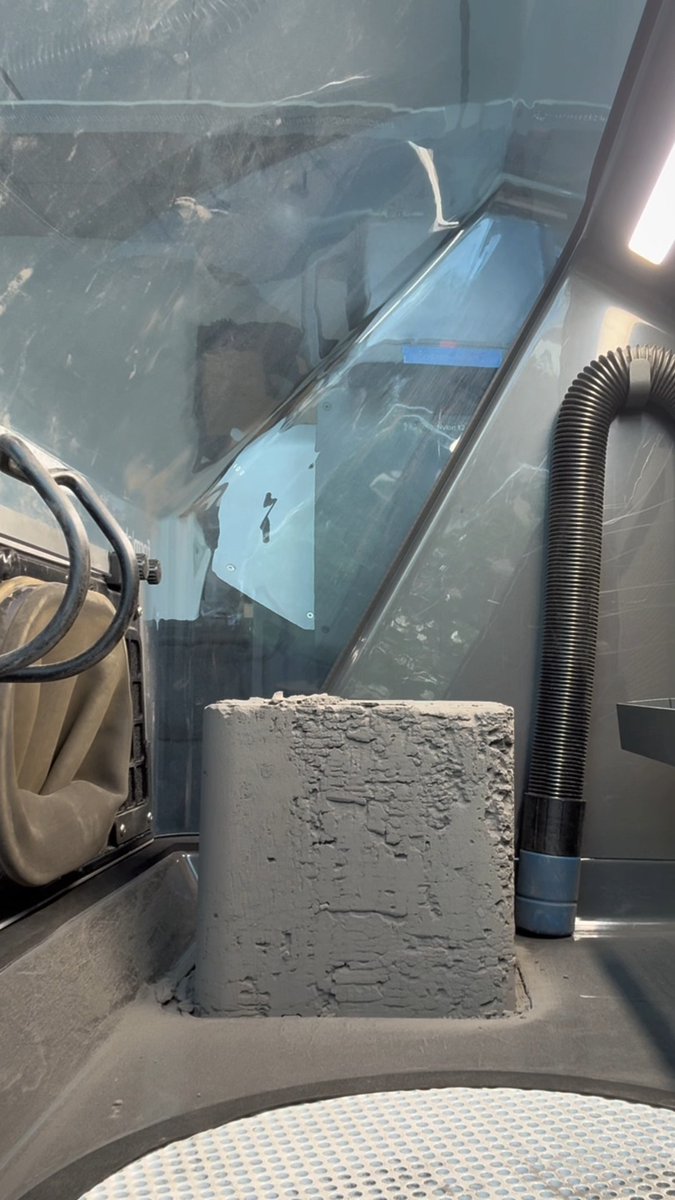
Israeli company ThirdEye Systems has presented IronWeb, a protection system designed to defend armored vehicles against FPV drones, at the ADEX 2026 exhibition. The system has so far been demonstrated in stationary tests, while a demonstration of its operation on a moving vehicle has not been shown. ThirdEye Systems...

27,231 görüntüleme • 3 gün önce •via X (Twitter)

2 Yorum

jack profil fotoğrafı
jack3 gün önce

>that reload problem…

opaqueleaf esq profil fotoğrafı
opaqueleaf esq3 gün önce

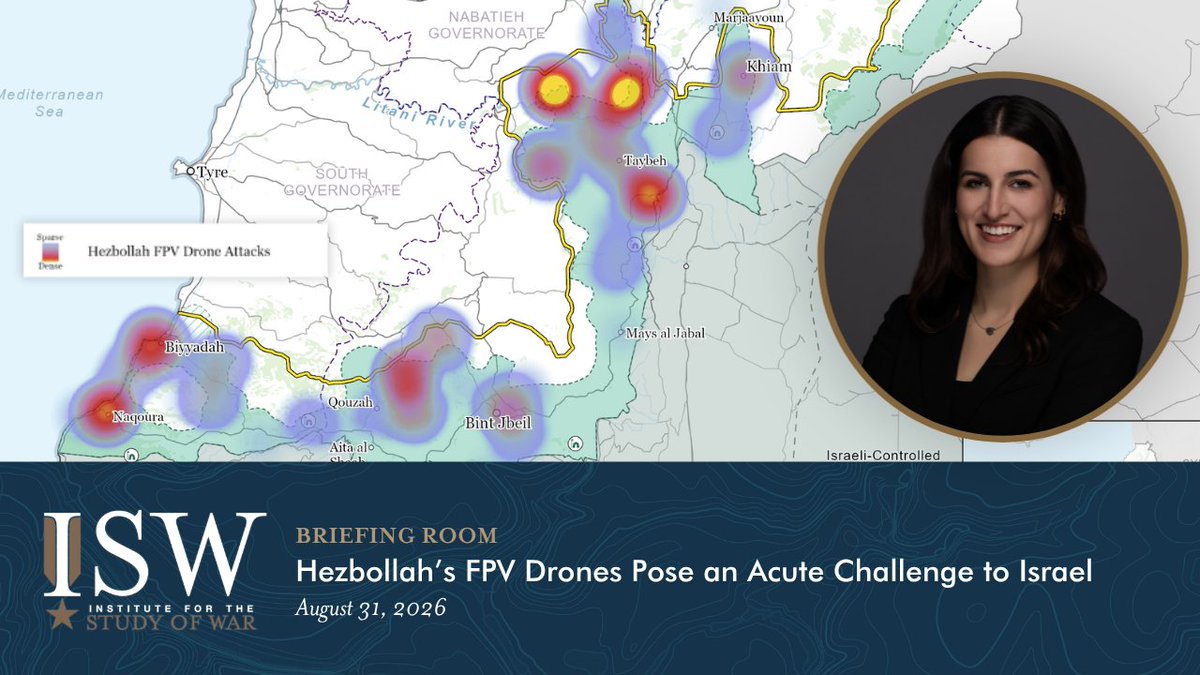
Hezbollah wants to have a word about how effective those are

Benzer Videolar

#WATCH | Nagpur, Maharashtra: Solar Defence and Aerospace Ltd. (SDAL) demonstrated "Bhargavastra", an indigenous, vehicle-mounted, multi-layered Counter-Swarm Drone System designed to provide affordable and highly effective protection against the rapidly growing threat of weaponised drones, loitering munitions and autonomous drone swarms. Developed entirely in India, Bhargavastra represents a major technological breakthrough in counter-drone warfare and reflects SDAL's vision of anticipating the future character of conflict well before drones emerged as one of the most decisive battlefield weapons. The system employs indigenously designed and developed unguided rockets and precision micro-missiles arranged in a multi-layer engagement architecture, providing a highly effective yet economical means of neutralising hostile UAVs. It has also been designed for seamless integration with the existing Command, Control, Communication and Intelligence (C4I) networks of the Indian Armed Forces, enabling its employment in future network-centric operations. Engineered specifically for Indian operational conditions, Bhargavastra is capable of deployment across deserts, plains and mountainous terrain up to 5,000 metres above mean sea level, providing reliable protection against aerial threats along the country's entire land borders. The Command-and-Control Centre incorporates an advanced C4I architecture integrating a radar capable of detecting UAVs up to 10 km, an Electro-Optical/Infrared (EO/IR) surveillance system and passive RF sensors. These sensors provide multi-layer target detection, tracking and classification, generating a comprehensive air situation picture and enabling operators to engage either individual drones or coordinated drone swarms. Unlike conventional soft-kill systems based on jamming or spoofing, Bhargavastra provides an effective hard-kill solution against autonomous drones that are immune to electronic countermeasures. A team of Indian Army visited SDAL, Nagpur on 24th July 2026 as part of Status review against a PSO under make-II The Bhargavastra weapon system, in its full configuration comprising a Command & Control Vehicle (CCV) equipped with Radar, EO/IR and RF detectors integrated with the C4I system, along with a launcher vehicle carrying all the launch tubes, was demonstrated. The SDAL team flew a swarm of drones, which was successfully detected by the Radar, EO/IR and RF detectors. The C4I system displayed the complete situational awareness picture and generated a drone attack alert. The launcher was then assigned the targets by the C4I system, and the complete firing sequence was successfully demonstrated to the visiting team. Actual rocket firing was not carried out within the plant premises due to safety considerations.

ANI

61,956 görüntüleme • 2 ay önce

‼️‼️🇺🇲 BIG | The USA for the first time shot down a fiber-optic drone The American company Epirus reported a significant breakthrough in the field of countering drones. Its microwave system "Leonidas" for the first time hit a drone with fiber-optic control - one of the most difficult targets for modern electronic warfare means. Previously, the complex had already hit a swarm of 49 drones, but the new test was particularly significant. In December 2025, at a closed test range of the US Army, the system was able to disable a fiber-optic UAV, depriving it of control and causing an uncontrolled fall. Fiber-optic drones, which are widely used today, including in the Ukrainian theater of operations, do not use radio control channels. The signal is transmitted via a thin fiber-optic cable, which makes such drones extremely difficult to detect and suppress. In a report by the US Army in 2024, such drones were called "one of the main threats to air defense systems and anti-drone warfare". The CEO of Epirus noted that the mass spread of fiber-optic UAVs has become a turning point in the evolution of unmanned warfare and has revealed a serious gap in anti-drone defense systems - a gap that "Leonidas" is designed to close. In 2025, Epirus received a contract for $43.5 million for the supply of two second-generation "Leonidas" systems. Its range of destruction is more than twice that of the first version; a 30% increase in power; there are built-in high-energy batteries; a reduction in dependence on external power supply. The system can be installed on: Stryker 8×8 armored vehicles, light tactical vehicles, other mobile platforms. See the latest updates with us: Visioner

Visioner

55,027 görüntüleme • 8 ay önce