Loading video...

Video Failed to Load

Go Home

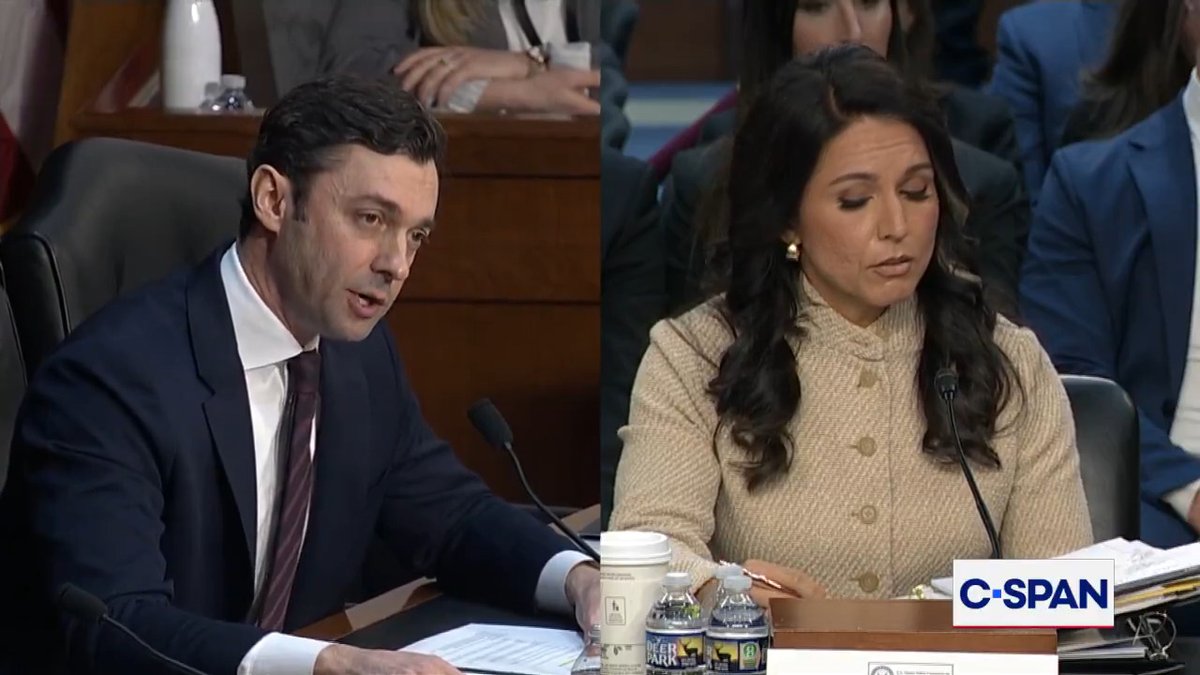
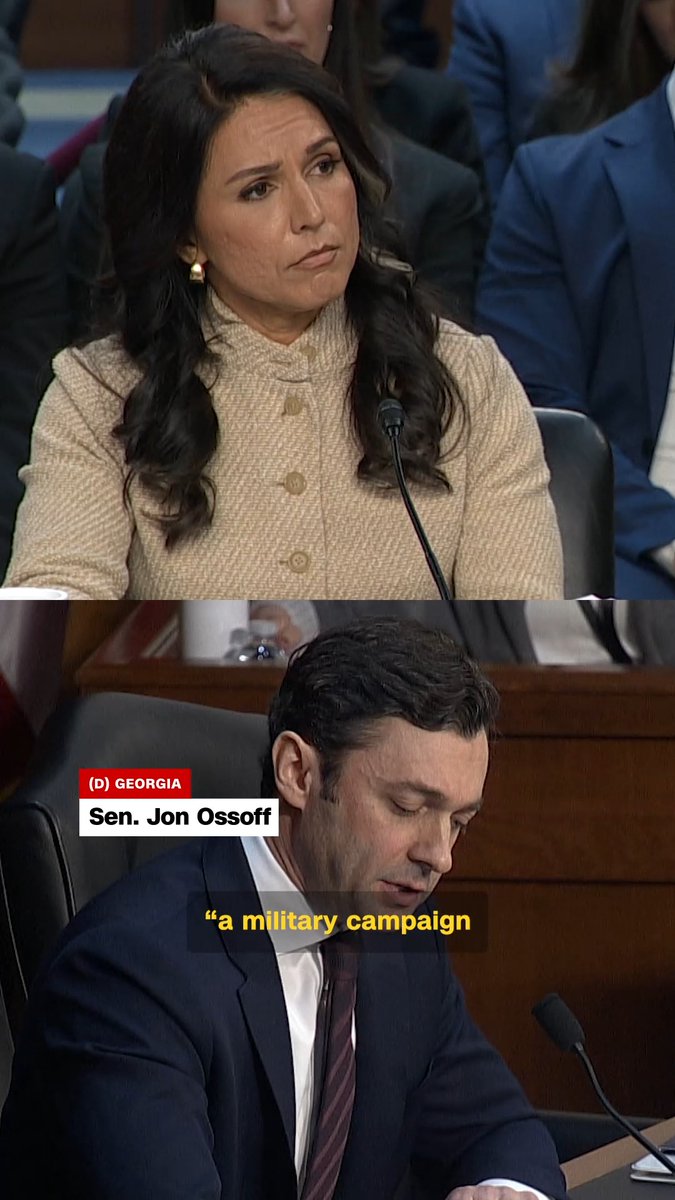
.Jason Rantz on Seattle Red calmly points out what was missing from the coverage of DNI Tulsi Gabbard's Senate testimony and masterfully explains the Trump administration's rationale for after Iran... "We're in a world of fact. I think Andrew McCabe's characterization of her answer goes very far from what...

16,657 views • 5 months ago •via X (Twitter)

0 Comments

No comments available

Comments from the original post will appear here

Related Videos

Victor Davis Hanson draws an uncanny comparison between President Trump and Winston Churchill — two leaders warning about a growing threat while the world refuses to listen. Hanson said that for 47 years, every U.S. president promised to deal with Iran, but Trump is the first one to actually do it. HANSON: “In 1939 Churchill had warned everybody about the threat of fascism on the continent…nobody listened to him.” “Then after the war broke out, nobody called on him and then finally he came in and from May 10th of 1940 he was saying to everybody, these people want to take over the continent.” “He was the voice in the wilderness.” “That’s what Trump is trying to do, trying to say to the American Democratic party, what’s left of it, you don’t understand what’s going on here.” “You Europeans don’t understand, you people in the Middle East don’t fully understand what this regime is about.” “When people say we did not have an imminent threat, we didn’t have an imminent threat when they took our hostages, when they blew up our barracks.” “Nobody said we better attack Iran because we need an imminent threat when they blew up our embassy, they always acted spontaneously with surprises and we never knew what they were going to do.” “The idea you have to have a telegraphed imminent threat, it’s not the nature of that regime.” “It’s lying, disguise and dissimulation. That’s their pattern for the last 47 years.” “But nobody’s taken them seriously.” “Every president’s said we’re going to deal with this, all seven of them and all seven did not.” “And then all seven of them when they got out of office said I regret that I didn’t” “He’s the first one that warned the world and said he’s not going to be one of those presidents.”

Overton

85,279 views • 5 months ago

What is Netanyahu expected to say to the president? The main problem with the ballistic-missile story is that the Iranians have caught on to the daylight—the gap—between Israel and the United States. What happened here is that Donald Trump gave his word and then broke it. "We will not allow Iran to have nuclear weapons." But he didn’t talk about conventional weapons—the ballistic missiles that threaten Israel. They threaten Israel to such an extent that Netanyahu himself, in a video announcing to the Israeli people that he was launching Operation Nation of Lions, said that two existential threats had developed. The nuclear threat—you’ve known about for years—but also the threat of thousands of ballistic missiles. What has happened since then? The Iranians are not acting at all on the nuclear front, as far as we know. They have not even extracted the enriched material buried underground. But they are very much intensifying their experiments with ballistic missiles. Either because they think it is threatening, or because, as Netanyahu says, it is an existential threat to Israel. We also have a race between the number of their missiles and the number of our missiles—and let’s say that both countries need to recover on this issue. Let’s ask the question now, and here I don’t have an answer. When Netanyahu goes to Washington to talk to Trump about this, is he talking to him about a combined attack—which seems a bit far-fetched to me, because the Americans really have no intention of getting involved in a conventional weapons conflict anywhere in the world; otherwise they would never get out of it—or is he content to give Israel permission to attack on its own, with the U.S. providing a defensive umbrella? One. Two, it should also be said, in this context, that there is a big debate in the Israeli cabinet and at the top about whether it is possible to launch an attack every six months. You cannot—unlike the nuclear project—you cannot eliminate the Iranian ballistic threat. Is it sustainable to come every six months, eight months, and launch another round, which includes them firing at us, all the flights leaving Israel, and all the implications for the economy? There is no decision in Israel. There is no decision in the U.S. that's what they will discuss.

Amit Segal

273,898 views • 8 months ago

American Surgeon shows the actual letter from UnitedHealthcare DENYING a patient in emergency condition from receiving care “This is a woman who was in the emergency room with pulmonary embolisms” “I think we all knew this would happen. I had another patient come in and share with me that UnitedHealthcare denied her inpatient's day. So this is a patient who had shortness of breath and some chest pain, and she just knew that something wasn't right in her body. She had a family history of blood clots and she'd had a deep flap surgery a couple of weeks ago. She went to the hospital and they saw her and they found that she had a life threatening condition known as pulmonary embolisms. So she was admitted to the hospital and taken care of really well by the doctors there. And they ordered all the right things. After a couple of days, she was discharged. She got a letter from UnitedHealthcare explaining that they didn't agree with the level of her care and that they would not cover it. So I'm gonna share some of the language of that letter with you, and I want you to know that my patient that we talked about previously who had her surgery denied had almost exactly the same letter shared. So there's some troubling things in this letter. I think this term is really interesting. United is saying they reviewed the request for inpatient admission. So let's all just pause and consider that. This is a woman who was in the emergency room with pulmonary embolisms, and the doctor wasn't really requesting anything. They were saying this patient needs to be in the hospital. But an insurance company sees this as a request, and that's part of this prior auth environment that we're living in. So I think it's important as patients and as physicians to just acknowledge that this is our reality now. Someone can think that there's a good medical decision for you and can write orders and wanna do the right thing for you, but your insurance company is seeing that as a request and deciding whether or not they wanna do it. One of the criteria that this insurance company used to decide whether or not to accept or deny this request was whether it's medically necessary. And it's so interesting that we're letting insurance companies and the doctors who work for insurance companies determine what's medically necessary and not just the doctor in front of the patient in the emergency room. So this is a really bold statement from UnitedHealthcare for my patient. They say you did not have to be admitted as an inpatient to the hospital for this care. I think we all need to just reflect on that. An insurance company is telling a patient and her doctor that they disagree with the plan of care to keep that patient safe. I know that this is boiling down to whether it's an inpatient admission or an observation admission, and that's really about money. But what I wanna point out to you is they're making medical decisions. This insurance company is actually weighing in and disagreeing with a doctor who made a medical decision to admit this patient for her safety. So this specific sentence, when a doctor or facility treats a patient above the recommended level of care, we cannot cover it. What the heck? That's what we do. We go above and beyond as physicians. It's clear that insurance companies don't, and they're actually saying it here.”

Wall Street Apes

115,712 views • 1 year ago

Devin Nunes explains various charges that are likely to be brought against Comey and company "On Comey, the answer is for this, it's very specific, and it's over whether or not he lied on this one part. The larger part is whether or not you can bring a Grand Conspiracy case. And there's the law, which is, lying to Congress, lying to the FBI, but there's also a term in there called misleading. And what a lot of these guys did is they made up things using intelligence that didn't exist, but acted like they knew something that actually wasn't there, and they lied and misled the American people. And by doing that, all the times they testified before Congress, the Senate, they lied over and over and again with this, oh, we've seen something, we can't tell you about it because it's classified. But what do we now know by everything that's been declassified is, is that they didn't have any intelligence on Russia colluding with Trump. In fact, the only intelligence that they had is that the Russians were very well aware of Clinton's plan. And they actually not only thought Clinton was going to win, but likely preferred that she would win. So going back to the cover up of her missing emails that, by the way, are still missing, they all got involved in this plan. They all got the FBI exercise. They were able to go spy on the Trump campaign. They were able to then get the Mueller witch hunt going, that then led to the Ukraine. Remember, that dies off, then you have the fake whistleblower and the Ukraine impeachment. I mean, that means a whole investigation in and of itself. We now know the latest information that happened on January 6th now with agents that were out there, the pipe bombs, all this other stuff that is, who broke the windows that I asked when I was in Congress, I really wanted to know that. But most importantly, Maria, who's the victim in this? The victim is President Trump and his family. They raided Mar-a-Lago. That's a problem and we need answers to that

Svetlana Lokhova

25,150 views • 11 months ago