Loading video...

Video Failed to Load

Go Home

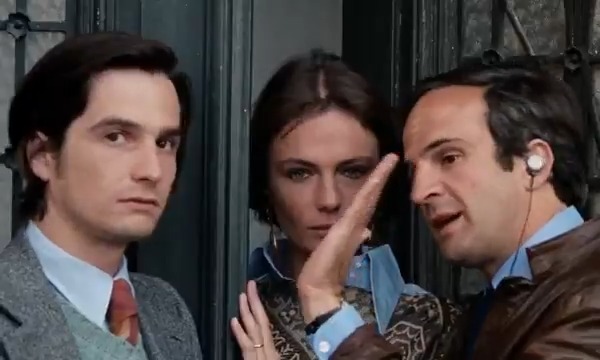
Kathleen Turner explains why she wasn't into method acting: "Interviewer: What do you think about the approach of actors like Dustin Hoffman or Daniel Day-Lewis, who famously do all this intense in-character preparation in order to play a role? Turner: In 'Crimes of Passion' (1984) I was playing a...

528,203 views • 1 day ago •via X (Twitter)

0 Comments

No comments available

Comments from the original post will appear here

Related Videos

Robert Duvall on how he prepared for his role in "Tender Mercies" (1983) & what he wanted to bring to the characters he played through his acting: "Interviewer: You usually play illiterate guys, yet on the subject of acting, you become very articulate. Have you ever wanted to do something totally different? Comedy, maybe? Duvall: Well, I just play characters. I mean there was comedy in my role in 'Apocalypse Now' (1979), but it was comedy that came through because I played the character. If you play the character, whatever’s there will come out. Interviewer: What about Shakespeare? Would you like to take on something like 'King Lear'? Duvall: People ask me why I don’t do Shakespeare. I think I could … I know I could, but it’s never interested me. My King Lear will be when I play in Horton Foote’s 'Convicts', and my Othello was Eddie Carbone in Arthur Miller’s 'View From the Bridge'. You don’t have to do classics to give great performances. I don’t know. I’ve always had a yen to play a preacher like Jimmy Swaggart. That might be it. I’m not sure yet. Just say this: just say it’s got to be real. That’s what I’m trying to do. And that’s hard. I drove over 600 miles of road in Texas listening to accents, watching how people held their bodies, talking to farmers. Man, I wanted my character to be real. But I loved it, too. I loved talking to those people. You know, that’s what all my acting is really about. Dignity. Trying to find the dignity in the man. Because the average working man has dignity that the Hollywood establishment has overlooked. The center and, especially, the South of this country have been patronized and made fun of. Things like the 'Dukes of Hazzard' (1979-85) — man, they’re the worst. If I can do anything at all in my work to show what dignity is in the common man, then that’s what my life is really about." (Robert Duvall's interview with Robert Ward, Rolling Stone, 1983)

DepressedBergman

22,085 views • 1 month ago

Sigourney Weaver on what she loved about her character in "Alien" (1979): "Interviewer: Ripley is now seen as this feminist action hero. Did you think about that or the politics of your representation at the time? Weaver: What I loved about Ripley in the first one, thanks to [producers] Walter [Hill] and David [Giler], and in the second one, thanks to Jim Cameron, was that I didn't really feel like a badass heroine ever. What I felt was like you or me in this situation, [wondering] what the f**k you were going to do. It was an everyman character that could be any of us. That was very unusual at the time that a character, a woman character, went through a whole film, doing difficult things by herself, a lot of the time, and didn't have some scene where she bursts into tears and cries in a corner for a while. Because I'm telling you, in those days, they really wanted women to be sympathetic. And that meant that either you had to be in a little skirt and run around, or you had to have these scenes where you cried and broke down because they thought if you didn't that you would seem unfeminine. So I was so lucky that I avoided all of that because I was doing science fiction, because I was in the future. And I was just playing this character who was put in this situation. And it was written like a man. It wasn't written like the way they wrote women in those days." ("At 28, Sigourney Weaver Was Thrust Into An Alien World", Zosha Millman, Bustle, 2021) P.S: On this day, 47 years ago, "Alien" (1979) had its limited release in the USA.

DepressedBergman

20,284 views • 26 days ago

Zack Snyder on his dyslexia: "It was a challenge for me when I was, you know, young in school, and all I wanted to do was make movies because that was the thing that I got great pleasure from and reward from. I love books, and I'm an avid reader, but I just have a hard time because of the way that I perceive. "I've had a great sort of - one side of me anyways - was really satisfied by art and drawing and sculpture and sort of visual expression. And I think that that started to, you know, was the thing that kind of made me feel un-frustrated. And also the way the system was designed, sort of not to support me when I was in high school at that time. "It was very difficult, you know, there was a lot of, you know, just, difficulty. My English teacher in high school was worried about what my career would be, and I'm like. He would be happy to know that I'm in the Writers Guild of America now. "But, I think that that all those things are, they're all... you can transcend all those things with perseverance and with interest and with with help. And I think that that's an important part of it. "And I just think I've had to adapt, and sort of... I have my own style of the way I write, I write all, you know, but I'm pretty prolific. And I love- I listen to tons of audio books on tape, unabridged hours and hours and hours. That's all I do when I'm driving in the car or wherever I'm doing. And it's helped me a lot. "And yeah, I mean, I just hope that anyone who is- feels trapped or frustrated by the world in general. You know, they need to just, I think that we all have like a magic spark, and you need to just find the thing that makes you, you know, inspires you and, and gets you excited and pursue it as hard as you can find your passion in the world. That's a, that's a great motivator."

Zack Snyder Film

11,128 views • 5 months ago

Hirokazu Koreeda on how he directs Children: "Interviewer: I think 'Shoplifters' (2018) is very remarkable in showing different sides of a city and like you said, people who are pretty much invisible, but I do want to also commend you on another thing, is you often work with young actors, and they always tend to have a significant role in many of your films. How do you go about finding such dynamic young actors, and why do you often put these young people at the center of each one of your stories? Koreeda: First of all, I would say that I tend to make what I would call family dramas, and of course, you have to have children if you’re creating a family, but that’s how it started, but I found that as I did it, I became really interested. It became very interesting and fun to work with these children, and for example, the two children in this film, neither of them had any acting experience at all before this film. I brought them in, and what I find when you bring these children in, and you work with them is that the adult actors change. They become much more lively and natural in the way that they act, and I guess, at some point, I realized this, and I guess, became really attracted to the idea of having children and the impact that it had. Interviewer: Do you find that there is any struggle in terms of working with young actors, or in this case, young children who have not actually acted before? Koreeda: Just to clarify, I have worked with children in many of my films, and all of them have never had experienced before. I always go out and pick non-acting children to work in my films, so just, I wanted to put that out there. In terms of the struggle, it does take time. You have to give extra time to work with these children. When I choose these children, I have an audition, and I pick out who I want to the audition, and then when we get to set, I never give them the script. No child that I’ve worked with has been given a script beforehand, and when I get to the actual part where they’re going to be acting, I give them the lines myself, and work with them and coach them. What I find is that it’s actually really enjoyable, both for them and for myself that way. I also, because I’ve been doing this now for several years, I tend to have a fairly high success rate in choosing children that are able to work with me in that way. Interviewer: That’s fascinating, and it also shows how you are able to create such authentic performances from these child actors over and over again in so many of your films. I think it’s a unique gift that you have, and it’s something that very few directors, I think, here in the United States do. Koreeda: It’s true, I guess by working with these children, I learned. I discovered that the best way to do it was just to communicate verbally their lines, rather than giving them in a written format, and over time, this really worked, and so I just kept doing it. But, interestingly, I loved the movie 'Kramer vs Kramer' (1979), directed by Robert Benton, and one time I bought the movie with all the extra, the making of and everything, and I went over it, and I found through that, that in fact, the child in that movie was also given his lines every day by the assistant director each morning when they came in to set, so I discovered that it wasn’t just me that was doing this." (Koreeda's interview with Scott Menzel, We Live Entertainment, 2018)

DepressedBergman

49,522 views • 5 months ago

Revamp Space Translation (11/10/2025) Barcode: Thank you to P’AloneNew for inviting me to be part of this project. I feel really good. This is actually my first project with GMMTV, and I’m very happy — it’s been a genuine and very positive experience. Speaking of Ciar, it’s a really challenging role. Because he’s a vampire, it’s not something that reflects real life, so I couldn’t draw from real-life character traits. It’s like being in a novel — I had to explore and figure out what he’s like, which was a lot of fun. Getting to discover this character was both challenging and fulfilling every time I worked. Thank you so much — I feel really good about it. 👏 ========= Prem: I have a question for Barcode. I want to know — when you were playing the role, did you have a core principle or something you held onto? ========== P’AloneNew: Like, something he grounded himself on? ========== Prem: Yeah, because the character Ciar is quite extreme. So did you have a core idea or mindset going into a scene — like, “I am Ciar, so if I do this, it makes sense”? Something like that? ========== Barcode: Honestly, it was more about doing my homework. There wasn’t a fixed core or anything like that. But once I got to know the character deeply enough, I could just play him naturally. I didn’t have to consciously think like, “If I’m Ciar, I need to be cool, have a low voice.” It wasn’t about that. It’s more about what’s inside the character — what he’s been through, what happened in the previous scenes, what his backstory is, what just happened before coming into this scene, and how that made him feel. That’s a fundamental part of the acting craft. ========== Prem: So, Code, you place a lot of importance on preparation and studying the character before filming, right? ========== Barcode: Absolutely. I give it a lot of importance. I feel like the process of preparation is like 80:20. Everything we show on screen mostly comes from what we’ve done behind the scenes. If we’ve prepared well, everything will just flow naturally. ========== Prem: That’s really good. I’ll remember that and apply it myself. VENGEANCE OF CIAR #RevampSeriesEP8 #barcodetin Tinnasit

Barcodetin Official Fan Club

49,222 views • 8 months ago

AFP’s Danny Kemp: “Mr. Vice President, you presumably watched the video yourself. There’s not the slightest doubt in your mind, having viewed it, that this the victim — you still believe that she deliberately tried to ram him despite despite seeing this video?” Vice President JD Vance JD Vance: “Look, I don’t know what it’s in a person’s heart or in a person’s head. And obviously, we’re not going to get the chance to ask this woman what was going on. What I am certain of is that she violated the law. What I am certain of is that that officer had every reason to think that he was under very serious threat for injury, or in fact, his life. What is I’m certain of that she accelerated in a way where she ran into the guy. I don’t know what was in her heart and what was in her head, but I know that she violated the law, and I know that officer was acting in self-defense. That’s raises an interesting point, though. Look, if people want to say that we should have a legitimate debate about, you know, what was she really doing, right? Was she panicking when she drove into this officer, or was she actually trying to ram him? That’s a — that’s a reasonable conversation. What’s not reasonable is for so many of you to plaster all over the media that this was an innocent woman and that the ICE agent committed murder, which is what many of you have said explicitly, and some of you have said implicitly. That’s what I have an objection to. The idea that this was not justified is absurd and I think everybody knows it in their heart.”

Curtis Houck

19,488 views • 5 months ago

"You know, I don't, I have not changed. I really make the movies for myself. I really, really do." Q: "For no one else, or just sort of like what you ultimately want to see in them?" "Yeah, I think so." Q: "As a fan yourself, too? "What I want to see, yeah, like as a, like, you only have the benchmark of yourself. Like, if you ever try and make a movie for someone other than yourself... I feel like you're going to blow it. "Because you can't, you don't know how anyone else is going to feel. So like, you know, you go, 'okay, do I find that emotionally real? Do I find that interesting? Is that the Krypton I want to go to? Is that the Superman I want to see fight?' "You know, those are the questions you ask yourself constantly. And I think once you, if you're constantly answering yes to that, then you'll end up the more, the film will end up being more interesting to you. "And ultimately, the film being interesting to you allows you to make the movie better because you're interested. "If you make it for someone else over a two-year period, you're just going to not give a sh*t at some point because you're just like, 'I don't care. This is not my movie. I don't care about this movie because I made it for someone else.'" Q: "I imagine that's a very hard thing to do in Hollywood, though, is to keep your vision clear with so much collaboration, with so much going on, with so many other people in the mix." "It really depends on the project. For instance, it was hard on Guardians, you know, where I feel like what ended up happening on that movie was people, we did end up, they did end up asking me like, 'this is for kids, right?' "And I got to honestly say that I knew it was for kids, but I didn't want to make it for kids. You know what I mean? And I think that's what happened to that movie. It did get like second guessed at the end and turned more into a movie for kids. "My point of view is I can think like a child if I want. I have that enthusiasm for movies and what I think is cool. You, the collective you, don't need to try and second guess me and go, 'this is what we think a kid would like.' "And then it's like, 'oh, a song' or whatever. Then you're just like, 'okay, whatever.'"

Zack Snyder Film

334,960 views • 6 months ago

Gena Rowlands explains the reason why "A Woman Under the Influence" (1974, Cassavetes), which was first written as a play, was made into a movie: "Rowlands: John wrote it as a play. He said, “Hey, I wrote you a play.” And I said, “Great, let’s read it.” I read it and I said, “John, I couldn’t do this every night and twice on Wednesday and Saturday. I wouldn’t be able to last two weeks. I’d die.” It was a very hard play to do every night. And he said, “Don’t worry. Don’t even think about it, you’re right. I hadn’t thought of that.” He said, “Just forget it.” Then in about two weeks he said, “Okay. I solved the problem. I wrote a different play for you.” He said, “So you won’t have to carry all of it every night. I used the same characters but I enlarged different parts of the scenes.” He changed it generally to make it humanly possible. And I said, “Oh, that’s a miracle, let me see it.” And I read it and I said, “Listen, you must know a lot of strong actresses!” [laughs] I said, “I still wouldn’t be able to do it. This is really hard.” She has a nervous breakdown—there’s a lot of things that are hard emotionally to do. So he said, “Okay. I’m going to write it as a picture.” I said, “I think I can get through it once.” [laughs] “But I’m not making any guarantees.” He thought that was funny and then he wrote it thinking like an actor too instead of just a writer. I think he took that into consideration. And it is, of course, much easier to do a film when you’re doing an extremely emotional part than it is doing it onstage over and over especially. Interviewer: Do you consider that to be your most challenging role? Mabel? Rowlands: Well, yes, it was my favorite. I loved doing that. And it was challenging. Interviewer: Since John gave you so much freedom to do what you liked as a character, how would you go about finding them? Was it something that was instinctual for you, from the script? Rowlands: I read the script, you know, 50 times. And I thought about it. And then I did it. [laughs]" (Gena Rowlands' interview with Colleen Kelsey, Interview Magazine, 2016) P.S: Remembering the great American Actress Gena Rowlands on her 96th birthday!

DepressedBergman

63,388 views • 1 day ago

Cate Blanchett on how she prepared for the role of Katharine Hepburn in Martin Scorsese's "Aviator" (2004): "Interviewer: How do you deal with the problem of portraying someone like Katharine Hepburn who is so well known? Blanchett: I tried not to look at it like a problem. I tried to look at it as a challenge. But it was more than daunting, it was completely and utterly terrifying. I don’t know that I knew what I had agreed to do. When Martin Scorsese calls you just go into this reverie…I’m such a fan…and so when he asked of course I said yes. Then I realised the consequences but I had agreed to do it. You just have to get on. I find the technical work fascinating. You have to find a balance between paying a homage to her as an actress and being irreverent and serving the script and unlocking the private human being. She was enormously private. Interviewer: There must have been tons of material…books, films, TV interviews…for your homework? Blanchett: There is not a lot of newsreel footage actually. It’s not like now where there’s a lot of interviews with film actors outside the domain of the sound stage. The interview I found most helpful was one she gave in 1973 to Dick Cavett. I had read about that in a biography – and this is the great thing about working with Martin Scorsese, he is so into research and his research team found that TV interview for me. And that became my bible. It was listening to the woman herself, even though her voice had calcified, I think, as had her personality, as she approached or was in her seventies. But watching her be uncomfortable, it was like a gambler looking at another gambler – you could see where the ‘tell’ is. After watching that interview I went back and watched her films and tried to compare the awkward gestures with the gestures that she had as a young actress before she had really crystallised into Hepburn as we know her. Interviewer: What about getting to grips with her distinctive almost iconic voice? Blanchett: It’s a bit like a language lab, if you want to get a feeling for an accent you have to immerse yourself in it. Someone said you can tell if someone has the feeling for an accent because they’ll be able to hesitate in the language. That became very important to me. You learn it technically and then you have to get fluid with it and forget the preparation." ("The Aviator (2004) – Q&A interview with Cate Blanchett", Phase9 Editorial, 2004) P.S: Happy 57th birthday, Cate Blanchett!

DepressedBergman

47,416 views • 1 month ago